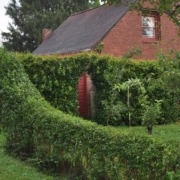
Espalier pear

ESPALIER, A TASTY FUSION OF ART AND SCIENCE

Let’s Revive an Ancient Technique

Let’s go back in time, say, four hundred years. You’re puttering around your garden, your walled garden — walled to keep out animals and unfriendly neighbors. Hmmmm, you think, why not plant a fruit tree in that strip of earth against that wall, perhaps a fruit that will also benefit from the extra warmth over there? May as well make the plant look nice and orderly, too.

And so originated espalier (ES-pal-yay): a plant, usually a fruit plant, usually trained to an orderly and two-dimensional form. The word is derived from the Old French aspau, meaning a prop, and most espaliers must, in fact, be propped up with stakes or wires. 
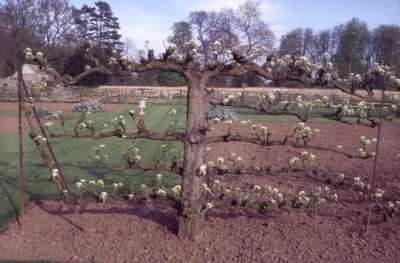
Although today we rarely build walls to fend off unfriendly animals or neighbors, an espalier still might warrant a place in the garden. Read more

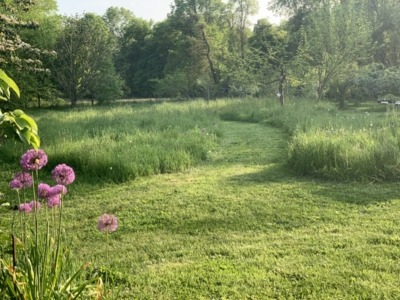
Lush meadow above ground, rich soil below ground

THE TOP OF THE SOIL

Where Roots Like to Roam

“Topsoil” is one of the haziest terms used by gardeners — and by those who sell the stuff. After all, topsoil is nothing more than the top layer of soil.

And what’s so special about this layer of soil? Under natural conditions, topsoil is the most fertile portion of soil. In the forest each autumn, leaves fall on the surface of the ground, where they are digested by soil life to release nutrients and create soil organic matter. In meadows, including prairies, the topsoil each year is similarly enriched by the remains of old roots, leaves, and stems of flowers and grasses.

Lush meadow above ground, rich soil below ground

Lush meadow above ground, rich soil below ground

Read more

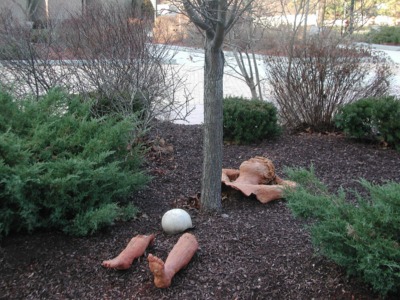
Mulched tree with ground sculpture

TRAVELING PLANTS

Yes, Plants Can Travel Successfully

People often stare at me in disbelief if I suggest buying a certain plant from a nursery 2000 or 3000 miles away. Surely no plant could survive such a journey!

Not so. This time of year, UPS trucks and airplane holds are filled with plants on the move.Mulched tree with ground sculpture

I prefer to buy my plants at local nurseries. But when I want a specific plant, such as a Hudson’s Golden Gem apple tree on G.11 dwarfing rootstock, I have to turn to mail order. (In this case, it would be from www.cumminsnursery.com.)

If shipped from reputable nurseries, mail-order plants thrive as Read more

Hedges need repeated shearing with hedge shears each season

TEN ESSENTIAL PRUNING TIPS

Do It Now (or Soon, Usually)

An ideal time to prune most trees and shrubs is just as their buds are swelling, which is just about now here on my farmden. Leafless stems make it easy to see where to cut, dead stems make their presence known, and with coldest weather past chances for cold damage near cuts are minimized. Warmer spring weather also promotes rapid healing of cuts. 

Whole books have been written about pruning (I even wrote one!: THE PRUNING BOOK), yet the essence of pruning can be distilled into a few general pointers. The ten listed below will not result in an expert pruning job, but offer sufficient guidance to keep you and your plants reasonably happy.

1. Don’t cut unless you have a clear reason to do so. Trees and shrubs vary in their needs for pruning, from, for example, Japanese maple and witch hazel, which need no regular pruning, to butterfly bush and lilac, which need to be pruned every year to look their best.


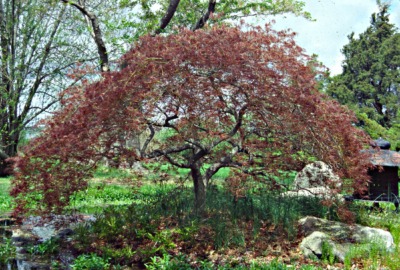
Japanese maple

Japanese maple’s rarely need pruning

Read more

Garden in June

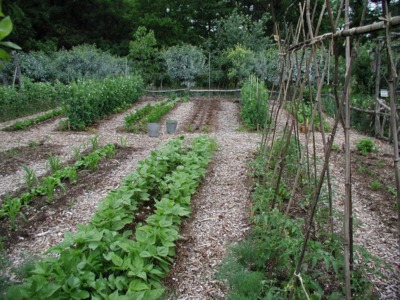
WITH GOOD REASON, FAMILIES MIGRATE AROUND MY GARDEN

(Excerpt from The Ever Curious Gardener: Using a Little Natural Science for a Much Better Garden, available directly from this website, signed, or from the usual sources.)

Who is Coming?

How many families am I having over to the vegetable garden this summer? I have to plan their seating arrangements.

Garden in June

I’m talking about plant families. An example of a plant family is the Mustard Family, known botanically as the Cruciferae, and including among its members cabbage, broccoli, collards, and Brussels sprouts. Their similarly pungent flavors and waxy, bluish leaves might also have earmarked them as being in the same family. Then again, the different parts eaten—the swollen stalks of kohlrabi, the leaves of cabbage, and the flower buds of broccoli— might indicate otherwise. 

Most important in uniting this family, and the primary characteristic that botanically unites members of any plant family, is Read more

Whitefly

THE DARKER SIDE OF TINKERBELL

They’re Cute, Though

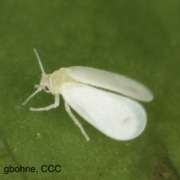
The bugs is comin’! The bugs is comin’! Just as sure as the sun is rising higher in the sky each day, the hope of spring is awakening all sorts of pesky little buggers on houseplants. One by one, they are showing their faces: mites, aphids, mealybugs, scale insects, and white flies.

I’d actually consider whiteflies — the target of today’s hunt — to be cute if they weren’t plant pests. The same surely could not be said for drab mealybugs and scale insects, or for mites, the latter because you can hardly see them at all.Whitefly Read more

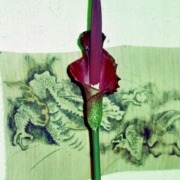
Another relative, this one called Amorphophallus

AND THE REAL SPLIT-LEAF PHILODENDRON IS. . . 

Doppelgangers

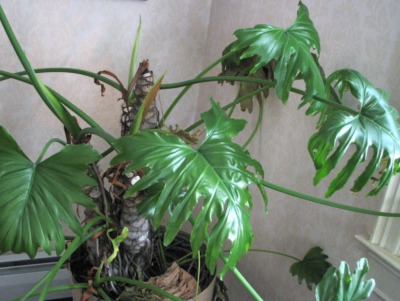
Ask for the real philodendron to stand up and you might be surprised at what plant does not rise. The still-seated plant I’m talking about is Swiss cheese plant (Monstera deliciosa), often called split-leaf philodendron.

Swiss cheese plant is sometimes called split-leaf philodendron, a common name it shares with a true philodendron (Philodendron bipinnatifidum) because both have similar looking, large glossy, incised leaves and aerial roots. Like the real philodendron, Swiss cheese plant also has a hardy disposition within the limitation of being tropical, and tolerates low light, dry air, and neglectful watering as well as do other good houseplants.

Philodendron bipinnatifidum 2

Philodendron bipinnatifidum 

Where the cousins part ways visually is in the “Swiss cheese” aspect of the plants. Read more

Bark of paperbark maple

BARKS OF ANOTHER STRIPE

Even Shrubs (Have) Bark

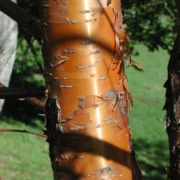
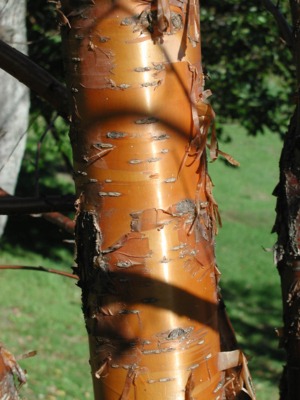
Hear “bark” and I’ll bet “dog” or “birch” comes to mind. Well, foxes also bark, and the cinnamon brown, flaky bark of paperbark maple is every bit as eye-catching as is the more talked about chalky white bark of birch. Winter is a wonderful time to appreciate plants’ bark.Bark of paperbark maple

Shrubs never develop trunks thick enough to be swathed in broad expanses of bark, yet a few of them do have notable bark. Read more

Grapefruit chimera, illustration from my book Fruit: From the USDA Pomological Watercolor Collection

MYTHOLOGY COMES ALIVE!

[The following is excerpted from my book The Ever Curious Gardener: Using a Little Natural Science for a Much Better Garden, available from the usual sources or, signed, directly from me at leereich.com/books.

Chimeras That Are Not Frightening

The chimera of Greek mythology was a scary, fire-breathing creature that was part lion, part goat, and part dragon, and feasted on humans. Although Bellerophon killed that chimera, some still exist today. Perhaps there’s one in your backyard, even in your house!Drawing of mythological chimera monster

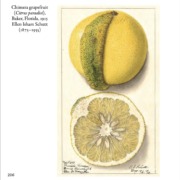
A chimera is a composite creature, a genetic mosaic, and such creatures exist in the plant world. Don’t expect to find red apples dangling from marigold stems or gardenia blooms unfolding against backdrops of poinsettia leaves. Plant chimeras never are as genetically diverse as that lion, goat, and dragon combo. Nor are they as physically diverse, a plant usually broadcasting that it is a chimera only with splotches or lines of color different from the surrounding color of the leaves, flowers, or fruits.

A chimera might originate by design, more usually by chance. Read more

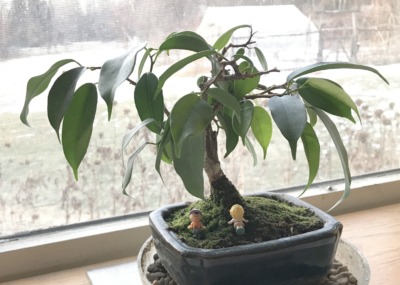
My bonsai, 7 years old

MINIATURE LANDSCAPE CARE

[The following is excerpted from my book, The Pruning Book, available, signed, directly from me as well as from the usual sources.]

Refreshening Soil

Suppose you’ve just created a bonsai plant, or you’ve just bought one, or been gifted one: Does the plant need further pruning? Most assuredly, yes! Bonsai need regular pruning both above and below ground throughout their life. The frequency of pruning depends on just how fast the particular kind of tree or bush grows, the size of the pot, and the growing conditions.My bonsai, 7 years old

Roots eventually fill the soil in a small, bonsai pot, so root-pruning is needed to make room for fresh soil. Root-prune deciduous bonsai in early spring or late autumn, evergreen bonsai in early spring or late summer. Read more