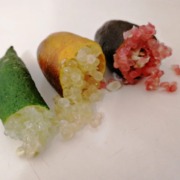
Colorful finger limes

ALL FOR A SLICE OF PIE

The Real Thing

This time of year, a slice of Key lime pie is the next best thing to walking along a beach in the Florida Keys. Okay, not the next best thing, but good eating anyway. Hold on a minute, though, before beginning your gustatory journey; the supermarket is not the place to begin.

What you are most likely to get at any market is a Persian lime (Citrus × latifolia), a hybrid of Key lime and lemon), and this kind of lime lacks the unique and potent aroma of a genuine Key lime (Citrus × aurantiifolia). Persian lime is more cold-hardy and less seedy than Key lime, and has a longer shelf life. Even commercial lime pies are sometimes made with Persian limes, one reason why a pie from a bakery or a slice in a restaurant might miss the mark in flavor.
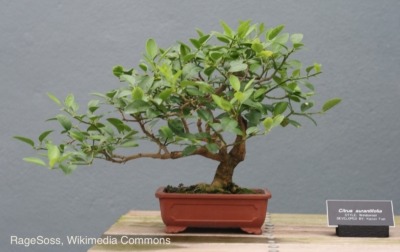
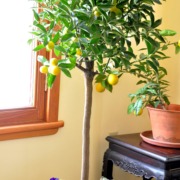
Bonsai Key lime tree

Bonsai Key lime tree

You probably now suspect — and rightly so — that I’m going to suggest that you grow your own Key limes. Do it, but watch out Read more


Jumanji

JUMANGI!!!

The “True” Jimangi

Back in 1995, Robin Williams starred in a rather bizarre movie, Jumangi. The rhinoceroses charging through the living room and the crazed, great white hunter caused more terror than did the bizarre plant that kept threatening Robin Williams. After all, rhinoceroses and great white hunters, even crazy ones, are real enough, but that plant surely had to be no more than a moviemaker’s fantasy. Well, let me tell you, that odd looking plant bore an eerily strong resemblance to a real plant.

Jumanji

Jumanji

Read more

Macrocarpa, wintergreen planted as ornamental, Bryn Mawr

A WELCOME TOUCH OF GREENERY

Beauty, Beer, and Aroma

What more hopeful way to go into winter than with a plant named wintergreen? Wintergreen. The word conjures up an image of lush greenery against lily white snow, a congenial juxtaposition of the living and the nonliving, both pristine.

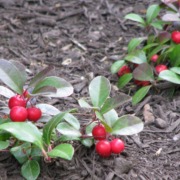
Wild wintergreen in Maine

Wild wintergreen in Maine

If the word wintergreen brings to mind, instead, a refreshing aroma or flavor — yes — that’s the same plant. Oil of wintergreen has been used as flavoring for teas and beers, both alcoholic and nonalcoholic, as well as straight up, as a leafy nibble. The plant’s berries also provide a nibble, one that might make you start moving your feet. Wintergreen is also known as teaberry, the flavoring in a chewing gum that was featured in popular TV advertisements in the late 1960s that showed the gum inducing a jiglike dance, the “teaberry shuffle,” to a catchy tune. Read more

Cabbage kin

UGLY WORD, NICE PLANTS

What’s a Variety

Mmmmm, how I like to bite into a cultivar. And look at the beautiful petals of a cultivar. And admire the autumn foliage of a cultivar.

A “cultivar?” What an ugly word for a plant with so many qualities.

Actually, a cultivar is any cultivated variety of plant. Get it? “Cultivated variety” contracts to “cultivar,” a word that was originally conjured about 100 yers ago, then codified  in the International Code of Nomenclature for Cultivated Plants (ICNCP) in 1959. Some horticulturalists, myself included, avoid the word. As I wrote, the word is just too ugly.

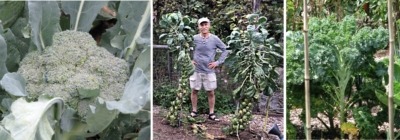
Cabbage kin

Brassica oleraceae var. botrytis, B. oleraceae var. gemmifera (with Homo sapiens), and B. oleraceae var. acephala.

Before the word “cultivar” was invented, gardeners used the word “variety,” but some people objected Read more

Kumquat

THIS CITRUS HAS IT ALL

Botanical Mumbo Jumbo, but it’s Still a Kumquat

Cold and snowy winters agree with me just fine. Still, as a gardener, my mouth waters and my hands itch to be able to pluck ripe citrus from a home-grown tree in winter. It can be done, as attested to by all the potted calamondin orange trees now basking in sunny windows.

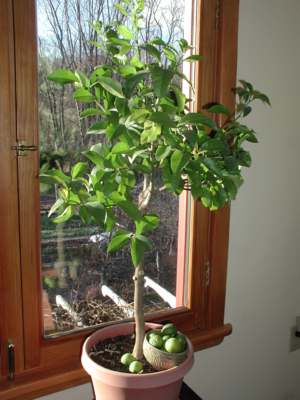
As pretty as calamondin trees are, their fruit is barely edible, if that. What I want is a citrus plant that also bears edible fruit. Oranges and grapefruits are possibilities, but let’s admit it: a four-foot high citrus tree festooned with a few large, colorful fruits thoroughly lacks grace. Lemon and lime fruits are better proportioned to an indoor plant, and have the advantage that a single fruit of either goes far in the kitchen.Lime tree in pot

The citrus that offers the most mileage as a potted plant is kumquat. Read more

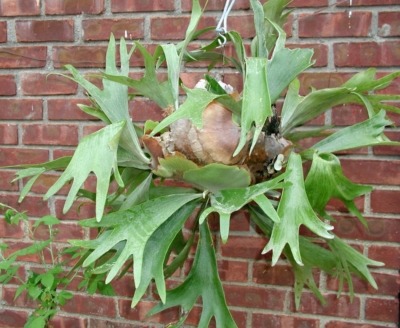
staghorn fern

GIFTS FOR GARDENERS

Duh…A Plant, But What Plant?

December is a low point in the gardening year, but a high point in the year for giving gifts. A felicitous way to raise that gardening low point is with a gardening gift. What might be a good gift for a gardener?

Most obvious would be a plant. After four decades of growing and buying plants, I, for one, still get a thrill when opening a box with a new — for me — plant in it.

staghorn fern

Staghorn fern

Still, there are ho-hum plants, plants that have their qualities but just aren’t going to elicit any surges of excitement from me. Read more

White footed mouse

MOUSEY THREATS AND SOLUTIONS

Food and Lodging

Mice have been seeking bed and board, all to the detriment of us gardeners. Already their devilish deeds are evident in the gnawed bark at the base of a poor little apple tree that I planted in spring.

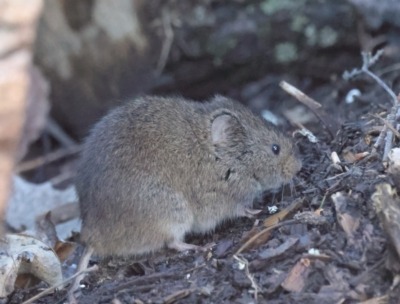
There are a few kinds of mice, and the meadow vole (Microtus pennsylvanicus) — also known as the meadow mouse or field mouse — is most at home in tall grass. There, this rodent finds food and a place to nest and scamper about shielded from the hungry eyes of hawks, owls, weasels, skunks, and other predators.

Unfortunately, from fall to spring, meadow voles like to supplement their usual diet of grasses and herbs with the bark of trees. My trees! Your trees!

Meadow vold

Meadow-vole, Cephas, Attribution-Share-Alike-4.0-International.jpg

Inhospitality

The first line of defense against meadow voles, then, is to create an environment inhospitable to them. Read more

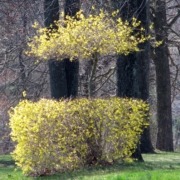
Interesting and unique pruning of forsythia

BUSH RESCUE

Let the Plant Express Itself

“I brake for butchered plants.” Perhaps that’s what the bumper sticker on my car should read, because I did almost slam on my brakes last week to try and save a forsythia bush — a whole row of them, in fact — from being butchered. An obviously well-intentioned guy was attacking the bushes on his front lawn with loppers. 

A few things were wrong with this scene. Read more

Growing breadcrumbs

STUFFED

Grow Your Own Stuffing

Thanksgiving is a time of year when one’s thoughts naturally turn to . . . stuffing. No, not stuffing yourself, but stuffing a turkey. Even many people who choose not to eat turkey on Thanksgiving nonetheless do enjoy stuffing themselves with stuffing.

So why not think about what ingredients for stuffing can be reaped from the garden? Even better, how about setting aside a little portion of the garden next year as a stuffing garden?

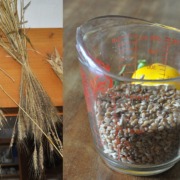
The bread and butter of any stuffing is some starchy food, often bread and butter itself, the bread usually as crumbs. There’s no breadcrumb plant, so forget about growing breadcrumbs. Not that you couldn’t buy some wheat “berries” at a health food store, plant them next spring, harvest the grain when the plants dry down, thresh and winnow out the berries, grind them into flour, make the flour into bread, then let the bread go stale and pound it into bread crumbs.

Growing breadcrumbs

Growing breadcrumbs– I did it once!

Read more

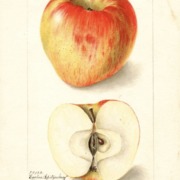
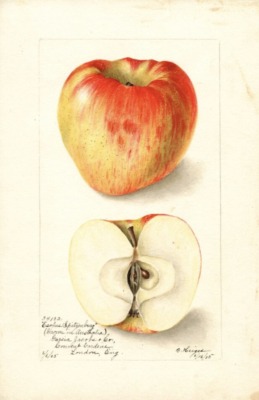
Spitzenberg apple watercolor

ONE OF THE GREATEST APPLES

Ol’ TJ was Spot On

Thomas Jefferson was right: Spitz is one of the greatest. Apples, that is. Esopus Spitzenberg, to use the variety’s full name, was the variety that T.J. preferred over all others from his Monticello orchard. And soon it will be coming into perfection here. Or, I should say “would be coming into perfection here.”

That was years ago, when I grew Spitz.

This time of year, back then, the fruits would not be still hanging from the branches. Read more