
MOUSEY THREATS AND SOLUTIONS
Food and Lodging
Mice have been seeking bed and board, all to the detriment of us gardeners. Already their devilish deeds are evident in the gnawed bark at the base of a poor little apple tree that I planted in spring.
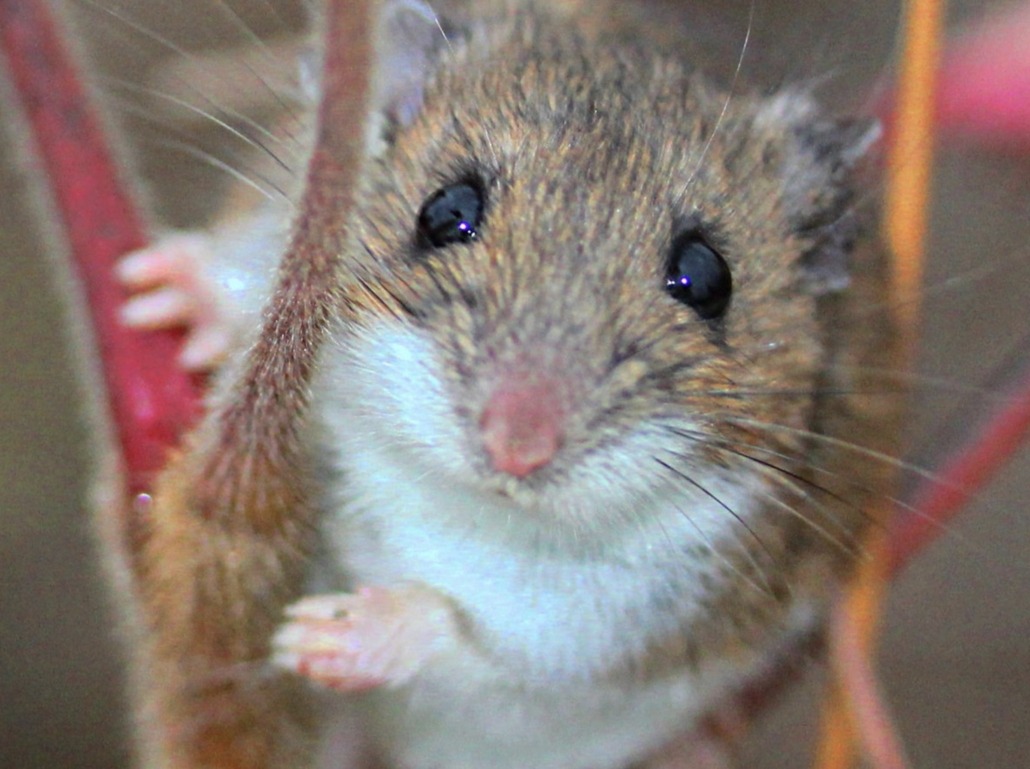
There are a few kinds of mice, and the meadow vole (Microtus pennsylvanicus) — also known as the meadow mouse or field mouse — is most at home in tall grass. There, this rodent finds food and a place to nest and scamper about shielded from the hungry eyes of hawks, owls, weasels, skunks, and other predators.
Unfortunately, from fall to spring, meadow voles like to supplement their usual diet of grasses and herbs with the bark of trees. My trees! Your trees!
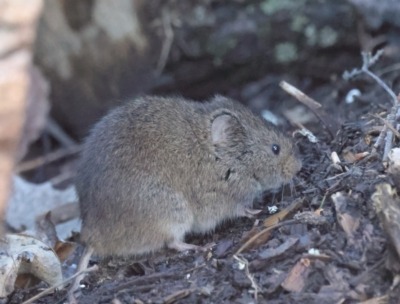
Meadow-vole, Cephas, Attribution-Share-Alike-4.0-International.jpg
Inhospitality
The first line of defense against meadow voles, then, is to create an environment inhospitable to them. I do this by mowing as late and as closely as possible, especially the lawn surrounding my apple and pear trees, both of which mice seem to find particularly tasty. I once saw one of my ducks snatch a mouse as it scampered across the grass; the duck tipped its head back and the mouse slid down its throat.
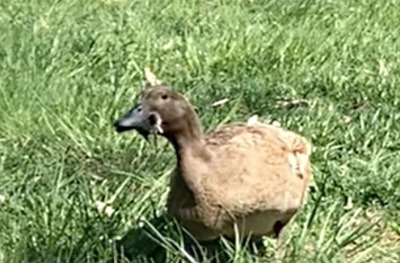
Duck dining on mouse
There are always a few mice with enough derring-do to scoot across my mowed DMZ, so further protection is needed — at least for those trees that are young or that mice find most appealing. A two foot high cylinder of half-inch mesh hardware cloth, with its bottom forced into the soil, provides good protection even if it is somewhat tedious to cut and put in place.
More convenient to use are plastic or metal wraps sold specifically for protecting trees in winter.
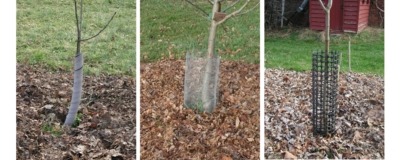
Three ways to protect young trees from mice
Meadow voles are mostly vegetarians, although they occasionally will chomp down on an insect, snail, or, especially when populations are dense, other voles. Still, painting the lower bark of trees with white latex paint, diluted by half with water, to which some bone meal has been added usually keeps them at bay. (The white paint lets me see where I’ve painted and reflects sunlight in winter to prevent bark splitting from large swings in temperature following sunset on cold winter days.)
My efforts to thwart bark-eating mice do not stop here. A thick mulch of straw, leaves, or some other organic material is ideal for the soil and plants, but also provides cozy lodging for mice. So, if possible, I hold off spreading these mulches until about now, by which time mice should have found other places in which to settle in for the winter.
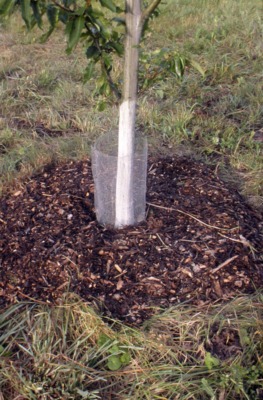
Well-dressed tree, ready for winter
And I never pile any mulch right up against a tree’s trunk, or I’d be giving mice easy food and lodging. I leave a mulch-free ring around and a few inches away from the base of the trunk.
Other Mice
Meadow voles are probably the worst mouse culprits in the garden this time of year. House mice (Mus musculus) might also do some damage, but, of course, would prefer to feed and live in our houses. In contrast to meadow voles, they will eat just about anything.
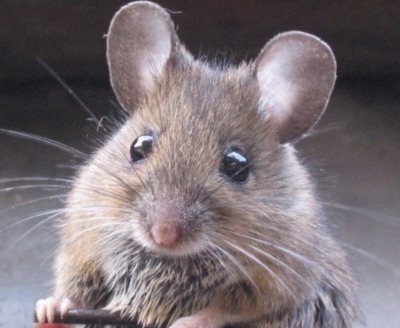
House mouse; Rasbak; Creative-Commons-Attribution-Share-Alike-3.0.jpg
Deer mice (Peromyscus maniculatus) feed mostly on seeds, berries, nuts, and insects, so are off the hook for now. Woodlands are more to their liking; they often nest in hollows of trees. And they don’t tunnel beneath the snow like meadow voles.
You might point an accusing finger at moles (Talpidae spp.) for plant damage this time of year.
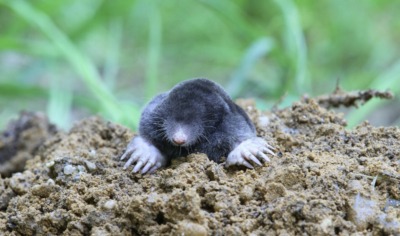
Mole
Don’t. Although taking an occasional nibble at bulbs, moles are mostly carnivores. If you’re going to fault them for anything, fault them for feasting on earthworms, and for lending mice occasional use of their tunnels. Meadow vole runs are at the ground surface; moles tunnel below ground.
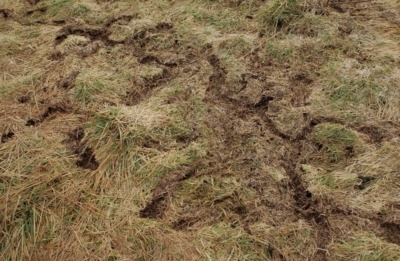
Meadow vole tunnels, J.-Barton-Creative-Commons-Attribution-Share-Alike-2.0.jpg
Large front feet with prominent digging claws make moles easy to distinguish from any of the mice.
Fecund Threat
A single meadow vole can bear many litters per year (17 in one case!) of 5 babies each, and the other mice are similarly fecund. Fortunately, infant mortality and death from many natural causes is high. When mouse populations soar, more heroic control measures are needed, including trapping, even poisons.
All these real-life creatures might look as endearing as Mickey Mouse, but don’t be lulled. They are cute in real life, especially deer mice (Peromyscus maniculatus) and the related white footed mice (P. leucopus), both with their white bellies and oversize eyes and ears. But in addition to damaging plants, mice also are carriers of such diseases as lymphocytic choriomeningitis, salmonellosis, campylobacteriosis cryptosporidiosis, hanta virus, Lyme disease, tuleremia, and babiosis.
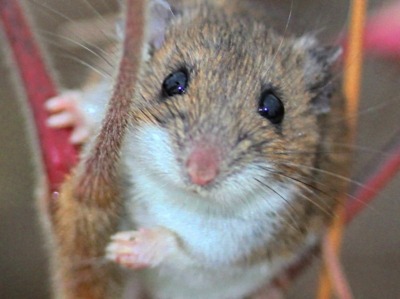
White-footed mouse, Peterwchen-Creative-Commons-Attribution-Share-Alike-4.0.jpg



I wish you wouldn’t recommend poison. It’s a horrible, prolonged death for them. Also, if consumed by another animal, the poison is transferred to that animal. This happens with raptors – owls for example. It’s altogether a bad idea, and certainly inhumane. Spring traps are really the most humane option.
Thanks,
Pia
I’m not sure how prolonged the death is with poison but it probably depends on the poison. My poison of choice is ziinc phosphide. It’s quick acting and breaks down to zinc ion and phosphine gas, the latter of which just adds phosphorous to the soil in the same form as from fertilizer or breakdown of organic compounds. The important thing is to be very, very careful that it isn’t accessible to nontarget animals or humans.
Our daughter who lives in N.C. battles voles that eat the roots, rather than the bark, of her plants and baby trees. Our most expensive battle with mice in Minnesota has been the damage they do to wiring in one of our trucks. They seem to have a special fondness for Chevrolets. The ‘flip top’ mouse buckets work well for catching some of the little critters.
My ‘flip top’ mouse buckets seem only to work sporadically. Fortunately, we don’t own a Chevrolet.
I appreciated the practical prevention angle here, especially the emphasis on making the surrounding habitat less inviting before damage starts. The difference between meadow voles, deer mice, and other small rodents is also useful context because prevention is easier when people know what signs they are actually looking at. I maintain Hantavirus Tracker, a public-source timeline project at hantavirustracker.com, and this kind of rodent-prevention discussion fits the public-health side of the work without turning it into medical advice. Clear sanitation, exclusion, and monitoring habits are easy to underestimate.