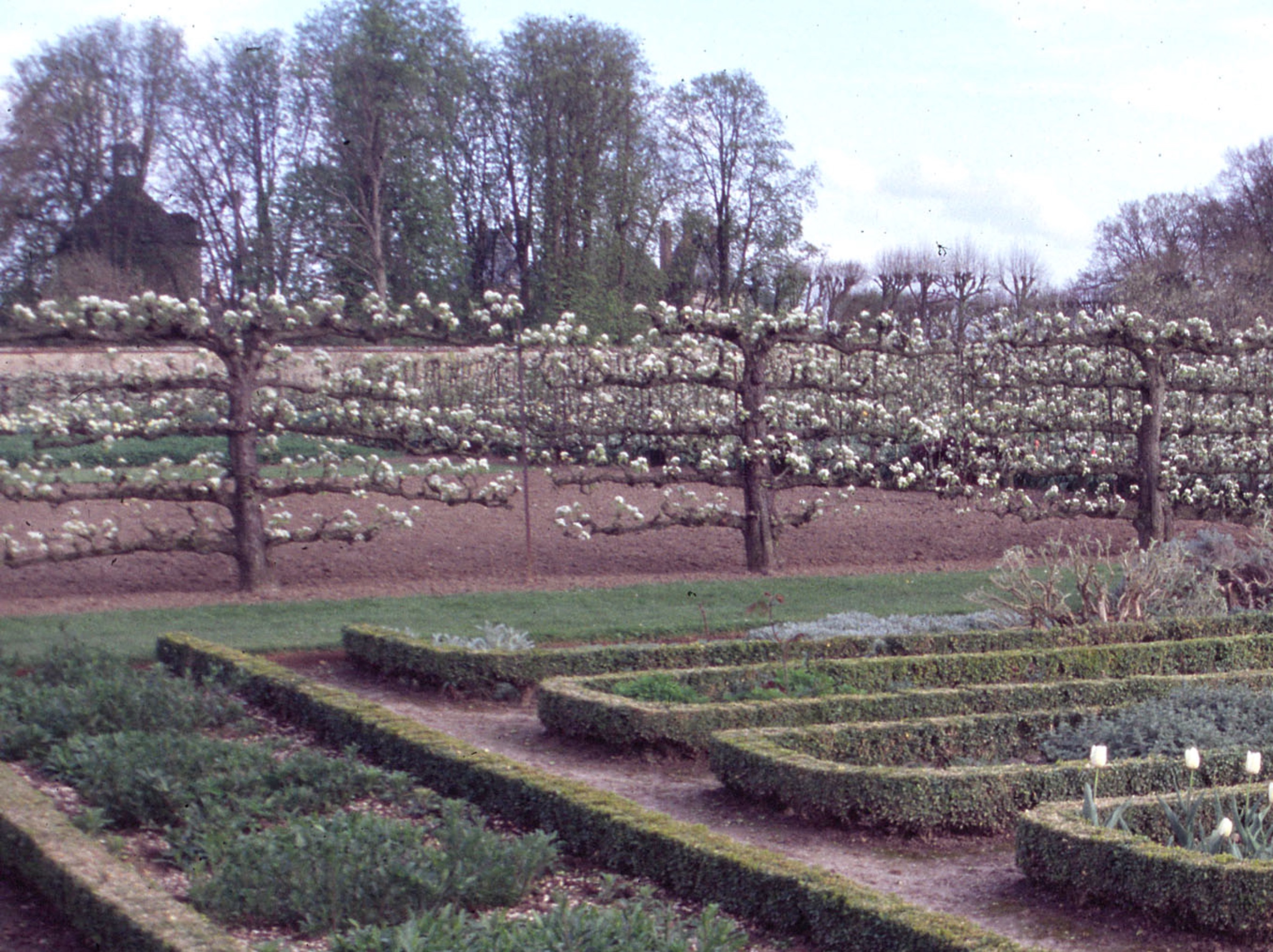
Espalier in Normandy, France

FORM & FUNCTION MEET WITH ESPALIER

Espalier Goals

Espalier (es-pal-YAY) is the training of a plant, usually a fruit plant, to an orderly, two-dimensional form. The word is derived from the Old French aspau, meaning a prop, and most espaliers must, in fact, be propped up with stakes or wires. This method of training and pruning plants had its formal beginnings in Europe in the 16th century, when fruit trees were trained on walls to take advantage of the strip of earth and extra warmth near those walls.
Espalier in Normandy, France

Espalier in Normandy, France

Why go to all the trouble of erecting a trellis and then having to pinch and snip a tree frequently to keep it in shape? Because a well-grown espalier represents a happy commingling of art and science, resulting in a plant that pleases eyes and, if a fruit plant, also palates. You apply this science artfully (or your art scientifically) with manipulations such as pulling exuberant stems downward to slow their growth, by cutting notches where stems threaten to remain bare, and by pruning back stems in summer to keep growth neat and fruitful.  Read more
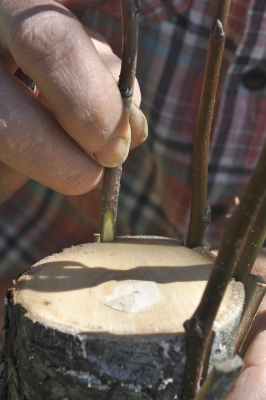
Slitting bark of rootstock

HENRY THE EIGHTH OF HORTICULTURE

How to “Make” a New Tree

Visitors to my garden this time of year are often astonished to see me lopping the tops off some of my trees. No, I’m not the Henry the Eighth of horticulture, chopping the head off any tree that no longer meets my fancy. Okay, I AM actually lopping the head off any tree that doesn’t meet my fancy.

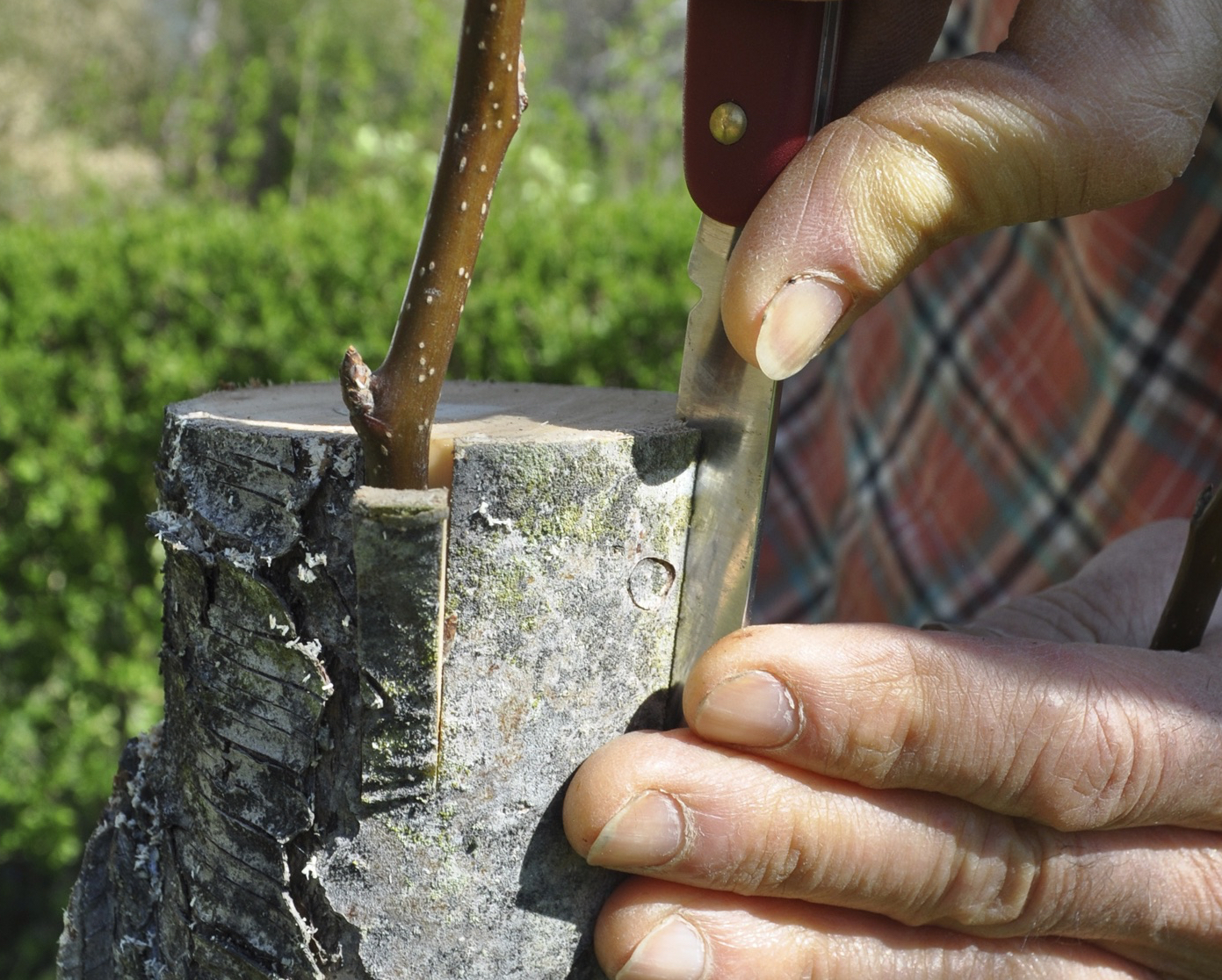
I part ways with Ol’ Henry, though, because, first, lopping the head off a tree doesn’t kill it and, second, I graft on a new head. (Something Henry could not do.) A few years after this seemingly brutal operation, the tree looks as chipper as ever. And it has a head that I like better — or else off it comes again.Inserting scions for bark graft

I do this type of grafting, called topworking, mostly on my pear trees, but it could equally be applied to many other kinds of fruit or ornamental trees. Read more

Tulips in a vase

DEER FOOD

Big Bulbs Uneaten

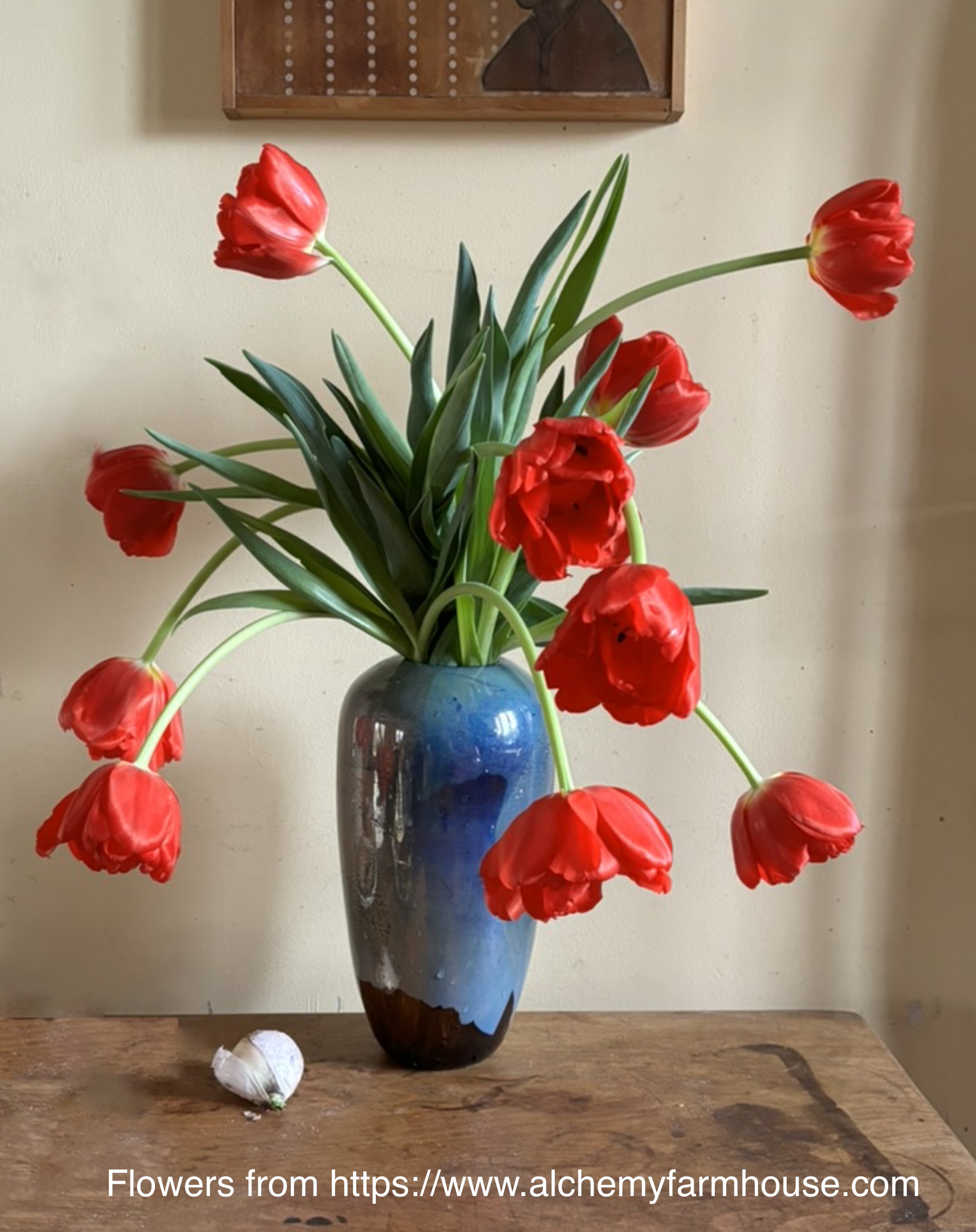
Chomping down on a rosette of freshly emerging tulip leaves is just the thing to drive away winter’s doldrums — for a deer. Tulips in a vaseCrocuses probably taste almost as good to these creatures. There’s no need, though, for you or me to forsake the blossoms of spring bulbs; plenty of plants don’t appeal to deer palates. Read more
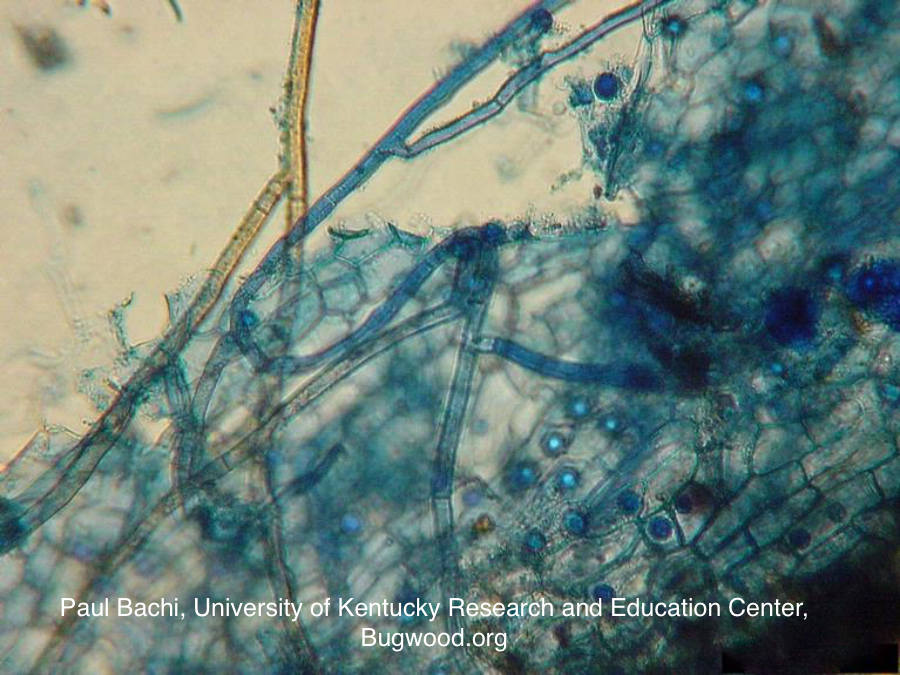
Rhizoctonia damping off

DAMN-PING OFF

Worse than Roman Warriors

I made my first gardening enemies decades ago, within a few weeks of starting my first garden. Not other gardeners but — and perhaps you also have crossed paths with them — with Pythium, Rhizoctonia, and Fusarium. I quickly learned that they were, or should be, hateful not only to me but to all gardeners.

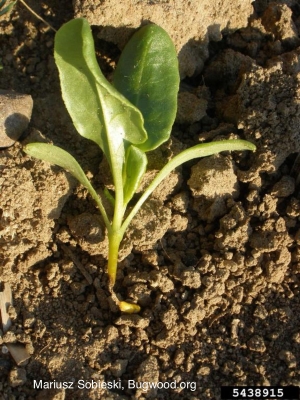
Pythium, Rhizoctonia, and Fusarium are not ancient Roman warriors; they are fungi and, worse than Roman warriors, they lurk everywhere. When they, or one of them, gets the upper hand they cause damping off disease.Beet seedling damping off

Let’s return to my first garden: At the time, decades ago, I was living in a relatively dark apartment, a converted motel room, and was eager to start my first seedlings. I sowed all sorts of seeds in peat pots, stood them in a little water, then crowded them together on all the shelf space that could be mustered.

Young sprouts never appeared in some of the pots. In others, seedlings emerged, then toppled over, their “ankles” reduced to a withered string of rotted cells unable to support the small plants physically or physiologically. Read more

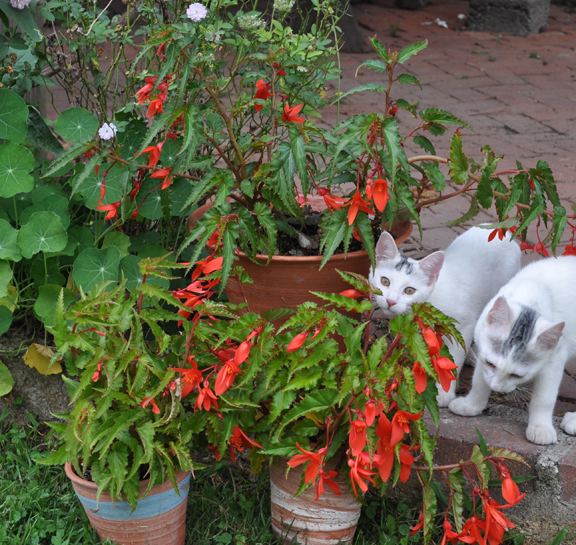
Cats with potted begonias

IS REAL SOIL GOING TO POT?

What’s in Your Mix?

That potting soil that you’ve bought for your seedlings and houseplants? It probably has no REAL soil at all in it. Real soil is just too hard to obtain in reliable and uniform quantities for commercial packaging. Soilless mixes, as commercial potting soils are (or should be) called, are a mix of some kind(s) of organic materials along with some aggregate, with possible additions of fertilizer, ground limestone, and a wetting agent.Cats with potted begonias

Organic materials in these mixes help sponge up water and cling to nutrients that might otherwise wash down and out of the pot. Peat moss is the organic material traditionally used in soilless mixes. Although it holds water well, it’s initially hard to wet, which is why wetting agents are sometimes added to soilless mixes. Read more

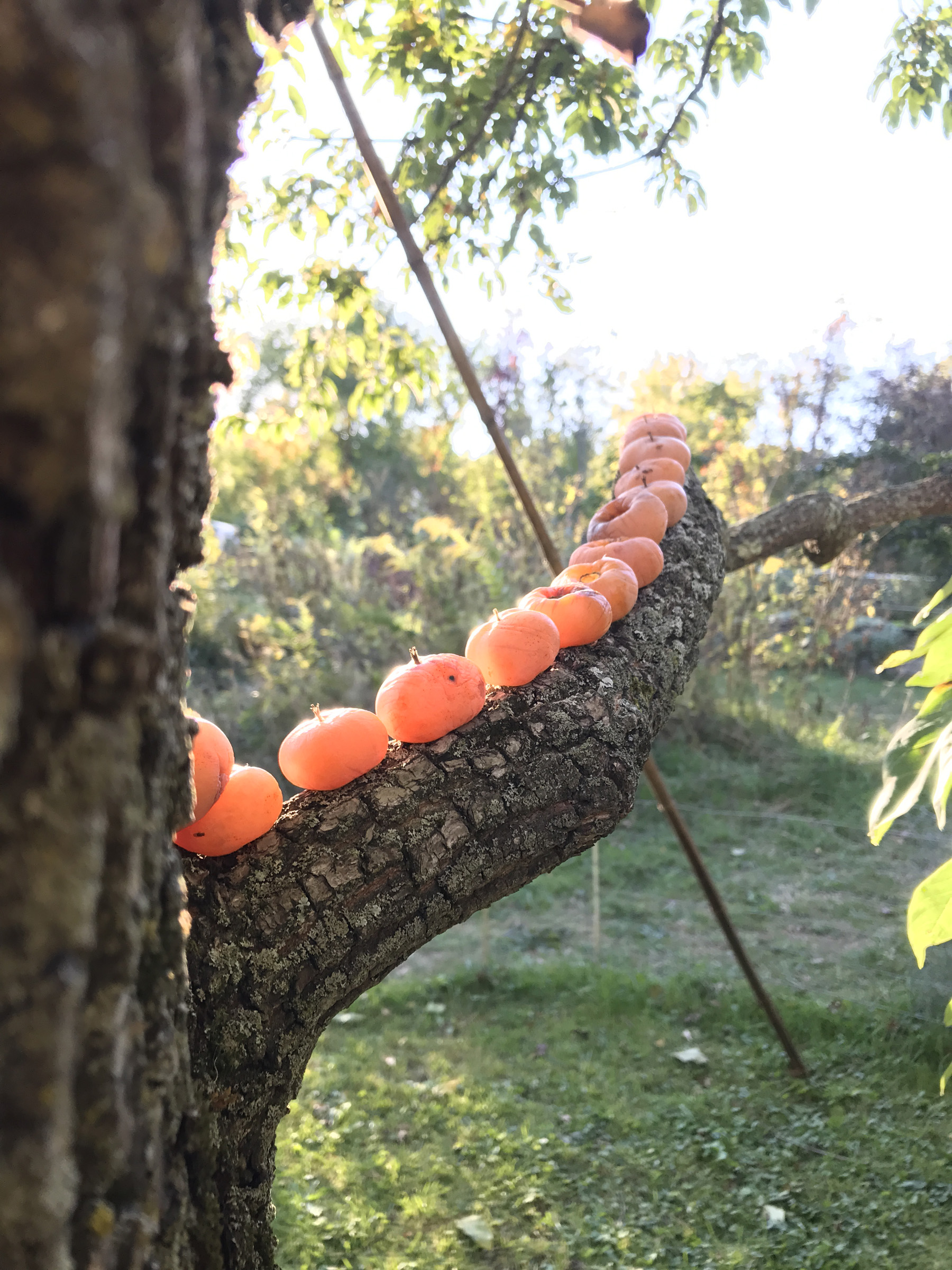
Persimmons (not growing) on a branch

HAVE YOUR “CAKE” AND EAT IT, TOO

Take a Moment for Forethought

Luscious photos now splash pages of mail-order catalogs, the web, and plant tags at local nurseries. It’s hard to remain rational about planting this time of year, and more so the colder the last winter’s climate.

What I’m suggesting is to give plantings some forethought and, rather than looking for either ornamental or edible trees and shrubs, considering plants that fulfill both functions. That is, trees and shrubs that earn their keep year-‘round with leaves that remain lush and verdant all summer, then light up with fall color, and, of course, bear fruit, and perhaps unfold with eye-catching blossoms in spring.

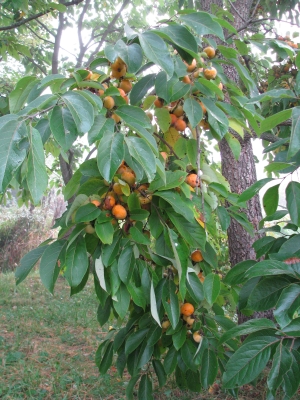
Persimmons ripening

Persimmons ripening

Lots of trees and shrubs fill this bill, but here I’d like to restrict consideration to fruits that I would pop into my mouth right out in the garden; doctoring up as jam or in a pie is not obligatory.  Read more

Raised beds

SOIL PREP

Universal Plant Needs

Although garden plants hail from all corners of the world, they have surprisingly similar soil requirements — best attended to before planting. Simply put, most garden plants need soils that are well-supplied with air (yes, roots must breathe!), water, and nutrients. And one other important ingredient, organic matter (sometimes called humus), that witch’s brew of living and once-living organic materials in various states of decomposition that, in addition to contributing to the just-mentioned needs, also includes a friendly microbial community for optimum plant health.

Aeration must be the first consideration, since plants are unable to utilize nutrients, even in fertile soils, if roots lack access to air. There are two causes for waterlogged soils: either the water table is too high, bringing water up from below; or the soil has pores so small that they cling by capillary action to too much water that falls from above.

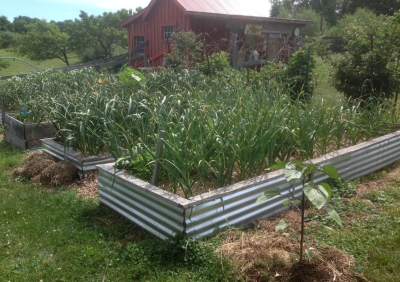
Deal with a high water table by either choosing another site for planting, by raising roots above the water table, or by lowering the water table. Growing plants in raised beds is the way to bring roots above a water table. Raised bedsBuild beds high enough to take the roots up out of the water, and wide enough so they don’t dry out too quickly. Read more
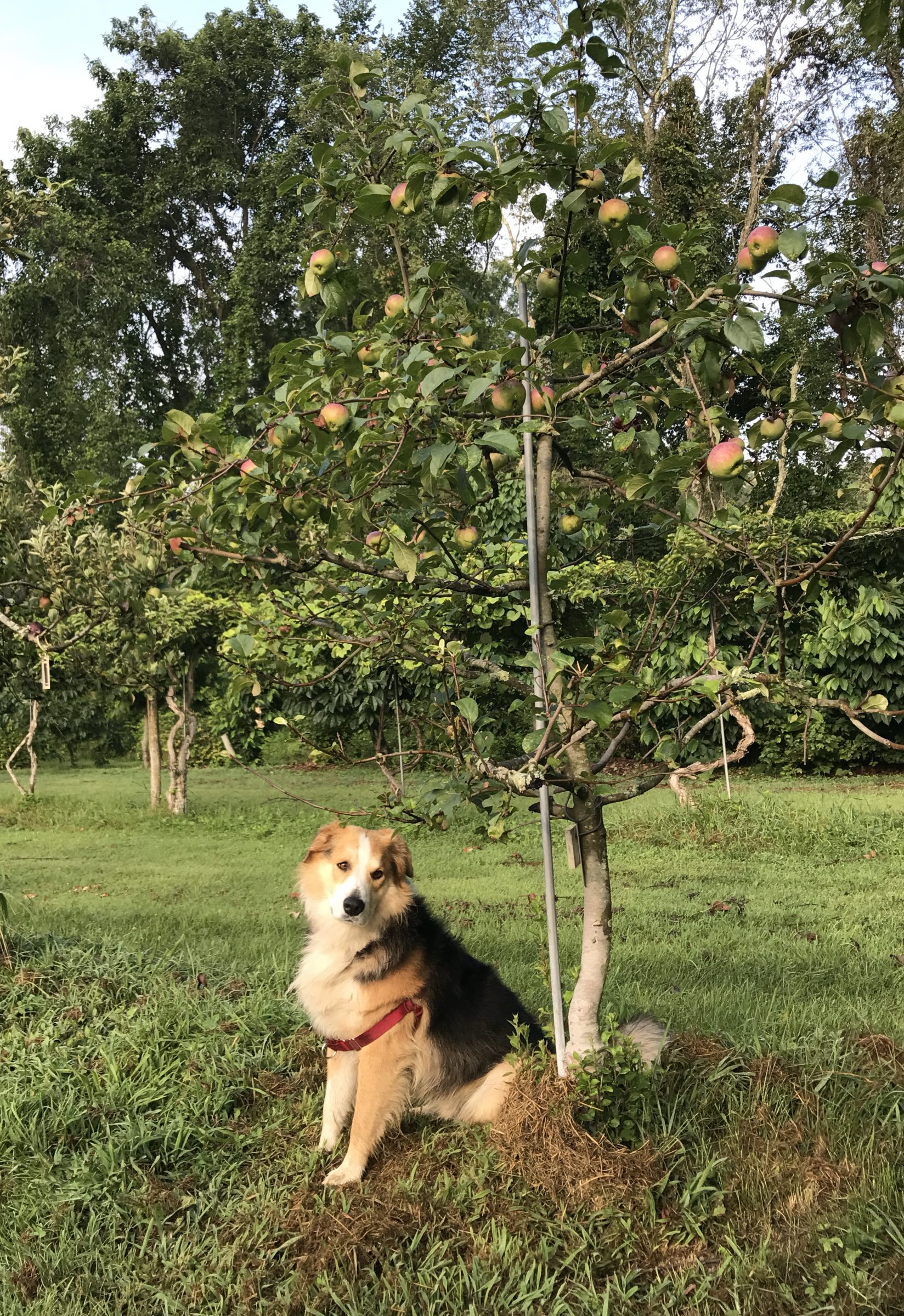
Dwarf Liberty apple tree & Sammy

CLEAN APPLES, EDIBLE APPLES

Popular Though They May Be . . .

Apples may be a common fruit, second worldwide and in the U.S., bested only by bananas, but they surely are not the easiest ones to grow. At least not over much of this country east of the Rocky Mountains, and here on my farmden. Throughout this area, insects and diseases are ready to pounce on virtually every unsuspecting apple tree.

Pesticides will control these pests but, if needed, are effective only if used rigorously: trees must be regularly and thoroughly doused with the correct material, used at the correct concentration, and applied at the correct times. No wonder the average gardener is daunted at the thought of growing apples!

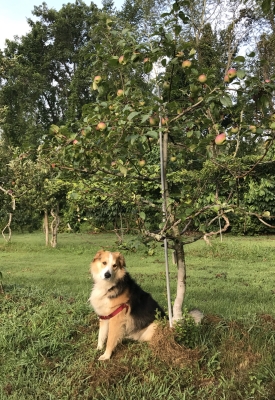
Dwarf Liberty apple tree & Sammy

Dwarf Liberty apple tree & Sammy

The prospects for backyard apples, organic apples, even in pest-prone regions brightened a few decades ago. Not all apple varieties are equally susceptible to diseases, and apple breeders went to work. Read more

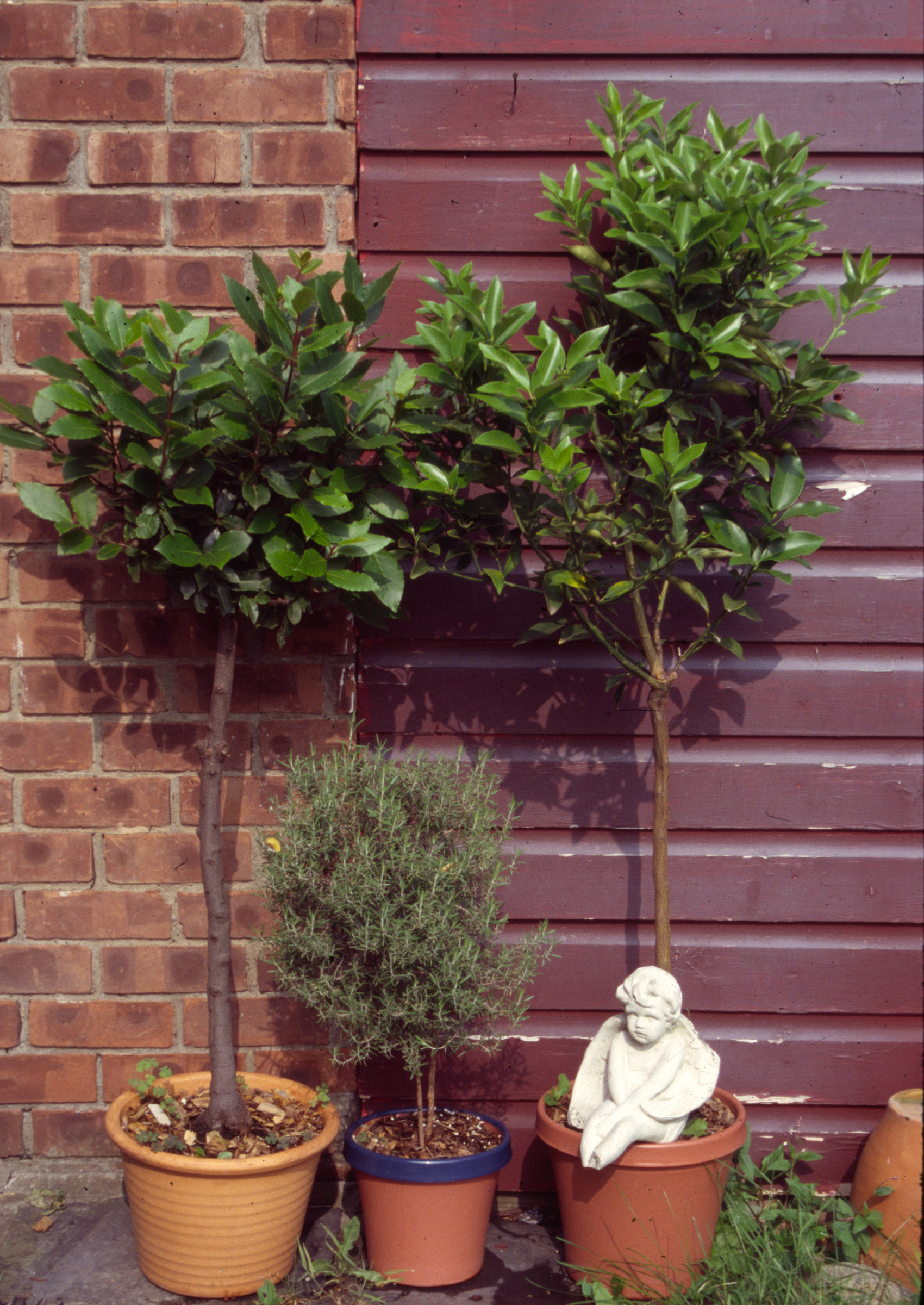
Standard bay, rosemary, kumquat

RDS (ROSEMARY DEATH SYNDROME) SOLVED?

Lack of Water Could Be the Cause

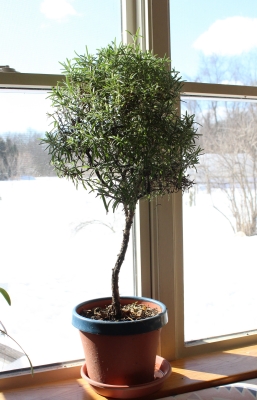
Looks like I’ve done it again. Killed rosemary, the plant. Worse than that, I’ve killed two rosemary plants. And even worse still, drawing on my experiences killing numerous rosemary plants — perhaps you also have killed one or more — I’ve been dispensing my “expertise” on how not to kill rosemary.Rosemary with winter background

My reasoning went like this: Although native to the generally dry climate of the Mediterranean region, roots of rosemary plants in the ground there can reach far and wide in their explorations for water. Not so for rosemary plants that need to live in pots here, where winters are too cold for them outdoors.

To make matters worse, rosemary’s stiff, needle-like leaves don’t signal that the plant is crying out from thirst by wilting. Read more

PLOTTING ALONG

Possible Sources of Anxiety

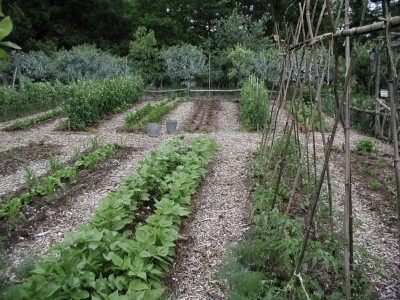
Especially in years past, I would get a little tense this time of year, because sometime soon I would have to sit down and map out the year’s vegetable garden. As usual, ideas have been bouncing around inside my head for the past few weeks, but the day must come — before April 1st, my date for planting peas — when procrastination must bow to action.Vegetable garden with trellis

When that time comes, I gather together on the kitchen table printouts of the empty beds in my two vegetable gardens, a sharpened pencil, and notes and plans of gardens past. After taking a deep breath, my first order of business, planning for crop rotation, begins. The theory: Plant no vegetable in the same spot sooner than every third year. The rationale: A garden pest might survive the winter to bother the same plant the following year . . . unless the plant happens to be growing elsewhere, in which case the pest starves and dies.

Pests usually are equally fond of all plants in a plant family, so I won’t grow tomatoes, peppers, eggplants, or potatoes (nightshade family) at the same location without waiting three years. Read more