Cherry blossoms

HAPPY BIRTHDAY GEORGE

Was He a Bad Boy?

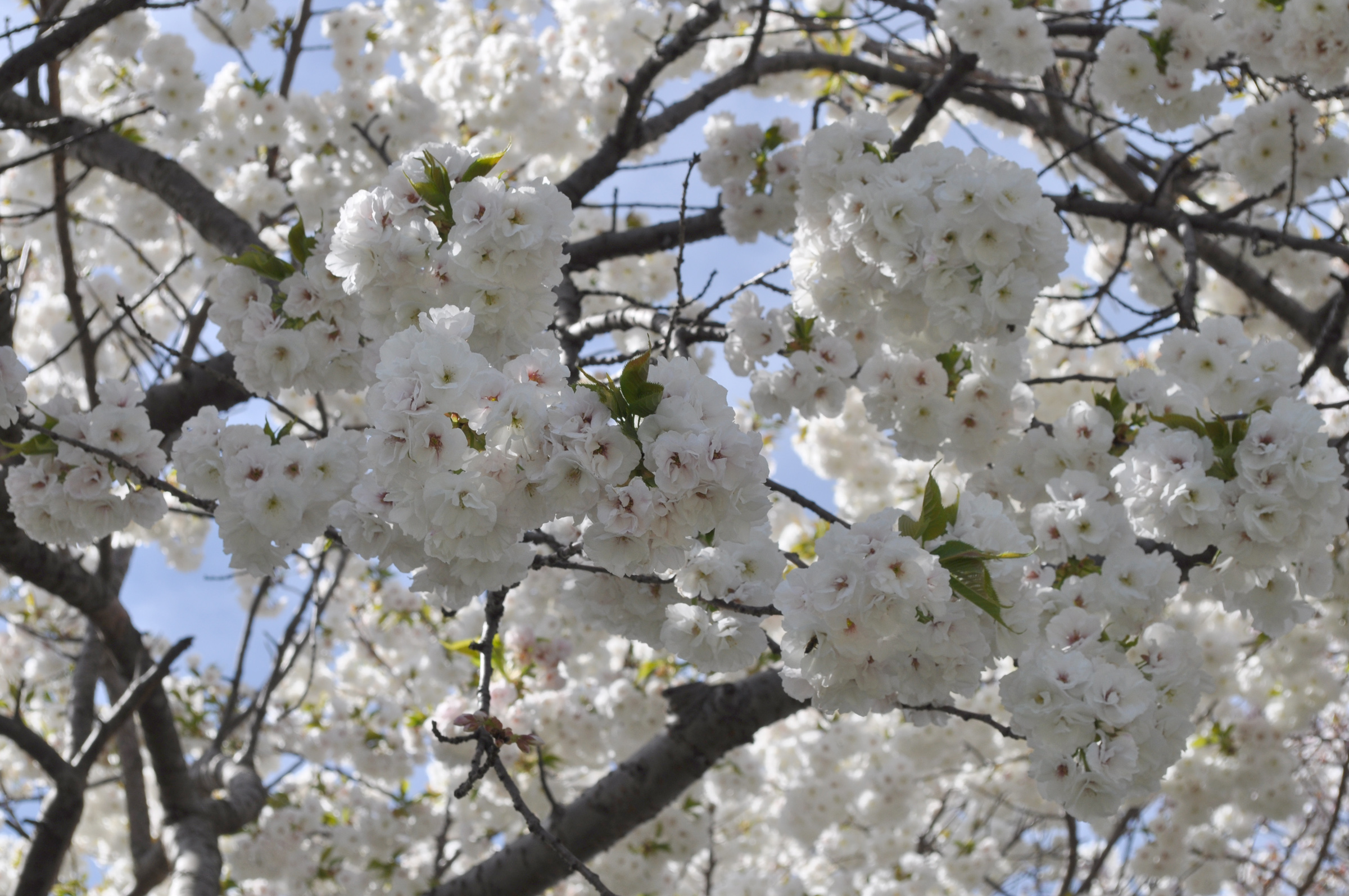
Washington’s birthday is a proper time to think about cherry trees. Rather than question whether or not George did chop down the tree, and whether or not he had the honesty to admit to the act, I wonder what kind of a cherry it could have been. (The story, incidentally, is apocryphal, having been fabricated by Mason Locke Weems for his 1802 book, Life of George Washington; With Curious Anecdotes, Equally Honorable to Himself and Exemplary to his Young Countrymen. “Parson” Weems also wrote of Washington throwing a silver dollar across the Delaware River).

That cherry tree could very well have been something akin to the sweet cherries we can buy or grow today. Sweet cherrySweet cherries (Prunus avium), sometimes called bird cherries or, in their more wild state, mazzard cherries, were amongst the plants ordered from Europe by the Massachusetts colony in 1629. By 1650, there was a cherry orchard in Yonkers, New York, and before the end of that century, there were plantings in Rhode Island, Maryland, and Virginia. Trees became so abundant that in 1749, Peter Kalm wrote that “all travellers are allowed to pluck ripe fruit in any garden which they pass by, provided they do not break any branches; and not even the most covetous farmer hindered them from so doing.” So it is not unlikely that Papa Washington had a few sweet cherry trees planted at his farmstead along the shores of the Rappahannock River.
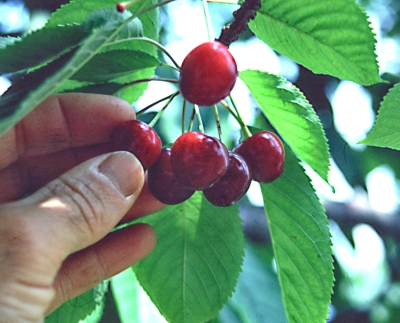
That abundance of cherry trees and cherries is interesting because here in the Hudson Valley, in Eastern US in general, sweet cherries are not an easy crop. Read more
Pruning kiwi

OUT TO PRUNE, WITH WHAT?

Pruning (Book) Perks

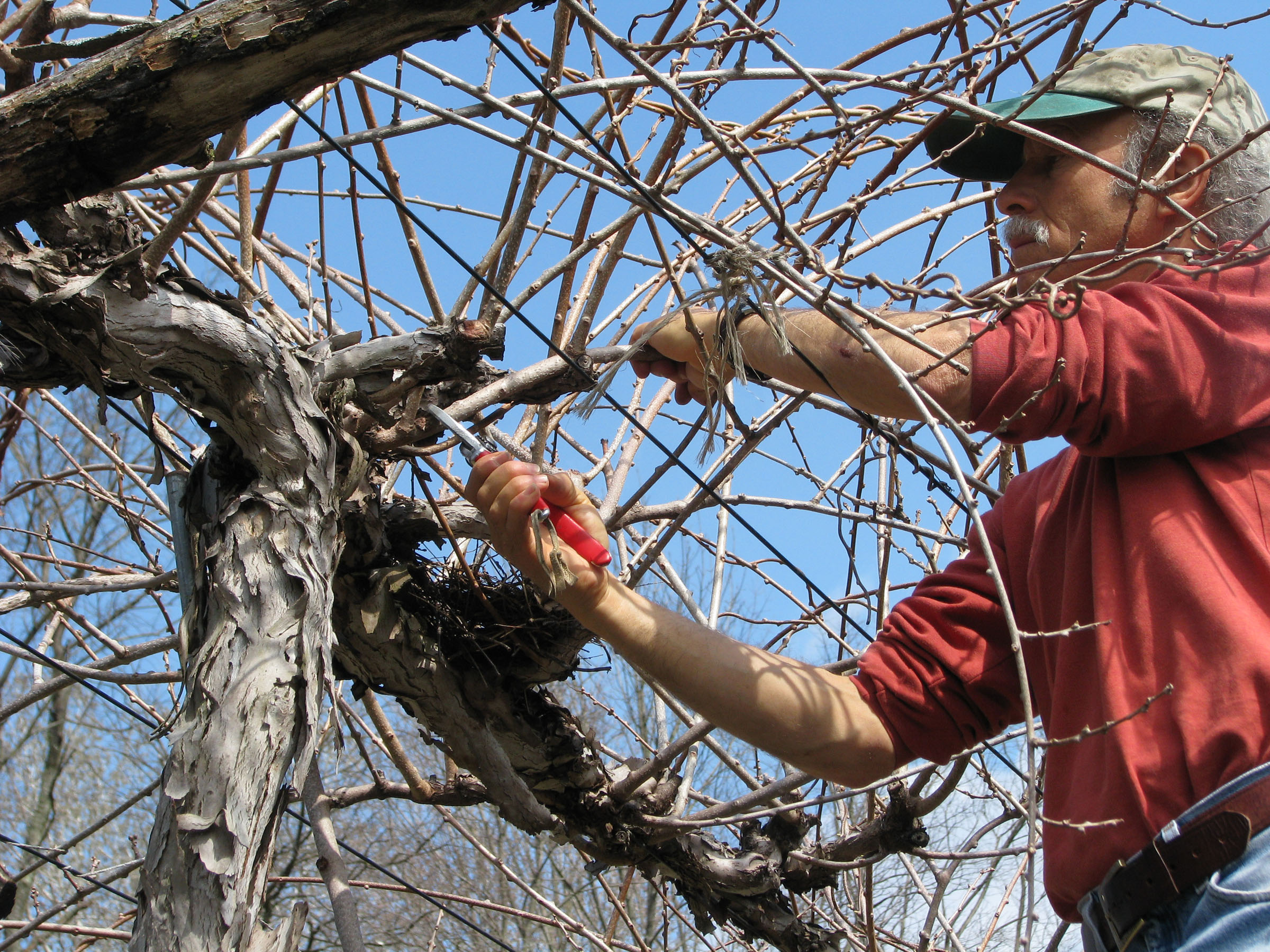
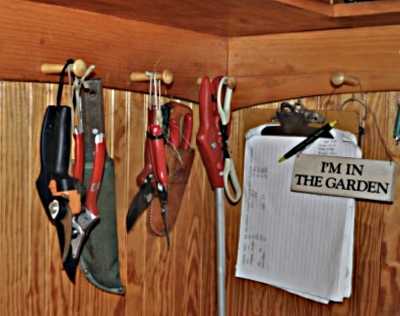
One perk of writing a book about pruning (The Pruning Book) is that, in the months after publication, I kept getting gifts in the mail, gifts in the form of pruning tools to try out. The pruning shears hang on a row of wooden pegs near my back door, loppers hang on pegs in the garage, and hand saws fill a five gallon bucket. All the big-name brands are represented, from ARS to Bahco to Corona to Felco to Fiskars to Silky. With many models of each brand of tool at my fingertips, it’s easy to know which ones I like the best. They’re the ones for which I reach most frequently.Pruning shears hung up

With the coldest part of winter behind us (and even that not very cold), it’s time for me to start pruning. A sunny day with temperatures in the 40s makes pruning an enjoyable excuse to be outdoors. Into my leather holster, which came with the shears, goes my ARS hand pruning shears. Sometimes, if I need to cut stems that are a bit beefier, I’ll grab instead my Felco shears. Or, for lighter pruning, my Pica shears. Those are my three favorites. All are excellent although the ARS shears have the edge for me.

But that’s me. As they say, “Your results (preferences) may differ.” Read more

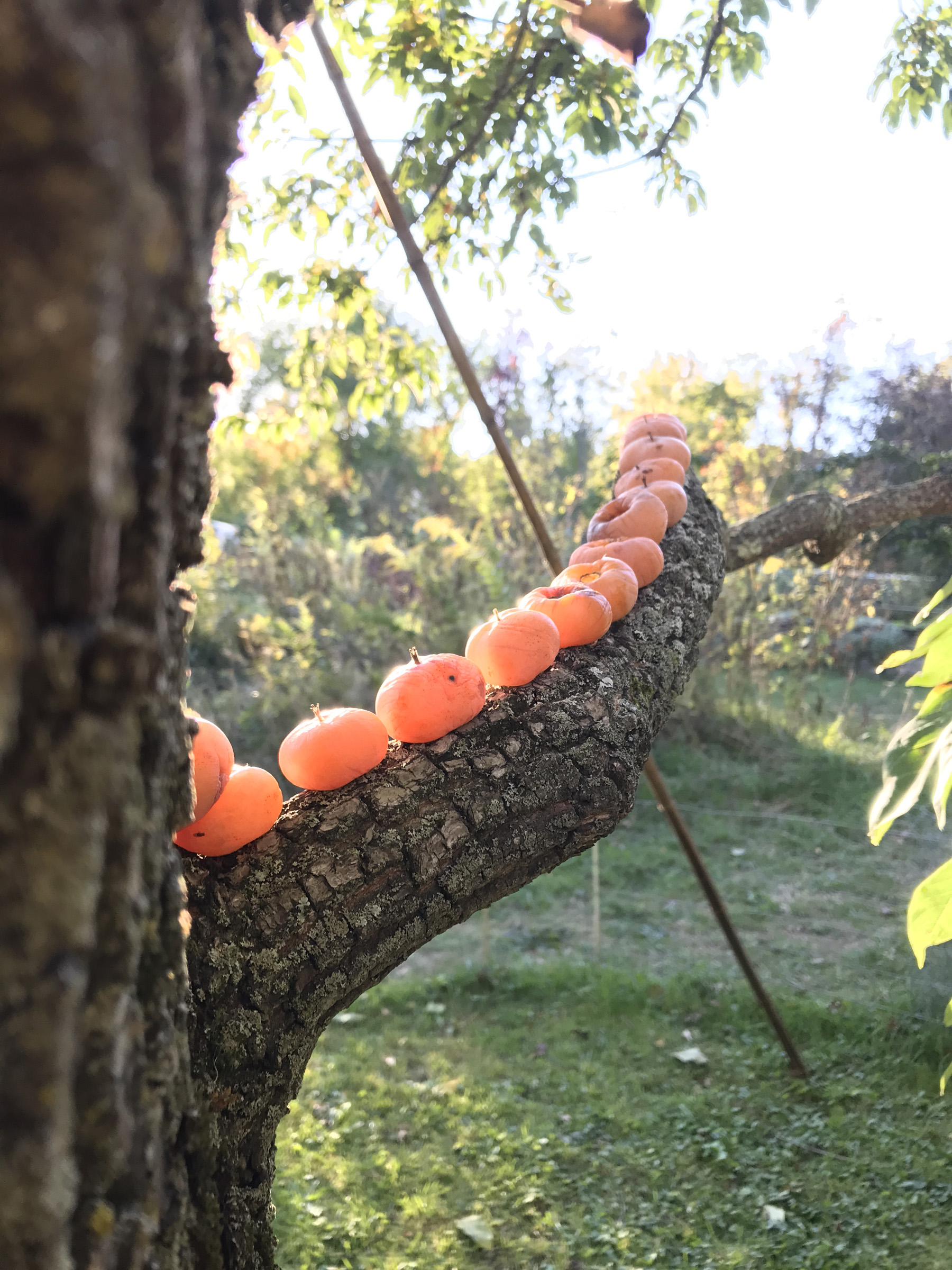
Persimmon fruit perched on branch

FRUITFUL THOUGHTS

Watch for Road Blocks

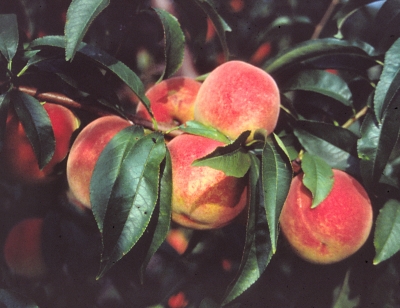
If you’re considering growing fruits, good idea. You’re probably dreaming about, in a few years, being able to reach for a ripe red apple, a peach, a cherry, or a plum from a fruit laden branch. To a large degree depending on where you garden, you could be paving the way for disappointment. Insect and disease pests, and specific pruning needs, are potential road blocks for many of the more common fruits. Peach fruit on branch

Yet, luscious fruits plucked from a backyard plants are such a delicacy. What else but a fruit could have tempted Adam and Eve? Fortunately, many fruits need only a minimum amount of care. What follows are easy-to-grow fruit plants, grouped into three categories, from the very easiest to the “hardest easiest.”

Easiest Peasiest

The first category includes plants that you merely set in the ground, then come back in a couple of years for the first of many years of harvest. Well, almost nothing else to do. You may recognize in this category some plants commonly grown as ornamentals. Read more

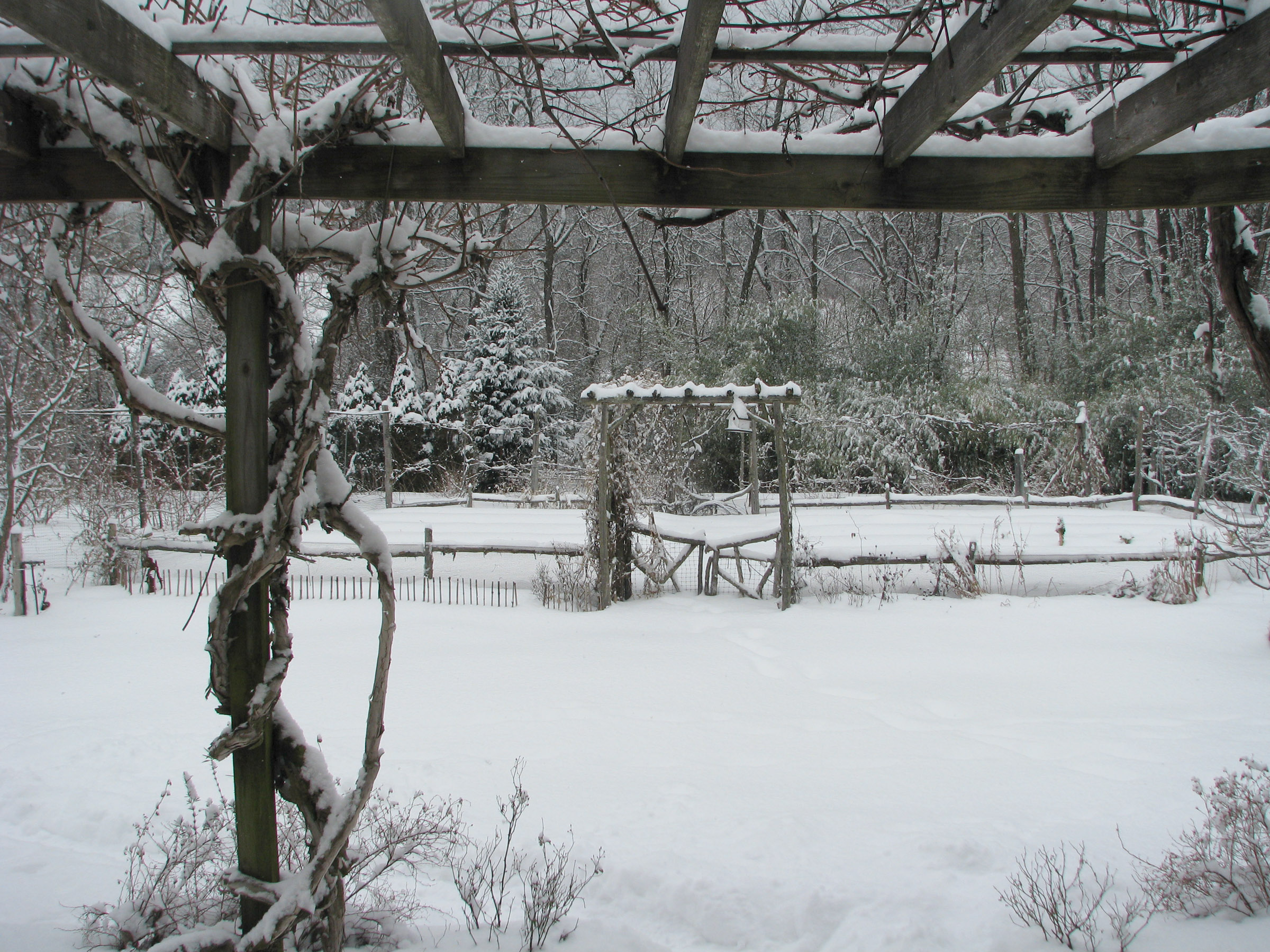
Winter view from indoors

THE GARDEN IN WINTER

Forming Relationships

This may sound crazy but even this far north, winter isn’t a bad time to admire the garden. With leaves and flowers a memory of the past season and a hope for the coming season, the garden is reduced to its bare bones. Not that the wintry scene need be dull or bleak. Good bones give structure to the landscape, knitting it together in some places, dividing it up in others, framing vistas, and providing firm footing for the eyes (figuratively) and feet (literally). Even now.

Three-dimensional forms are what give structure to a landscape. A house usually is the most obvious mass jutting up into space on a property. Too often it’s the only structural element, feebly tied to the landscape with some gumdrop-shaped junipers or yews standing, as if guarding, the foundation.

Winter view from indoorsI have effected a relationship between my yard and my house by building a grape arbor out from the rear wall, then enclosing the ground beneath this arbor with a brick terrace (my house is also brick) edged with a low hedge of potentilla. Similarly, the stone wall supporting what previous were slopes at the front and side of my house flow into the landscape with a contiguous stone wall sweeping out across the yard. Read more
Poncirus Flying Dragon with fruits

ORANGES IN NY’S HUDSON VALLEY, OUTDOORS

Frightening, Beautiful, Edible

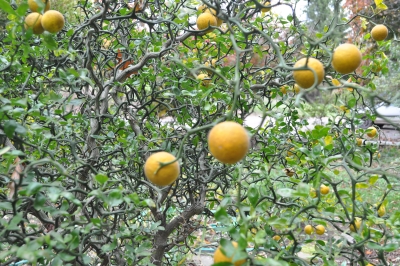
Right now, my hardy orange tree might look at its finest, standing at the head of my driveway against a pure white, snowy backdrop. An orange tree!? Outdoors with a snowy backdrop?! Okay, in all honesty, it’s a bush, not a tree. But it is an orange plant, and it does survive into Zone 5 outdoors. (Temperatures plummeted to 2° F a week ago, and coldest temperatures typically arrive around the end of this month.)

Botanically, the plant was Poncirus trifoliata. I write “was” because a few years ago, this citrus relative was welcomed closer into the citrus fold, with a new official name, Citrus trifoliata. Not all botanists recognize this closer kinship, and insist on keeping the plant in the Poncirus genus.

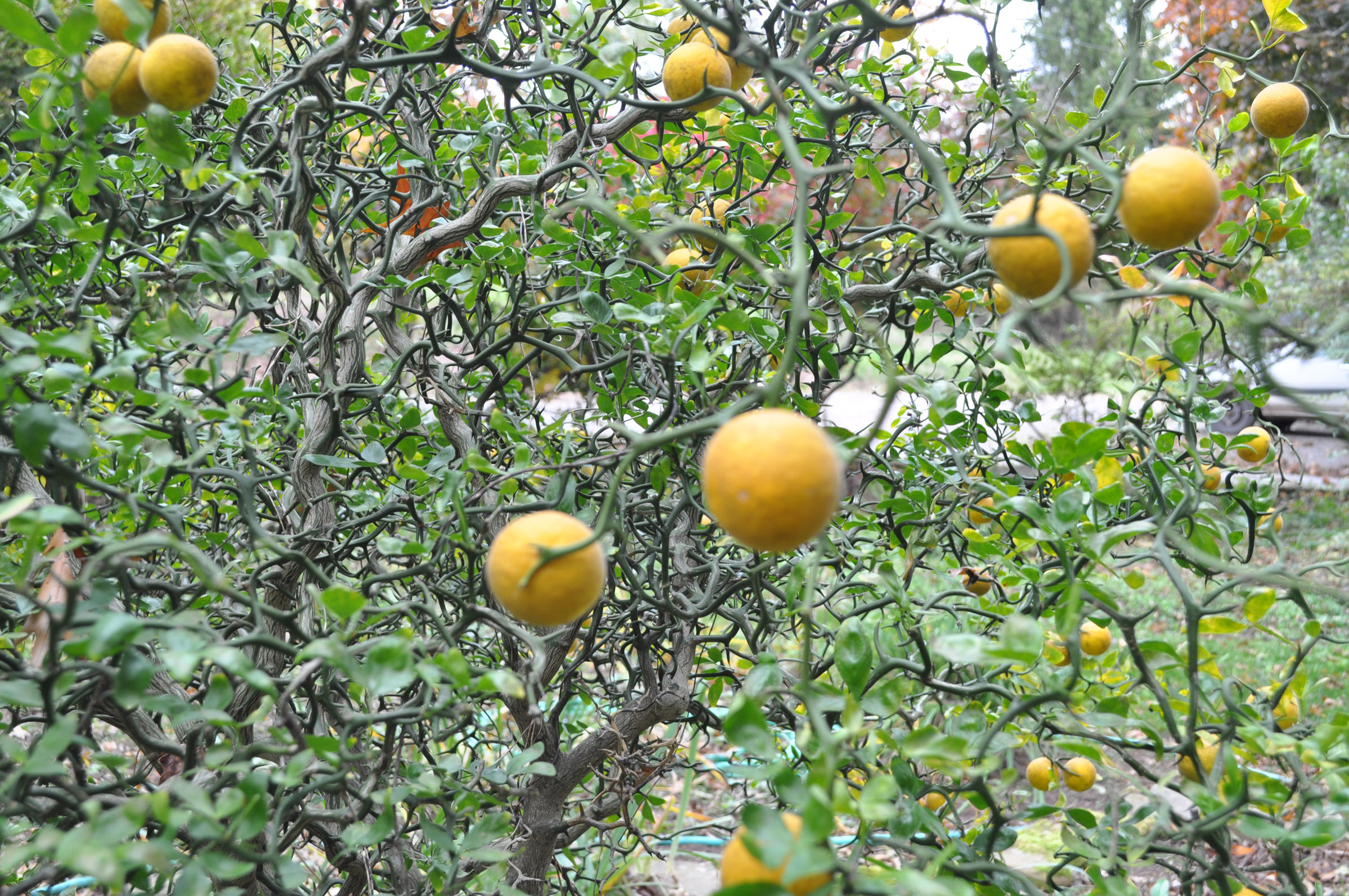
The kinship of hardy orange with other citrus is obvious from its glossy, forest green leaves, the sweet (but very slight) aroma of its flowers, and its fruits, which are pale orange. Poncirus Flying Dragon with fruitsThe fruits are edible but I wouldn’t bite into one; the flavor is orangish, but also sour and bitter. Perhaps I’d squeeze the pulp to add a hint of citrus flavor to some other cooked fruit or a baked good. Perhaps not.
What I like best about this plant are its stems, which are most evident now, when bared in winter. Read more

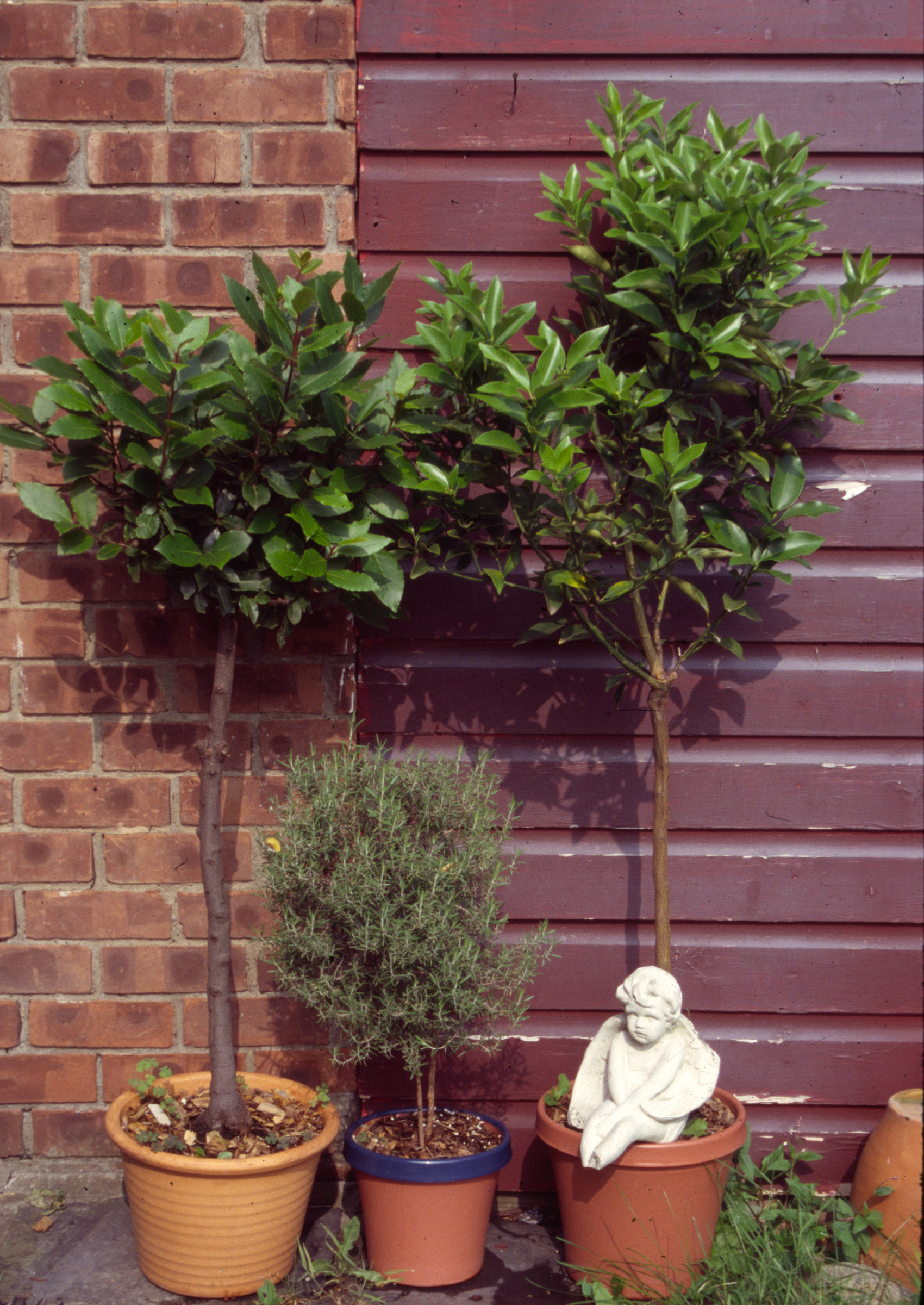
Standard bay, rosemary, kumquat

GARDEN FRESH, STILL

Good Only in Theory?

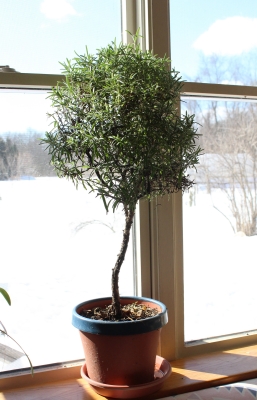
The idea has merit: flowerpots of flavorful herbs decorating windowsills and providing savory additions to meals through the winter. A good part of last season’s garden is packed in the freezer and glistening jars of canned tomatoes line shelves in the basement. The greenhouse is offering a steady supply of lettuce, arugula, and other salad greens.Rosemary against a snowy backdrop

Still, I’m beginning to miss garden-fresh vegetables. Sprinkling some fresh chives on a pan of roasted potatoes might infuse the whole dish with freshness.

The problem is that chives doesn’t thrive on a windowsill, unless the windowsill is very, very sunny. Chives will grow well through the winter with artificial light, but that means a bank of lights permanently poised a few inches above the leaves — so much for the rustic charm of indoor potted herbs. And maybe my taste buds are dulled, but when I snip chives to add to a dish, I take a handful. The plant would need at least a few weeks to recover sufficiently to withstand another harvest.

The same could be said for growing parsley indoors; after each picking, you have to wait too long for another.

I haven’t thrown up my hands at the possibility of growing culinary herbs indoors through the winter. I just have to be very selective in what I grow. Any such herb must pack a lot of flavor into each leaf, survive well indoors, and look pretty. I offer at least two candidates: rosemary and bay laurel. Read more

Banana plant in summer

YES, WE HAVE NO BANANAS (title of 100-yr-old song)

I Receive a Giant Teardrop

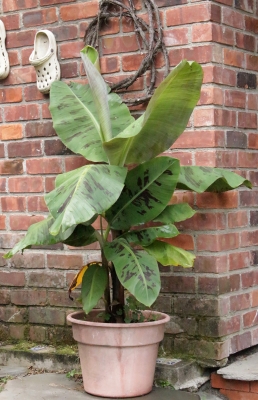
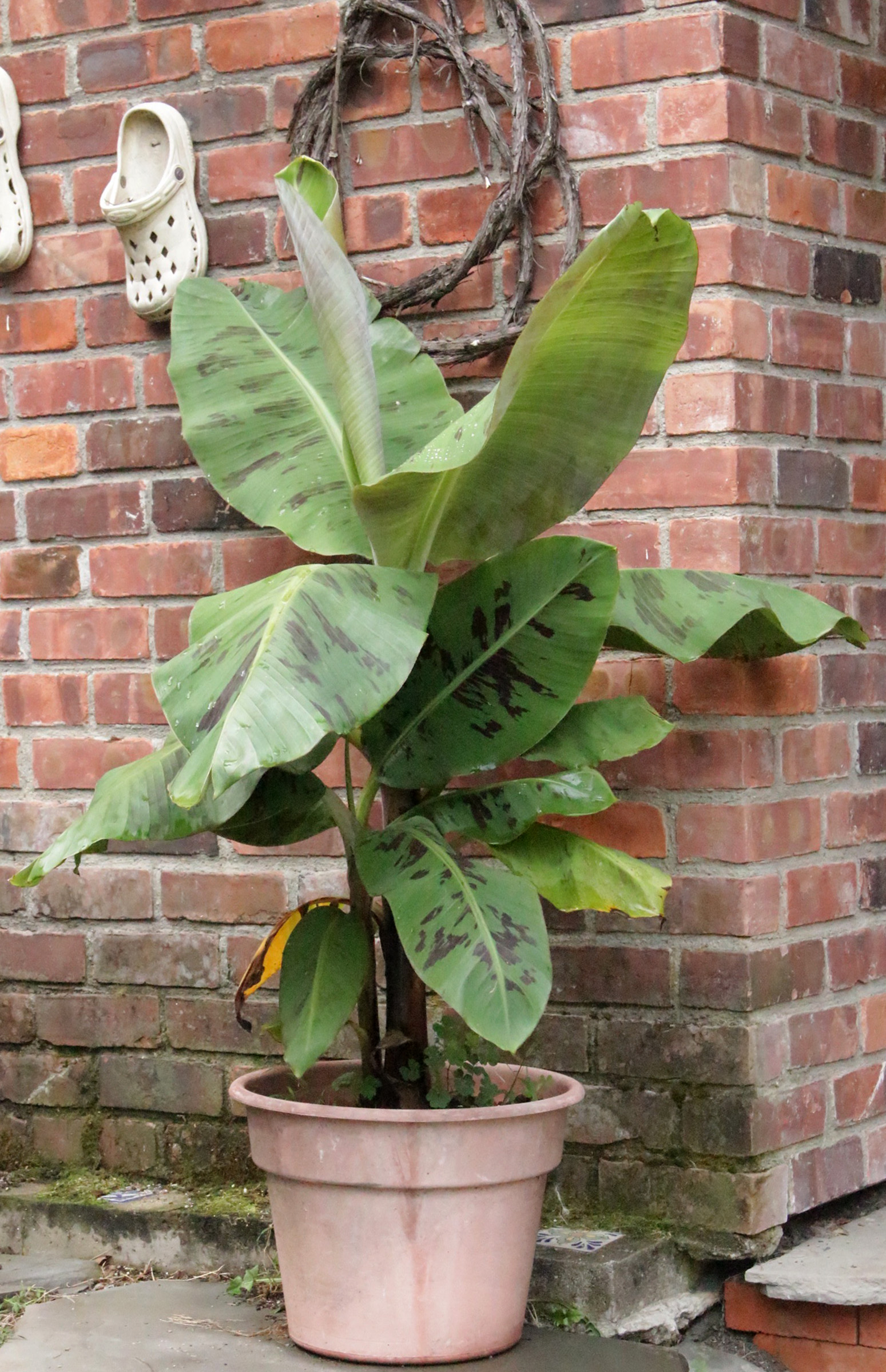
Since I don’t live in the tropics, I bring a bit of it into my house. Hence, the banana tree that, years ago, tropicalized my living room for a number of winters. The plant made a nice houseplant for awhile, its large leaves jutting into the air like velvety, soft, green wings. Pests never bothered it. It even signaled to me when it was thirsty by drooping its leaf blades down along its midribs.

Banana plant in summer

Banana plant in summer

But mind you, I was not growing this plant only for show. I also wanted to harvest bananas. In the warm tropics, bananas fruit when they are only ten to fifteen months old; in a warm greenhouse, plants fruit in two or three years; in my sixty to seventy degree, sometimes colder, house . . . well, fruit was a goal, but I was in no particular hurry. Read more

Spreading wood ash

OCCULT PRACTICES?

Potash Kalium Connection

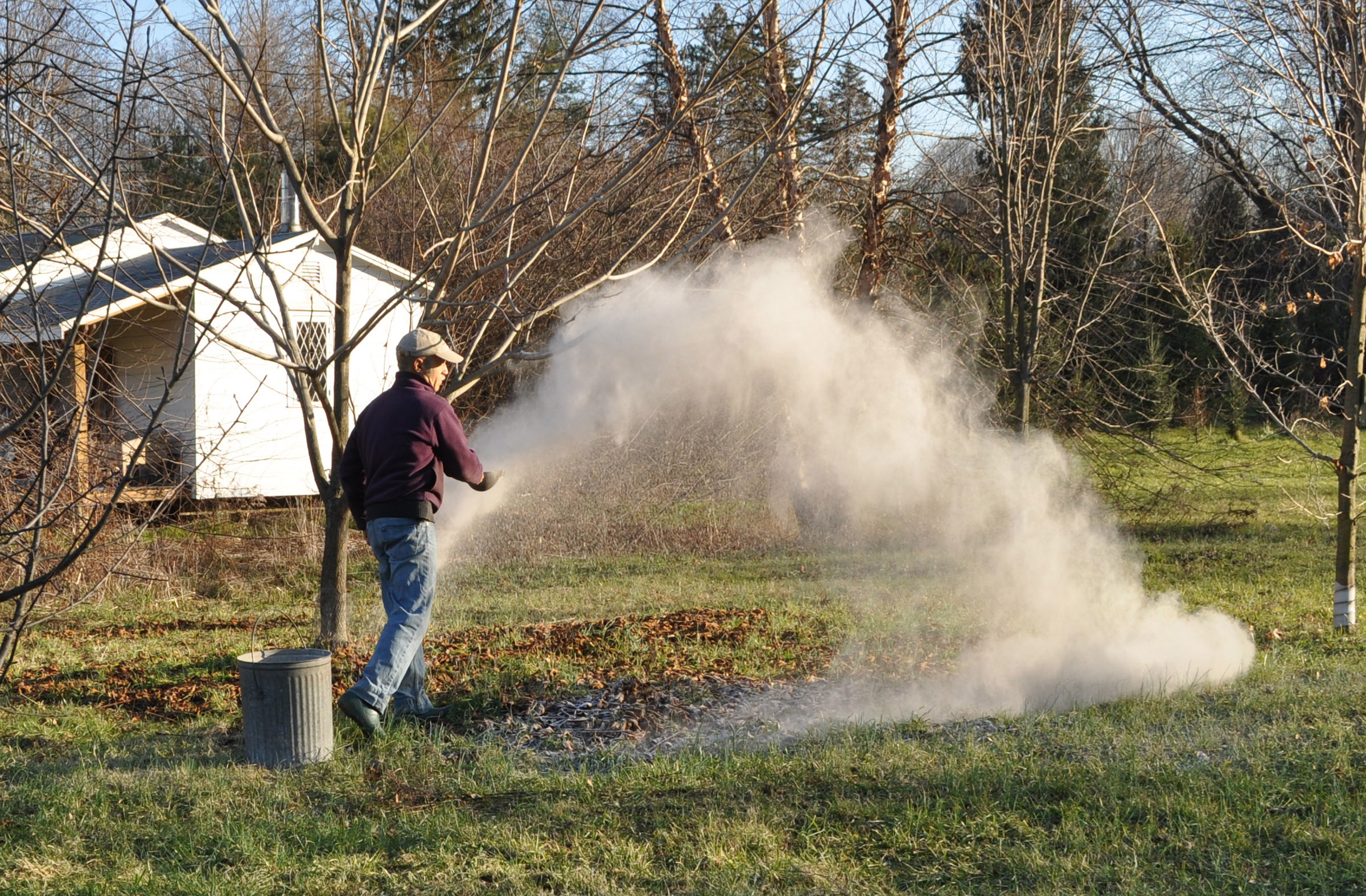
I wonder if my neighbors suspect that I’m engaging in some sort of occult ritual as I take rounds through the farmden followed by puffs of grey smoke. Perhaps I’m entreating tiny gnomes living within the soil to keep weeds at bay next season? Or begging garden gremlins to make my soil fertile? No, and again no! I’m merely spreading wood ashes.Spreading wood ash

I must be careful with my terminology: I’m not dumping wood ashes; I’m fertilizing my soil with wood ashes. Wood ash is a rich source of potassium, a nutrient required by plants in amounts second only to nitrogen. Potassium helps build strong stems and helps plants resist disease. It also regulates the opening and closing of stomata, the tiny pores in leaves through which gases pass for photosynthesis.

The close connection between potassium and wood ash is reflected in a traditional source of, and the root of the word, potassium — “potash.” Read more

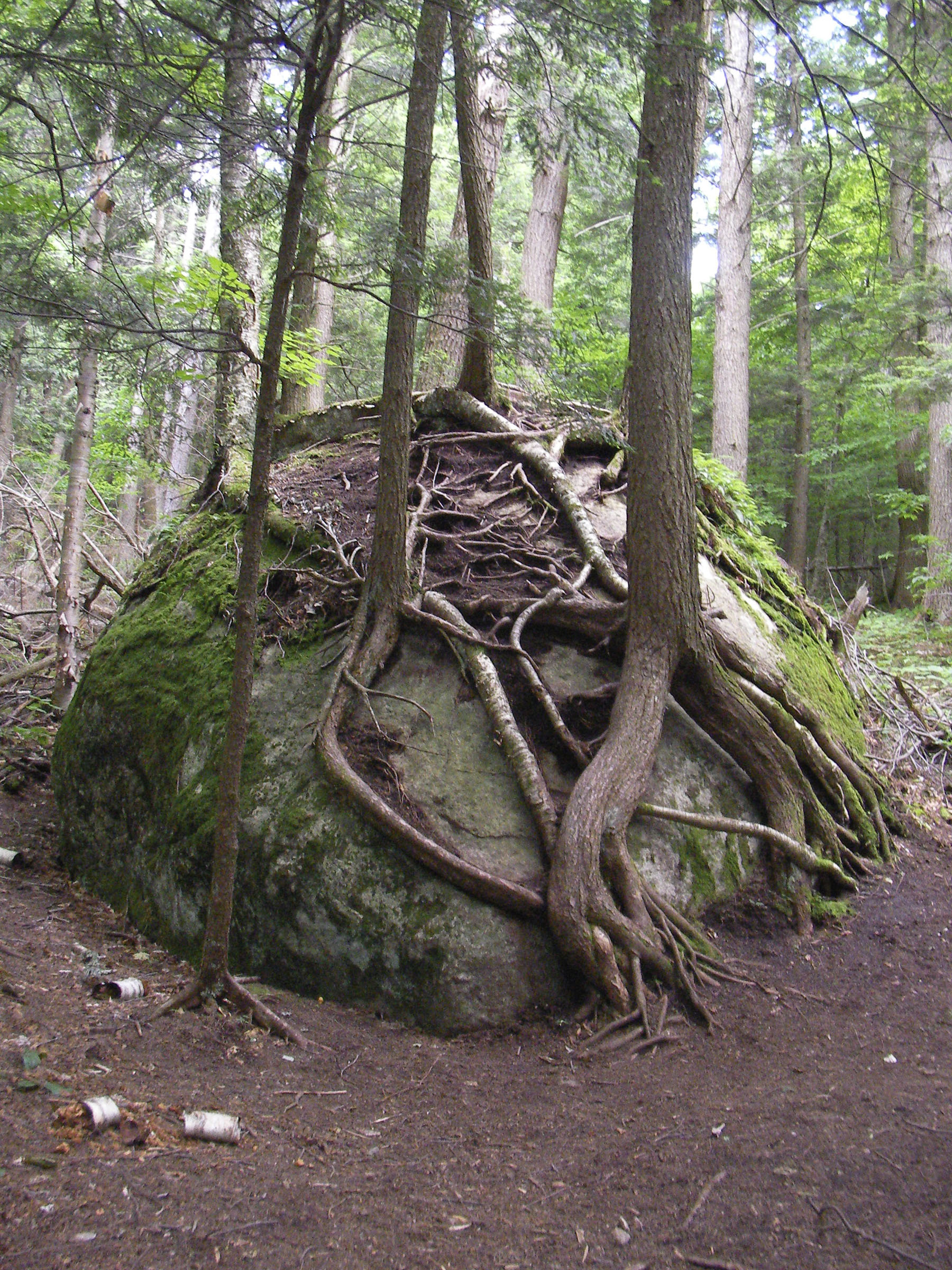
Tree roots in the Adirondacks, growing over boulder

MICROFORESTRY

Something to Do

During a sunny, cold day a few years ago, I was itching for something to do outdoors. I already had piled mulch on top of last year’s mulch beneath the blueberries, the vegetable plot was weed-free, and I usually defer pruning until later in winter. So what was there to do? I decided to clear some “forest.”

Actually, the forest was one mulberry tree, a seedling that had grown up in the wrong place, but which I had neglected for a few years until its trunk had a girth of  eight inches. I had cut back the top the summer previous to at least slow its growth. But it was time to emulate on a small scale one of the tasks of the early settlers here: digging out the stump.

Tree roots ni the Adirondacks, growing over boulder

Tree roots in the Adirondacks

Before I began, I gathered up what I would need for the job: a spade whose blade I sharpened with a file; a pruning saw; a pry bar; and some fill soil. But first let’s backtrack a moment. When I lopped back the tree the previous summer, I had cut off all the branches and left a single trunk about five feet tall. A length of trunk provides a handy lever for working a stump out of the soil. Read more

HOT OFF THE PRESS

A New Map

The coldest nights of the year are due to arrive in about a month. These frigid nights might test the hardiness of trees, vines, and shrubs, perhaps nipping back a few branches here or there on some plants, perhaps killing others outright. Though bitter cold is a few weeks away, I have done what I could to prepare plants for the onslaught.

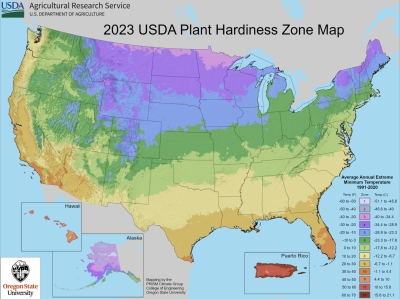
The first step in preparing any plant for the winter is knowing how cold it’s going to get. There’s no crystal ball offering this information, but decades of weather data have been compiled by the U. S. Department of Agriculture to prepare the USDA Hardiness Zone Map, which is helpful in predicting the probable minimum temperature for an area. The map has gone through numerous incarnations of increasing accuracy and . . . drum roll . . . recently this year the latest incarnation was revealed.USDA Plant Hardiness Map 2023

So, what’s new? The increasing accuracy reflects minimum temperatures measured at 13,625 weather stations averaged over 30 years. As before the country is divided into zones denoted by color and number, 13 of them, the lower numbers reflecting colder regions. Each zone denotes the average coldest temperature in that time period, not the minimum temperature ever experienced.

You often see this map, the country covered over my squiggly lines filled in with a color. Big change this year: The USDA offers this map only online Read more