MY FIG GROWS OLD, AND LOOKS IT

Weeping Fig, Growth in Check

My little fig tree put on a lot of new growth this year. Let me qualify this statement. By “fig,” in this case, I mean my weeping fig (Ficus benjamina). It’s a relative of edible fig, also edible (but rarely eaten), and a common houseplant, valued for its relaxed appearance, its small, glossy green leaves, and its tolerance for indoor environments. By “a lot of new growth,” I mean a half an inch or so.Bonsai fig

Despite that meager growth, the plant has grown too large. Nothing like it would have grown outdoors in open ground in the tropics, where this trees’ branches quickly soar skyward and sideways to the size of our sugar maples. From those branches drip aerial roots which anchor themselves in the ground, the ones nearest the trunk eventually merging together to become part of a fattening trunk.Weeping fig in Puerto Rico

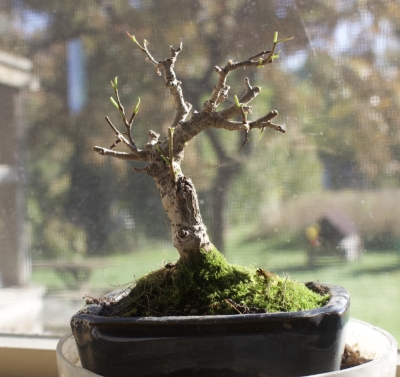
My little fig, you probably guessed by now, is a bonsai. The tree, if I may call a four-inch-high plant a “tree,” began life here as one of a clump of what evidently were rooted cuttings in a small, plastic pot I purchased on impulse from a big box store. 

Back here at the farmden, I got to work on it, first teasing the plants apart from each other, selecting one as keeper. The road to bonsai-dom began as I trimmed back the roots to be able to fit the plant into its new home, a 3 by 4-1/2 inch shallow pot about an inch deep. There was little to prune aboveground, but I made any cuts necessary, with the future in mind.

Read more

AN AUTUMN VEGETABLE FROM FRANCE, FROM BELGIUM, OR IS IT BATAVIA?

Saying It is Easy; Naming It, Not so Easy

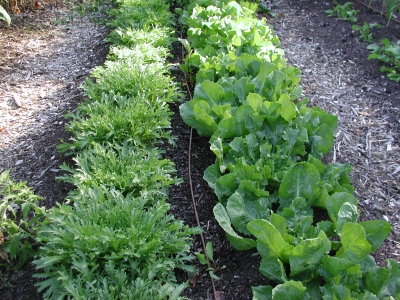
Pinch your nose with your fingers and say “on.” Follow that with a long, drawn out, “d-e-e-e-e-v,” your mouth in a smile to get emphasis on the e’s. Endive. I once considered endive to be lackluster in flavor, so needed to be offset with this highfalutin pronunciation. After many years of growing endive, I’ve come to recognize a more distinct flavor, nutty and just slightly bitter.

Endive, frisee & escarole

Endive, frisee & escarole

(This is the first time I’ve used “nutty” to describe a flavor, having recently figured out what it means. Nut-like. Duh. Hints of nuttiness are found in the flavors of many foods, including seeds, wines, beans oils, cheeses, fish, and, of course, almonds, hazelnuts, and other actual nuts. Since writing the above description of endive flavor, I learned that others have also described its flavor as nutty. QED)

Read more

TOMATOES & CORN, TWO ALL-AMERICANS

Ode to Sungold

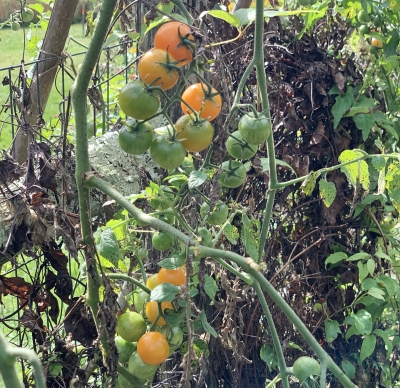
As the curtain closes on the summer garden and the autumn garden edges towards its glory, I’d like to offer thanks. No, not a religious thanks for a summer of tomatoes, peppers, cucumbers, okra, and other warm weather vegetables. But thanks to a person, the person who bred Sungold cherry tomato.Sungold near season's end

Anyone not familiar with Sungold tomato should be. It’s sweet and tangy, not at all cloying, enveloped in persimmon-orange skin. I once grew over 20 varieties of cherry tomatoes (Solanum lycopersicum var. cerasiforme), including Sungold, for a magazine article. As a friend walked down the row, sampling fruit from each plant, she proclaimed, “That’s one row of lousy tomatoes.”

Agreed, excepting a few varieties, one of which was, of course, Sungold. The other exceptions were Gardener’s Delight, Sweet Million, and Suncherry, all three of which are rarely seen these days, probably because Sungold eclipsed the others with its distinctive appearance and, I think, even better flavor.

(My cherry tomato row didn’t include marble-size, so-called currant tomatoes, botanically, S. pimpinellifolium. They are very sweet, very small, and very tasty. I don’t grow them anymore because, for me, they’re too messy, dropping fruits all over the place. The following year, seedlings can grow to become a tomato jungle.)

Read more

MORE OF MY FAVORITE TH . . . GRAPE VARIETIES

The Birds and the B . . . Vespids

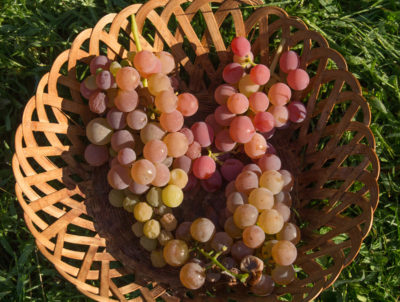
Hot and dry. What great summer weather it’s been here for grapes. Most years around this date, I’d go out every morning and pick bunches for fresh eating, continuing to do so for weeks to come.Basket of grapes

Alas, where there are grapes, you’ll find the birds and the be. . . vespids (the family of wasps and hornets, not bees). No raccoons or foxes, here on my grapes, at least. Here you’ll also find paper bags stapled around about a hundred bunches.

The bags are meant to protect the enclosed bunches from birds and insects. This year was a first: Thirsty birds pecked holes in the bags through which they could reach, then peck at the grapes hanging within. By my estimate, about three-quarters of the bagged bunches suffered damage or were finished off in toto. 

In addition to the damage inflicted by the birds, the resulting holey bags provide easy entrance to wasps and hornets, who further tear up the bag and finish off the fruit repast started by birds.

Read more

THESE ARE A FEW OF MY FAVORITE TH . . . VARIETIES

Not a Research Station, but I do Test

It seems that every couple of years or so, some kind gardener offers me seeds, plants, or just a recommendation for the best-tasting, earliest ripening, or longest keeping tomato. I’m appreciative, but these days usually refuse the offer or ignore the recommendation.

True, In addition to providing a year ’round supply of fruits and vegetables, my farmden provides a testing ground for innovative techniques in growing fruits and vegetables, and provides a site for workshops and training. All this would surely include trying out new kinds and varieties of fruits and vegetables.

But I want to avoid having my plantings become like those described by Charles Dudley Warner in his 1887 classic My Summer in the Garden: “I have seen gardens which were all experiment, given over to every new thing, and which produced little or nothing to the owners, except the pleasure of expectation.”

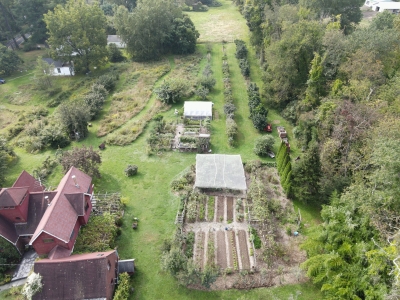
Still, I have studied plants and soils in both academic settings and in my own “back forty” (actually, my own back 2 and 3/4). I’m in New York’s Hudson Valley, Hardiness Zone 5, more specifically the Wallkill River Valley. This low spot is notable for good soil and bad air. The soil is fertile, perfectly drained, and pretty much free of any rocks or stones. But cold, damp air, being heavier than warm air, pours down hillsides into this valley. It suits disease-causing fungi and bacteria of plants just fine.Aerial view of farmden

The above paragraph is a preamble to my offering a few recommendations on species and varieties worth growing in similar settings, but also, in many cases, where conditions don’t match those here on the farmden. I’ve also gardened in the Upper Midwest and in the South, and I think these recommendations would be well received over a large swath of our country. Some may be worth a spin in your own “back forty.”

Read more

GOURMET COMPOST FOR ALL

Your Pet Needs:

As the bumper sticker on my truck reads, “COMPOST HAPPENS.” Even so, problems sometimes arise along the way.Compost happens bumper sticker

Is your main complaint that your compost “happens,” but too slowly. I like to picture my compost pile as a pet, except this pet is made up of many different kinds of macro- and microorganisms, and the population changes over time. Like other pets, my compost pet and your compost pet need food, air, and water.

Compost piles work quickest when their two most important foodstuffs — nitrogen and carbon — are in balance. (All this, by the way, also applies to us humans; our nitrogen comes mostly from proteins, and our carbon comes mostly from carbohydrates.) Old, usually brown and dry plant materials, such as autumn leaves, straw, hay, and sawdust, are the carbon-rich foods for a compost pile. Carbon-rich compost foodThe older the plant material, the richer it is in carbon. Nitrogen-rich materials include young, green plant parts, such as tomato stalks, vegetable waste from the kitchen, and grass clippings, as well as manures.Nitrogen-rich compost food

Nitrogen fertilizers are concentrated sources of nitrogen. They commonly are the active ingredients of commercially available compost “activators.” “Activator” has a nice ring to it, but it is overpriced, unnecessary, candy for any compost. Sometimes they also contain microorganisms, also unnecessary.

Read more

BEST GARDEN EVER, DROUGHT NOTWITHSTANDING

Go Drip!

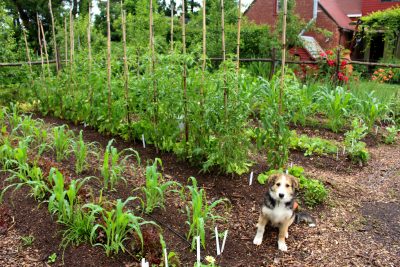
This summer has been one of the hottest and driest ever — and it’s been one of the best ever in the vegetable garden. Baskets of red, ripe tomatoes and peppers sit on the kitchen floor awaiting metamorphosis into sauces and salsas, dehydration, or just plain being eaten.Dog Sammy and garden beds

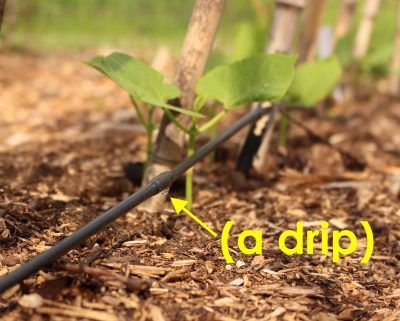
What about water? My garden plants are plump with water thanks to drip irrigation. In addition to benefits to the plant, drip is also good for the environment, typically using only about 40 percent of the amount of water used by sprinkling. That’s because the more pinpointed water avoids wasting water in paths and other places it’s not needed. Also because little water is lost to evaporation.Dripline with beans

The “drip” in drip irrigation tells you that water is applied at a very slow rate, which is especially appealing to those of us whose water comes from a well. With drip, the well has plenty of time to recharge between waterings.

Drip is also better for plants. Leaves stay dry, lessening the chance for disease. And rather than flooding the ground, which a sprinkler does at each watering, drip keep soil moisture within that happy window when larger pores remain filled with air, and water is held within smaller pores so that roots can both breathe and draw in water. (This is one reason for the more efficient water use of drip irrigation.)

Read more

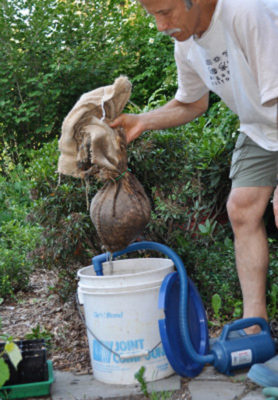
COMPOST TEA REVEALED

First Step, Identification

A few years ago I went to a nearby permaculture convergence. (Actually a “permaculture conference; those people have the best terms for what they do). I’ve grown plants in what I learned was a permie way for many decades, so I’ve been accused of being a permaculturalist. I was even invited to do a presentation and host a farmden tour for the convergence.

While there, I had the opportunity to attend a lecture by someone who has been billed as the diva of dirt, or, at least, of compost tea, specifically aerated compost tea (ACT), Dr. Elaine Ingham. You’ve never heard of ACT!? It became the hot, new thing years ago, perhaps still is, as an alleged cure for poor soil and plant pests. I’d been skeptical and thought that hearing and speaking to Dr. Ingham in person could entice me into the fold.Making compost tea

  Dr. Ingham showed myriad images of fungi, nematodes, and other creatures that you might find in compost piles and teas. We saw many “bad guys” that lurk in poorly aerated composts and teas. The “bad guys” are bad, she asserted, because they release toxins into the soil and puff away valuable nitrogen, sulfur, and phosphorus in various forms as gases.

  Dr. Ingham suggested monitoring our compost piles and tea happenings by purchasing a microscope and, with the help of her workshops, identifying resident microorganisms. Hmmm; interesting, but is it really necessary for a green thumb?

  While the panoply of microorganisms discussed was impressive, I contend that even a well-aerated compost pile or tea is bound to have some poorly aerated pockets. It’s not a “bad guys” vs. “good guys” situation, but a question of generally favoring an excess of “good guys.” Also, once compost is spread on the ground, the large surface area presented is going to tip the balance even more in favor of aerobic conditions.

To identify what organisms are in a compost pile, you have to get them out of the pile and onto a microscope slide. Easy. Just soak some compost in water and strain it. Or use a compost teabag. But wait! Is that really the spectrum of microorganisms that call that compost home? Not necessarily. What are staring up at you from that microscope slide are creatures that can be leached most readily into water. What you see also might depend on how long you steeped the teabag and who can squeeze out into the water through whatever size holes are offered by the strainer or the teabag.

Will Compost Microbes be Happy Far from their Compost Home? More fundamentally, I question basic assumptions underlying the use of compost tea. Even if you have beneficial organisms in hand (figuratively) and sprinkle them on the ground, they’re bound to expire unless the environment is suitable. Microorganisms in the tea might have enjoyed life within the dark, moist innards of a compost pile; the soil environment ain’t nothin’ like home for them.

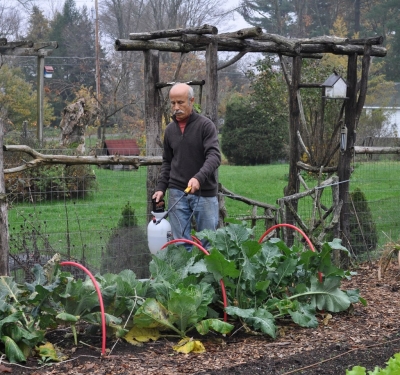
Spraying ACT or any compost tea on plant leaves should likewise have little or no effect on plant diseases; again, conditions on a leaf surface aren’t conducive to their survival. In the evolutionary scheme of things, why would a microorganism that thrives in the dark, moist, nutrient-rich innards of a compost pile survive on the sunny, dry, nutrient-poor surface of a plant leaf, let alone provide any benefits?Spraying plants

Over the last few decades, people have spritzed plants and sprinkled soils with compost tea, looking for effects such as improved soil structure or drainage or increased plant resistance to pests. Independent well-designed, vetted studies do not generally support claims made for compost tea.

True, there are some studies that show some benefits. I contend that if you spray just about anything on a plant leaf and have enough plants in the study along with sufficiently detailed measurements, some statistically significant effect might be noted. But every statistically significant effect isn’t also biologically significant. And looking over a number of studies, some few show a benefit from compost tea, many demonstrate no effect, and for a number of them, the effect of compost tea is detrimental.

Soluble nutrients do leach out of a compost teabag into water. The resulting compost tea, then, becomes a liquid feed for plants, effective either poured on the ground or even sprayed on leaves. So there can be some benefit from compost tea, a nutrient effect, not a microbial one.

Bulk is Good

Except in special situations, soil environments naturally host microorganisms that thrive best in them. A similar situation exists with earthworms. Years ago, perhaps still, advertisements in the back pages of gardening magazines would offer earthworms for sale. The reasoning went that good soils are teeming with earthworms, so purchasing and importing these creatures to you garden will make your soil better. Not true. The earthworms will die out if conditions and food are not to their liking. The same goes for microorganisms.

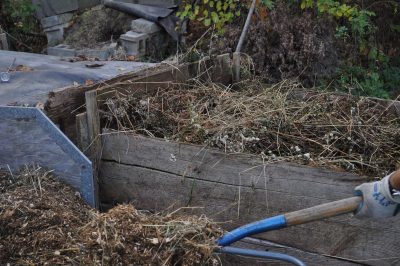
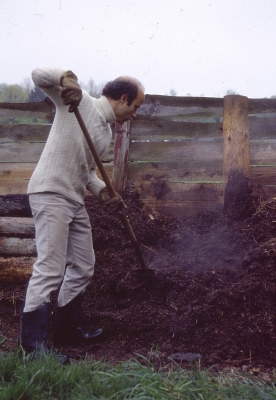
(An example of an exception to what I wrote in the previous paragraph is a study that was done in Puerto Rico back in 1950. THE USDA was trying, with little success to introduce a more useful, but non-native pine, to the island territory. Mycorrhizae are fungal symbionts that infect practically all plants; the fungus gets some foods manufactured by the plant in return for moving more nutrients and water to the plant for improved growth. The appropriate fungal symbiont was lacking in Puerto Rican soils. After inoculating plants with an appropriate fungus, the inoculated, introduced pines grew six times more than their introduced brethren that had not been inoculated.)Compost being shovelled

Except in rare situations, as in the example above, earthworms, microorganisms, and other creatures generally inhabit environments most congenial to their flourishing. Perhaps not enough of them, and what they really need is food to give their populations a boost, and food means some form of organic material. That is, bulky organic materials, such as compost, manure, leaves, and straw.

  Good gardening comes form using a pitchfork, not an elixir. Does anybody still make and use compost tea?

WAITING FOR FIGS

(Much of the below information is gleaned from my book Growing Figs in Cold Climates and a video I presented, now available online.)

Affliction

If you’re not growing figs because you think your cold winter climate is wrong for them, you’re wrong and you’re missing out on an exotic treat. Figs can be grown just about everywhere. If you are growing figs and you’re in a cold winter climate, the fruits should be nearly or already ripening.

Impatience is the affliction of the cold climate fig grower. I’m feeling it right now, as I write. That impatience comes from watching little figlets forming and expanding early in the season and then just sitting on the branches, doing nothing, seemingly forever. Knowing somethingAdam & Eve, painted by Titian, 1550 of how fig fruits develop and grow, and ways that ripening can be hastened along helps soothe my affliction.

Let Me Know Thy Ways (of Fruiting)

Most varieties of figs bear fruit on new, growing shoots. This bearing habit is very different from that of most common fruits, such as apples, peaches, and blueberries, which bear fruit on stems that are one-year-old or older. (Some fig varieties do bear on one-year-old stems, and some bear on both one-year-old and new, growing shoots.) Figs’ bearing habit is a boon to cold climate fig growers because that means that a fig tree can still bear fruit even if its stems freeze back or are pruned back rather severely.

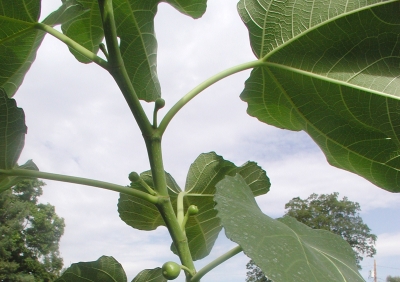
Figs forming on new shoot

Figs forming on new shoot

But it takes time for fruits on young fig stems to develop and ripen, which they do sequentially from the bottom (the oldest) part of the growing stem to the top. The closer a stem originates to the roots, the longer it takes for fruit on that stem to develop and ripen. That time could be too long, depending on how severely the plant was pruned or froze back and the length of the growing season. I like to develop and leave one or more permanent trunks at least two feet long, letting sprouts grow from or at their tops.

Some so-called “hardy” figs sprout new shoots from ground level after dying back from winter cold. Actually, since ground temperatures in winter are milder than air temperatures, many figs will do this. Problem is that figs will form on those sprouts from ground level but may not have time to ripen.

Quicken the Pace

Assuming a portion of trunk or trunks have survived winter, perhaps because the plant was potted and moved to shelter, the trunk was insulated, or the trunk was buried, etc., impatience still lurks. (I detail a number of ways to get figs through winter in my book Growing Figs in Cold Climates.) The problem — for us, not the figs — is that fruit growth follows a sigmoidal (S-shaped) curve over time. That is, the fruits swell up rapidly early in the season, then just sit for a long time.

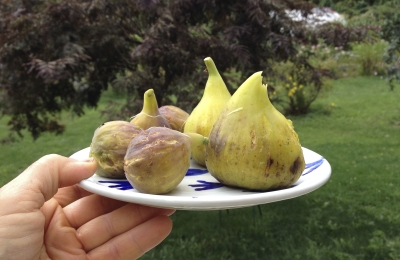
But hang tight. If all else is in order, fruit growth leaves the flat part of the curve, and figs start to rapidly swell, at the same time softening and developing a rich, sweet flavor. How long before ripening begins depends on the where the fruiting shoot originated, the variety, and the growing season.Ripe figs on plate

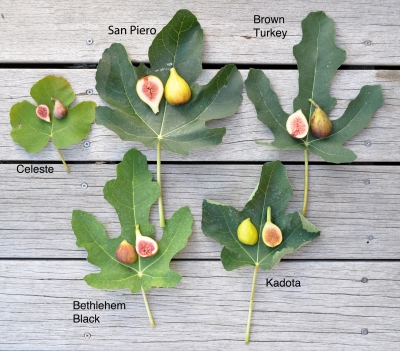
Fortunately, you can hasten along ripening to some degree. The first way is earlier in the season, when a shoot has just a few leaves, say about five. If you pinch out the growing tip, that could stimulate figs down along the stem to start developing sooner than if the stem was left alone. However, doing so also might reduce total yield because shoot growth is at least temporarily stalled.Five varieties of fig

As fruits near ripening, they can be hurried along by “oiling.” Do this by putting a drop of olive oil in the eye of a fruit; I just dip a chopstick in the oil and then let the oil drip off onto the eye. Oiling a figVery important: Don’t try this on a fruit very far from ripening, which is, of course, hard to tell until the fruit starts ripening. But if you really love your fig tree, you’ve been staring at it a lot. As you do so you’ll begin to notice subtle changes. I’ve typically used this method towards the end of the growing season when fig ripening slows with waning sunlight and cooling temperatures.

Wait!

Whatever you do, don’t harvest any figs before they are fully ripe. Figs, like many other fruits do not ripen at all once they have been harvested. Incipient rot might make harvested, underripe fruits a bit sweeter, but that’s different from ripe. Commercial figs are harvested just short of full ripeness because then they can be shipped without damage. 

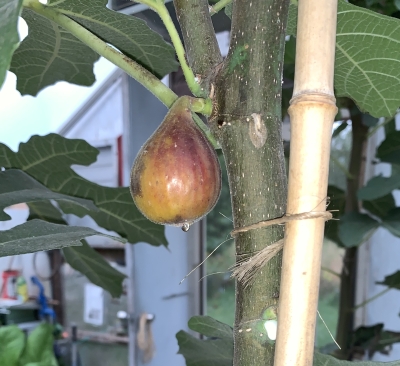
Fig with tear in eye

When your fig is fully ripe, the fruit is soft and perhaps has a “tear” in its eye. The flavor will be sweet and rich.Eating a fig

LUSCIOUS LANDSCAPING

From Alaska & the White Mountains to my Garden

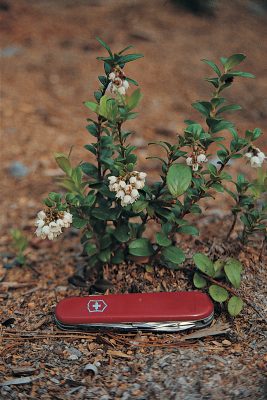
Lingonberry a plant of harsh, cold climates. I’ve seen the plants poking out of rocky crevices in Alaska and high in New Hampshire’s White Mountains, all of which makes all the more surprising the stellar performance of my plants in this hot summer. For years they sat quietly, growing slowly and slowly spreading; this summer, the plants took off, their underground stems reaching further than usual and aboveground stems sporting a very respectable crop. Or, I should say, crops, plural; more on that later.lingonberries in hand
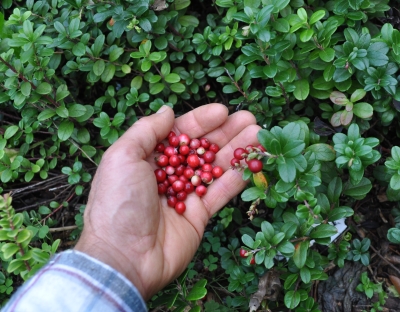
Here in the U.S., lingonberries are little known and, when they are known, it’s as jars of jam. But merely utter the word “lingonberry” to someone Scandinavian and watch for a smile on their lips and a dreamy look in their eyes. Each year, thousands of tons of lingonberries are harvested from the wild throughout Scandinavia, destined for sauce, juice, jam, wine, and baked goods. A fair number of these berries are, of course, just popped posthaste into appreciative mouths.
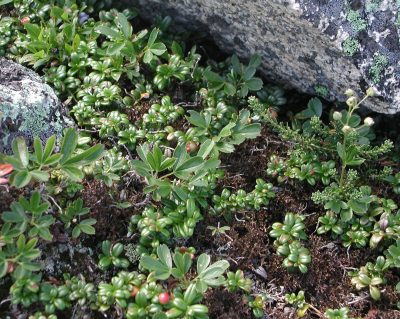
Lingonberry in White Mountains

Lingonberry in White Mountains

Lingonberries have often been compared to their close relative, our Thanksgiving cranberries. But lingonberry fruits meld just enough sweetness with a rich, unique aroma so that the fruits — if picked dead ripe — are delicious plucked right off the plants into your mouth or mixed with, say, your morning cereal. As far as I’m concerned, cranberries are never palatable until doctored up with plenty of sugar and heat.

More Than Just Good Looks

As tasty as lingonberry is, I don’t grow it only for its fruit. Lingonberry also outshines its stateside relative in looks. The plants are pretty enough to have garnered a rating of 3, the highest possible, in my book Landscaping with Fruit.

Like cranberry, lingonberry grows only a few inches high and spreads horizontally to blanket the ground with evergreen leaves the size of mouse ears. While the onset of cold weather in fall turns Thanksgiving cranberry’s evergreen leaves muddy purple color, lingonberry leaves retain their glossy, green appearance, like holly’s, right through winter. Lingonberry under snowLingonberry could stand in well for low-growing boxwood — in a parterre, for example, a use first suggested in 1651 by André Mollet, the French gardener to Queen Christina of Sweden
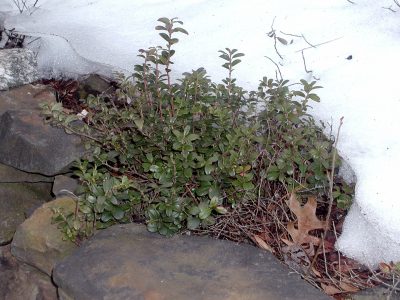
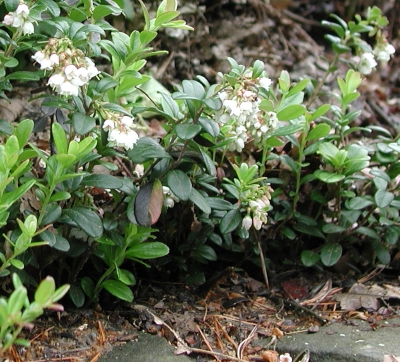
Cute, urn-shaped blossoms dangle singly or in clusters near the ends of lingonberry’s thin, semi-woody stems. These urns hang upside down (upside down for an urn, that is) and are white, blushed with pink. They’re not the kind of blossoms that are going to stop street traffic, but are best appreciated where plants can be looked at  frequently and up close — such as in the beds along the path to the front of my house.Lingonberry flowering
If you miss the spring floral show, you get another chance because lingonberries blossom twice each season. That second show has now morphed into clusters of developing fruits that hang right next to clusters of fruits ripening from the first round of blossoms. Fruit yields are greater from the second flowering than from the first.Lingonberry old and new fruits
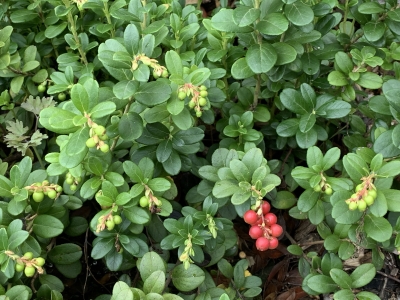
The pea-sized fruits a show in themselves, the bright red berries hanging on the plants for a long time, well into winter. Backed by the shiny, green leaves, they making a perfect Christmas season decoration in situ.

Soil Prep & Management: Obligatory but Easy

Lingonberry plants do need some special care. Hot summer temperatures aren’t ideal. My plants were originally near the east and north sides of my house. Those on the east side are now few and far between, perhaps helped along on the way out by the scratching of the ground beneath them by my chickens, now gone (replaced by ducks, who don’t scratch). The north side of the house, not as welcoming to the chickens because it’s my dogs’ hangout, is, of course, cooler.

All the soils that lingonberries naturally inhabit have good drainage and are extremely rich in humus (decomposed organic material), which clings to moisture. In addition to good drainage and abundant organic matter, lingonberries enjoy the same very acidic conditions — with a pH ideally between 4.5 and 5.5 — required by blueberries, mountain laurel, rhododendron and other kin in the Heath Family. These conditions are easily reproduced in a garden.

I created my bed of lingonberries, which is also home to lingonberry kin, by first checking the soil pH. If the pH is too high, digging elemental sulfur into the top six inches of ground can make it right. Three-quarters of a pound per 100 square feet in sandy soils, or 2 pounds per 100 square feet in heavier soils will lower the pH by one unit. Where soils are naturally very alkaline (pH higher than 8), such as in many parts of the western United States, soil needs to be excavated at the planting site and replaced with a fifty-fifty mix of peat moss and sand. Alternatively, this mix could go into containers plunged into the ground up to their rims. In wet areas, build up mounds of soil and peat, and plant the lingonberries on the mounds, which keeps their shallow roots above water level.

I set my plants at two foot by two foot spacings which plants fill in to form a solid mat over the ground. Young lingonberry plantEvery year, in late fall, I scatter wood chips, sawdust, or shredded leaves over the plants, enough for an inch or two depth. Sifting down through the leaves and stems to keep the ground cool and moist, to prevent frost from heaving plants in winter, to maintain high humus levels in the soil, to provide some nutrients, and to buffer soil acidity. Every few years I check acidity, and sprinkle sulfur on the soil, as needed.
Enjoy!

Beyond needing mulching and having their soil acidity monitored, lingonberries are carefree plants. My main “job” is harvesting the berries. No need even to rush picking or eating them. They keep well on or off the bush, in part because they contain benzoic acid, a natural preservative. Refrigerated, the harvested berries keep for at least eight weeks. In nineteenth-century Sweden, lingonberries were kept from one year to the next as “water lingon,” made by merely filling a jar with the berries, then pouring water over them.

My main problem with lingonberries is, at the end of the growing season, deciding whether to harvest and enjoy the berries immediately and enjoy only the glossy, green groundcover or whether to leave the berries on into winter and enjoy the look of the glossy green groundcover livened up with red berries. Or to split the different, occasionally harvesting some of the fresh berries all through winter.

Lingonberry and lowbush blueberry in fall

Lingonberry and lowbush blueberry in fall