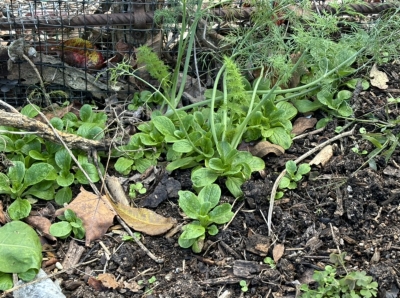
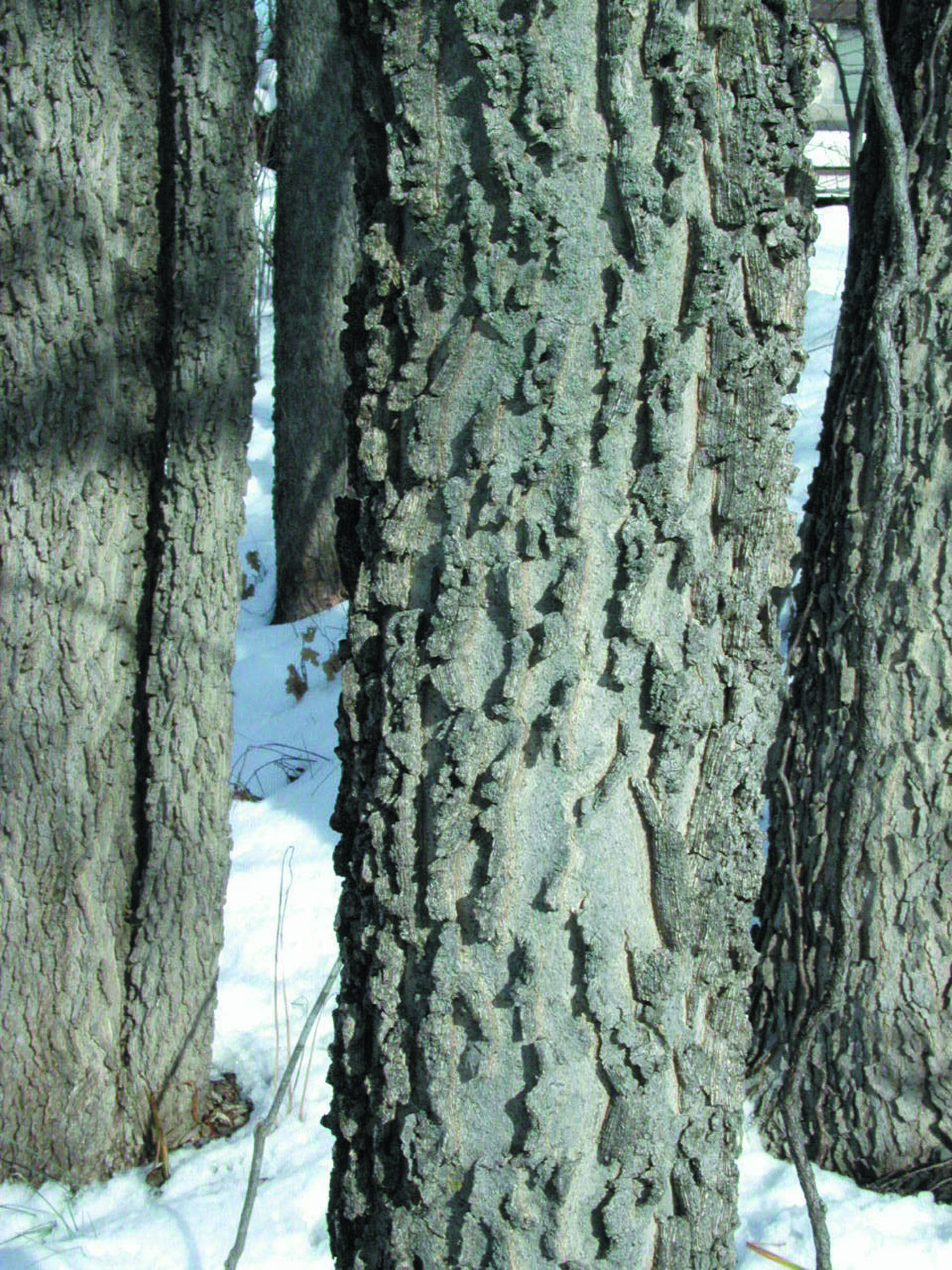
My favorite bark. Can you guess what it is?

WOOF, WOOF, BUT NOT A DOG

More than Meets Your Eye — So Look Closely

The transition from fall to winter brings many trees and shrubs from their most ostentatious to their most subtle beauty. Like a developing photographic image, the textures and colors of various kinds of bark come slowly into view against the increasingly stark winter landscape.

If you were to choose one plant for its bark, what would it be? Paper birch (Betula papyrifera) usually comes to mind, of course. But there are so many other trees and shrubs with notable bark, some as striking as birch, others with a subtle loveliness best appreciated during a winter stroll or viewed through a window from a comfortable chair.
My favorite bark. Can you guess what it is?

My favorite bark. Can you guess what it is? Read on.

Whole books — Bark, by G. T. and A. E. Prance and Bark: A Field Guide to Trees of the Northeast, by Michael Wojtech — have even been devoted to bark. They are useful adjuncts, in addition to other features such as tree form and remnants of autumn leaves on the plant or ground nearby, to winter plant identification. Read more
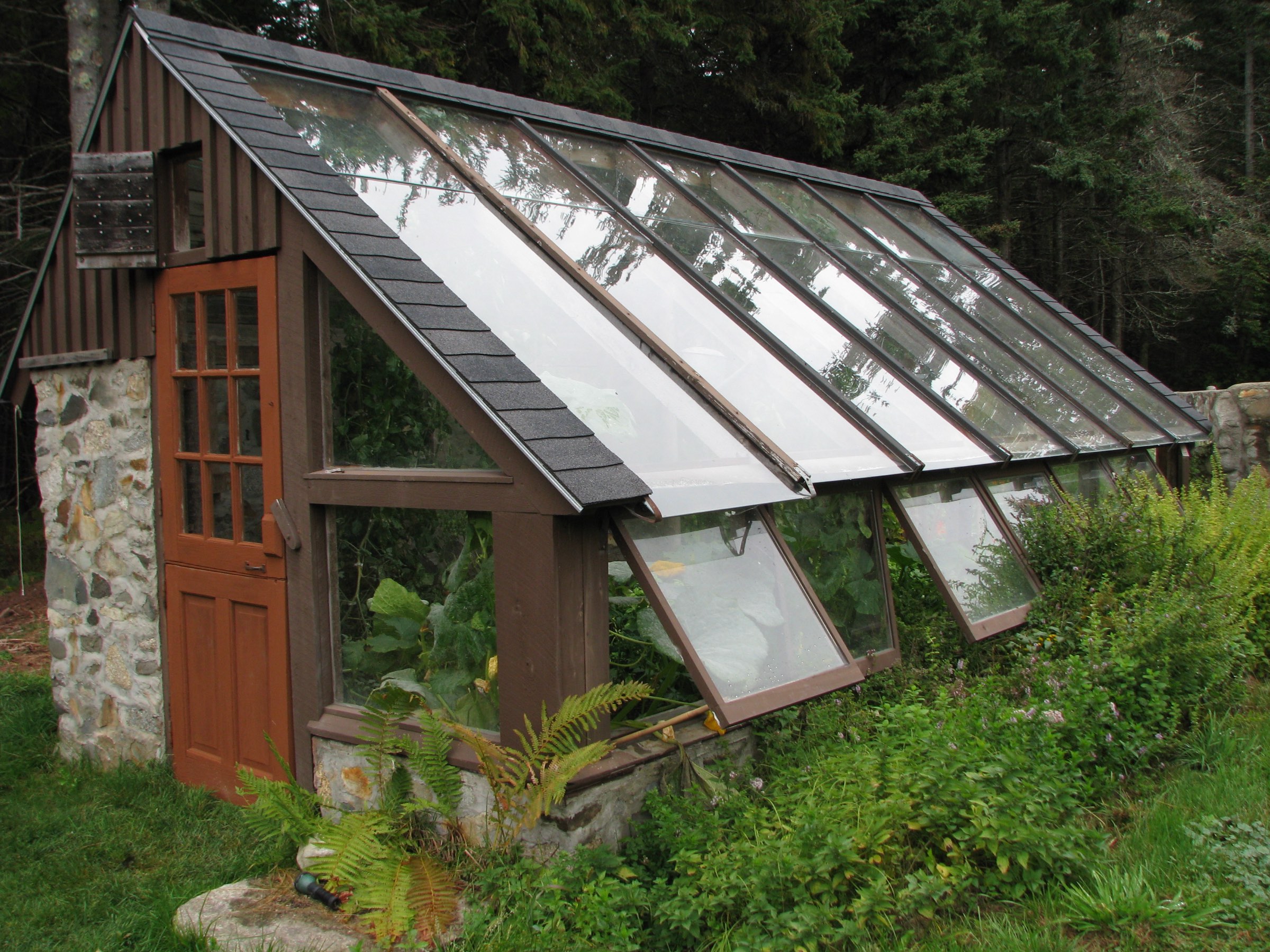
Forest farm greenhouse

SOW A (FIGURATIVE) SEED

An Oasis

It’s not the time of year to inspire most of us gardeners to sow a seed, but sow I will, a figurative seed in your imagination. Who knows what reality it may grow into?

As the weather turns increasingly cool, then cold, and the landscape becomes washed over in gray and brown, imagine a retreat, an oasis of lush greenery and bright colored flowers suffused in warm, moist air. A greenhouse.

Forest farm greenhouse

Greenhouse at the Nearing’s Forest Farm

Read more

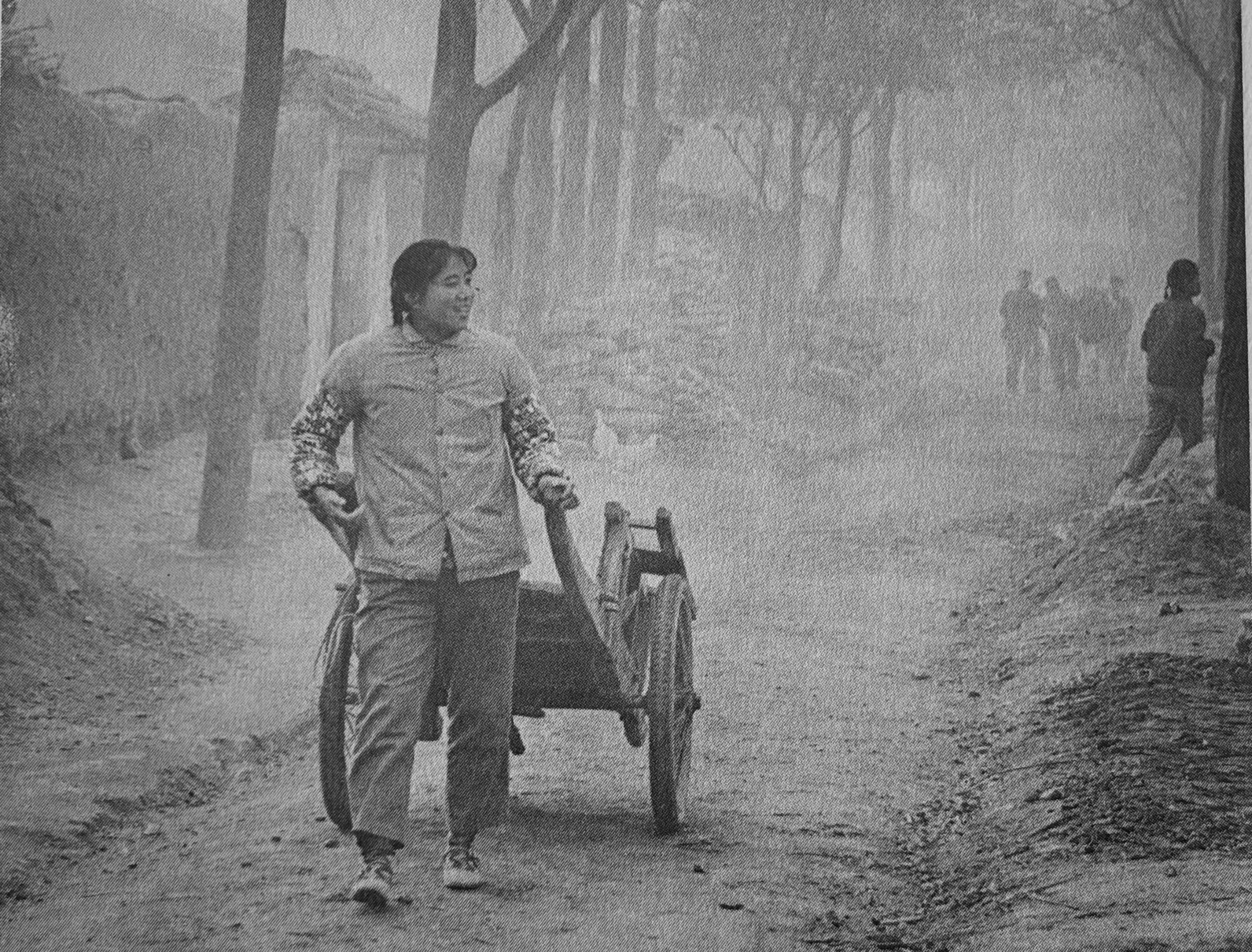
Cart use in China, 1980's

A CART FOR ALL SEASONS . . .  AND GARDENS

What is It?

Praise is in order for an unsung hero of my garden — my garden cart. I’m serious. This cart has played a fundamental role in the pleasures my garden has offered to numerous eyes, noses, and mouths.

Cart use in China, 1980's

Cart use in China, 1980’s

Let’s first be clear on just what implement I’m talking about. Read more

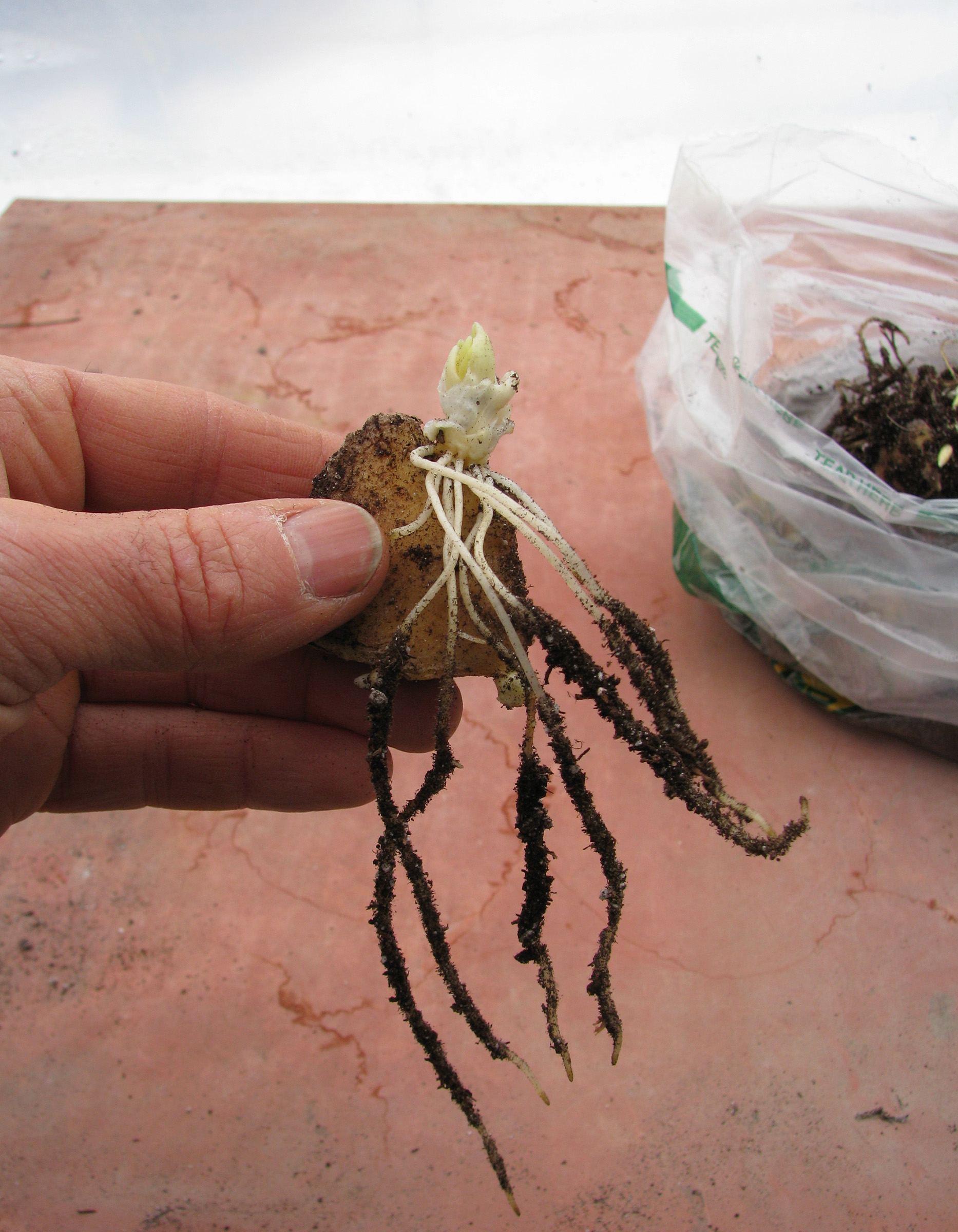
Sprouting roots

OF BULBS, BULBILS, BULBLETS, AND CORMS

Admission

I’ve admitted to this addiction before and I’ll do it again. I’ll even hope you become addicted. You are forewarned.

My addiction is to propagating plants. No harm done, you say? How about all the plants that you become inundated with. Perhaps you plant them; that can be overdone. Give them away, please. Or sell them.

Anyway, here goes another wrinkle on plant propagation. You are forewarned!

What’s in Your Hand?

You’ve perhaps bought some spring flowering bulbs for planting. Wait! Before you drop all those tulip, daffodil, crocus, and hyacinth bulbs into holes in the ground Read more

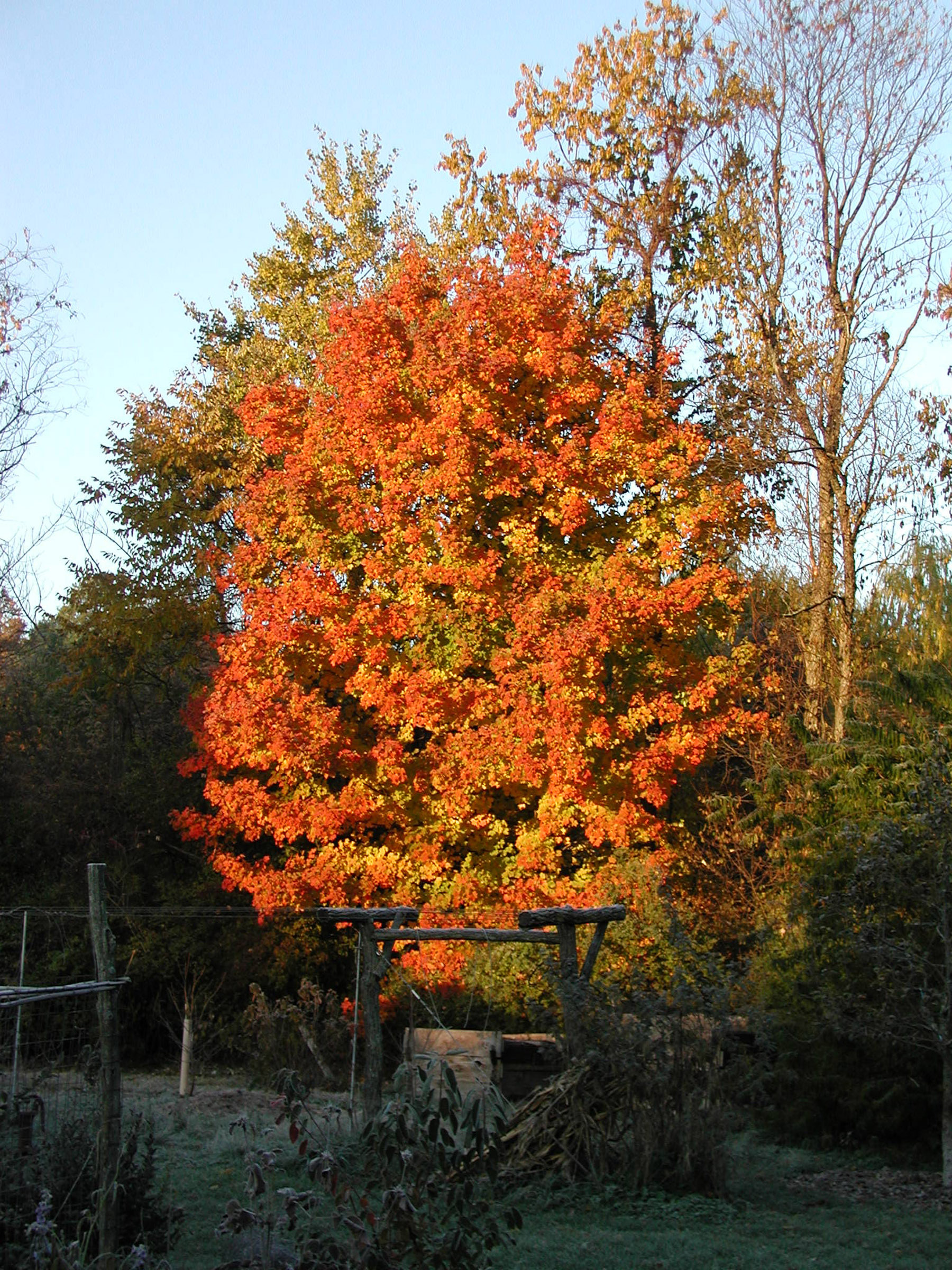
Sugar maple in fall

A WONDERFULLY FIERY FALL

The Glory of the Hudson Valley Unfolds

Here on the farmden and beyond, this growing season is exiting with perhaps the most gloriously colored fall I’ve seen in decades. Standouts right around here this year are Korean mountainash, red oak, stewartia, huckleberry, and blueberry. Even Norway maple, usually with unsightly splotches of yellow, this year have been turning a fairly attractive pure yellow before dropping.

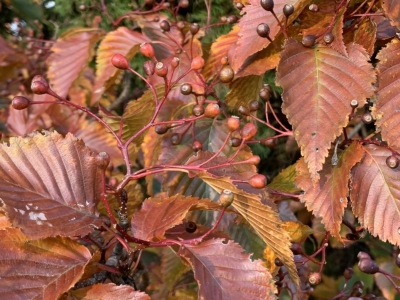
Korean mountainash

Korean mountainash

Knowing what puts color in leaves opens up the possibility for ratcheting it up. It might even increase appreciation for the various hues. To best do that, I’m going to plagiarize . . . from my own book, The Ever Curious Gardener: Using a Little Natural Science for a Much Better Garden.

Yellow and Orange

Green is from chlorophyll, most welcome in spring and through summer, but not what interests me in fall. Chlorophyll must be continually synthesized Read more

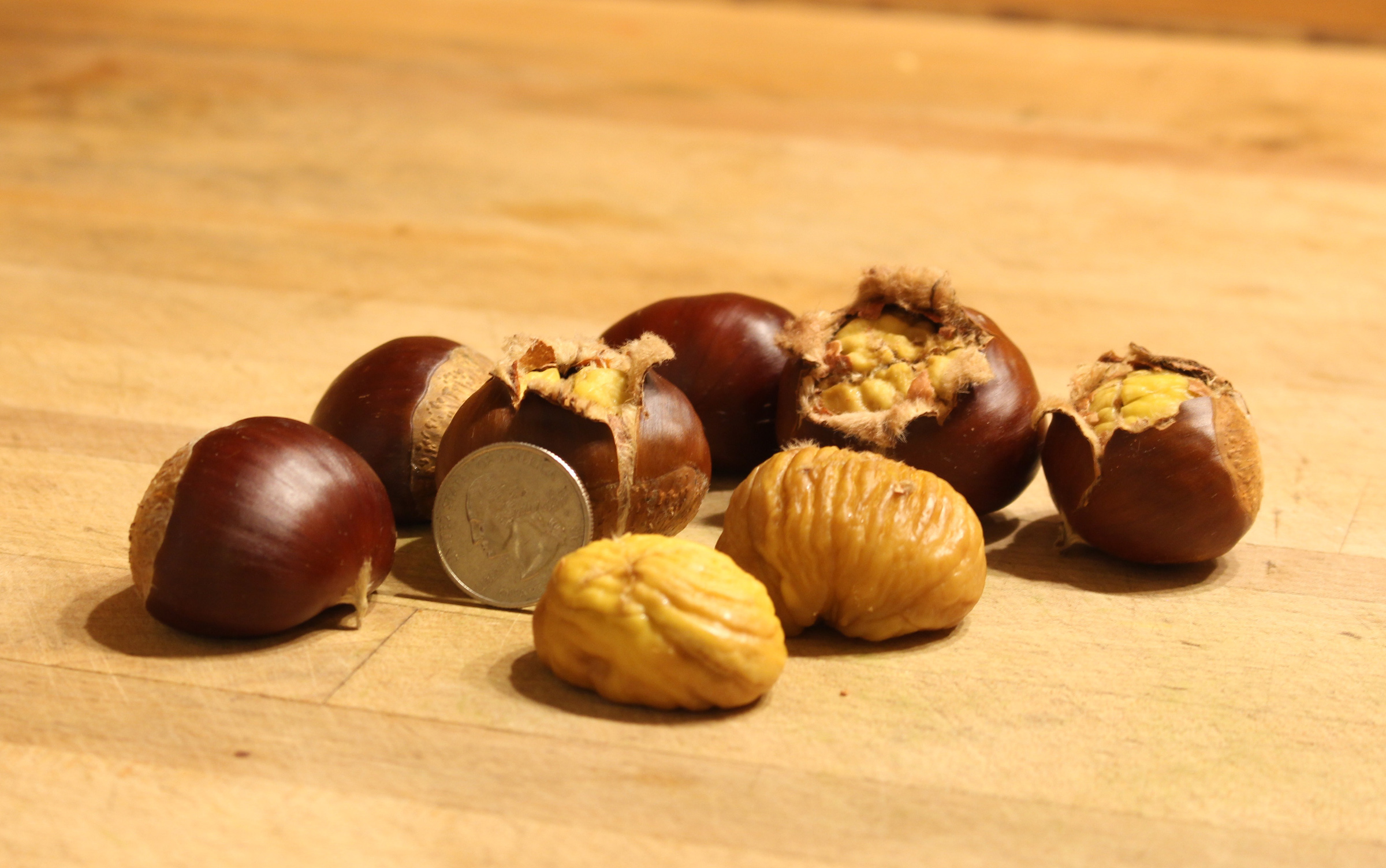
Marigoule roasted chestnuts

CURING CHESTNUTS, AND MORE

Gathering

“There’s many a slip ‘twixt the cup and the lip.” Likewise for chestnuts, in this case twixt the ripening of the nuts (in September and October and the lip. That is, if you want the highest quality nuts.

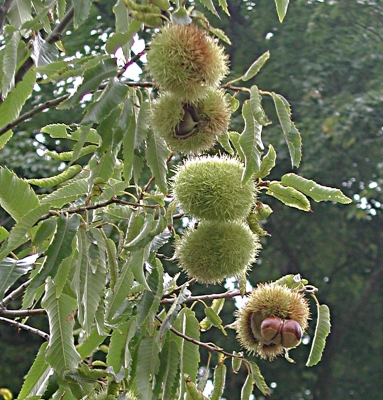
We can start right when the nuts begin to drop. They’ll do so still enclosed in their spiny burs or the burs will open to release the nuts. Don’t be disappointed with burs pretty much empty, perhaps containing a couple or more small, slivers of nuts; these are the result of inadequate pollination.Chestnut burs & falling nuts

Those disappointing burs are among the first to drop. The real show yields burs bursting with two, even three fat, mahogany brown chestnuts. For the best quality nuts, I gather them daily, at the most every other day, before Read more

Màche in winter

FRESH, WINTER CORN SALAD

A Welcome Weed

I am happy and proud to admit that I have firmly established a weed in my garden. That weed is corn salad (Valerianella olitoria). Not that it took a lot of effort on my part; this plant is after all a weed, one that got its name for the way it invades European corn fields — “corn,” in the Queen’s English, being any grain except for corn, which is “maize.” I can still call it a weed because a definition of a “weed” is any plant that shows up where it’s not desired; much of corn salad here comes up where I don’t want it to.

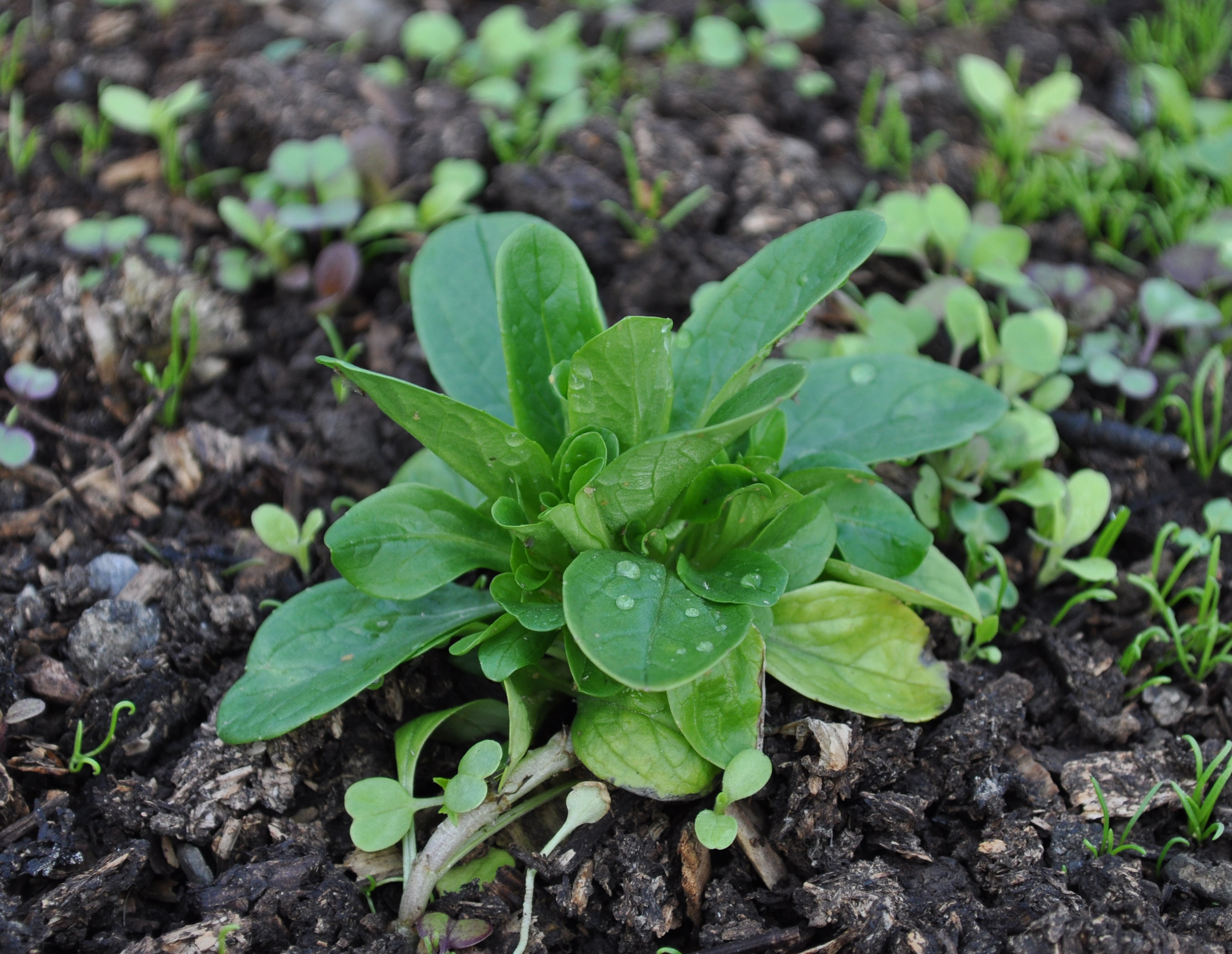
Màche, the weed

Corn salad, the weed

The second part of this weed’s name, “salad,” explains why I nonetheless want it in my garden. Read more

UPS AND DOWNS AND UPS WITH CHESTNUTS

The Best of Them, No More

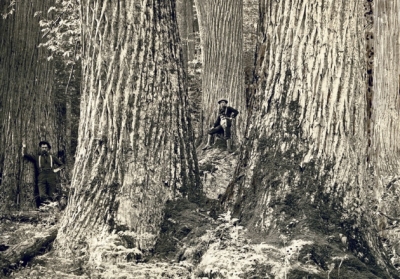
Of all species of chestnuts, none is finer than the American chestnut. This majestic tree towered to 100 feet high in America’s virgin forests and yielded a wood that was used in musical instruments, molding, fenceposts, barrel staves, even telephone poles. The nuts of American chestnut are deliciously sweet and flavorful. Or, so I have read and been told, having never tasted one myself.Old photo of giant American chestnut

But the sturdy chestnut had its Achille’s heel — chestnut blight. The disease, accidentally introduced from Asia, was first noted at New York’s Bronx Zoo in 1906. It spread 25 to 50 miles a year and within 50 years had left 7 million acres of Appalachian forests with dead or dying chestnut trees.

The American chestnut is not gone, though. Trees cling tenaciously to life. Read more

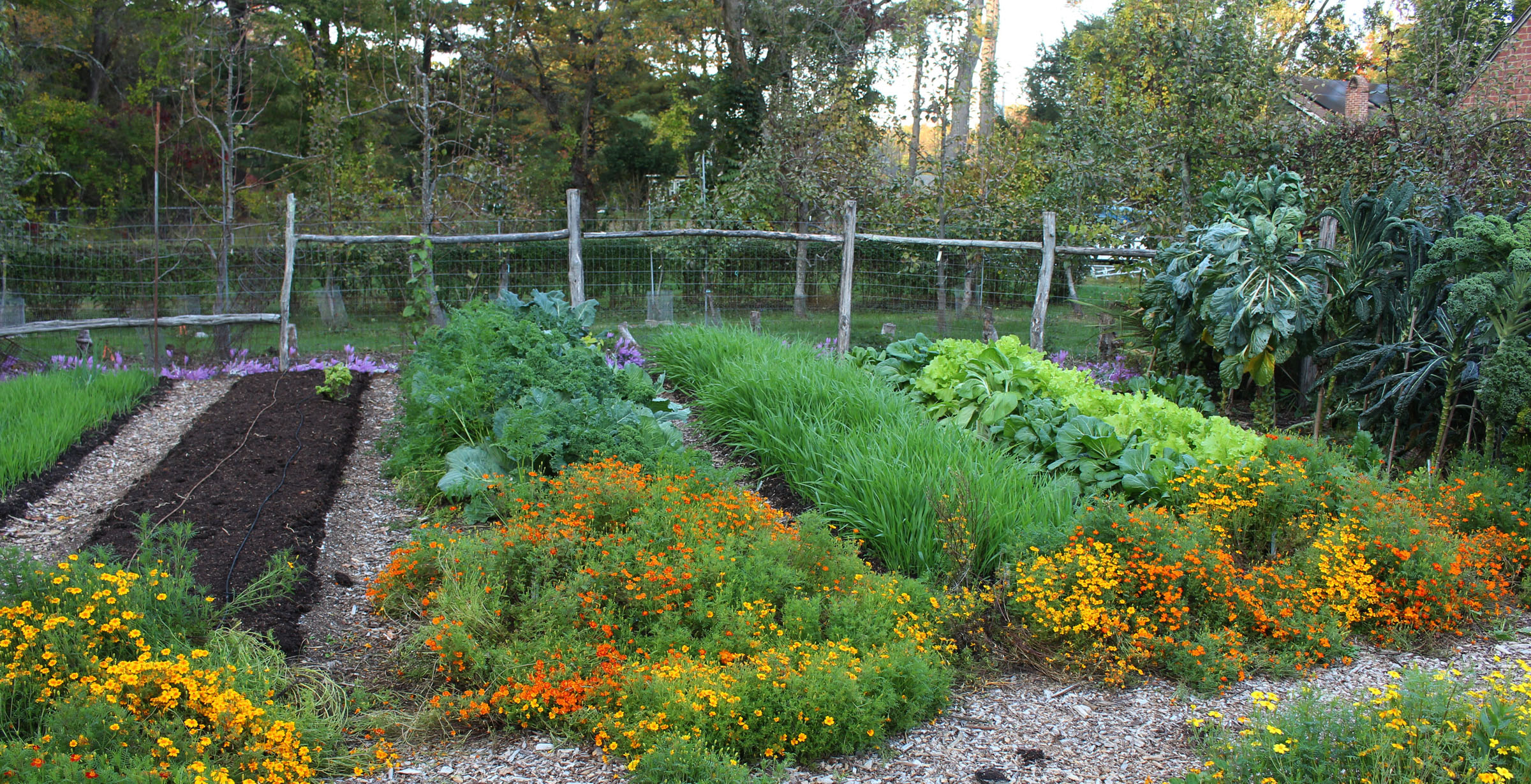
Garden in October

AUTUMN’S LUSHNESS

Preparation

How green is your vegetable garden? Mine is very. Summer long gone and frost in the air doesn’t have to bring on a scene of browned and ragged leaves clinging to withered stems.

My garden is green, having arrived at its present state of enthusiasm by, first, my keeping one step ahead of weeds. Especially after midsummer, some gardeners relax their grips on weed control, letting heat loving annuals like lamb’s-quarters, purslane, and pigweed take hold. And then cooler weather brings quackgrass and creeping charlie stealthily trying to . . . well, creep . . . in at the garden’s edges.Garden in October

Regular weeding forays through summer and early fall took but a few minutes of my time — much less than the heroic effort firmly established weeds would have required. Read more

Dr. Elwyn Meader

GILDED BERRIES

Making a Good Impression

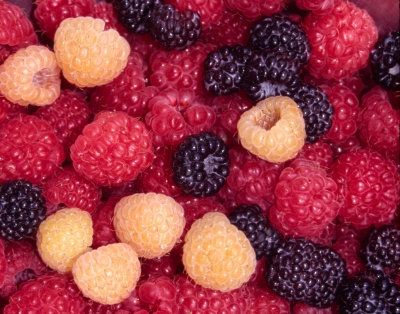
When I really want to impress some visitor to my garden, I offer a taste of Fallgold raspberries. Here is a fruit that is truly unique in a number of ways.

First, of course, is the flavor. Many raspberries taste good, especially when picked dead ripe and popped right into your mouth, but Fallgold is perhaps the tenderest and sweetest raspberry around. Here’s a berry that you’ll never find on a supermarket shelf; it’s too fragile to travel much further than arm’s length. Good for fresh eating but not freezing or processing. A university publication, while admitting that there’s currently limited commercial use for this variety, it could become a “gourmet item on the fresh market.”

Raspberry kin

Raspberry kin

Fallgold berries also have a unique appearance. The pale yellow, blushed orange color of the berries seems to speak out their sweetness and tenderness. Read more