FEAST OR FAMINE

Is Gardening Too Easy?

    Control yourself, Lee! Growing seedlings this time of year is too easy. Within a single packet of seeds  is the potential for a gardenful of vegetable or flower plants, even shrubs and trees. As such, a packet of seeds is relatively inexpensive.
    I have envisioned delphinium in my garden, its tall, blue studded spires backed by the fence surrounding my blueberry planting. I could have just gone out and purchased a few potted delphinium plants, but I wanted a bolder effect so purchased instead a packet of seeds. Who would have thought that germination would be so good. After all, the seed germinates best when fresh and likes some cool temperatures to awaken; some people freeze the seeds in ice cubes for awhile before sowing them. I used nothing but patience, and not that much was needed.
    I couldn’t bear to discard most of the seedling, so “pricked out” 24 of them into cells of my APS seedling flat.
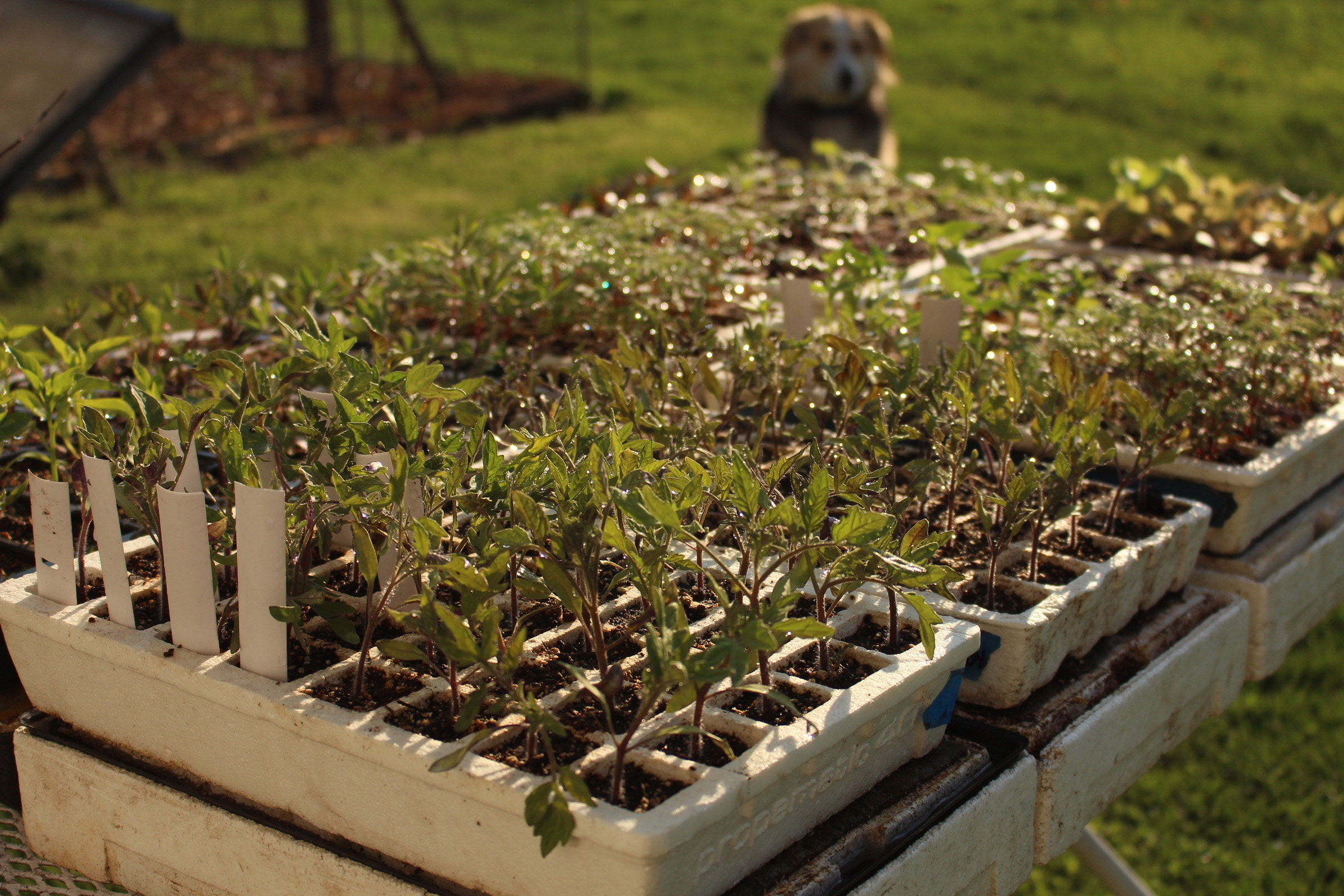
Seedling plants (and Sammy the dog) in spring

Seedling plants (and Sammy the dog) in spring

    The same thing happened with red lupines, chocolate daisies, Yellow Gem marigolds, and . . .  Growing transplants is the easy part. The difficulty will be in about a month when I’m wandering around the garden, seedling flat in one hand, trowel in the other, wondering where to plant all these flowers. (This problem does not arise with growing vegetable transplants because I keep harvest records for vegetables that let me know how many plants I need of each. Could my eyes get too full or too fat on too many flowers? No.)

Damn-ping Off, No More

    Raising transplants wasn’t always so easy for me. Decades ago, as a graduate student, I lived in a converted motel room which also became home to seedlings for my first garden. The shelves were lined with peat pots of sprouting chamomile (very easy), lettuce, beans, and other plants.
    Thence was my abrupt introduction to “damping off,” a disease that attacks seeds and newly emerged seedlings. Imagine the disappointment of a beginning gardener (me) watching seedling stems pinch in at he soil line and topple over — the telltale symptom of damping off disease.
    I soon learned that damping off was not uncommon, even among experienced gardeners. The disease is caused by any one of a few soil dwelling fungi  that raise their ugly head (figuratively) given the right conditions (for them). One obvious way to try to avoid the problem is to sterilize the potting media.
    Most commercial potting mixes are sterile, as were the peat pots I was using. The problem is that the culpable microbes are everywhere, just waiting to attack when conditions are just right, conditions that I unknowingly provided for them in my motel room. The peat pots were excessively moist; the air stood still; and little light entered the room — perfect for damping off development.
    Nowadays, my seedlings rarely experience damping off. The plants get off to a good start at temperatures they enjoy, bathe in light in my greenhouse or sunny windows (or, in the past, cozied up very close to fluorescent bulbs), and a fan keeps the air moving. I also add sufficient perlite to my potting mixes so that excess water drains feely down and out of the mix.
    Years ago, soothing brews of chamomile tea would also come to the rescue — for the seedlings, not for me. That tea hasn’t been needed for a long time. I also don’t pasteurize or sterilize my potting mixes. Beneficial microbes, from the compost in my mix, and good growing conditions have thankfully made damping off nothing more than a distant memory for me.

Oh Deer!

    Bigger creatures are still an ever present nightmare. Especially deer and especially after this winter. They have sheared the greenery from nearly every evergreen they could reach here, the hollies, arborvitaes (white cedar), yews, hemlock, and junipers (red cedar).
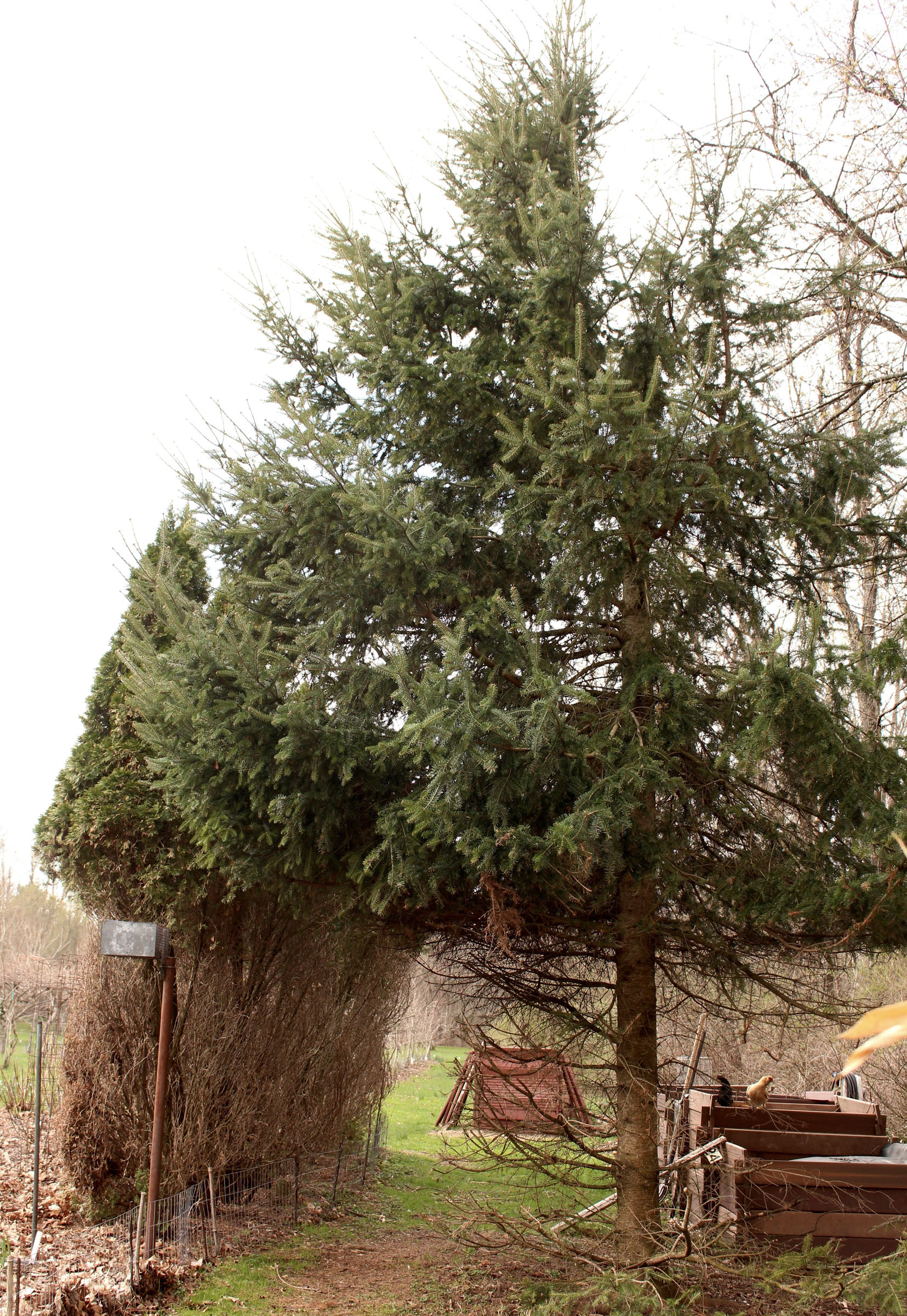
Deer damaged arborvitae and balsam fir.

Deer damaged arborvitae and balsam fir.

    Interesting about the yews, because the foliage is toxic to many ruminants; a mouthful will kill a horse or cow within 5 minutes. Deer, according to most reliable sources, can feed on yew without ill effect. With that said, this past winter, I did find a deer dead on the ground near my yew bushes, which had been nibbled free of their foliage.
    How about the plants; how will they fare, bare. Yew tolerates all sorts of abuse in the form of pruning. Soon, new needles will start appearing along their stems. Or, if the stems are cut back, new needled shoots will soon appear. My other evergreens should also fare well. Rhododendrons and mountain laurels, which the deer left alone, also generally sprout new growth when nibbled. So any of these so-called random-branching conifers or broad-leaved evergreens can be pruned to look prettier after deer have ravaged them.
    Not so with so-called whorled branching conifers, such as pines, spruces, and firs. They generally do not resprout from bare wood, so there’s not much that can be done to prettify them now. Just lop back bare branches because they’re always going to be just that: bare.
    For more about pruning evergreens, and other plants, see my book, The Pruning Book.
QUICK, NO WORK GARDEN, FOR STARTERS

Prescription for a New Gardener

    It seems like everybody’s a gardener, or is becoming one, this time of year. And a lot of people have been asking me questions. Like my niece Lana, for instance, who moved along with her husband, a baby, and a toddler to a new house last fall and is ready to dig into a garden this spring — but, as Lana said, a garden “that will be easily manageable for her and interesting to her 3 year old.” (The one-year-old is still enthralled with her thumb and other such things.) So, for Lana and other beginning or non-gardeners, here is a simple plan for a small garden that requires almost “no time.”

A small, productive garden

A small, productive garden

    The most stringent requirement for this garden is sun. The more the better. And the closer the garden is to the back door, the more you will be drawn to it, whether to dash out to pick a few leaves of lettuce, or to pull a wayward weed. This garden can be, probably should be, small. Let’s assume it is ten feet by ten feet.
    The second requirement is soil that does not stay sodden for hours after a heavy rain. Push a can with both ends open into a hole in the soil and add water; it should drain faster than an inch an hour. If not, choose a new location or make raised beds.
    With sun and water taken care of, soil preparation begins. And ends a few minutes later! Blanket this area with a four-sheet thickness of newspaper (do not use colored pages), overlapped and wetted.  Done, almost. The newspaper will smother existing vegetation, and keep out weeds during the growing season. And as the paper rots away, it will enrich the soil.
    The planting plan is simple: divide the garden into four beds, delineated by two 18 to 24 inch wide paths going up the center of each side and crossing each other in the center of the garden. Cover the newspaper in the paths with wood chips, wood shavings, sawdust, or pine needles. In the beds, purchase some weed-free compost, enough to lay at least a one-inch depth over the newspaper.
    Sow seed right into the compost layer. Peas and lettuce need to be planted early — as in now — because they both enjoy cool weather in rows about a foot apart. Make each pea row four inches wide, then scatter the seeds so they are about an inch apart down and across the row.
    The next wave of planting takes place after warm weather has settled, in late May. Buy tomato transplants and set them in one of the northern quadrants. If needed make a hole through the newspaper into the soil below to accommodate the full depth of the transplant. Grow a variety for flavor, like Brandywine, Sungold, or Amish Paste. Each plant should be two or three feet from its neighbor, depending on whether you are going to stake your tomatoes or allow them to sprawl. Eventually you will have a jungle of vines in danger of overtaking or enlarging your garden, so take a few minutes occasionally during the summer to prune wayward stems from the tomato plants.
    Plant sweet corn and cucumber seeds at the same time as tomato transplants. Since corn is a tall grower, it gets the other northern quadrant. Plant three seeds together in “hills,” which are groups of seeds, not mounds of dirt, spaced two feet apart each way. Cucumbers get the final, southern quadrant. Sow six seeds per hill, with hills three feet apart. Grow a bush-type cucumber, like Salad Bush or Bush Pickle. Once the corn and cucumber seeds are up and growing vigorously, ruthlessly thin the plants so each corn hill has only one plant and each cucumber hill has three plants.
    This garden gets one final planting in early July. But where, since all four quadrants are used up? Pull out the peas and lettuce, which flag anyway during hot weather, and plant in their place bush beans. Bush Blue Lake and Bush Romano are good choices.
    This garden will produce a limited amount of vegetables with a minimum amount of work. Success may tempt you to enlarge your garden and grow a greater variety of plants next year.

Get Your Compost On

    A gardening friend called to ask how much compost is needed to cover his garden. It turns out that a one inch depth of compost will supply all the nutrition, plus a lot of other goodies, that a vegetable garden needs to nourish the plants for one year. So that one-inch depth needs replenishment annually.
 

Spreading compost on bed

Spreading compost on bed

   (Less compost could be used if the deficit is made up by fertilizer. But compost is the Cadillac of plant foods while also offering protection against pests, improved aeration and water retention in the soil, protection against erosion, and other known and unknown benefits.)
    Back to the amount needed: 1/3 of a cubic yard (300-500 pounds, depending on moisture) will cover 100 square feet 1 inch deep. That’s a lot of compost, which beginning gardeners will likely be buying. If you’re buying compost in bulk, which is the least expensive way to purchase it, make sure it’s good stuff by asking some questions, such as what went into the compost. Avoid using compost that contains industrial wastes — especially in the vegetable garden — because of possible toxins like excessive quantities of heavy metals that could contaminate your food. Also ask how the compost has been prepared and stored.
    The ideal would be to make enough of your own compost. Next year, perhaps.

BLUEBERRIES OUTSIDE, APHIDS INSIDE

 Plant the Best-Tasting Fruit

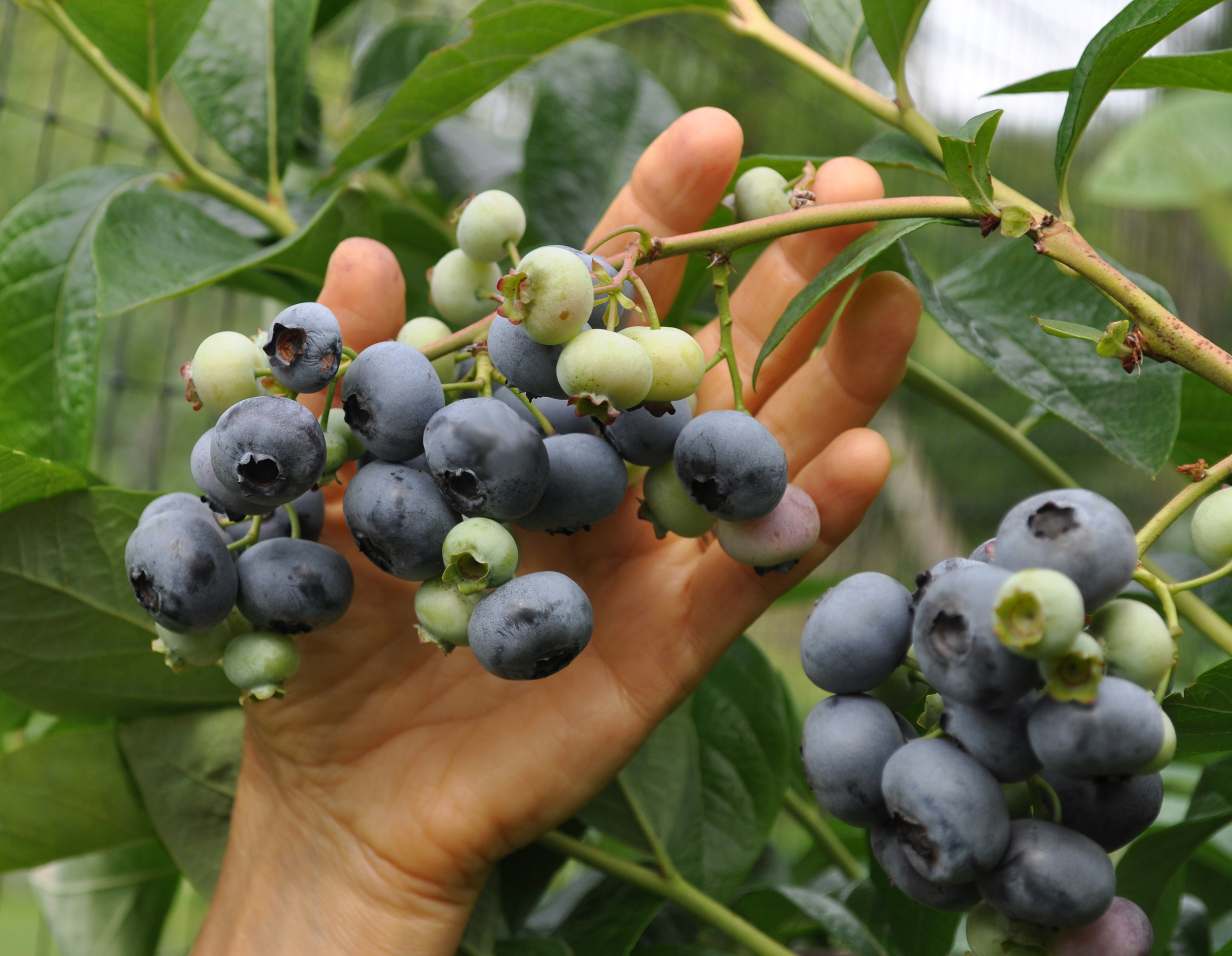
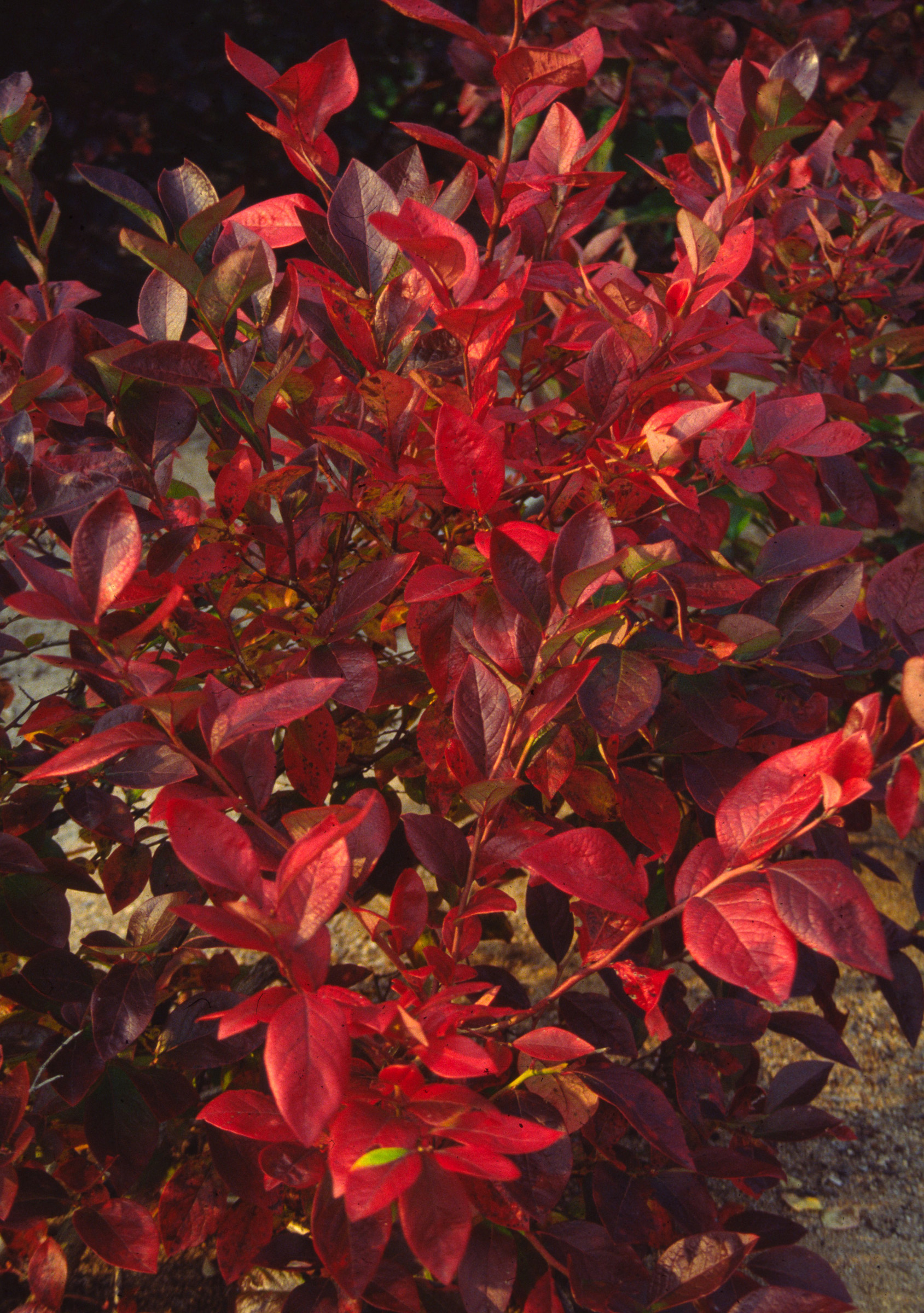
   My sixteen blueberry plants keep me in blueberries year ‘round, so I’m not planting any this year. But you are, or should be. The bushes are attractive in every season, with white blossoms in spring, foliage that looks spry all summer and turns crimson red in fall, and stems that shade to red in winter. The bushes are almost pest-free. And the berries are healthful and delicious.

Blueberry fruits on plant
Blueberry fall color    All you would-be blueberry planters out there: Pay attention to the soil for your plants, about which I’m going to offer advice. Too many people plunk a blueberry bush into a hole dug in their lawn and then wonder about the lack of berries. Poor growth, that’s why. The plants bear fruit on one year old stems. If shoots grow only a few inches one year, there’s little room on which to hang berries the following year.
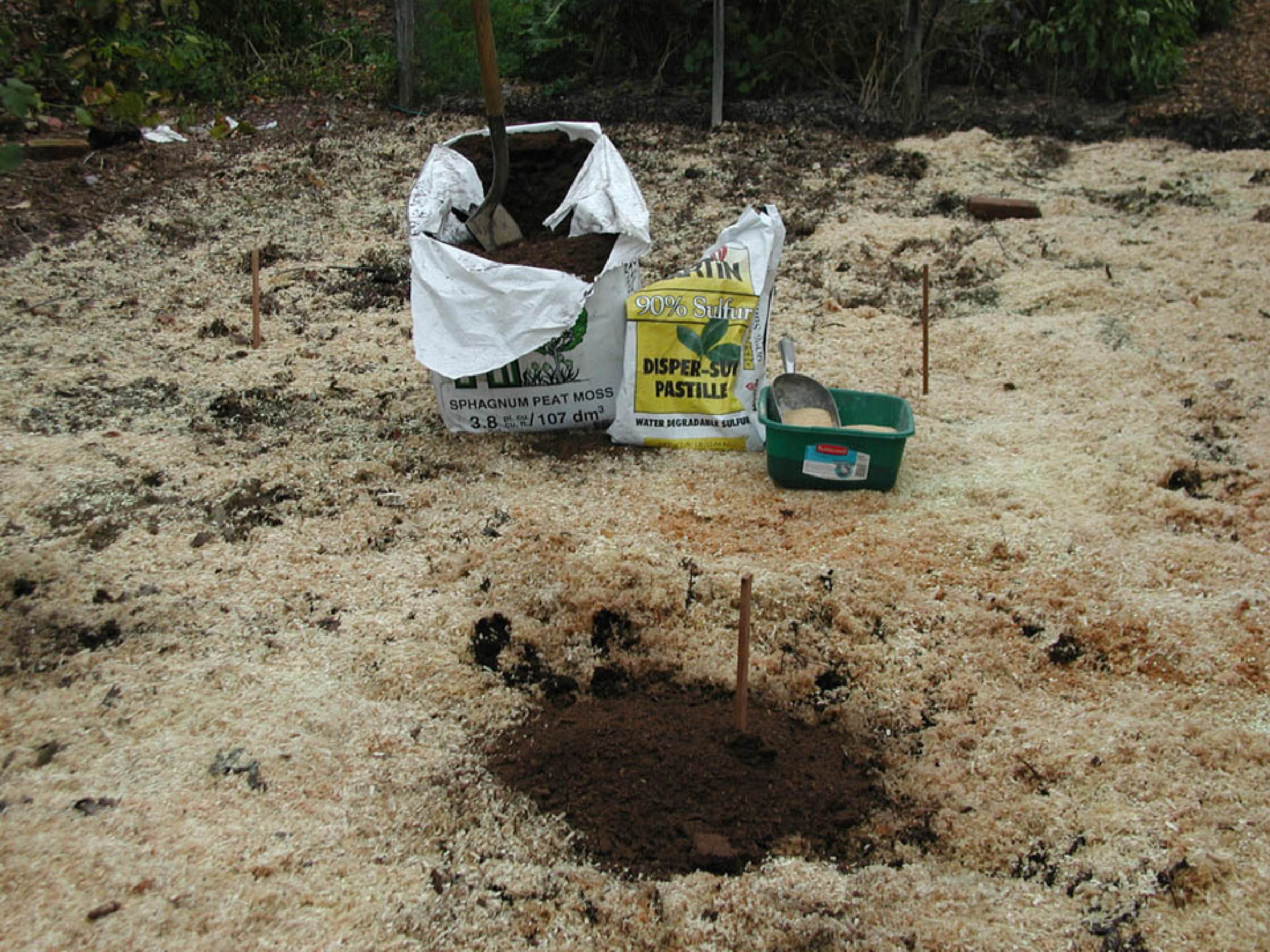
    Taking a cue from wild blueberries, here’s what the bushes need, soil-wise: acidity (pH 4-5.5), organic matter, relatively low fertility, moisture, air, and no competition from weeds. For starters, check the soil pH with either a home testing kit or by taking a sample to a Cooperative Extension office or soil testing laboratory. If soil is not sufficiently acidic, add sulfur, preferable pelletized sulfur for ease of handling, 3⁄4 pound of sulfur per 100 square feet in sandy soils or three times this amount in heavier soils, for each pH unit the soil is above 4.5. Contrary to popular myth, adding oak leaves or pine needles will NOT do the trick. Spread sulfur over the ground as far as the eventual spread of the roots, which is about 3 feet in all directions.Planting blueberries
    Then dump a bucketful of peat moss right where you plan to dig each hole. Dig the hole deep and twice as wide as needed to get the plant in the ground, mixing the peat moss with the soil. Peat moss provides a long-lasting source of organic matter, which also helps with aeration and water retention.
    Finally, plant and water.

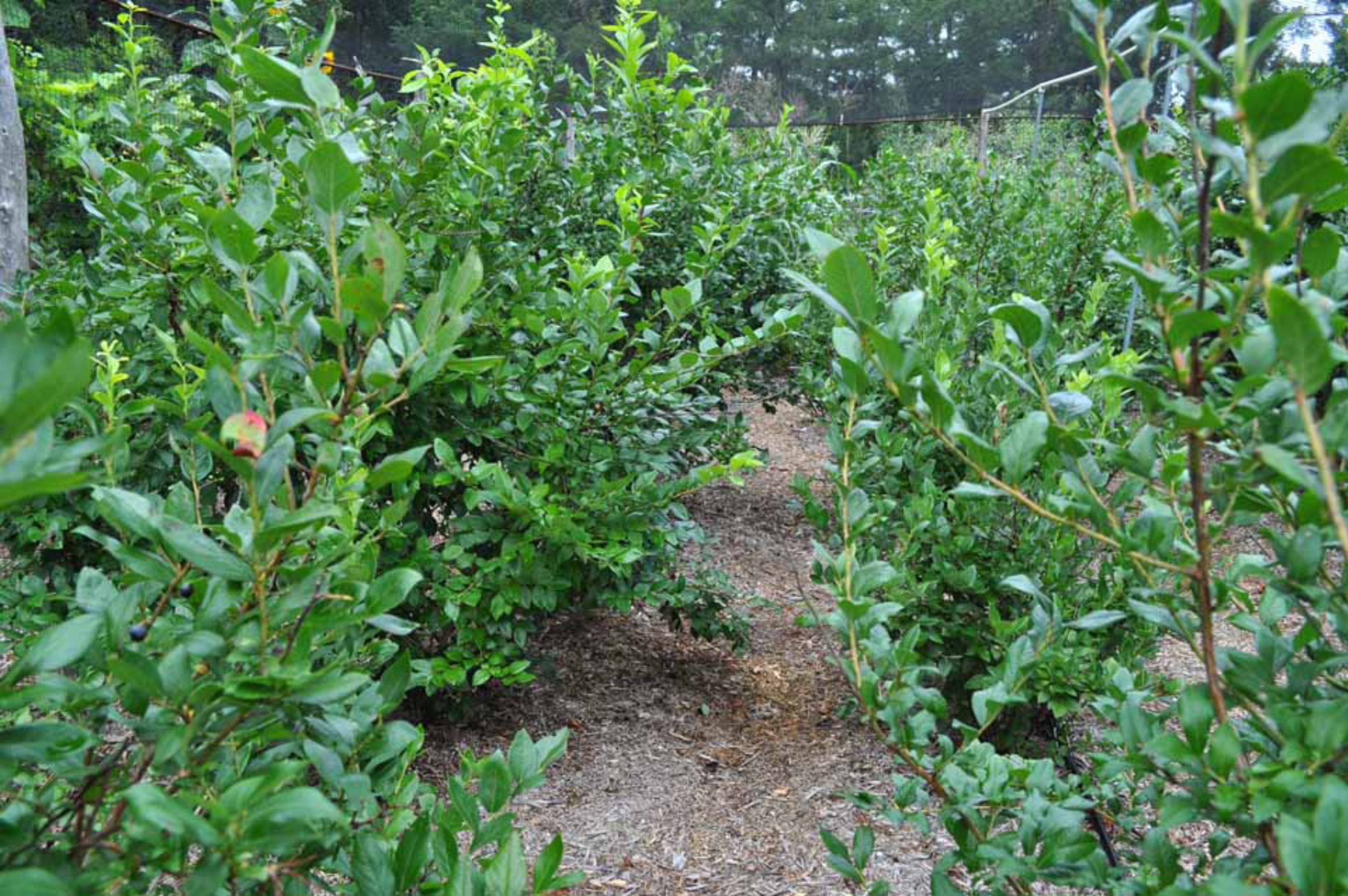
My planting, 7 years later

My planting, 7 years later

   Wait, you’re not finished yet. Right after planting, spread some organic mulch, such as wood shavings, leaves, or pine needles, a couple of inches deep and as wide a spread as the roots. Mulch keeps the soil moist and further enriches the ground with organic matter as its lower layers decompose.

Soil & Birds

    Ongoing soil care for blueberry bushes is simple and necessary, mostly food and drink.
    Assuage the bushes’ thirst with, barring rain, three-quarters of a gallon of water per week for each square foot spread of the roots. Satisfy their hunger by spreading a high nitrogen fertilizer late each fall. I use an organic fertilizer, such as soybean or alfalfa meal, at the rate of 1.5 pounds over every hundred square feet of root spread. These fertilizers offer nitrogen throughout the growing season in a form blueberries can use.

Blueberry temple in winter

Blueberry temple in winter

    Periodically re-check the soil pH and add more sulfur, if needed. Replenish the mulch each fall, laying the new mulch right on top of the old mulch.
    For the future — harvest of first berries should begin within a couple of years — think about birds. Are you going to share? Are they going to share? I opt not to share, enclosing my whole planting in netting, to create a walk-in “blueberry temple.”

Aphid Attack & Counterattack

    Turning inward, not introspectively, but to the greenhouse, I see aphids getting a foothold. Their populations soared a few weeks ago as young and old feasted on aging celery and arugula plants beginning to send up seed stalks.
    My first counterattack was to cut down or dig up these old plants and whisk them to the compost pile before too many insects dropped off to take up residence on smaller plants and seedlings. Not that there weren’t plenty of stragglers fattening up on younger plants.
    My tack with the stragglers has been to set my watering wand on “fan spray” and blast the plants with water. Most aphids that get knocked off plants don’t return. I spray on mornings of sunny days so leaves dry relatively quickly, limiting potential disease problems. The temporary increase in humidity might increase the likelihood of aphids’ getting fungal diseases, to which they are very susceptible.
    Of less effect are the ladybugs I periodically introduce into the greenhouse, in large part because I don’t have enough of them. They used to enter my home in large numbers via leaks around an old, south-facing window and nearby crack in the wall. I’d merely vacuum them up as they clustered on the window pane and shake the contents of the hand-held vacuum among plants in the greenhouse late in the day. That window and the wall crack have been repaired, so few ladybugs end up indoors.
    I’m considering making a hole in the wall to let the ladybugs indoors again and hanging a ladybug live trap (available commercially or made from online plans at http://www.ars.usda.gov/is/br/lbeetle/001030.trap.pdf) right near the hole.
    Thus far, though, cleanup and water sprays have kept aphids under control, and plants are growing well. Once transplanted outdoors aphid problems vanish because of the weather and natural predators.

POPPING, PRUNING, AND EATING


Popcorn Gets Bigger, But Medlar Is Still Ugly (Not To Me)

   A couple of weeks ago I wrote about increasing the poppability of my home-grown popcorn by exposing the kernels to the vapor of a saturated salt solution. Pennsylvania Dutch Butter Flavored popcorn, a variety that usually pops fairly well, popped to 1/3 greater volume.
    This week Pink Pearl, a variety that’s not usually a very good popper, underwent testing. The result: No effect of the treatment; both the treated and untreated batches popped pretty well. Was it the change in the weather, stronger hints of spring? Perhaps. (Previously, I pointed out how cold weather outside turns indoor air drier, perhaps too dry for good popcorn popping.) At any rate, Pink Pearl was tasty.

Medlar Teaches How To Prune A Fruit Plant

    The weather change also had the effect of drawing me outdoors more — for pruning. Looking at my medlar tree’s branches going every which way, I scratched my head (figuratively) wondering where to start, what to cut.
    Medlar is a fruit tree (more on medlar later), and the first step in pruning any fruit tree is attending to light. Light provides the energy for photosynthesis which translates into flavorful fruits. The goal is to let every branch bathe in sunlight, which also helps thwart potential disease problems.
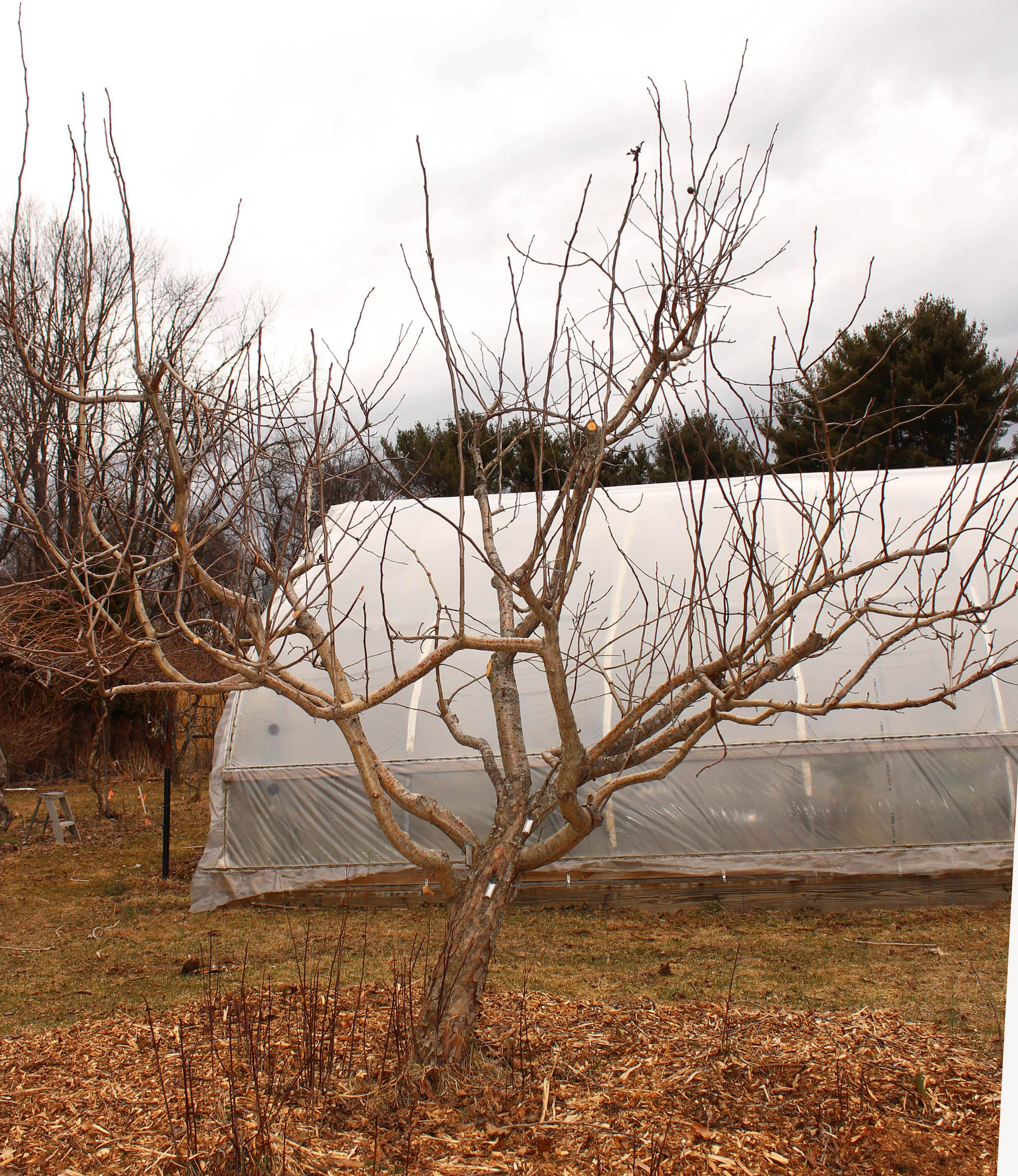
    So I stopped scratching my head and started with a few dramatic pruning cuts, lopping some of the larger limbs back to their origins. Medlar has a naturally spreading growth habit, so cuts were aimed at removing limbs trying to fill in and shade the the center of the tree. I wanted a whorl of branches reaching up and out.

Medlar tree, after pruning

Medlar tree, after pruning

    Next to go were dead, diseased, and broken branches. I saw remnants of cicada damage from two years ago. Away with most of those stems also.
    For the next cuts, you have to know how a particular kind of fruit tree bears fruit. At one extreme are peaches. They bear only on one-year-old stems so need aggressive pruning each year to stimulate new shoots that become next year’s bearing, one-year-old stems. At the other extreme are apple and pear trees. They bear fruit on long-lived spurs, which are stumpy, branching stubs that develop on older limbs, so relatively little pruning is needed.
    Medlar’s bearing habit lies somewhere between those two extremes. I shortened a few very old branches to invigorate them with new growth.
    On most fruit trees, drooping branches make poorer fruit. Probably for medlar also. So off came the drooping branches, either back to non-droopy portions or to their origin.
    Finally, some detail work: shortening or removing those vigorous, vertical shoots called watersprouts; thinning out smaller areas of congested branches; removing stems growing too close to where major limbs exit the trunk; and lopping down root sprouts growing at or near ground level from the rootstock.
    Besides fruit, medlar offers beauty. Part of the beauty is the craggy shape of the tree, its muscular limbs clothed in golden brown bark. I stepped back to admire the tree and my work after pruning. If I’ve done a good job, the tree looks happily ready to bask in light and air and, because the major cuts removed limbs at the origin, hardly looks like it’s been pruned.

Medlar Teaches To Eat With Your Tongue, Not Your Eyes

    Medlar is a fruit whose popularity peaked in the Middle Ages. Charlemagne was a fan, a big fan who demanded the tree be planted in every town he conquered.

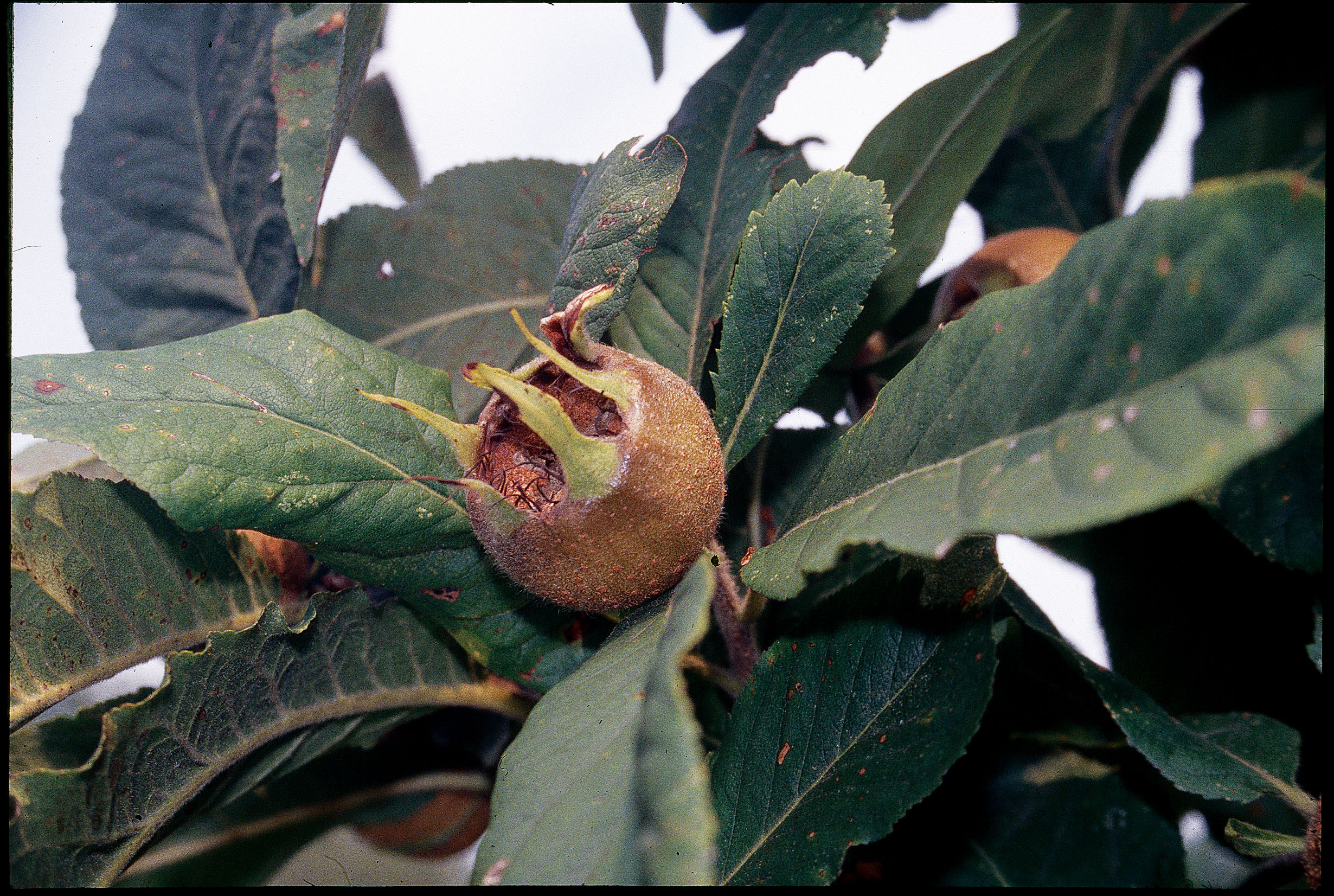
Medlar, fruit in summer

Medlar, fruit in summer

    Despite its popularity, even in the Middle Ages, the fruit has often been described disparagingly — for its appearance, though, not its flavor. The fruits resemble small, russeted apples, tinged dull yellow or red, with their calyx ends (across from the stems) flared open. “Open-arse” was the name Chaucer chose. A more recent writer described medlar as “a crabby-looking, brownish-green, truncated, little spheroid of unsympathetic appearance. “ (All recounted, along with information about growing, procuring, and eating medlars in the chapter on medlar in my book Uncommon Fruits for Every Garden.)

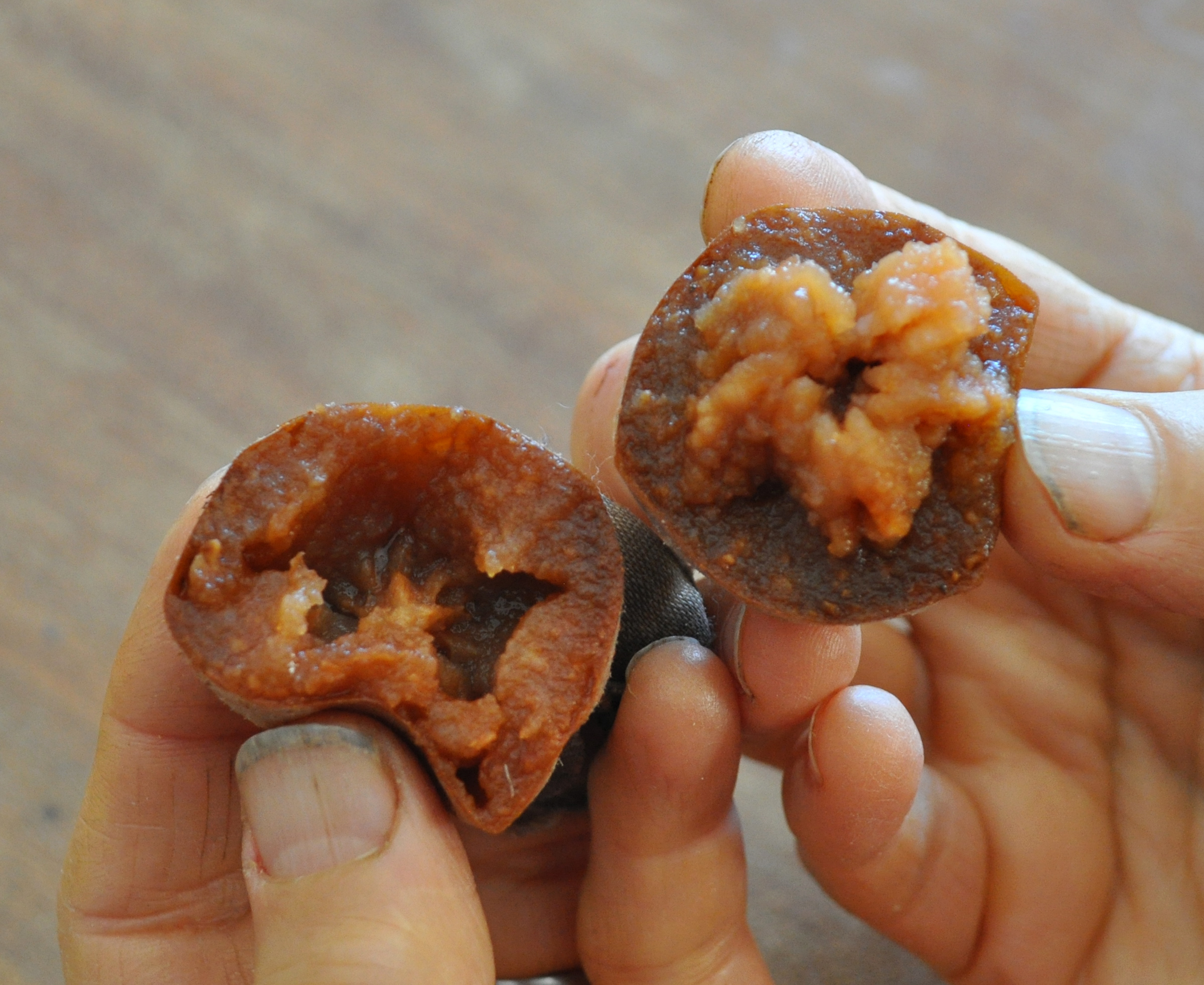
Medlar, after bletting

Medlar, after bletting

    Oh, one more quirk about medlar: The fruit, rock hard at harvest, needs to be bletted before eating. This means gently setting it on a counter in a cool room for a couple of weeks, or more, depending to the temperature, during which time the fruit’s interior turns to brown mush. Ugly to look at, but the flavor has a refreshing briskness with winy overtones, like old-fashioned applesauce laced with cinnamon. Between the fruits’ appearance and their need for bletting, you’ll never find medlars for sale on a supermarket shelf.
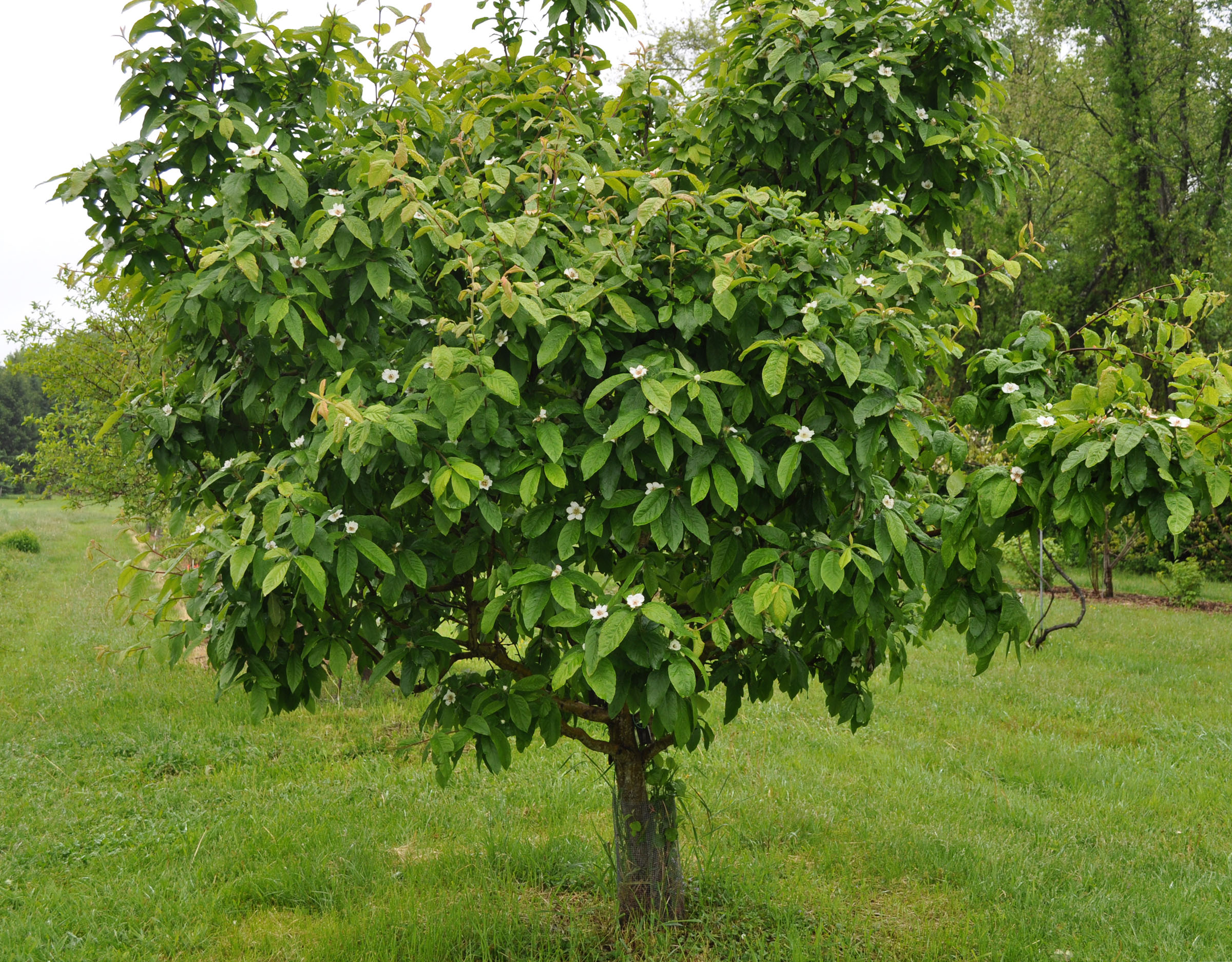
    Perhaps the fruit is ugly. The tree is not. I already mentioned the attractive form and color of the limbs. The white flowers, opening here in May, are like those of a wild rose, each one enhanced because its late opening gets a backdrop of a whorl of already unfurled, dark, green leaves. The tree grows only 8 or 10 feet high and wide and will fruit without another pollinator, so is perfect for a small yard. No need to decide whether to plant a fruit tree or an ornamental tree; medlar is both trees in one.

Medlar, tree in bloom

Medlar, tree in bloom

ELUSIVE AZURE AND FRUIT

Too Hot Here For These Gems, But Maybe I Can Trick Them

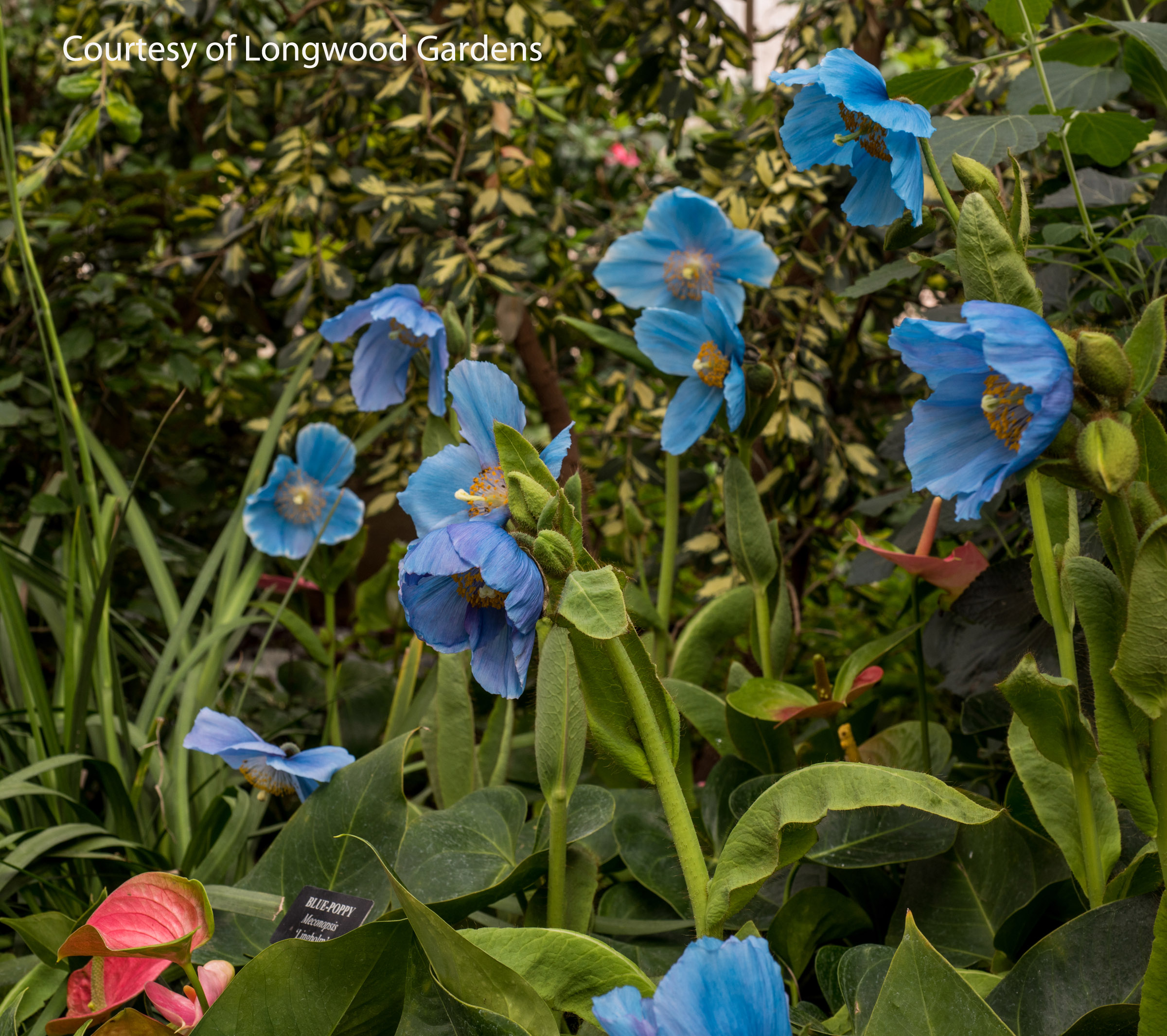
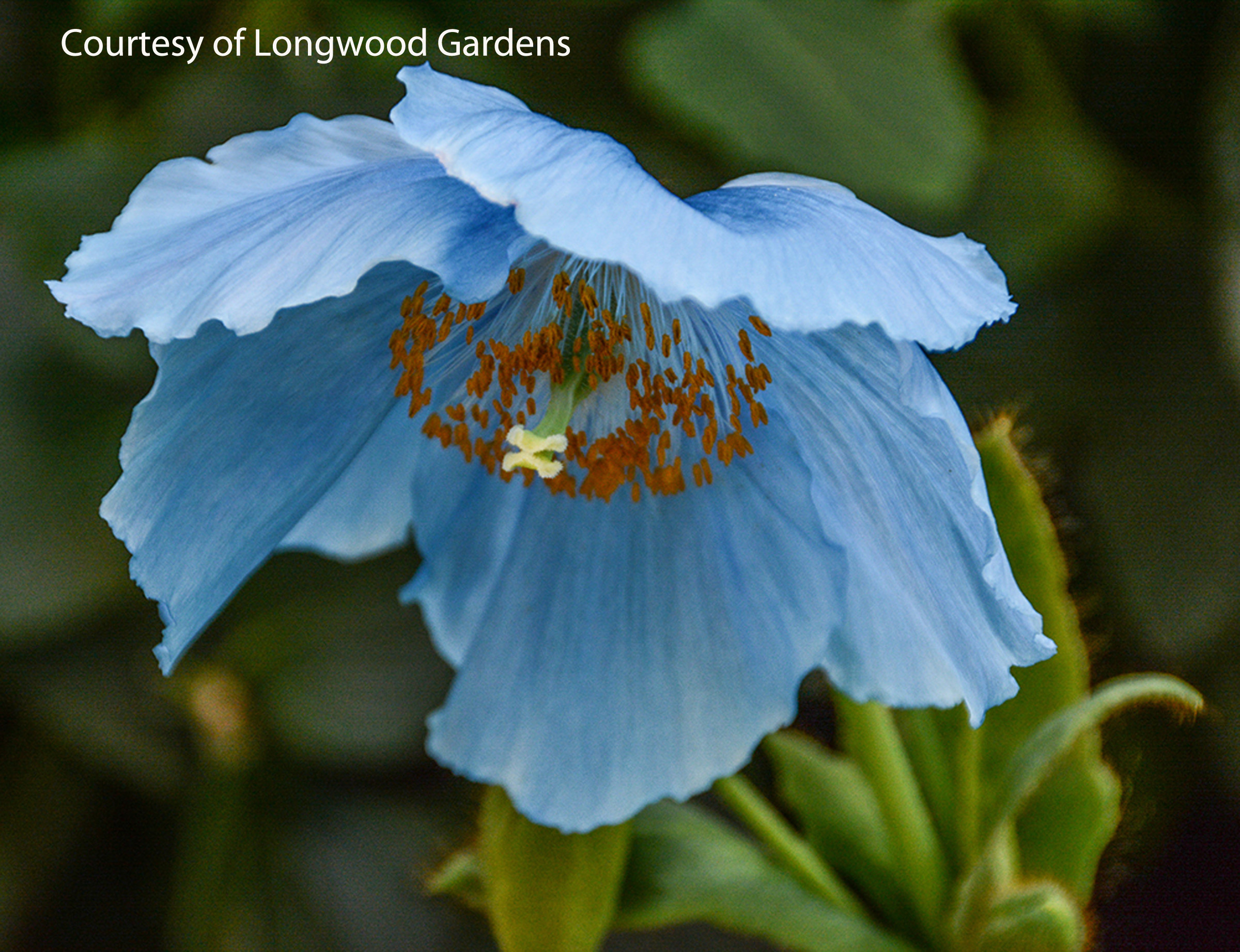
   It was decades ago that Norman — gardener, orchid expert, one-time cattle farmer, and lawyer — described to me his first sighting of blue poppy, Meconopsis betonicifolia. He was traveling in England, and at this particular garden was a pond whose far side was electrified by the sky blue petals of blue poppy, perhaps the purest blue of any flower. The mirrored surface of the water stepped up the voltage, as do the frilly clusters of golden anthers trembling in the center whorls of petals.Blue poppy at Longwood Gardens
    Since then, I’ve lusted for blue poppies but have yet to see the plant in bloom. Twice I tried to grow it, from seed. Each time the seedlings germinated and got off to a good start. Each time, in July, as temperatures here started to get steamy, the plants collapsed, dead. Blue poppy is native above 10,000 feet in the Himalayas and doesn’t like hot weather.
    I don’t feel compelled to grow the plant (although that would be nice); I just want to feast my eyes on those bluest of blue petals. To see the plant in bloom requires being somewhere: 1) in late spring or early summer, 2) with cool summers, 3) where blue poppy grows wild or has been planted. The second condition, cool summers, is found in North America in the Pacific Northwest, New England and adjacent parts of Canada, and Alaska. I like hot summers so I’m not relocating to any of these places in order to grow this plant. Also, my garden is particularly needy and entrancing in late spring and early summer, so I’m not leaving then.

I Almost Cross Paths With Blue Poppy, After 20+ Years

    As it turned out, I just missed an opportunity to see blue poppy in bloom at Longwood Gardens in Kennet Square, Pennsylvania. Not only is Longwood not far from here, but I happened to be in nearby Philadelphia two weeks ago, when the plant was in bloom. Who would have thought blue poppy could be grown in Pennsylvania?
Close up of blue poppy    I had, at least, to find out how the plants are grown there. As described by Longwood horticulturalist Jim Harbage, each October Longwood has potted plants shipped from a nursery in Alaska. The plants are put into cold storage until early January, then brought into Longwood’s cool (50-60°F) conservatory to slowly awaken and, finally, blossom in March. After bloom, the plants, although perennials, are discarded.
    Most important is to keep temperatures below 70° F. Research at Longwood Gardens showed that respiration outpaces photosynthesis at warmer temperatures. The plant, essentially, starves. Warmer temperatures also cause some purpling of the petals, ruining the whole reason for growing the plant.
    Could Longwood’s prescription be mimicked in my greenhouse? Probably not.  Longwood’s large, high-ceilinged conservatory, with dappled shade from tree ferns and citrus trees, perhaps also cooling mists of water puffed into the air as needed, is a lot cooler than my greenhouse. Here, greenhouse temperatures on sunny days in February and March soar, despite vent fans, into the 80s.
    How about a sunny window sill? Temperatures are cool in my house, more so the further you go from the woodstove. So that’s a possibility. But purchasing new plants every year could get expensive, especially plants that are good only for compost once their blossoms fade.
    How about starting the seeds in early or mid winter for planting outdoors to blossom before temperatures get too hot? Or starting the seeds in fall and exposing the young seedings to very cool temperatures for more assured earlier blossoms outdoors? Blue poppy, if it behaves like many other perennials, should blossom the first season if started very early or if tricked into thinking it’s been through winter before blossoming. I later learned that Chanticleer Garden, also in the Philadelphia region, gets outdoor blossoms from plants purchased in October, wintered in cold frames, then planted outdoors in March. Bloom is in April; composting is in June.
    The most important and most reliable route for me to eye blue poppy in bloom is to pencil in a trip to Longwood Gardens for early March next year.

King Red, For Fruit & Beauty, Also Elusive . . . Do Far

    My blue poppy experience is reminiscent of my experience with another plant of western Asia, a plant variously called King Red Russian olive, iğde (in Turkey), botanically Elaeagnus angustifolia var. orientalis, or, erroneously, Trebizond date (which is a persimmon species).

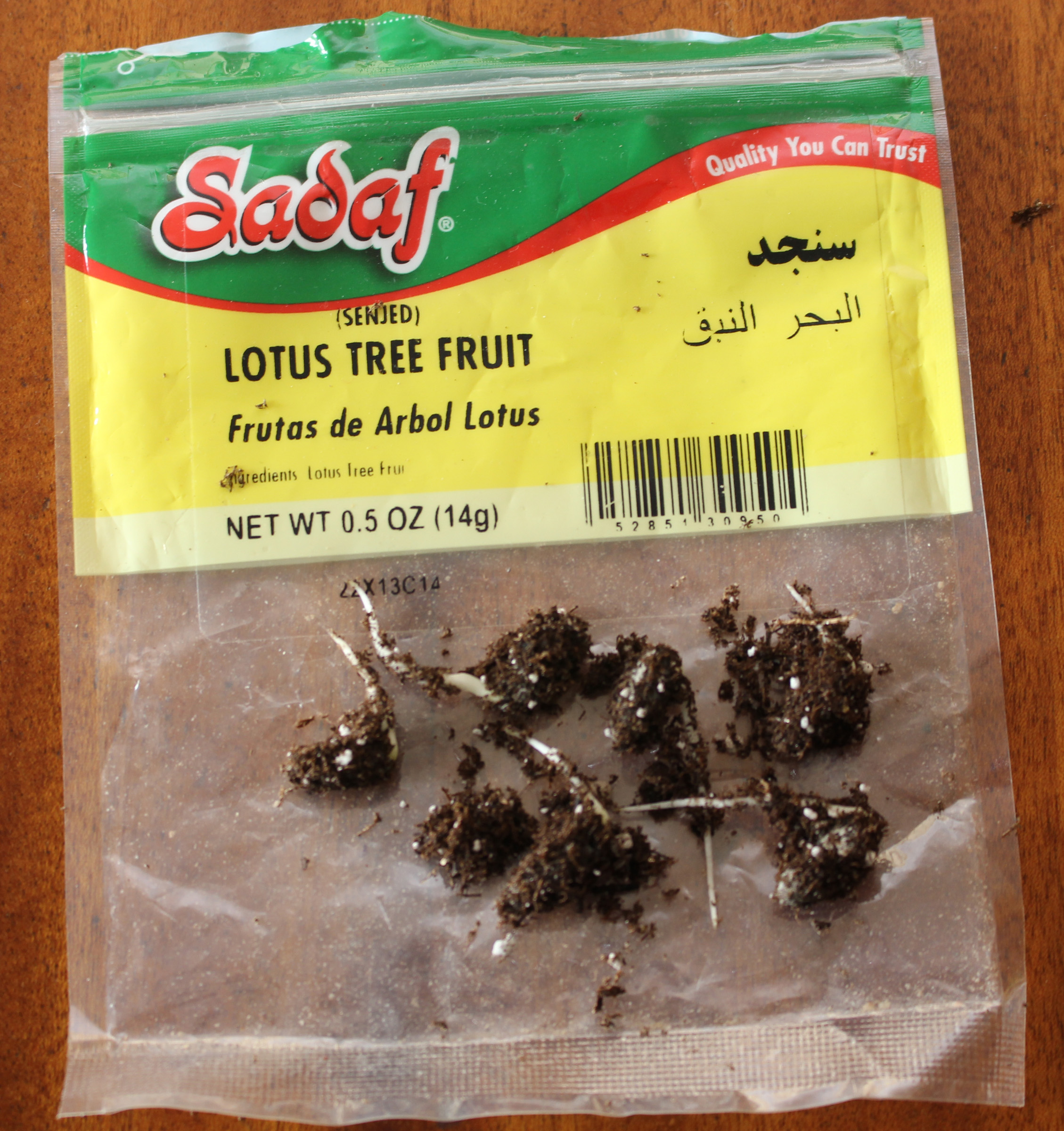
King Red seeds, sprouting last spring

King Red seeds, sprouting last spring

    King Red is invasive out West but definitely is not invasive here. As with blue poppy, I’ve grown the plant from seed only to have it collapse, dead, when steamy weather arrived.
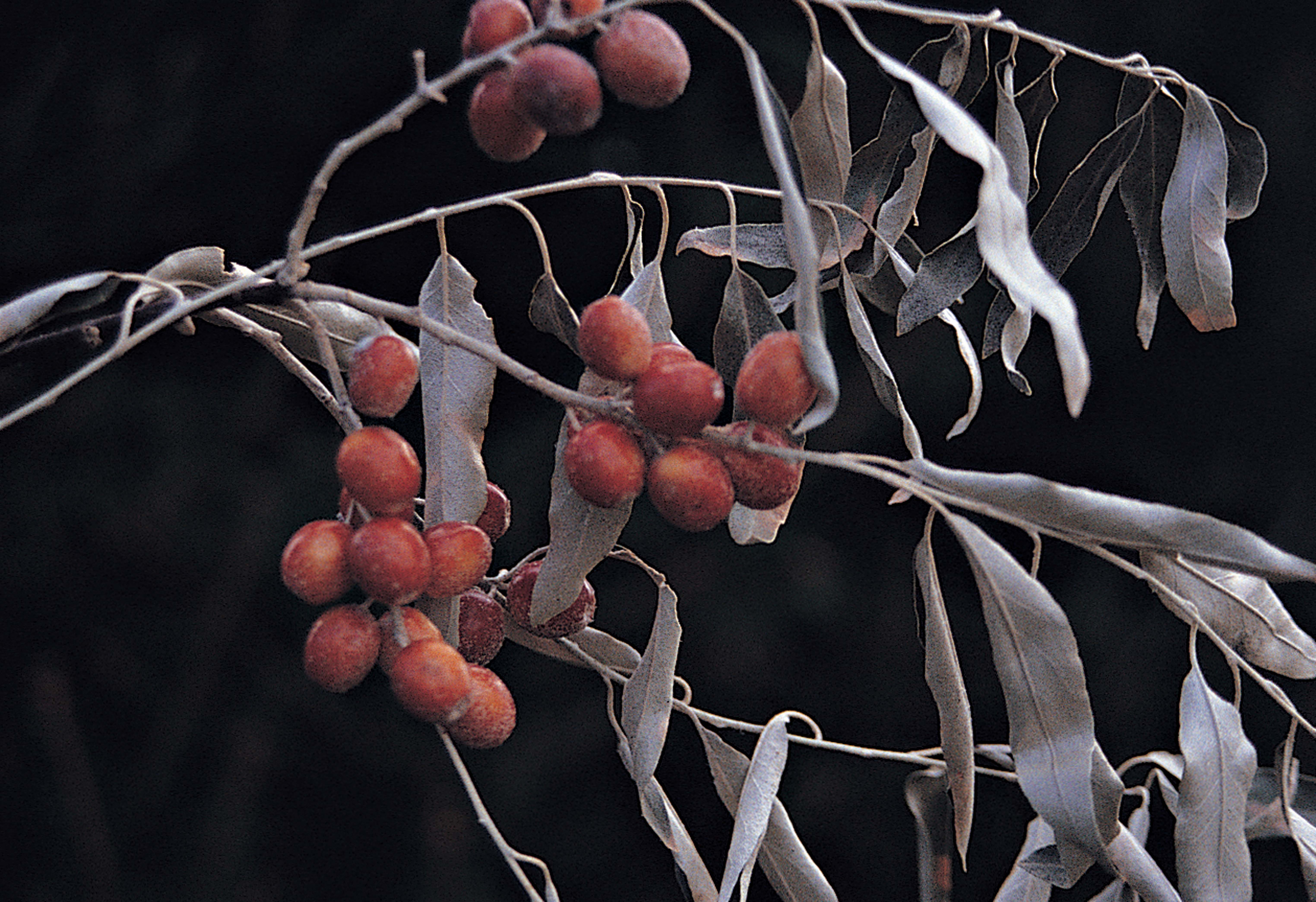
    Beautiful blossoms are not the attraction of King Red, although they do sweetly perfume the air in spring. Rather, it’s the bright red fruit that is highlighted by the gray-green foliage and, when dried, is like sweet talcum powder contained within a cherry-sized, brittle shell. Even without the flowers or fruit, the tree imparts a soft, Mediterranean look to the landscape, much like an olive tree, a relative.
    I started some seedlings of King Red Russian olive last year, hoping for some genetic variability in heat tolerance. All the seedlings thrived, probably because of last summer’s relatively cool temperatures.
 

King Red branch that someone sent me

King Red branch that someone sent me

   The seedlings are now dormant in 4 inch pots in my basement. I want 20 foot tall King Red trees so eventually the baby trees need to be planted out. I’m scoping out suitable locations with cooler microclimates. A spot receiving only morning sun is the current best candidate.
    Perhaps in a few years I’ll be eating home-grown iğde while enjoying the sight of blue poppies.

HOME GROWN GRAIN & GRAIN-ISH


Popcorn & Chestnuts, Bigger is Better But Not Always

   Orville Redenbacker’s popcorn may be an “exclusive kernel hybrid that pops up lighter and fluffier than ordinary popcorn,” but my popcorn — nonhybrids whose seeds I’ve saved for many years — tastes better. I grow two varieties, Pink Pearl and Pennsylvania Dutch Butter Flavored Popcorn.
    This winter my popcorns’ poppability was especially poor, probably because of the weather. Really! Popcorn pops when the small amount of water within each kernel, heated above the boiling point, builds up enough pressure to explode the kernel, turning it inside out. For good popping, a kernel needs an intact hull and moisture within. Not just any amount of moisture, though, but as close as possible to 13.5%.
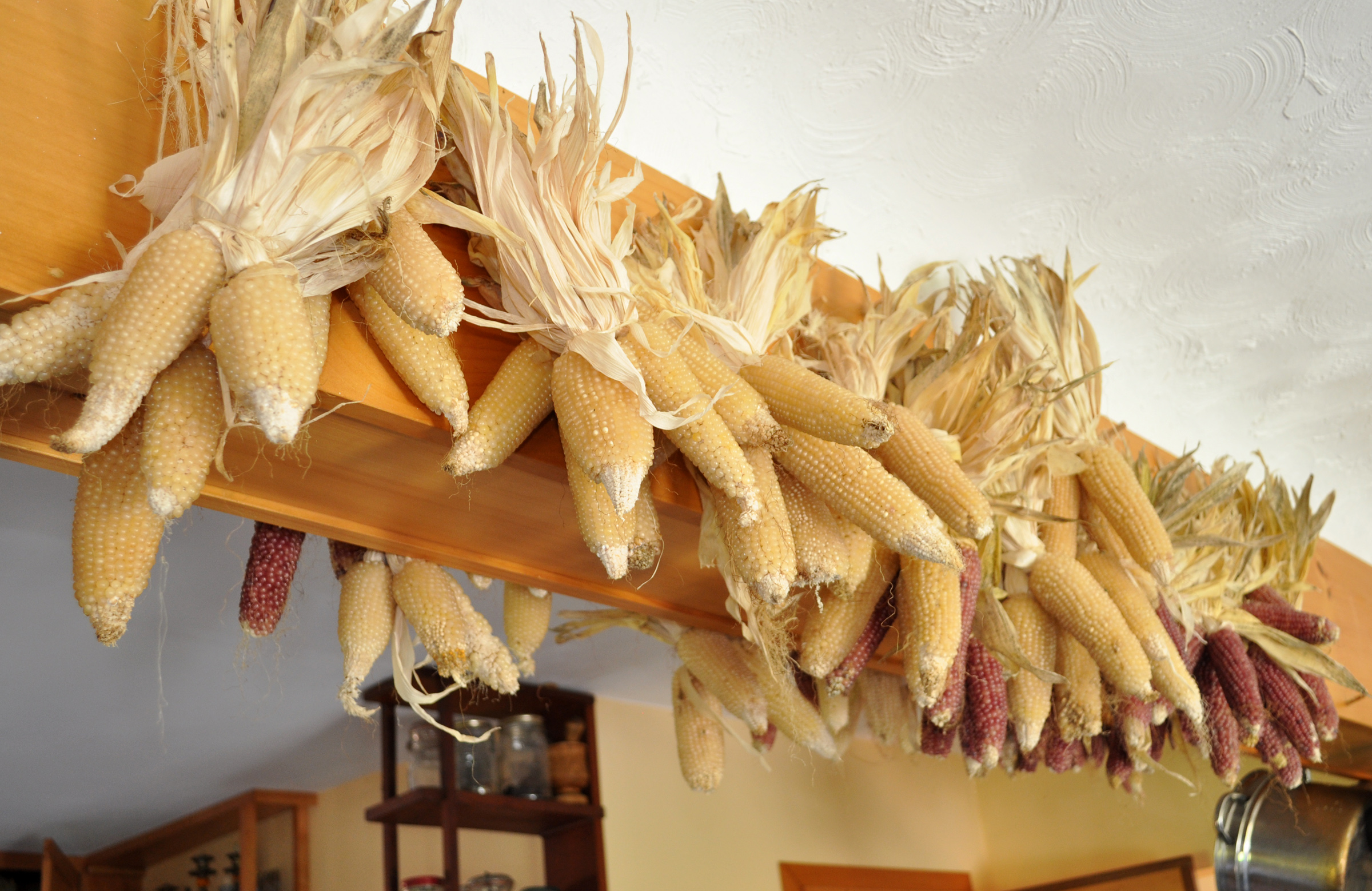
    (Other whole grains, such as wheat berries and rice, don’t pop with the same explosive force as popcorn because their hulls are porous.)Popcorn hanging from rafters for winter
    My popcorn spends winter, as ears, hanging from the kitchen rafters. I suspect the kernels are too dry because colder winter weather results in drier air indoors. Cold air holds less moisture than warm air so the colder the outdoor temperatures, the drier the air, once it is warmed.
    The kernels need moisture, but not more than 13.5%. Fortunately, for us popcorn lovers, back in 1950 a Mr. Stephen Dexter of Lansing, Michigan came up with an easy way to get the moisture just right, as spelled out in U.S. patent number 2497399. And for those of us who want to start eating our home-grown popcorn early in the season, when kernels may be too moist, his method also sucks excess moisture out of the kernels to bring the level down to 13.5%. Watch out Orville!
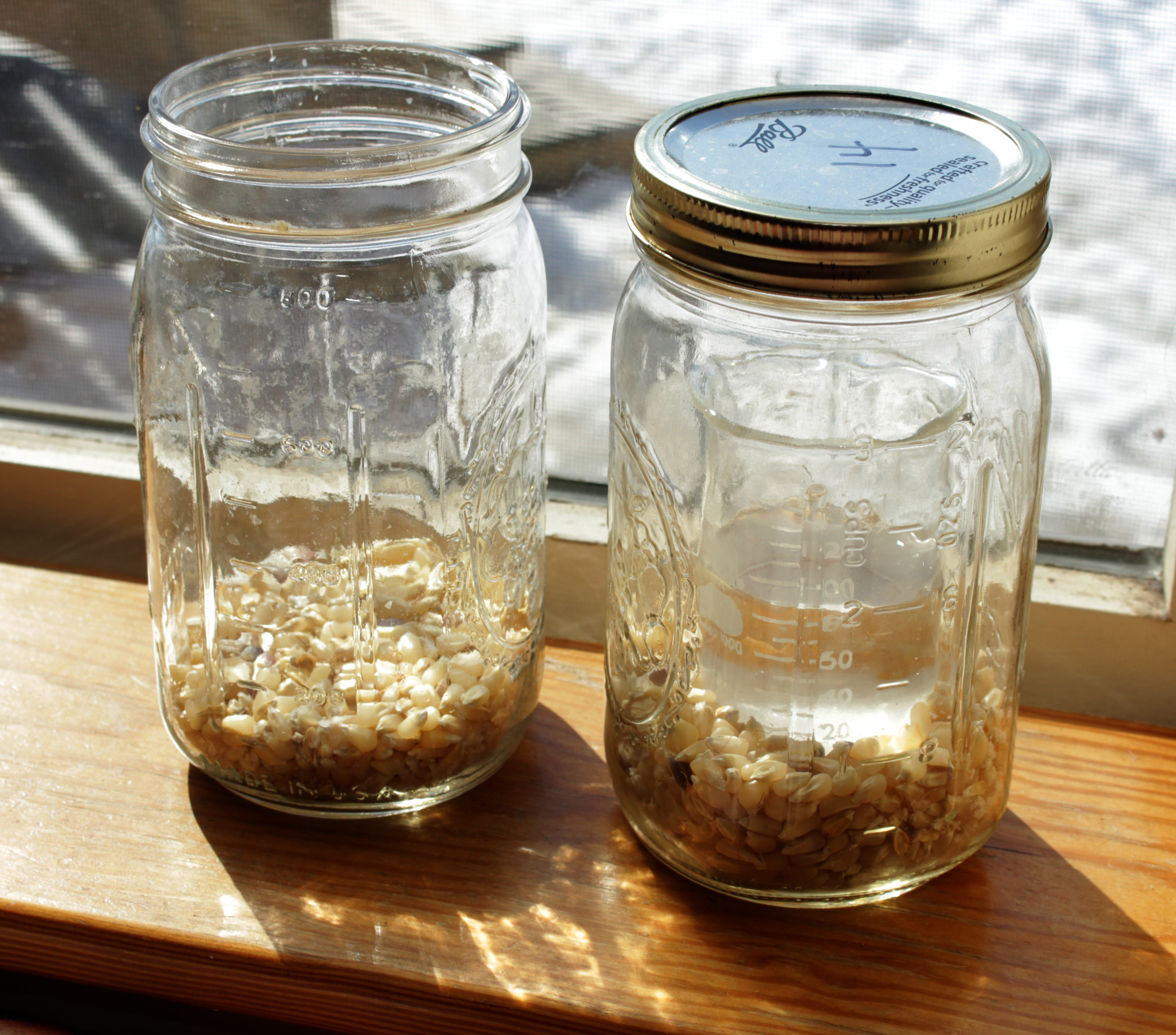
    Now for the method . . .  to quote, “I have discovered that popcorn can be maintained at the best popping condition or restored to that condition by storing it in a closed container in which the atmosphere is maintained at approximately 75% Popcorn being treated to pop betterrelative humidity. This relative humidity can be maintained throughout a wide range of temperatures by placing in the container a saturated solution of common table salt.” So the first step is to create a saturated solution of salt; I dissolved as much salt as possible (about 1.5 ounces) in a half a cup of water, and then added a little more to make sure that it was saturated.
    It’s important that the popcorn kernels don’t make contact with the salt solution. Mr Dexter maintained the right atmosphere by putting blotting paper soaked in the solution in a sealed container with the kernels. I put the kernels into a Mason jar and then set a beaker with the solution on top of the kernels.

A Little Science, A Lot Better Poppability

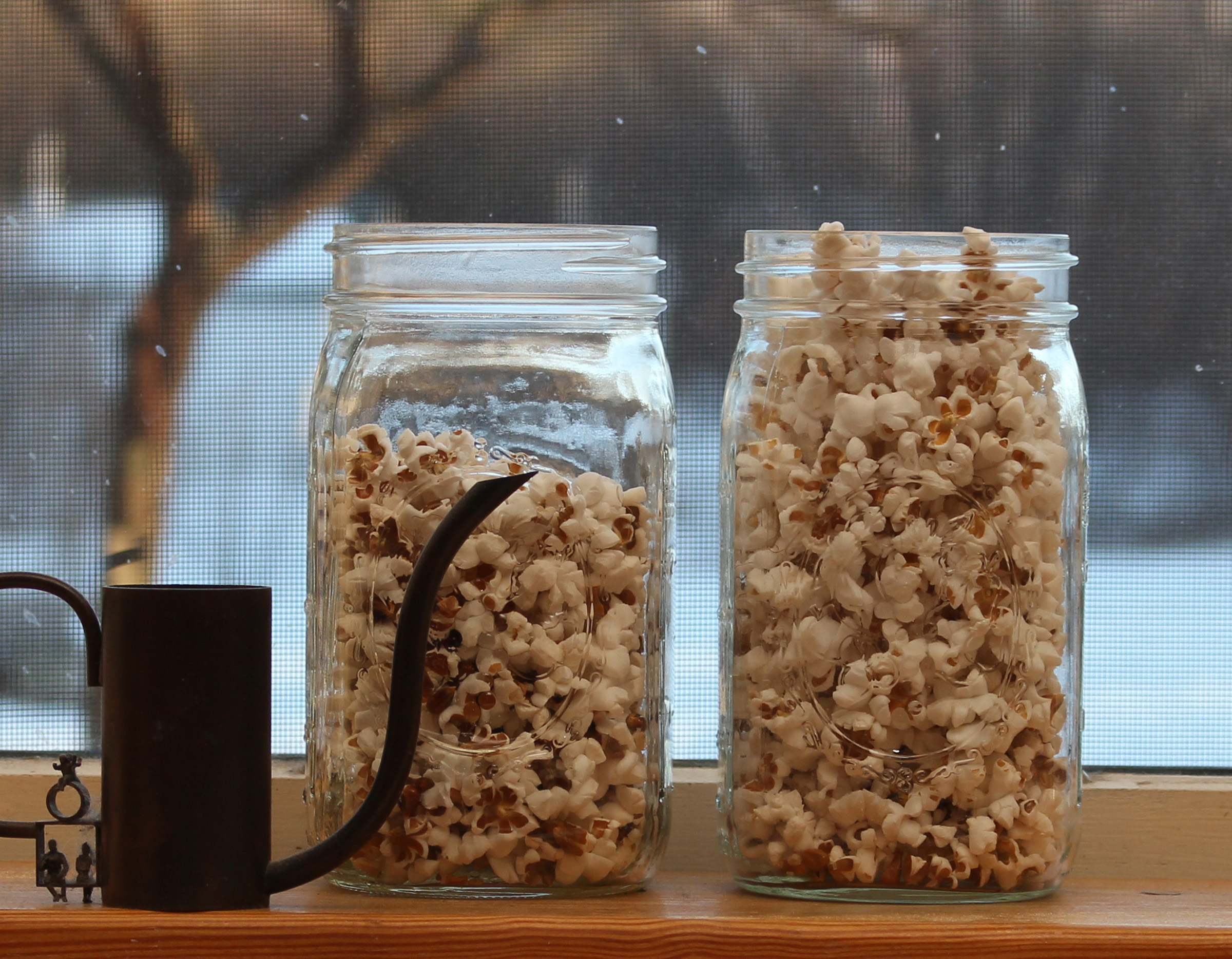
    Not to doubt Mr. Dexter or the patent process, but the scientist in me had to test the method. A handful of shucked kernels went into each of two Mason jars. One jar was left open to the atmosphere. The other was sealed after I set the beaker of salt solution atop the kernels. Poppability tests came 3 days later. Pennsylvania Dutch Butter Flavored Popcorn, which normally pops pretty well, popped to 1/3 greater volume after the moisture treatment. Pink Pearl awaits testing.

Positive results of popcorn treatment

Positive results of popcorn treatment

    At their best, neither would compare in volume increase with Orville Redenbacher’s popcorn, which claims a 44:1 increase. My popcorn costs nothing except my time (pleasantly spent) and is an organically grown, wholesome, whole grain that hangs decoratively from my kitchen rafter and tastes better. Let Orville have his fluff.

Editing my Chestnut Planting

    On to another grain, chestnuts, called the “grain that grows on trees” because, unlike other nuts, it’s low in fat and protein but high in starch. My trees demand little more from me than daily harvest during their two-week ripening period. I have 4 trees but harvest all the nuts I need from one tree, aptly named Colossal for the truly colossal size of the nuts it yield.
    Colossal, a hybrid of Castanea sativa (European chestnut) and C. crenata (Japanese chestnut), has its Achilles heel. Make that Achilles heels, plural. The first is that it is susceptible to the chestnut blight that decimated chestnut trees from

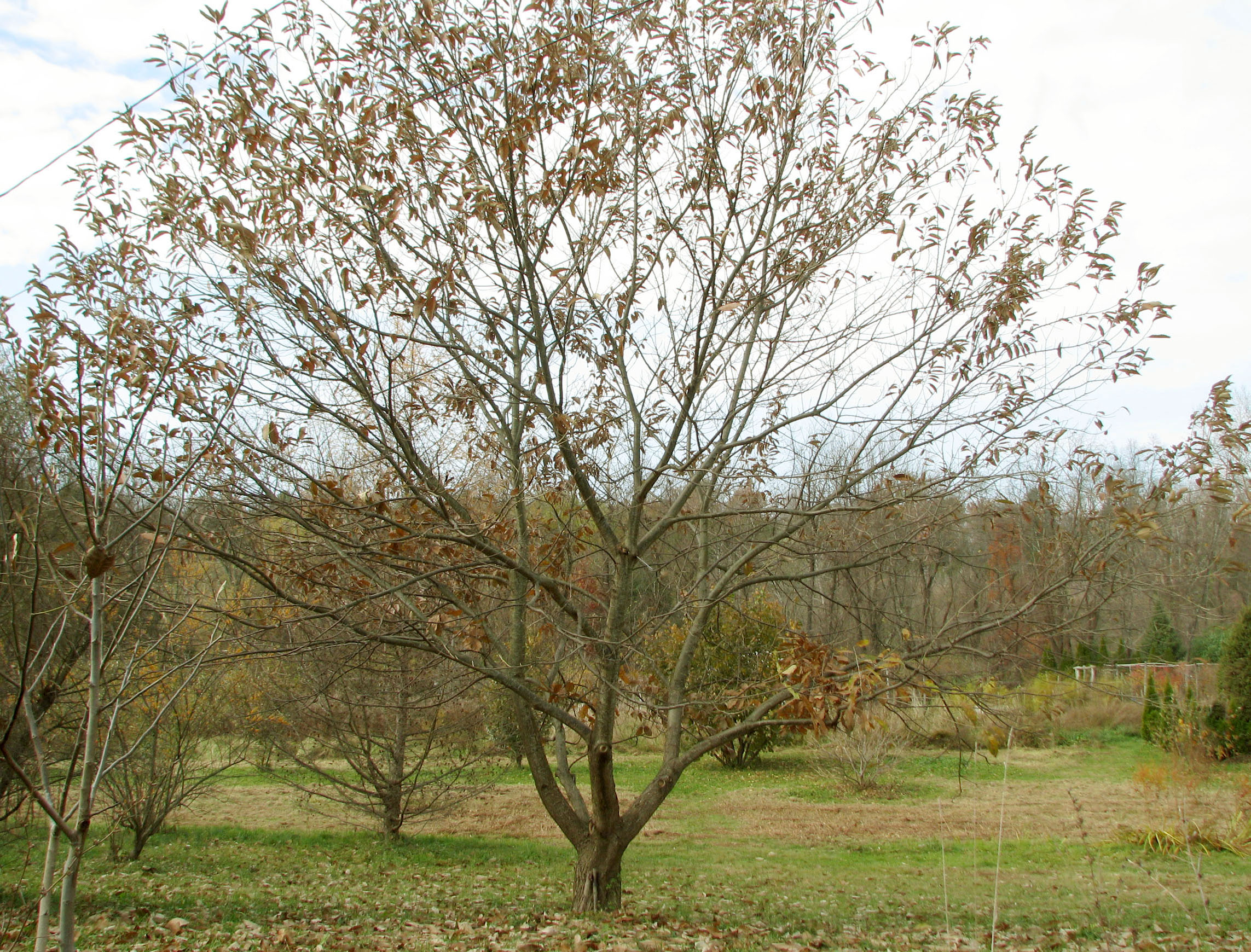
My majestic seedling Chinese chestnut

My majestic seedling Chinese chestnut

Maine to Georgia in the 20th century. Colossal is probably not quite as susceptible to blight as are American chestnuts; my trees, knock on (chestnut) wood, are 17 years old and have never had blight.
    More serious is IKB, internal kernel breakdown, which turns the kernels dark and ruins their flavor. IKB occurs in a certain percentage of nuts of European x Japanese varieties when they are pollinated by a Chinese chestnut (C. mollissima) or hybrid. And vice versa. Most of my other trees are Chinese or Chinese hybrids.
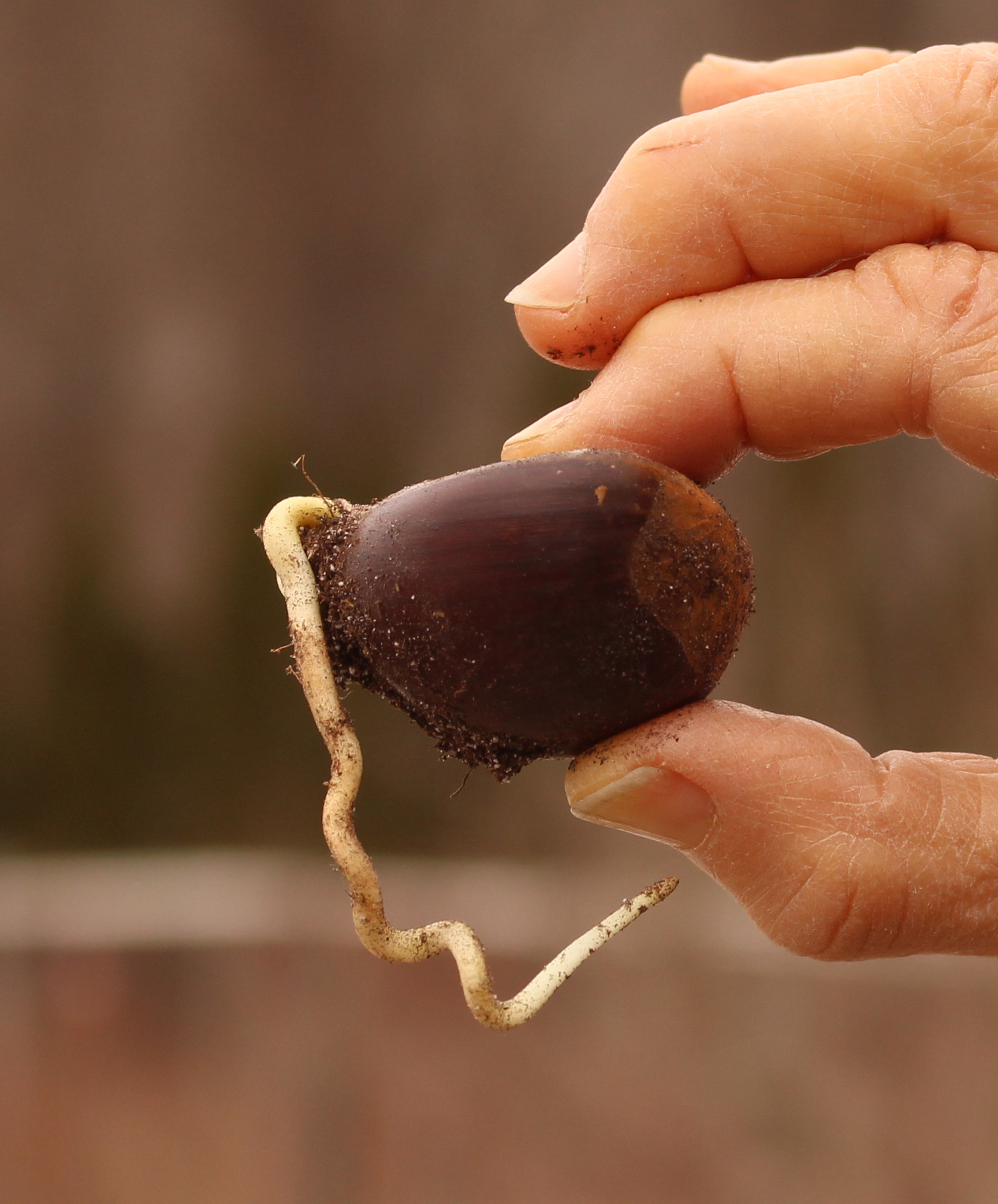
 Sprouting chestnut   I was going to plant some of my Colossal nuts to make more suitable pollinators for Colossal but, as chestnut researcher Dr. Dennis Fulbright of MSU pointed out to me, those seedlings would have some Chinese “blood” in them. Too bad; I wintered the nuts in a baggie with moist potting soil in my unheated basement. Those nuts now believe that winter is over, and are already sprouting roots.
    I’ll grit my teeth and put the chainsaw to my beautiful, large Chinese and Chinese hybrid chestnuts, and rely on my one, smaller Marigoule chestnut, a European x Japanese hybrid, to offer pollen to Colossal. Marigoule is blight susceptible, so I’m looking to plant another European x Japanese hybrid called Labor Day, which is blight resistant.

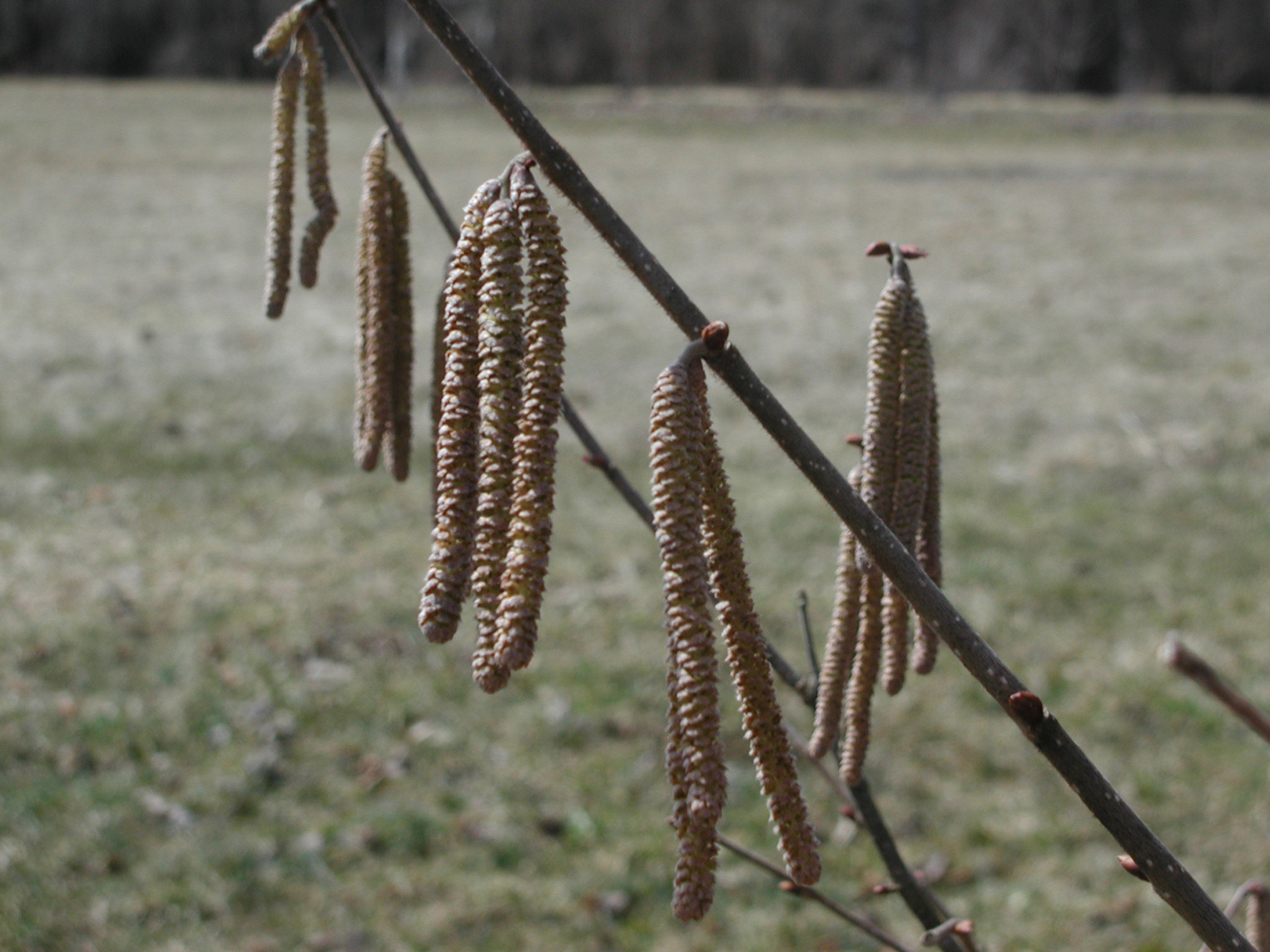
Filbert catkins

Filbert catkins

    At any rate, coming on the heels of winter, it’s nice to see something growing, even if it’s nothing more than a 2 inch root sprout that pushed its way out of a chestnut. Oh, and outside, filbert branches are now draped with catkins, chains of male flowers. And fuzzy, gray catkins have puffed out (indoors, on branches in a vase) on contorted stems of fantail pussy willow. And an abundance of tender green seedling are sprouting in the greenhouse. Happy spring!

BANANAS & GINGER BRING TROPICS HERE

Spring Coming? Might As Well Go For Something(s) Tropical

   Do I smell spring in the air? Must be. And the calendar confirms that it’s just around the corner. These hints finally stir longings for that season — even for a skiier. And what better way to welcome spring in than with attention to some tropical plants.
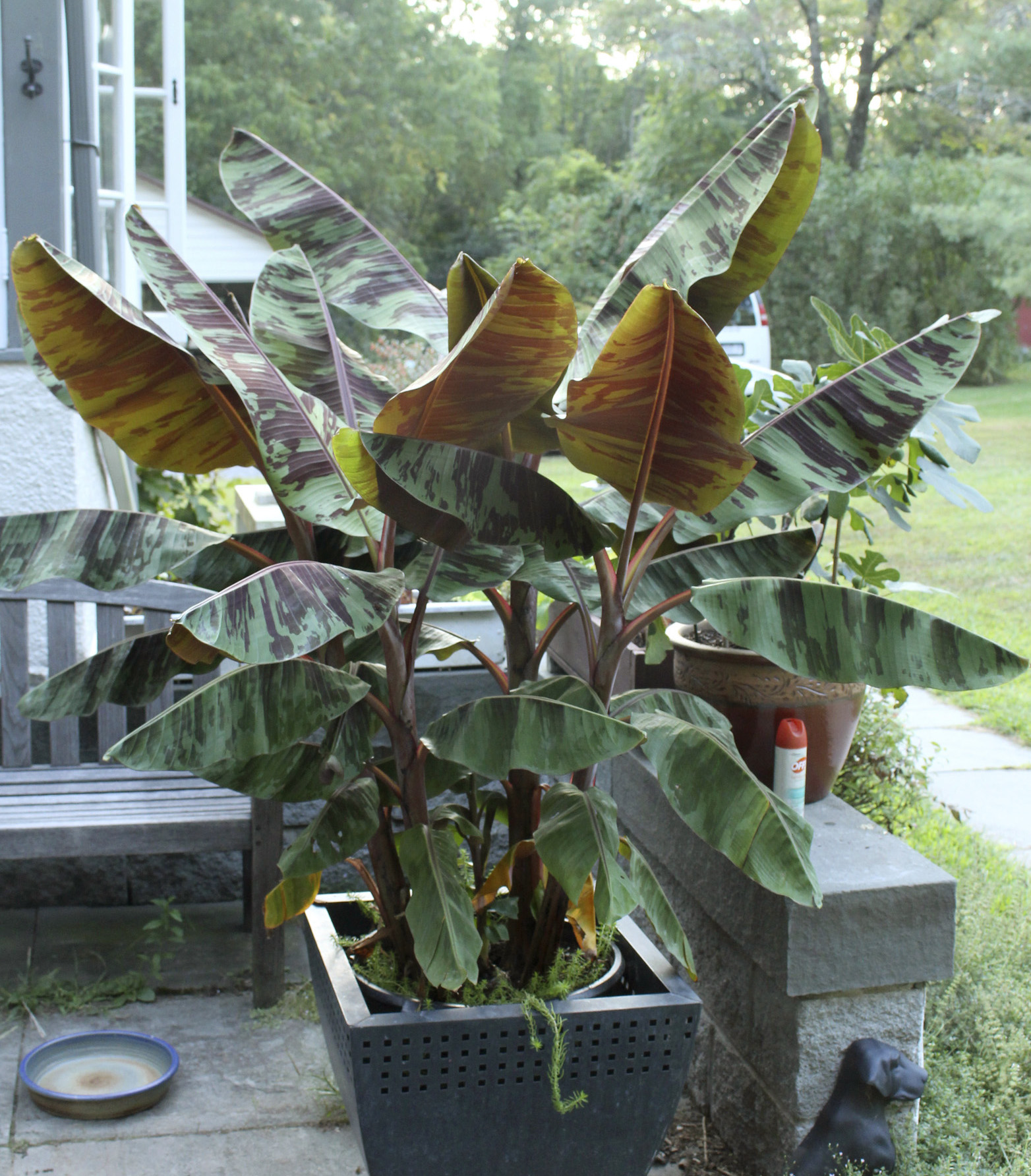
    My banana plants have weathered winter very well this year, indoors, of course. Last year I was proud that my one plant survived. After all, banana is a truly tropical plant. It shivers at temperatures below 50° F. and enjoys 80° days and nights as its broad, satiny leaves drink in year ‘round bright sunlight, occasional rains, and humid air. Even if my house was warm, which it is not, only a relative paltry amount of sunlight streams through even a south-facing window, and the air is bone-dry. Hence my pride.Indoor banana, this winter
    My philosophy last year was to send my banana tree into a state of suspended animation by withholding water and keeping the plant on the cool side. It did survive winter, barely. Once the weather warmed outdoors, it took a few weeks before the plant fully awakened. Actually the mother plant never did awaken, but two of its pups did. Pups are small plants that arise at the base of the mother plant, and are one of the ways in which new banana plants are propagated. (You no doubt noticed that cultivated bananas do not have seeds).
    Once the pups were growing strongly, I tipped the plant out of the pot and cut off each pup to pot up separately.
    This fall my approach was to keep the banana plants happy. Even if they couldn’t have steamy conditions of the tropics, I would at least provide their roots with plenty of water. And happy they are: New leaves have unfurled all winter, with few of the older ones drying out. By the end of May, the weather outdoors will be ready to receive the plants, which should grow exuberantly, as bananas are wont to do with good conditions.
    Bananas bear quickly so at this rate I may sometime be harvesting fresh fruit. If not, I can always use the leaves to make Indonesian pepes.

Banana (Not) Trees

    Notice, above, that I never referred to a banana “tree.” Banana plants might look tree-like and grow to the proportions of trees, but they are not actually trees. They are giant, perennial herbs. The “trunk” is composed of a sheath of tightly-wrapped leaf stalks. Each vertical stalk successively unfurls into a broad leaf which then splays its blade out horizontally.
 Banana outdoors in summer   All new growth is pushed up from the corm at the base of the leaf stalks.
    Musa basjoo is a banana that’s cold-hardy to about zero degrees F. The top will die to the ground in winter but the corm, if mulched for further protection in the ground, survives winter. Nothing worth eating from this banana plant, although it makes a bold, tropical statement in summer.

Immature Ginger, Mmmmm

    I could never understand the current commercial interest in growing ginger, a tropical plant, in cold winter regions, such as here. Until last year, that is, when I tasted freshly harvested, immature ginger I got from a gardening friend. The roots had a smooth flavor and fiber-free flesh as compared with the mature roots usually sold.
    So this year, of course, I’ll be growing ginger, and the time to begin is now. To that end, I “harvested” some mature rhizomes from the grocer’s shelves, broke them into pieces each with 3 to 4 eyes, and planted them. Not outdoors, but indoors. And not just any place indoors, but somewhere especially warm. Planting ginger rhizome
    The goal is to get just the beginnings of shoots and roots growing. Each rhizome piece went into a bed of potting soil in a 4 inch pot, covered with another half to 3/4 inch of soil, and watered. Best growth is at about 80°F., no problem when the sun beams down on the greenhouse. On cloudy days and at night, though, temperatures can drop into the 30s. So I placed the pots on a large heating mat in the greenhouse that I use to warms seedling flats to get seeds started. (Seeds need warmer temperatures to germinate than seedlings need to grow.)
    Ideally, roots and shoots will have filled those pots by the time the greenhouse has been cleared of lettuce, arugula, and other cool weather greens and the soil temperature is above 55°F. That’s when the ginger can be planted in the ground; I figure on the end of May. Ginger is a heavy feeder, so each plant will go into a mound of pure compost that I’ll add to as the plants grow.
    Come September, I’ll pull the roots. They won’t yet be mature. That’s a good thing.

Corms, Cormels, Rhizomes, and More

    Banana and ginger both grow from underground structures, a corm and a rhizome, respectively, each providing energy storage and buds for new plants. Corms and rhizomes are modified, underground stems.
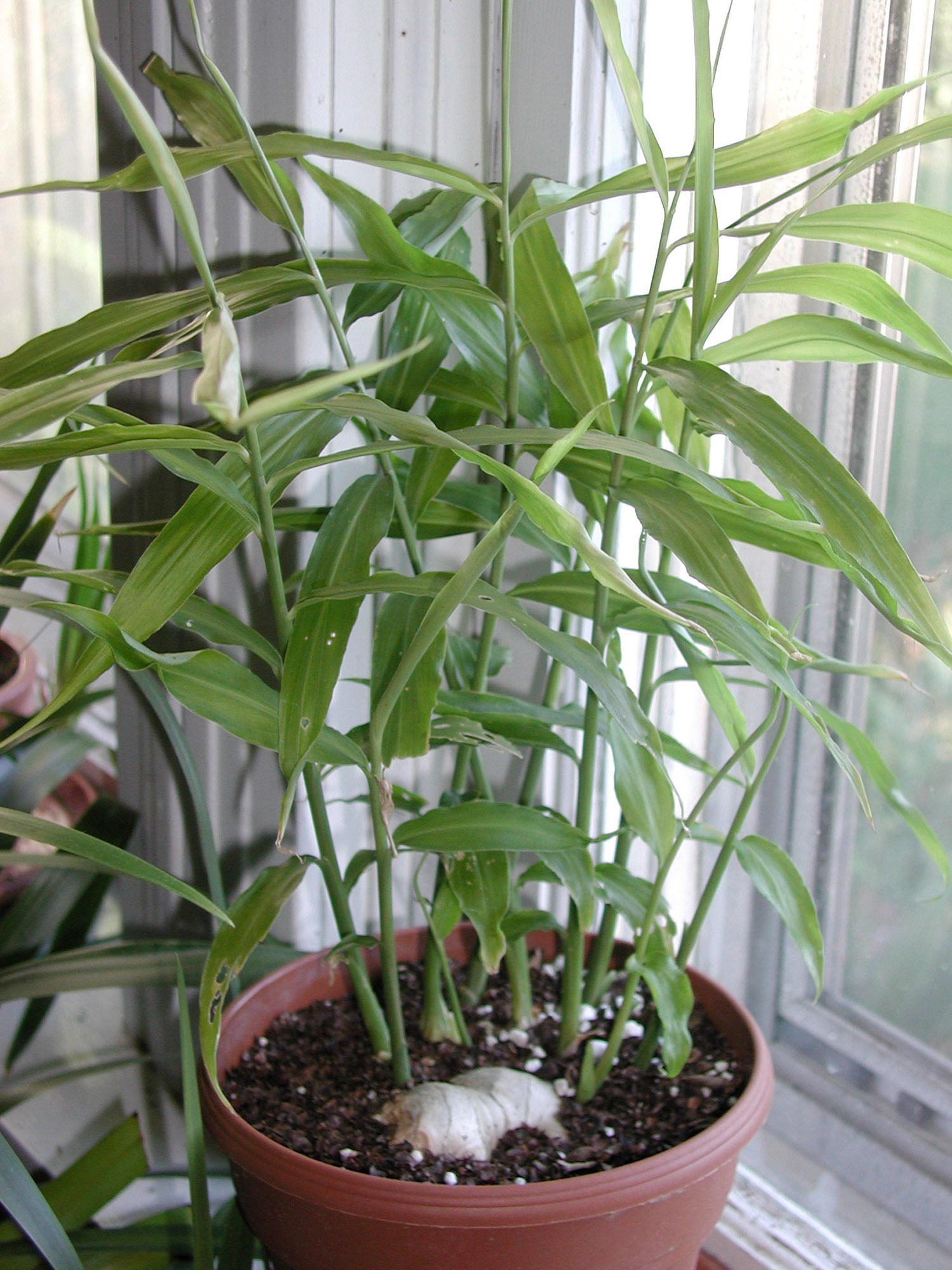
 Ginger on a windowsill   A corm is an upright, fleshy, thickened stem having a protective tunic of modified leaves. Baby cormels arise near the base of the corm. The cormels sprout leaves and become pups like the two that grew at the base of my mother plant.
    A rhizome is a horizontal-growing, underground stem. New plants can be made by breaking off pieces of rhizome and planting them, as I did with the ginger and as is done with potatoes.
    Sometimes banana corms, like ginger rhizomes, are eaten. I won’t be eating my corms.

And The Winner Is . . .

Wendy, who commented on March 19 about her travails in fruit growing, is the winner, by random drawing, of my book GROW FRUIT NATURALLY. Congratulations Wendy.

New Video, Seed Starting . . .

Check out my video page for my timely, new video about seed starting.


A FRUITFUL YEAR IN THE OFFING

 More Fruits to Plant!?

Pawpaw, tastes like crème brûlée

Pawpaw, tastes like crème brûlée

   You’d think, after so many years of gardening and a love of fruits being such a important part of said gardening, that by now I would have planted every fruit I might ever have wanted to plant. Not so!
    Hard to imagine, but even here in the 21st century, new fruits are still coming down the pike. I don’t mean apples with grape flavor (marketed as grapples), a mango nectarine (actually, just a nectarine that looks vaguely like a mango), or strawmato (actually a strawberry-shaped tomato).
    There are plenty of truly new fruits, in the sense of kinds of fruits hardly known to most people, even fruit mavens. Over the years, I’ve tried a number of them. Aronia is a beautiful fruit that makes a beautiful juice, so it’s getting more press these days. I grew it and thought it tasted awful. Goji’s another one in the public’s eye for it’s many health benefits and ease of growing; it also tasted terrible and I also escorted that plant to the compost pile.
    Some lesser known kin of raspberry had greater potential. I planted arctic raspberry, which grows as a groundcover and has been used in breeding for the good flavor it imparts to its offspring. The plant never bore for me. Salmonberry and thimbleberry similarly had gustatory potential but never bore well in my garden. I’ll give these plants another try someday.
    I’m tentative about honeyberries, which are blue-fruited, edible species of honeysuckle that bear young, fruit early in the season, and weather cold to minus 40 degrees F.. The “blueberry-like fruit” is so only in being blue. I planted a couple of bushes about 20 years ago and was not impressed with their yield or flavor — but I admit to neglecting the plants. More importantly, a lot of breeding has been done to improve the plants since I put my bushes in the ground. Stay tuned for my tastebuds’ report on the flavor of recently planted Blue Mist, Blue Moon, and Blue Sea honeyberries.

Some Fruits Are So Easy — And Tasty

    Reading what I just wrote might give the impression that planting any fruit except apples, peaches, and cherries — the usual, that is — leads to either failure or tentative flavor. Again, not so!
  

Persimmons, nashi, figs, and grapes

Persimmons, nashi, figs, and grapes

 Uncommon fruits adaptable over large swathes of the country that are easy to grow and have excellent flavor include pawpaw, American persimmon, gooseberry, black currant, hardy kiwifruit, Nanking cherry, and alpine strawberry — all documented in detail in my book Uncommon Fruits for Every Garden. All these plants grow and bear with little or no intervention on my part (and are available from such nurseries as www.onegreenworld.com and www.raintreenursery.com).

Seaberries on bush in fall

Seaberries on bush in fall

    Seaberry (Hippophae rhamnoides) didn’t make it into the book, which includes only “dessert fruits,” that is, those you can enjoy by just popping them into your mouth. But I’m happy I gave these bushes some of my real estate. Juiced, diluted, and sweetened, the delectable flavor is akin to rich orange juice mixed with pineapple. What’s more, the bushes are decorative and tolerate neglect, cold, drought, and deer.

New Fruits

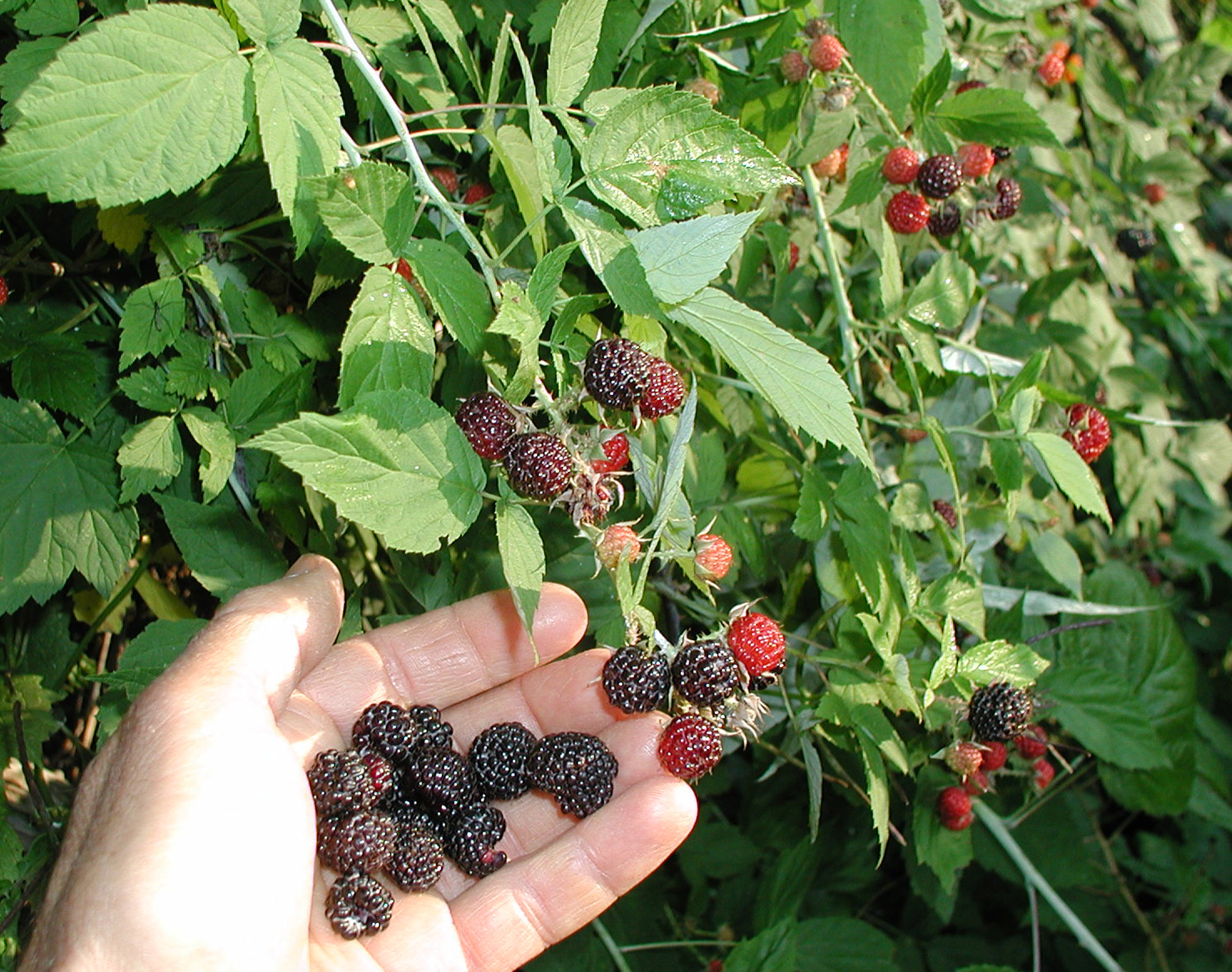
    This spring I’m planting a new kind of a somewhat familiar fruit, back raspberries. They’re also called blackcaps, and grow wild along woodland borders, which is where I gather my harvest. (A ripe blackcap comes off the plant with a hollow core, like a thimble, in contrast to a ripe blackberry, whose core persists.)
    Blackcaps have perennial roots but their stems are typically biennial, growing only leaves their first year, fruiting in midsummer of their second year, then dying.

Blackcaps, ripe last summer

Blackcaps, ripe last summer

    Two new blackcap varieties, Niwot (www.noursefarms.com) and Ohio’s Treasure (www.hartmannsplantcompany.com), do this one better: They start to bear on new canes towards the end of the first season, then bear again on those same canes, now one-year-old, in midsummer of the following year. You reap two crops per year, one in midsummer and one in late summer going on into fall. Or, for easier care but only one crop per year, the whole planting is mowed to the ground each year for a late summer-fall harvest.
    These two-crop blackcaps, just like two-crop (sometimes called everbearing) red and yellow raspberries, have the added advantage of bearing their first crop the same year that they are planted. My plan is to plant in mid-April, even though right now more than a foot of snow still blankets the ground.

Vegetables Are So Easy

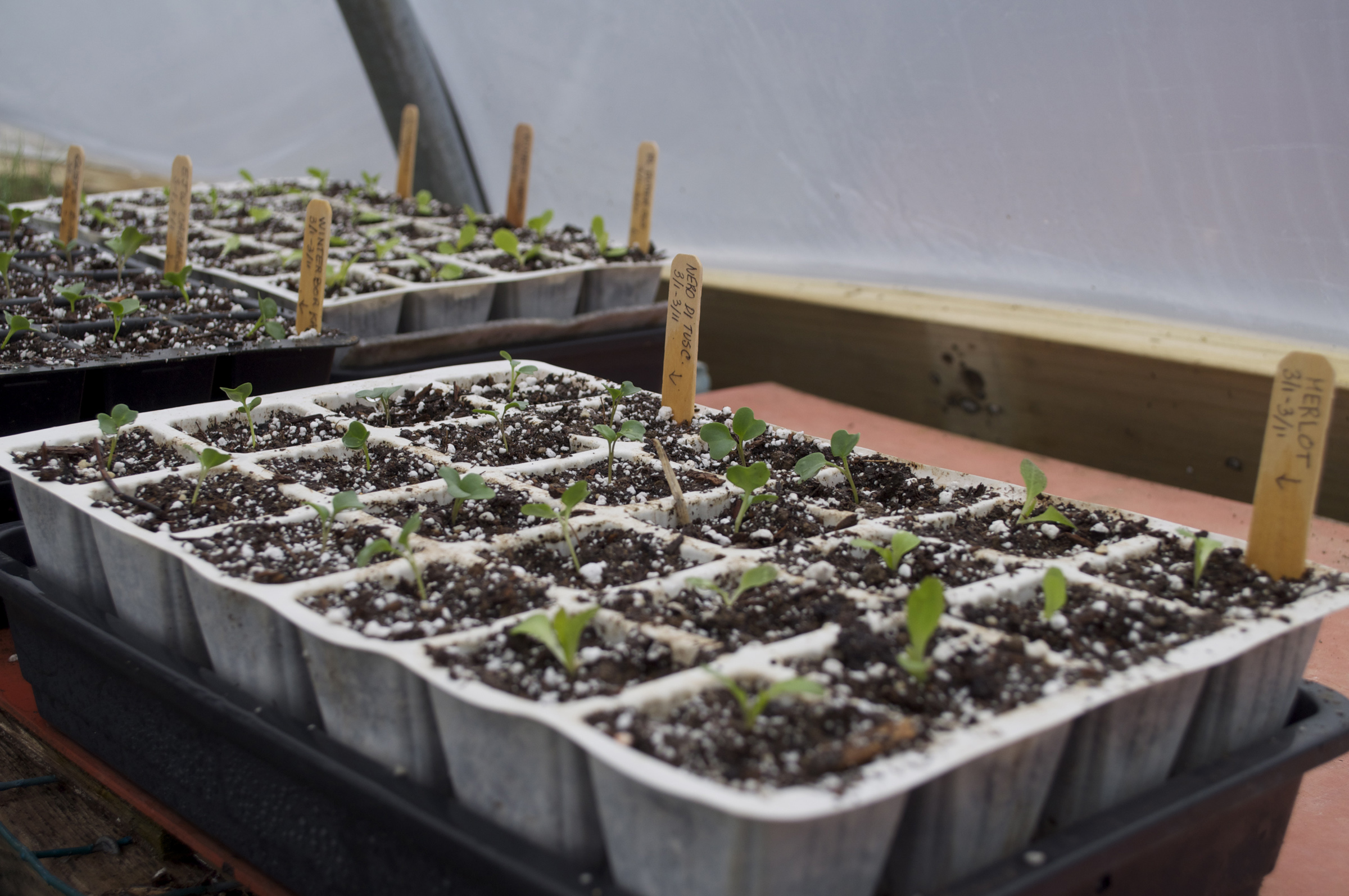
    Snow or no snow, I’m sowing vegetable seeds, the second wave of the season. (My seed sources are www.fedcoseeds.com, www.sustainableseedco.com, www.johnnyseeds.com, and www.reneesgarden.com.) Today, the lineup includes the new varieties (for me) Tuscan Baby Leaf kale, Tiburon Ancho hot pepper, and Round of Hungary and Odessa Market sweet peppers. With encores for their good past performance are Gustas Brussels sprouts, Early Jersey Wakefield cabbage, Winterbor kale, and Carmen Sweet, Sweet Italia, and Italian Peperocini sweet peppers.

FRUIT BOOK GIVEAWAY, AND FRUIT FUTURES

 The Eternal (Fruit) Optimist

   We fruit growers get especially excited this time of year. On the one hand, there’s the anticipation of the upcoming season. And on the other hand, we don’t want to rush things along at all.
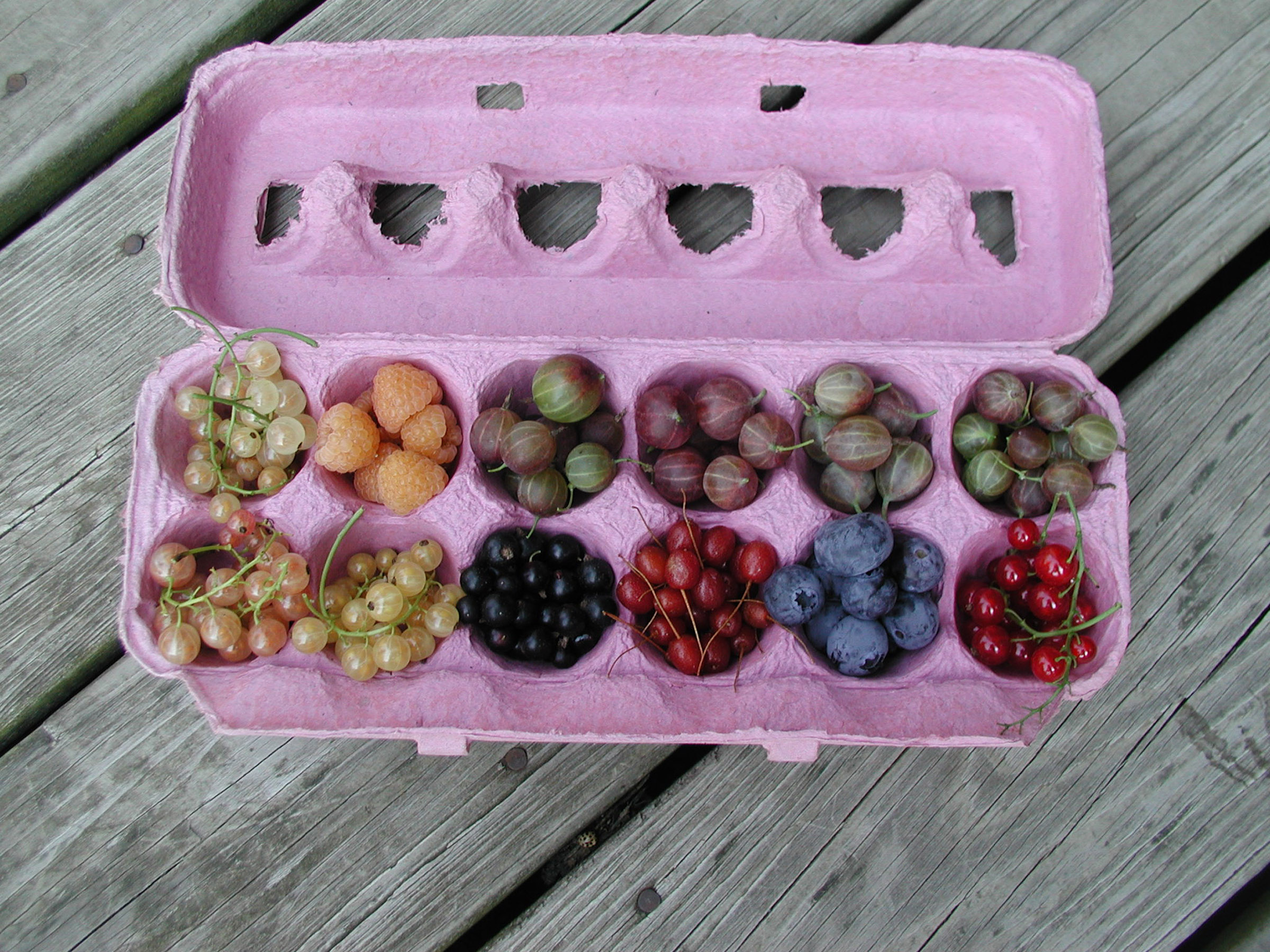
    Ideally, late winter segues into the middle of spring with gradually warming days and nights. Unfortunately, here, as in most of continental U.S., temperatures fluctuate wildly this time of year. Warm weather accelerates development of flower buds and flowers. While early blossoms are a welcome sight after winter’s achromatic landscapes, late frosts can snuff them out. Except for with everbearing strawberries, figs, and a couple of other fruits that bloom more than once each season, we fruit lovers get only one shot at a successful crop each season.Some berries of summer
    How did all these fruits ever survive in the wild? They did so by not growing here — in the wild. Apples, peaches, cherries — most of our familiar fruits — were never wild here, but come from climates with more equable temperatures, mostly eastern Europe and western Asia. We favor them because they are part of our mostly European heritage.
    The fruits that I never worry about here are the few that are native: pawpaw, persimmon, grape, mulberry, lingonberry, and blueberry, to name a few. (Also raspberry, gooseberry, and currants, cultivated varieties of which are hybrids of native and European species.) After decades of fruit growing, I’ve hardly missed a harvest, no matter what the weather, from any of these native fruits. (I cover native, non-native, common, and uncommon fruits in my books Uncommon Fruits for Every Garden and Grow Fruit Naturally.)
 Some fruits of fall   Still, I can’t deny the delicious flavor of apples, peaches, and other non-native fruits, especially those I grow myself. So I do grow them, do what I can for them, and hope for the best. I may even put a thin coat of white kaolin spray on these trees to reflect the sun’s warmth and further delay awakening of the buds.
    Last year was a very poor year for many tree fruits, and I’m not sure why. (Recovery from the previous years cicada attacks could be part of the reason.) Nonetheless, every year about this time I’m bursting with optimism for a bountiful fruit harvest.

Veggies, As Usual, Chugging Along Nicely

    I consider vegetables relatively easy to grow because most are annuals and because, with most of them, I can sow and harvest repeatedly throughout the growing season. Let cold or some pest snuff them out, and I can just replant.
    The first of my lettuces, sown early last month in little seed trays, are up and growing strongly, each seedling transplanted into its own APS cell (available from www.gardeners.com). Ninety-six seedlings take up little more than a couple of square feet and, with capillary watering from a reservoir beneath the APS trays, I need check the water only about every week.Seedlings in APS trays
    My next wave of indoor seed-sowing will take place in the middle of this month. That’s when I’ll sprinkle pepper, eggplant, broccoli, Brussels sprouts, kale, and cabbage seeds into the miniature furrows of miniature fields of my seed flats.
    I’ll also sow another batch of lettuce seeds indoors, this batch for eventual transplanting outdoors. The first batch is soon to be transplanted into greenhouse beds.

Fig Prophylaxis

    Buds on fig trees planted in the ground in the greenhouse are showing hints of green and swelling ever so slightly in spite of the cool night temperatures in there. The scale insects that I battled last year  are undoubtedly also coming to life on those plants. In the past, I’ve kept these insects at bay by scrubbing the bark in winter with soapy water or by spraying it with insecticidal soap, or, during the growing season, wrapping the trunk with a sticky Tanglefoot barrier to stop travel of ants that herd the insects.
    I’ve never gotten rid of scale insects, only kept them from gaining the upper hand. And some years it’s been a neck and neck race as to who would win out before the end of the season.
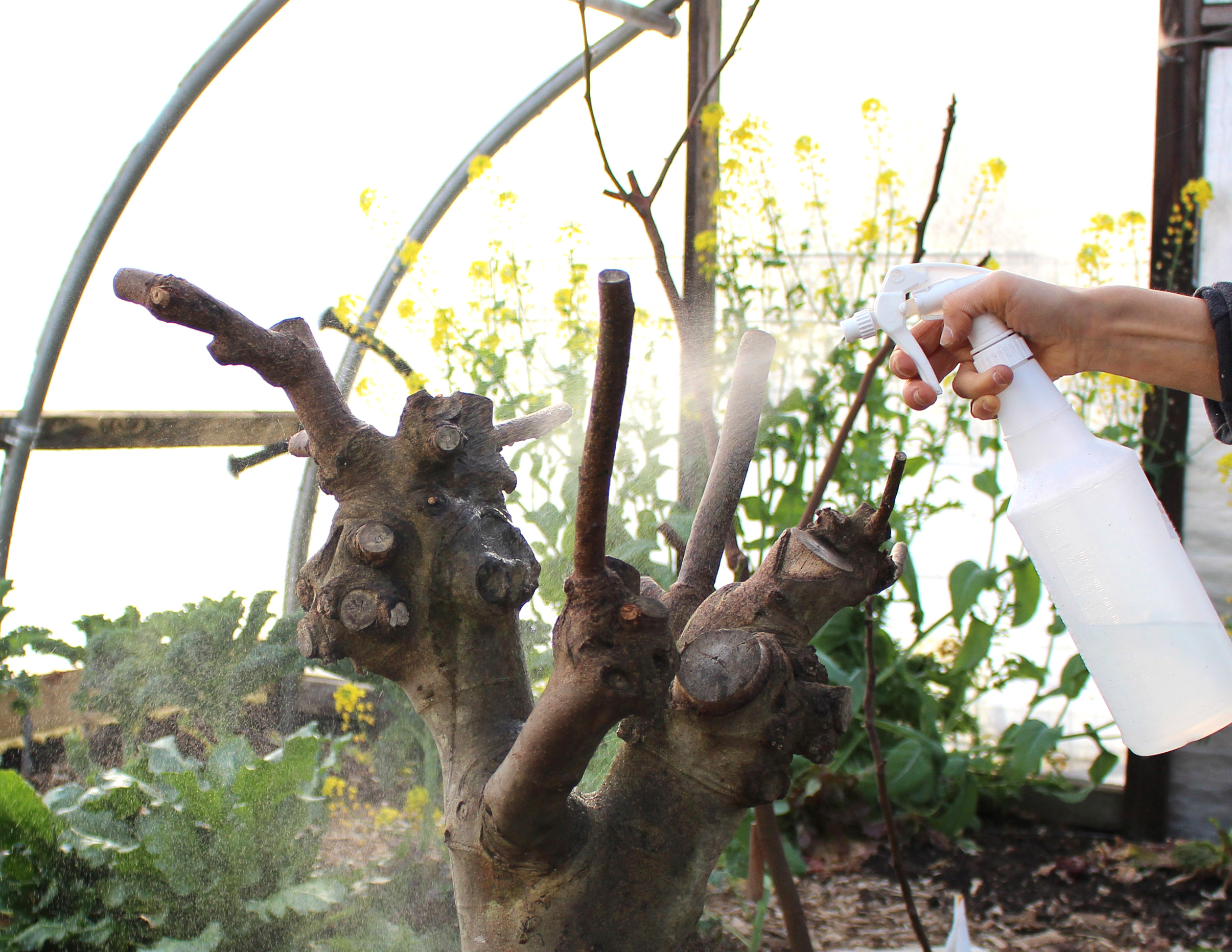
  Spraying oil on dormant fig tree  I’ve already begun this season with prophylactic sprays of oil. Oil has a long history of controlling insects and some diseases, with the advantage of causing little collateral damage to the environment, including beneficial insects. Because it’s main effect is to clog insect breathing ports (spiracles), there’s little danger of insects developing resistance.
    Oil’s major hazard is its potential to injure plants, mitigated by spraying when temperatures aren’t too hot or below freezing, or when rain is likely, all easily avoided in a greenhouse. Various kinds and formulations of oil — kinds include vegetable, mineral, and neem oils — differ in their hazard to plants. I’m using a high-purity mineral oil (Sunspray) from which I expect no damage, especially since the plants are still leafless.
    Scale insect eggs should be hatching about now. Brutal as it may sound, I hope to suffocate the crawlers before they settle down to one spot to cover themselves with their protective armor and literally suck the life from the plants. Weekly sprays should cover successive hatches.

New Video

Check out my new video on “pricking out” seedlings!

Free Book!

Book giveaway! Write a comment here telling us which is the most difficult fruit you grow, and why, and why you grow it, and you’ll be entered in a drawing to get a free copy of my most recent book Grow Fruit Naturally. Comments must be submitted no later than noon, March 23rd.Grow Fruit Naturally, front cover of book

Upcoming Lectures

Check out the “Lectures” page of my website for some lectures I’ll be giving in the next few weeks.

COMPOST TEA: SNAKE OIL OR PLANT ELIXIR?

Is the Jury Still Out on Compost Tea?

    In gardening, as in life, you can’t help but want to love some things, compost tea being one of them. After all, compost is good, tea is soothing, so what’s not to love about compost tea?
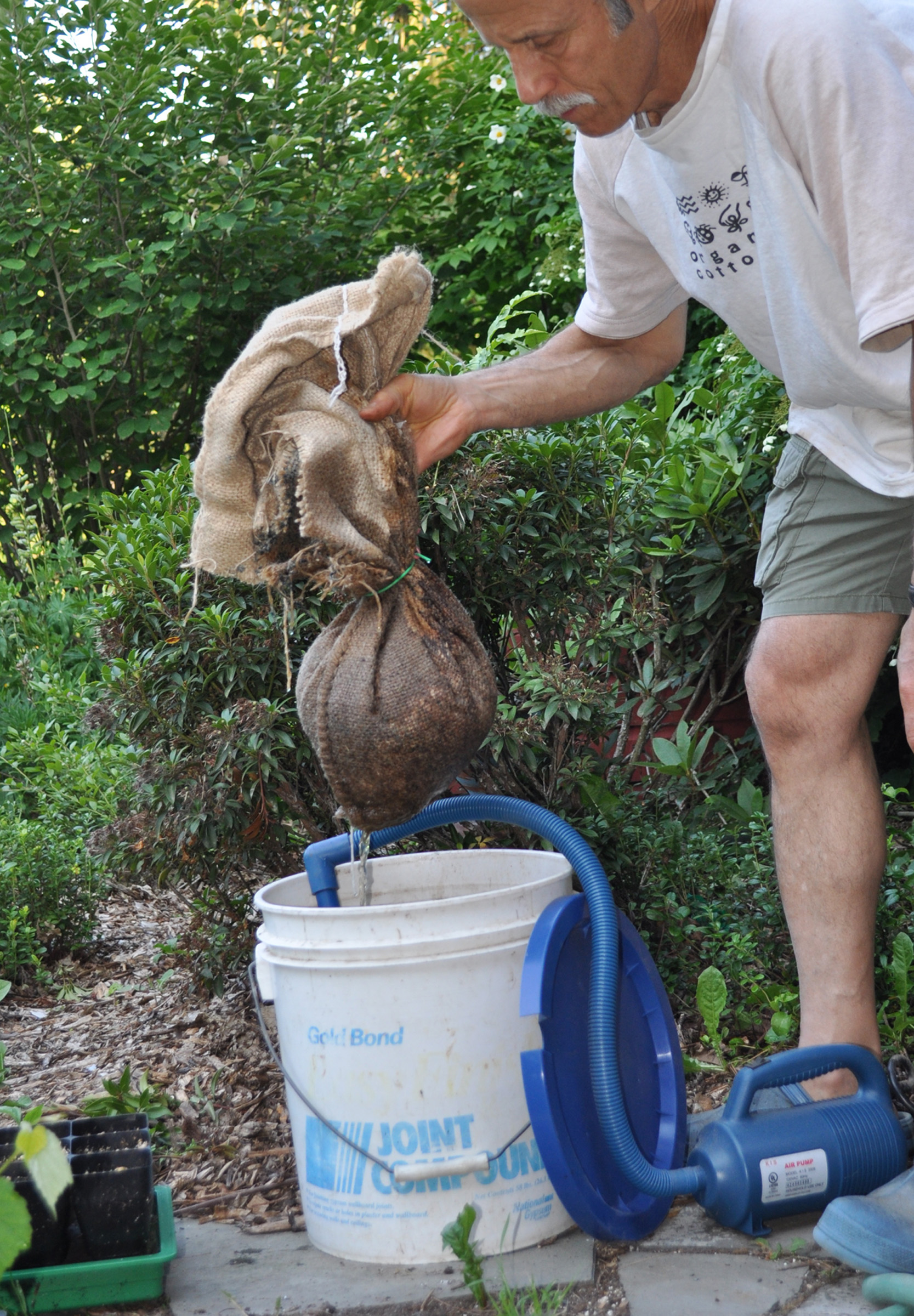
    Perhaps it depends on how you brew your tea. Traditional compost tea was and is made by hanging a burlap bag of compost in water, then diluting and drenching the ground or the potting mix of a potted plant with the nutritious, coffee-brown liquid.
    More recently, “aerated compost tea” (ACT) has soothed gardeners from coast to coast, the result mostly of the promotional efforts of soil scientist Dr. Elaine Ingham. This tea is brewed similarly to the traditional tea, except that extra foods, such as molasses (honey would seem more in keeping with the tea theme), brewers yeast, and bran, are also added, and — most important — the tea is aerated throughout the brewing process.

Brewing up a batch for some plants.

Brewing up a batch for some plants.

    The soothing effect from ACT is not nutritional, but biological. You spray the tea on leaves or soil to spread beneficial microorganisms leached from the compost whose populations were beefed up by all that aeration and added nutrients. These happy microbes fight off attack by pathogens and insects, perhaps by making the offenders sick or unable to reproduce, perhaps by making the plants more healthy, or any one of a number of other hypothesized manners.
    Coming from their home in the dark, moist, nutrient-rich innards of a compost pile, could these friendly microbes really be expected to survive on the bright, dry, nutrient-poor surface of a leaf? And evolutionarily-speaking, when would Mother Nature ever have made provisions for compost, let alone compost tea, let alone ACT microbes, to colonize a leaf and do good there? But this is all speculation; surely someone must have tested whether or not compost tea is really “soothing”  to plant life.

How to Really Test Effectiveness

    A slew of gardeners and farmers have tried ACT and can attest to its benefits. Matter of fact, a whole industry is dedicated to testing composts and compost teas, even selling compost tea brewers and compost tea itself.
    The way to truly ascertain the efficacy of compost tea is to subject it to the same scientific scrutiny as you would anything else: Come up with a hypothesis (such as “Compost tea prevents powdery mildew of squash plants”) and then design an experiment to test the hypothesis. Said experiment would need both treated (compost tea sprayed) and control (water sprayed) plants. Most gardeners and farmers go to the trouble of spraying compost tea because they believe it will be effective, so are not willing to leave a portion of untreated (control) plants. Their endorsements, then, must be taken with a grain of salt, and the same must be said for endorsements from anyone reaping financial gain from compost tea.
    One treated and one control plant, even one treated and one control plot of plants, would not be sufficient for a good test. Biological systems are complex. Grow 10 tomato plants under exactly the same conditions and some will grow a little more, some a little less than the others. With too few test plants, natural variations in plant growth might overwhelm variation due to a treatment. With enough plants to even out and offer a measure of natural variations in, say, plant growth, effects of a treatment are better parsed out.
    And finally, randomization is needed to even out any effects of, say, location. Perhaps one side of a plot is more windy, or the soil is slightly different, or there’s a bit more sunlight. Rather than have all the treated plants cozied together growing better or worse because of this added effect, even out these effects by randomizing the location of treated and control plants.
    Now you’ve got an experiment. Using a few arithmetic formulas or, these days, a computer program, you plug in the numbers and come up with a probability of an effect of the treatment. In agriculture, a 90% or 95% probability is usually considered sufficient. You can then answer “yea” or “nay” to the hypothesized question, in this example, “Does compost tea prevent powdery mildew of squash plants?” with a 90% or 95% confidence level

Okay, I’ll Try It

    I have a friend who is a big proponent of compost tea. Finally, he convinced me to give it a try but only after I made him agree to supply me with a brewer, some compost, and explicit instructions, just to avoid his finding excuses for failure of the tea treatment.
    A red flag went up when he advised me not to use it in my vegetable garden because it was “too organic.” I ended up, on his suggestion, spraying a few strips down my lawn and parts of some bean rows on a friend’s farms.
    This admittedly nonscientific test conclusively showed no benefit at all from the tea.

Snake Oil, Mostly

    So what’s the scientific verdict on compost tea? The answer is not so simple, in part because it depends whether the reference is to traditional compost tea or ACT, the kind of plant, the compost ingredients, how long the tea is brewed, how often tea is applied, etc.
 

Spreading compost, letting rain make the "tea."

Spreading compost, letting rain make the “tea.”

   Good experiments have been performed, from which the following general conclusions can be made: 1) ACT  is not reliably beneficial (and often has a negative effect or spreads human pathogens such as Salmonella); 2) Traditional compost tea has been shown to be often but only mildly beneficial for root diseases; 3) If sufficiently, but not too, dilute, either ACT or traditional compost tea can supply nutrients to feed plants.
    My pea plants succumb early every summer to some root disease, possibly fusarium. I am tempted to drench the soil for the peas with traditional compost tea. Perhaps I’ll even set it up as a crude experiment, keeping in the back of my mind the admonition of Charles Dudley Warner (My summer in A Garden, 1871), “I have seen gardens which were all experiment, given over to every new thing, and which produced little or nothing to the owners, except the pleasure of expectation.”
    Mostly, though, I’ll continue to do what I’ve been doing, spreading compost on top of the ground and letting rainwater make the tea.