Future Tense, Present Tense

Past is Present . . . No! . . . Present is Future

Gardening is so much about planning for the future. Dropping seemingly dead, brown specks into a seed flat in spring in anticipation of juicy, red tomatoes in summer is fun and exciting.

But now, in the glory of summer, I don’t particularly like planning, which means thinking forward to the crisp days of autumn that lie ahead. But I must. I know that when that time finally comes, I’ll have had my fill of hot weather. And the cooler weather coupled with shorter days and low-hanging sun will have tomatoes, cucumbers, peppers, and other summer vegetables on the wane. Planning and action now let me have a whole other garden come autumn, a garden notable for its shades of green (from leaves) rather than the reds and yellows (from fruits) of summer’s garden.

I’ll need plants and free space ready for my autumn garden. Some plants are already in place: One bed has been home, since early spring, to kale, which keeps growing as we harvest leaves through spring and summer, and brussels sprouts, from which harvest won’t even begin until early October.

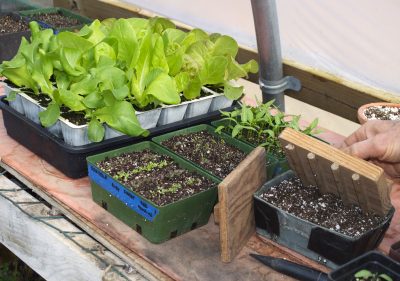
Cabbage plants sown in seed flats in early June are about ready to plant now out in the garden for autumn harvest. Today I sprinkled seeds of endive into mini-furrows in potting soil in a seed flat.Seed flats The endive seedlings will be ready to move out into the garden in 5 or 6 weeks. I’ve also sown more kale seeds to supplement the spring kale for harvest into and perhaps through (depending on the weather) winter.
Early August will be a good time, around here, for planting Watermelon — the Watermelon variety of winter radish, whose innards look like cut watermelon but taste very radish-y. Also turnips, the delicious variety Hakurei.

I’m also sowing lettuce seeds, which I’ve been doing since spring and continue to do every few weeks. They also go into seed flats, ‘GrowEase’ seed starters, from which I can pop out transplants into any spaces that open up here and there around the garden.

Looking for an Opening

So where am I going to plant all those endives, cabbages, winter radishes, and turnips? The autumn garden will also need room for direct sowings of quickly maturing autumn vegetables like arugula, mustard, and lesser known salad “greens” like mâche (corn salad), erba stella (minutina), and claytonia (miner’s lettuce). The garden is packed full of plants now.
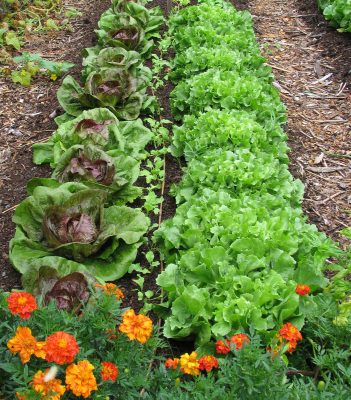
Endive, radish, radicchio in fall

Endive, radish, radicchio in fall

Going into August, space will open up for those autumn garden plants. From my first planting in mid-May, I’ll pick the last ripe ear of Golden Bantam sweet corn around mid-August, then have a whole bed available as soon as I clear away the spent stalks. Similarly for the beds of onions, early bush beans, and edamame.

Black Raspberries (Blackcaps) Redux

Enough planning for autumn and beyond. I’m going outside to feast on blueberries, black raspberries, and gooseberries, for me the essence of summer.Black raspberry
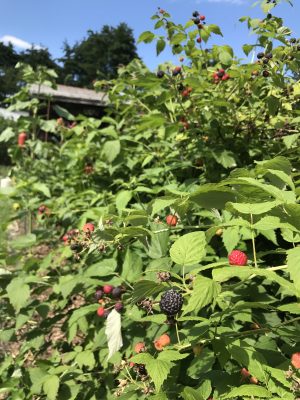
Now that I think of it, as soon as the black raspberries finish up, which is very soon, I do have to plan for them also, for late summer and autumn. The varieties I grow — Niwot and Ohio’s Treasure — are unique in being two-crop black raspberries, just like my “fall-bearing” (“everbearing”) raspberries. That is, they bear in early summer on stems that grew last year, just like conventional black raspberries. But — and here is where they are unique — they also bear in late summer and autumn beginning at the tips of new stems that rose from ground level this spring.

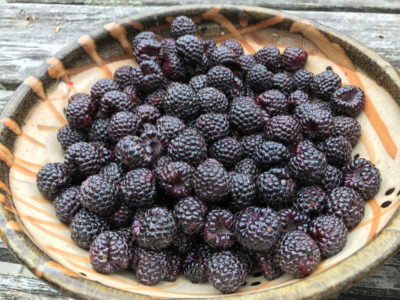
Last year’s stems are just finishing fruiting, after which they begin to die. I’ll cut them away to make room for the new stems and to keep the late summer and autumn harvest from these new stems from becoming a thorny nightmare.Black raspberry fruit
Heat and Drought Come and Go

(The following is a adapted from my recent book, The Ever Curious Gardener: Using a Little Natural Science for a Much Better Garden, available through the usual outlets as well as, signed, from me at www.leereich.com/books.)

Plants’ Dilemma in Beating the Heat

Last week, with a spell of dry weather, I wrote about irrigation; then it rained. As I write, we’re experiencing searingly hot weather; thank me for the cooler weather that will surely follow.
The heat is hard on us humans, but pity plants in the heat of a hot, summer day. While I can jump into some cool water, sit in front of a fan, or at least duck into the shade, my plants are tethered in place no matter what the weather.
And don’t think plants enjoy extreme heat. High temperatures cause plants to dry out and consume stored energy faster than it can be replenished. Stress begins at about 86° Fahrenheit, with leaves beginning to cook at about 105°.
One recourse plants have in hot weather is to cool themselves by transpiring water. This loss of water from leaves can cool a plant by about 5° Fahrenheit. Over 90 percent of the water taken up by plants runs right through them, up into the air, exiting through little holes in the leaves, called stomates. Carbon dioxide and oxygen, the gases plants need to carry on photosynthesis, also pass in and out through the stomates.
All goes well provided there is enough water in the soil. If not, stomates close, transpiration and photosynthesis stop, and the plant warms. Even if the soil is moist, stomates might close in midsummer around midday if leaves begin to jettison water faster than the roots can drink it in.
So plants are put in a bind. Should they open their pores so that photosynthesis can carry on to give them energy, but risk drying out, or should they close up their pores to conserve water, but suffer lack of energy?

Beat the Heat with CAM

Enter cacti and other succulents (all cacti are succulents—that is, plants with especially fleshy leaves or stems—but not all succulents are cacti. The fleshy stems and leaves of succulents can store water for long periods. After more than a year without a drop of water, my aloe plant’s leaves still look plump and happy.
Besides being able to store water in their stems and leaves, jade plants, aloes, cacti, purslane, and other succulents have another special trick, Crassulacean Acid Metabolism (CAM), for getting out of photosynthesis of dehydration conundrum. They work the night shift, opening their pores only in darkness, when little water is lost, and latching onto carbon dioxide at night by incorporating it into malic acid, which is stored until the next day. Come daylight, the pores close up, conserving water, and malic acid comes apart to release carbon dioxide within the plant, to be used, with sunlight, to make energy. 
I’ve actually tasted the result of this trick in summer by nibbling a leaf of purslane—a common weed, sometimes cultivated—at night and then another one in the afternoon. Malic acid makes the night-harvested purslane more tart than the one harvested in daylight.Purslane

C4 Beats the Heat Also

Another group of plants, called C4 plants, function efficiently at temperatures that have most other plants gasping for air and water. C4 plants capture carbon dioxide in malate, the ionic form of malic acid, which is a four-carbon molecule, rather than the three-carbon molecule by which most plants—which are “C3”— latch onto carbon. The enzyme that drives the C4 reaction is so efficient that C4 plants don’t have to keep their stomates open as much as do C3 plants. The C4 pathway also does its best work at temperatures that would eventually kill a C3 plant, and cells involved in the various steps are partitioned within the leaf for greatest efficiency.
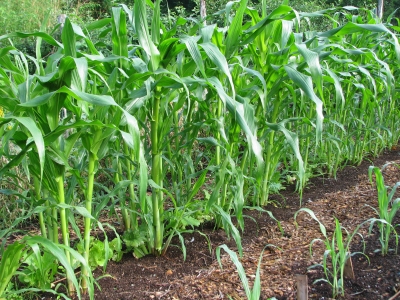
C4 plants are indigenous to parched climates, but not uncommon visitors in gardens every- where. Corn is a C4 plant. (Cool climate grains such as wheat, rye, and oats are C3 plants.) Look- ing at my lawn, I see another C4 plant. Corn hillsHot, dry weather in August drives Kentucky bluegrass, a C3 grass, into dormancy. Not so for crabgrass, a C4 plant, which remains happily green.
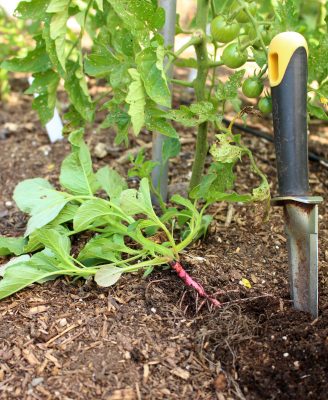
I also find some other C4 plants, in addition to corn, in my garden. As many vegetables and flowers flag, all of a sudden lambsquarters and pigweed, both C4 weeds (or vegetables, for those who like to eat them), appear as lush as spinach in spring. 
Red-rooted pigweed

Red-rooted pigweed


With a Little Help From Us Gardeners

Can we gardeners do anything to help out our plants in hot weather? Keeping the garden watered helps. Sprinkling or misting plants could keep them cool without their having to pull water up from the soil.
But the 30 gallons of water that runs up through a tomato plant in a season, or the 50 gallons that flows through a corn plant, is for more than just cooling these plants. It also carries nutrients from the soil into the plant. So it’s debatable how well a plant would grow with too much misting. And besides, wet plants are predisposed to disease.
A better alternative to sprinkling plants is to grow plants adapted to the climate and the season. Lettuce, spinach, peas, and radishes are not the plants to grow for harvest in August. At least not in full sunlight; that’s why, in midsummer, I grow lettuce in the shade beneath trellised cucumbers.
Tomatoes, cucumbers, peppers, melons, and squashes, although they are neither cacti nor C4 plants, can take the heat. And, of course, so can C4 plants like corn, purslane, and vegetable amaranth. 

Thirst

Too Much or Too Little?

The current deficit of rainfall reminds me of the importance of watering — whether by hand, with a sprinkler, or drip, drip, drip via drip irrigation — in greening up a thumb.

Not that watering is definitely called for here in the “humid northeast;” historically, cultivated plants have gotten by mostly on natural rainfall. Historically, vegetable gardens also weren’t planted as intensely as they are these days. In one of my three-foot wide beds, for example, brussels sprouts plants at eighteen inches apart are flanked on one side by a row of fully grown turnips and on the other side by radishes. Five rows of onions run up and down another bed.

The rule of thumb I use for watering is that plants need the equivalent of one inch depth of water once a week.

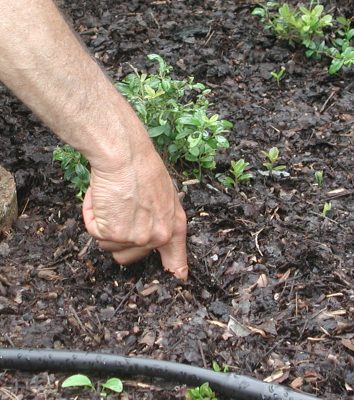
Finger in soil to test for moisture

Finger in soil to test for moisture

This approximation doesn’t take into account the fact that my bed of sweet corn is thirstier than is my bed of onions, that my plants drew less water up from the soil during a recent calm, cloudy day than they will with today’s bright sunlight and breezes, and that warmer temperatures speed water loss. Still, an inch a week is a good approximation, one very workable around here where periodic rain allow some wiggle room in watering. Not so in parts of California and similar climates that remain reliably bone dry all summer.

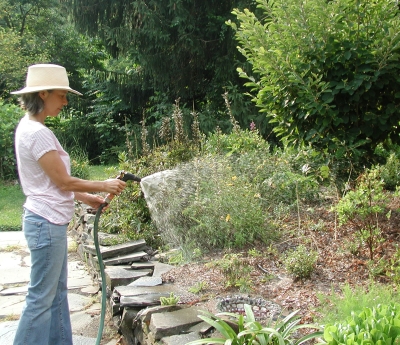
A sprinkler, or a hand-held hose with a spray rose for small areas, and some randomly placed straight-sided cans to catch water are an easy way to tell how long to leave the spigot on to get that inch depth of water. Hand wateringUsually, about an hour, once a week, is what it takes. (That’s a long time to stand still holding a hose.) Unless it rains. Then less might be needed.
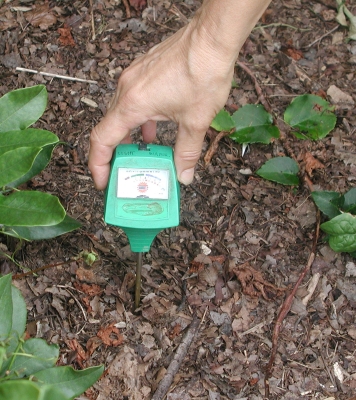
A rain gauge is an inexpensive way to know whether what seems like a soaking rain is really so. Or monitor soil moisture directly. Dig a hole, poke your finger into the soil, or, even better, purchase a “moisture meter” for less than $15; plunge the metal probe a few inches into the ground and read on the dial whether the ground down there is “dry,” “moist,” or “wet.” You want it moist.

Digital moisture probe.

Digital moisture probe.

Thirst Quenching a Drip at a Time

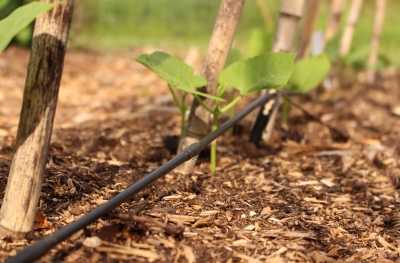
My vegetable plants get their thirst quenched with drip irrigation rather than a sprinkler. The idea of a drip system is to drip water into the soil at about the rate which plants are removing it. That doesn’t occur once a week, but every bright day, all day long.

That one inch per week rate translates to about three-quarters of a gallon per square foot. Dripline with beansMy drip system is on a timer, and the time needed to apply this amount depends on the rate of flow from each emitter as well as the spacing of emitters.
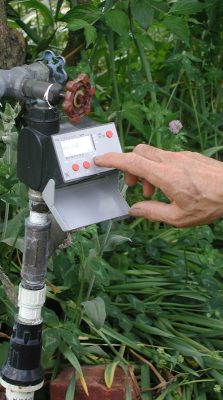
After a lot of calculations and approximations (many years ago), I determined that dripping for one-half hour per day would be about right. But, as I wrote, plants drink all day long, not just once a day. My drip timer can turn on and off at three specified times per day, so the plants get their thirst quenched three times spaced out during daylight hours at ten minutes per session. My old timer offered six sessions per day; then, plants got six waterings of 5 minutes each.Drip timer

Done. All I have to do is check every once in a while that all systems are go, which is one reason my drip lines run above ground. I can watch the dripping.

I do have to get out the watering can for the lettuce seedlings, the third planting of the season, that are soon to be set out, as well as for the recently planted row of carrot seeds and other recent seedings and transplants. Supplemental watering until roots of new plants stretch down into the region of the drip line’s wetting front, which spreads with the shape of an ice cream cone downward beneath each spot of dripping water.

(I’ll be leading a hands-on workshop on drip irrigation August 18th at the garden of Margaret Roach in Copake Falls. For more information, go to Margaret’s website, and type my name in the “search” box.)

Engineered Orifices

Note that I haven’t mentioned “soaker hoses.” Although the water oozes out from these porous hoses, they are not really “drip irrigation.” Sure, the water just oozes out slowly. But they’re inconsistent in output not only with water pressure and elevation, but also with time. And roots can grow inside buried soaker hoses, further muddying the water.

A real drip line has water emitters spaced six to twelve inches apart along their length, and those emitters aren’t mere holes punched in tubing. They are engineered orifices, designed to be relatively consistent in output with changes in incoming water pressure and changes in elevation along the line. They also are self-cleaning in case debris gets into the line.

And Now, A Word About Fireflies

Fun fact: Fireflies (which I knew as “lightning bugs” in my youth) are more than whimsy on a summer night; they’re also a gardener’s friend, feeding on, among other creatures, slugs.

Berries Begin

Green Thumb Not Necessary

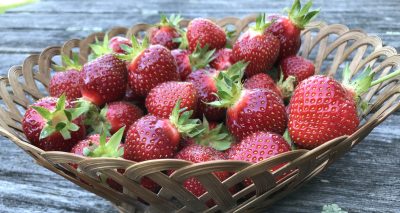
Every day, for some time now, my strawberry bed has yielded about five cups, or almost 2 pounds of strawberries daily. And that from a bed only ten feet long and three feet wide, with a double row of plants set a foot apart in the row.Strawberry harvest
Good yield from a strawberry bed has nothing to do with green thumbs. I just did what’s required to keep the plants happy and healthy. To whit . . .

I planted the bed last spring to replace my five-year-old bed. About five years is about how long it takes for a strawberry bed to peter out due to inroads of weeds and diseases, including some viruses whose symptoms are not all that evident.

To keep my new plants removed from any problems lurking in the old soil, I located the new bed in a different place from the old one. Further forestalling problems, plants came not from a generous neighbor and not from my old bed, but from a nursery selling “certified disease-free” plants.

I chose to grow them in a “spaced plant” system (which does not involve getting plants high, ha, ha) but allows each plant a square foot of space. Throughout the growing season, I clipped off any runners and daughter plants attempting to establish themselves and crowd into the mother plant’s space.

Other growing systems allow for runners, which makes for more economical planting of a bed but reduced initial yield. Given free rein, though, new plants eventually become the worst weed in any strawberry bed; they must be dealt with in some way.

Did I mention that the new bed, like the old one, was in the vegetable garden, where the soil is rich in nutrients and organic matter, with plants’ thirst quenched daily via drip irrigation? 

In late December, when the ground had frozen about an inch deep, plants were snuggled beneath mulch as protection from winter cold. Straw, pine needles, wood shavings — any loose organic material will do.

Come spring, just as soon as plants began to awaken, I pulled back new growth beneath the mulch and tucked it under the plants’ leaves. I also trimmed off any dead leaves. The new job for the mulch was then to keep the soil moist and the soon-to-form ripening berries clean of soil.

That’s it, for all those berries, fresh picked every morning. Every morning for a little while longer, that is. I planted a “junebearing” variety of strawberry, Earliglow, known for earliness and good flavor, but bearing only for a few weeks in June. Other varieties, so called “everbearing” and ”day neutral” varieties, bear repeatedly through the season.
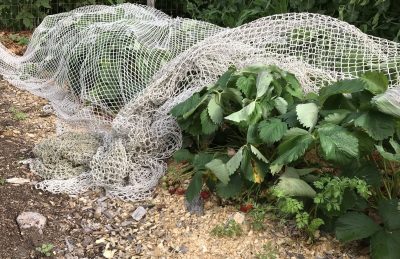
Netted strawberriesOnce Earliglow stops bearing for the season, the bed will need renovation and, through the season, its runners pinched off weekly to keep each plant “spacey.”
Better Berries

You might wonder: Why such a relatively small planting of strawberries, and why only junebearers? This admission may be sacrilege: I’m not a big fan of strawberries. I like the fruit well enough, but mostly because they are the first fresh fruit of the season.

(One other fruit does beat out strawberries as the first fruit of the season. They are honey berries, a kind of edible honeysuckle. Their flavor, thus far, has not impressed me. Breeding and cultivating honeyberries is in its infancy. They’re perhaps where apple was 2000 years ago, and the future might bring more flavorful ones.)

Back to strawberries . . . another of their deficiencies, in my view, is that you have to crawl for the fruit. And, as mentioned previously, although technically perennial, beds should replanted in a new location every 5 years or so.

The Best Berries

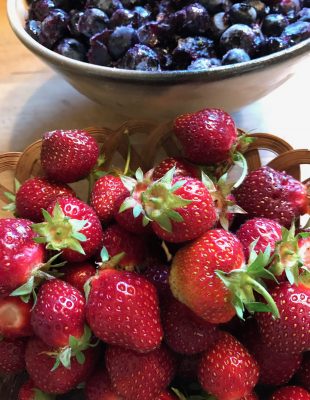
The fresh strawberries came on the scene on the tails of last year’s frozen blueberries, one of my favorite fruits. Perfect. (The loss of frozen blueberries is softened by the freshness of the strawberries.)

Last frozen blueberries, fresh picked strawberries

Last frozen blueberries, fresh picked strawberries

And just as the fresh strawberries fade out for the season, fresh blueberries will begin yielding this season’s bounty. Also, at the same time, black currants and red currants. And then black raspberries, and then  . . . and on and on.

All You Need To Know About Blueberries

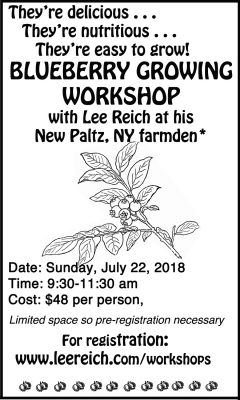
Interested in growing your own blueberries? It’s easy, if you meet their basic needs, all of which, including varieties, harvest, and other pressing questions about growing blueberries, will be covered at my upcoming BLUEBERRY GROWING WORKSHOP. The workshop will take place on my New Paltz farmden on July 22, 2018 from 9:30-11:30am, at a cost of $48. Registration is a must. For more information and registration, go to www.leereich.com/workshops.

Upcoming Blueberry Workshop

Ad for blueberry workshop

Immigrants Welcomed

Sad to See This One Leave, ‘Til Next Year

“So sad,” to quote our current president (not a president known, so far at least, for his eloquence). But I’m not sliding over into political commentary. I use to that pithy quote in reference to the fleeting glory of Rose d’Ipsahan.

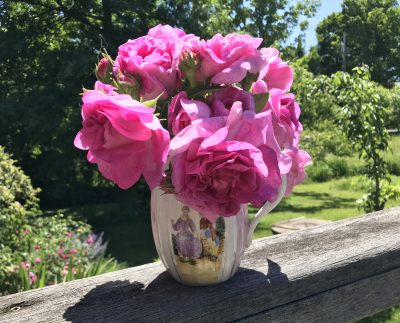
A little background: Rose d’Ipsahan was given to me many years ago by a local herbalist under the name of Rose de Rescht, which it soon became evident it was not. Rose d'Ipsahan in vaseDescriptions of Rose de Rescht tell how it blossoms repeatedly through the season; not my rose. I finally honed down my rose’s identity from among the choices suggested by a number of rose experts based on photos and descriptions I had sent them.
Under any name, Rose d’Ipsahan would be my favorite rose. Without any sort of protection, it’s never suffered any damage from winter cold. Insect and disease pests do it little or no harm. And rather than intimidating thorns, the stems are covered by more user-friendly prickles.

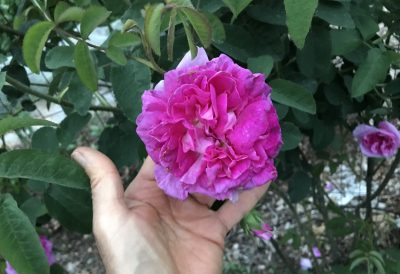
The best part of Rose d’Ipsahan is its blossoms, a loosely packed head of soft, pink petals that are attractive from the time the opening bud shows its first hint of pink until the head fully expands. Rose d'Ipsahan blossomAnd the fragrance! Intense, and my favorite of all roses. Rose d’Ipsahan is a variety of Damask rose and has the classic fragrance of that category of rose.
This rose was discovered in a garden in the ancient city of Esphahan (sometimes written as Ispahan, Sepahan, Esfahan or Hispahan) in Iran, making its way to Europe from Persia sometime in the early 19th century. Interesting that a rose claiming as home a part of the world with very hot summers, mild winters, and a year ‘round very dry climate does so well in my garden. And elsewhere; this is a cosmopolitan plant.

Why, the “So sad?” Because Rose d’Ipsahan blossoms only once a season. Then again, it does have a relatively long season — for a Damask rose. I’m thinking of making some new plants to plant near the east or north wall of my home where spring’s later arrival would delay the onset — and finish — of blossoming a few days after my plants in the sun. Rose d’Ipsahan also tolerates some shade. 

A Wild Italian

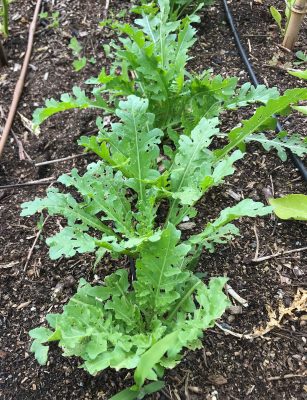
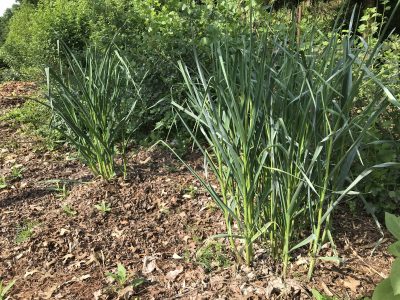
Another immigrant in my garden is arugula. Not your run-of-the-mill arugula (Eruca sativa), but a different species, this one usually known as Italian or wild arugula (Eruca selvatica). Italian arugula has a peppery flavor similar to common arugula, to me a little less sharp.

Italian arugula has it over common arugula in two ways. First of all,I think it’s prettier, with deeply lobed rather than mostly rounded leaves. Italian arugulaMore important, Italian arugula tolerates heat better. As my rows of common arugula are sending up seed stalks, the Italian arugula just keeps pumping out new leaves.
The native home of arugulas, common and Italian, is the Mediterranean, where their flavors have been enjoyed since Roman times. Perhaps more than just for their flavor. In his poem Moretum, Virgil has the line “et Venerem revocans eruca morantem  which translates to “and the rocket, which revives drowsy Venus’ [sexual desire].” Perhaps that’s why it was forbidden to grow arugula in monastery gardens in the Middle Ages.

It’s also been suggested that the reason arugula is often mixed with lettuce in a salad is to counteract arugula’s effect; lettuce contains the chemical lactucarium, a non-narcotic sedative and analgesic, structurally similar to opium. Lactucarium isn’t nearly as strong as opium, to say the least, because studies have shown none of the alleged effects from “lettuce opium,’ as the lettuce compound has been called. (I didn’t come across any studies confirming or denying the effects of arugula beyond good taste.)

Glad to Have These Immigrants

So there you have it, two immigrant plants well worth growing. I’m glad I welcomed them into my garden, and suggest you do so also.

Come Visit My Farmden

This Sunday, June 24th, 2018, from 1-4:30 pm my garden/farmden is open to the public as part of the Garden Conservancy’s Open Days program. The Garden Conservancy is an American nonprofit organization founded in 1989 and dedicated to preserving exceptional gardens and landscapes. The $7 admission cost to each Open Day garden helps fund their efforts. For more information about my farmden and other local gardens open that day (and through summer), go to https://www.gardenconservancy.org/open-days/garden-directory/springtown-farmden

My Dog and I Have Odd Tastes

In My Opinion . . .

Note: The following editorial comments represent the opinions of the writer and do not necessarily represent the opinions of the publisher.

I don’t understand the current — decades long, now — infatuation with the “stinking rose,” as garlic used to be called. Not to reveal my age, but I don’t remember ever seeing, smelling, or tasting garlic in my youth. Not that I didn’t; I just don’t remember it if I did. At any rate, in my family circle, at least, it would not have generated the undue enthusiasm it does these days. Whole festivals, for instance!

I don’t dislike garlic. Mostly, when I’ve used it, it’s flavor is lost when cooked. Except when roasting turns the texture satiny and the flavor bite-less; then it’s quite delicious spread on bread or baked potato, or mixed with vegetables. Mmmmm.

But still not worth planting. It’s my belief that many gardeners devote all too much space to growing garlic. Is home-grown garlic really that tasty, tastier than what you can pick off a supermarket shelf or from a bin at the farmers’ market?

I’ve seen very small vegetable gardens in which a third of the area was devoted to the stinking rose. For my money, I’d rather be picking fresh lettuce, asparagus, or peas — all of which taste significantly different and better within minutes of harvest than when bought from any market, farm or otherwise. Or peppers, tomatoes, sweet corn, or green beans, because I can choose the best tasting (to me) varieties to plant in my garden.

As you might guess, I don’t grow garlic — not in my vegetable garden, at least. Why devote even a square foot of space in that compost-rich, drip irrigated, sun-drenched ground to  such a thankless vegetable?

I do sometimes grow garlic in various patches of open ground in the large patch of gooseberries, grapes, and a miscellany of other plants behind my garden. The only improvement that soil experiences is annual mulching with autumn leaves, which has enriched the ground below with humus. But no irrigation, which the garlic, planted in early autumn and then harvested the following summer, hardly needs because it can run on rainfall that falls in autumn through spring.

Garlic doesn’t seem to get the hint that I don’t particularly want to grow it. Enough bulbils that form at the tops of scapes touch down each year to make new garlic plants. Most are spindly, giving rise to Lilliputian cloves. Garlic volunteer plantsBut if I want some garlic flavor in spring, I can pull stalks out of the ground, peel off the outer covered of leaf sheath, and chop up the ivory white lower portion for use. Many I just pull out and toss into the compost pile; the garlic is getting weedy.
Okay, you garlic lovers, go ahead and pelt me with tomatoes. But hold the garlic.

Sammy Stalking

My dog Sammy has grown very fond of stalks. Asparagus stalks. Why can’t he channel that stalky affection to the garlic sprouting behind my garden? Perhaps some culinary magic with garlic poured over his dog food and guided walks over to some of the growing clumps could bring him around.

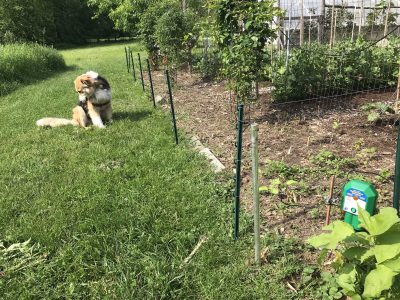
I planted asparagus outside the fenced vegetable garden with the knowledge (ha!) that no furry animals would dine on it. Sammy has plowed his way through or gracefully leapt over the temporary chickenwire enclosure meant to keep him asparagus-free. A recently purchased electric fence should keep him at bay — also from the persimmons, another of his favorites, later in summer. Sammy & electric fence

Of Mulch Importance

On a more serious note, now, with recent rains maintaining good soil moisture, is an ideal time to mulch. Earlier this season, mulch would also have been good, except that it would have delayed soil warming and, hence, seed germination, planting and growth of annual vegetables and flowers.

Mulch spread atop dry soil has to be wetted before letting water percolate down into the ground below. Mulching chestnutsIf spreading mulch is delayed until the soil turns dry, all the more water will be required to give the soil below a good drenching.
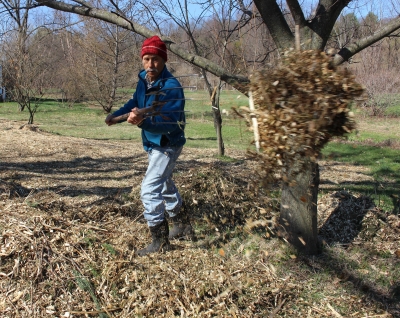
A large pile of wood chips sits on the far side of my wood pile, compliments of local arborists. Day by day, I’m spreading it for an attractive, soil enriching, moisture sealing blanket over my soil — even around my volunteer garlic plants.

“Worms” Good and Bad

Nematodes Galore

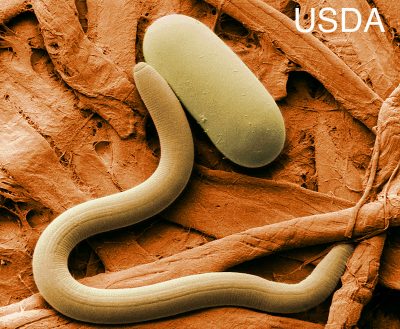
The name ”nematode” doesn’t conjure up a creature that you’d normally want to make friends with. It’s other name, roundworm, seems even more repulsive and is, in fact, also a name applied more specifically to a nematode that infects humans and dogs. 

Like it or not, nematodes are all around us, with over 25,000 species described so far that  inhabit diverse ecosystems from thousands of feet deep in the Earth to mountain tops, and from deserts to rain forests. Many are visible only under a microscope; some are two inches long. A square yard of soil can be home to more than a million nematodes, and we humans can be host to about 35 species.

Do we want our plants to cozy up with them?

A number of nematodes infect plants, resulting in stunted growth and, often, swellings on roots or stems.

Soybean cyst nematode

Soybean cyst nematode

Their common names — root knot nematode, stubby root nematode, cyst nematode, lesion nematode — describe some of the symptoms. These plant pathogenic nematodes can do further ill by transmitting bacterial or viral diseases to plants.

I’m not particularly worried about nematodes in my garden. For one thing, they’re more prevalent in warmer climates. Also, good gardening practices, such as enriching the ground with compost, leafy mulches, and other organic materials, and crop rotation go a long way to thwarting such problems.

If I did have a nematode problem, or suspected one, I could reach into a quiver of “organic” solutions. Marigolds can suppress nematodes. Not just a plant here and there, though, but a solid planting of giant, African marigolds. Mustard has a similar effect, whether grown, like the marigolds, as a cover crop, or applied as a seed meal, which also happens to be a slow-release nitrogen fertilizer.

Chitosan, made from the shells of crustaceans and the active ingredient found in commercial products such as Serenade, reputedly bolsters plant defenses against nematodes and other pathogens. (My casual experimenting with Serenade against apple diseases found no benefit.)

Welcome “Worms”

In the same way that just about no one with an eye patch is a pirate, very few “nematodes” are bad guys. In the garden, so-called “predatory” nematodes are better than neutral; they are the “good guys,” preying on a wide range of garden pests.

Some of the most common beneficial nematodes are Steinernema carpocapsae, S. feltiae, and Heterorhabditisheliothidis bacteriophora. These three nematodes vary in their habits although they all attack a wide variety of garden pests. Steinernema carpocapsae is an “ambusher forager” that lies in wait near the soil surface for unwary pests to wander past. Heterorhabditisheliothidis bacteriophora is a “cruise forager” that moves around through various depths of soil, ready to pounce upon unsuspecting sedentary pests. The habitat and hunting behavior of S. feltiae nematodes is intermediate to the other two.

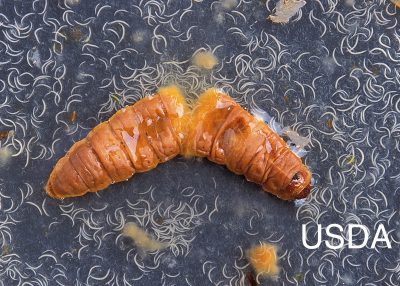
Waxworm releasing beneficial nematodes

Waxworm releasing beneficial nematodes

Beneficial nematodes can be purchased. To be effective, they must be shipped at the right growth stage and applied without their drying out. Even then, annual applications are frequently needed.

Some strains of the beneficial nematodes can survive and multiply in the soil year after year. I imagine that my garden soil has plenty of “good” nematodes; perhaps more would be better. Some day I may extract some of the “good guy” nematodes from my soil, multiply them, and then re-apply them to my ground.

For now, I intend to get hold of a starter supply of native, perennial nematodes and multiply my holdings, a process which I think will have the added benefit of being fun and interesting. The three kinds of nematodes extracted from soils in central New York, are available for purchase from http://blogs.cornell.edu/ccefieldcropnews/2018/02/28/discount-available-on-biocontrol-nematodes-to-protect-alfalfa-corn-crops/.

With nematodes in hand, a nematode host is needed if I’m going to multiply them. Waxworms, sold for fishing bait, are a convenient host. The waxworms get incubated with the nematodes which, after a couple of weeks, are rinsed free of the waxworms with water.

The aqueous suspension of nematodes is then ready for application. To prevent their drying out, they’re best applied in early morning or evening along with plenty of water. If all goes as planned, they should establish and multiply to kill such pests as wireworms that bore into carrot and radish roots, plum curculio that attack apple, plum and peach fruits, and any cutworms that attack just about everything.

Come Visit My Farmden

Last minute notice: Come visit my farmden, in real life, on June 24th. As part of the Garden Conservancy Open Days program, I’ll be hosting visitors between 1 pm and 4:30 pm on that day. For more information about my farmden and other local sites, go to the https://www.gardenconservancy.org/open-days/open-days-schedule/ulster-county-ny-open-day-2.

Invaders

Dare I Speak the Name?

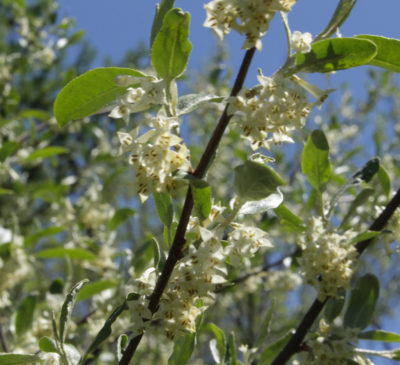
As I was bicycling down the rail trail that runs past my back yard, I was almost bowled over by a most delectable aroma wafting from a most despised plants. Autumn olive blossomsThe plants were autumn olives (Elaeagnus umbellata), shrubs whose fine qualities I’m reluctant to mention for fear of eliciting scorn from you knowledgable readers.
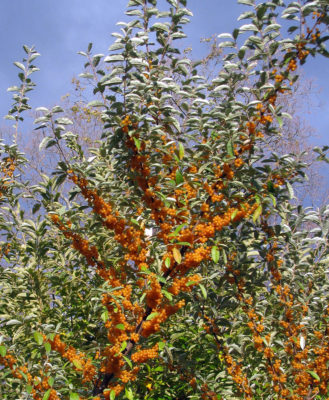
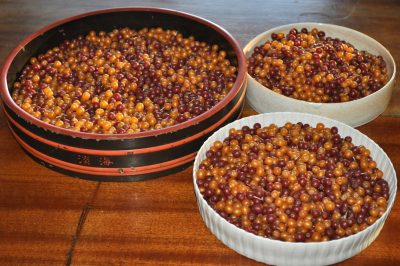
Yet, you’ve got to admit that the plant does have its assets, in addition to the sweet perfume of its flowers. Okay, here goes: The plant is decorative, with silvery leaves that are almost white on their undersides. And the masses of small fruits dress up the stems as they turn silver-flecked red (yellow, in some varieties) in late summer. Autumn olive fruitThose fruits are very puckery until a little after they turn red, but then become quite delicious, and healthful.

(I included autumn olive in my book Uncommon Fruits for Every Garden, and also planted them — but that was before the plant became illegal here.)

Another asset of autumn olive is that it actually improves the soil, converting air-borne nitrogen, which plants can’t use, into soil-borne nitrogen for use by autumn olives and nearby plants.

This native of Asia, introduced into the U.S. almost 200 years ago, was promoted in the last century as a plant for wildlife and soil improvement. Decades ago I worked for the USDA in what was then known as the Soil Conservation Service (now the Natural Resource Conservation Service), an agency that not only promoted the plant but also developed varieties for extensive planting.autumn olive fruits in bowl

Autumn olive likes it here and has invaded fields throughout the northeast, the Pacific northwest, and even Hawaii. It’s an invasive plant. Don’t grow it! (But feel free to enjoy its aroma, its beauty, and its fruits.)

One of My Favorite “Invasives”

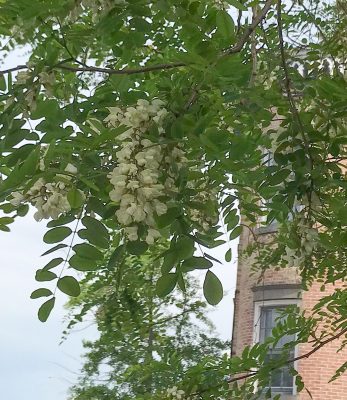
As autumn olive blossoms fade, the temporary vacuum in sweet-perfumed air will be filled by another plant, black locust (Robinia pseudoacacia). That aroma comes from the white blossoms that dangle in chains like wisteria blooms from this tree’s branches.Black locust flowers

Like autumn olive, black locust has other assets in addition to those offered by its blossoms. It’s a leguminous plant, like peas and beans, so, with the help of bacteria residing in its roots, also puts air-borne nitrogen into a form utilizable by plants. 

Black locust’s other assets refer to it when dead: The dense wood is very resistant to rot — much, much more so than cedar — and is very high in BTUs for burning. I converted all my garden’s fenceposts and arbors, which I had previously made from cedar and lasted only about 10 years, to locust.

I’m lucky enough to have a mini-forest of them growing along one edge of my property. I cut them when they are five or six inches in diameter, and in 10 or so years I have a new one to replace the cut one. It adds up.

Quick growth and the ability to resprout from stumps and grow in poor soil by “making” its own nitrogen makes black locust, like autumn olive, a plant not loved by everyone. Despite being native here in the U.S., black locust has been classified as a “native invasive.” The reason is that it was originally native to only two regions in the U.S., from which it has now spread far and wide.

Change Will Come

The classification of “native invasive” highlights the capricious legality and classification of invasive plants. Where is the boundary within which a plant becomes an accepted native? In the mountain that rises up just behind my valley setting, lowbush and highbush blueberry are thriving natives. But these plants would never turn up here on my land, except that I planted them. (And both thrive.)

Clove currant is another plant I grow, one that, in addition to bearing spicy fruits, is resistant to just about every threat Nature could throw at it: deer, insects diseases, cold, drought. And it’s a native plant, but native throughout the midwest, not here. Should I call it a “native?”

Black locust is such a useful tree that its spread was aided and abetted by humans. But it also would have spread, albeit more slowly, without our intervention. Even autumn olive, given enough time, might have hitch-hiked here in some way from Asia.

The Earth’s landscape is not static. Changes represent interactions of climate, vectors, chance, and time. Nostalgia may have us wishing for the view out the window to remain the same as it was when we were children, but that’s not Mother Nature’s way.