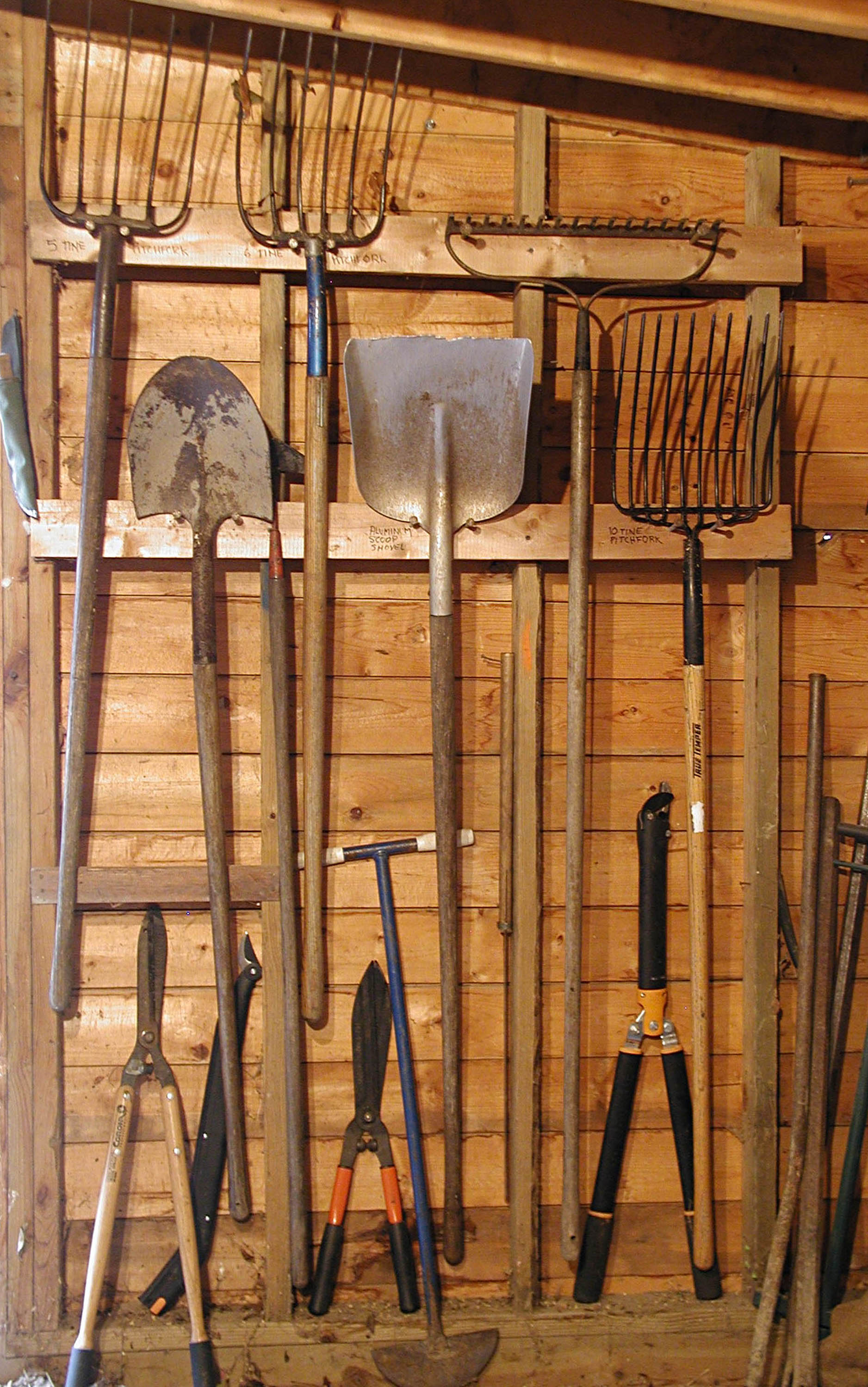
My stable of pitchforks & other tools

A BAKER’S DOZEN OF ESSENTIAL GARDENING TOOLS

With 40+ years of gardening under my belt, many gardening tools have come and gone around here. Or not gone; they may still be sitting in a dark corner of my garage. Some of those tools, while hardly essential, I’ve consciously kept because they are useful every once in a while, perhaps every few years. A pickaxe, for example. If I didn’t happen to own one, I could borrow one when needed.

Then there are those tools that get constant use, tools that it would be very hard to do without on an almost daily basis. What follows is my baker’s dozen of essential tools. True, each gardener might tweak such a list to suit his or her specific situation or need, but give each of these tools consideration. You might decide to add or subtract from your own list.

From the Ground Up

Good gardens begin at ground level. I pay close attention to my soil and a few of this Baker’s Dozen list relate to the soil.

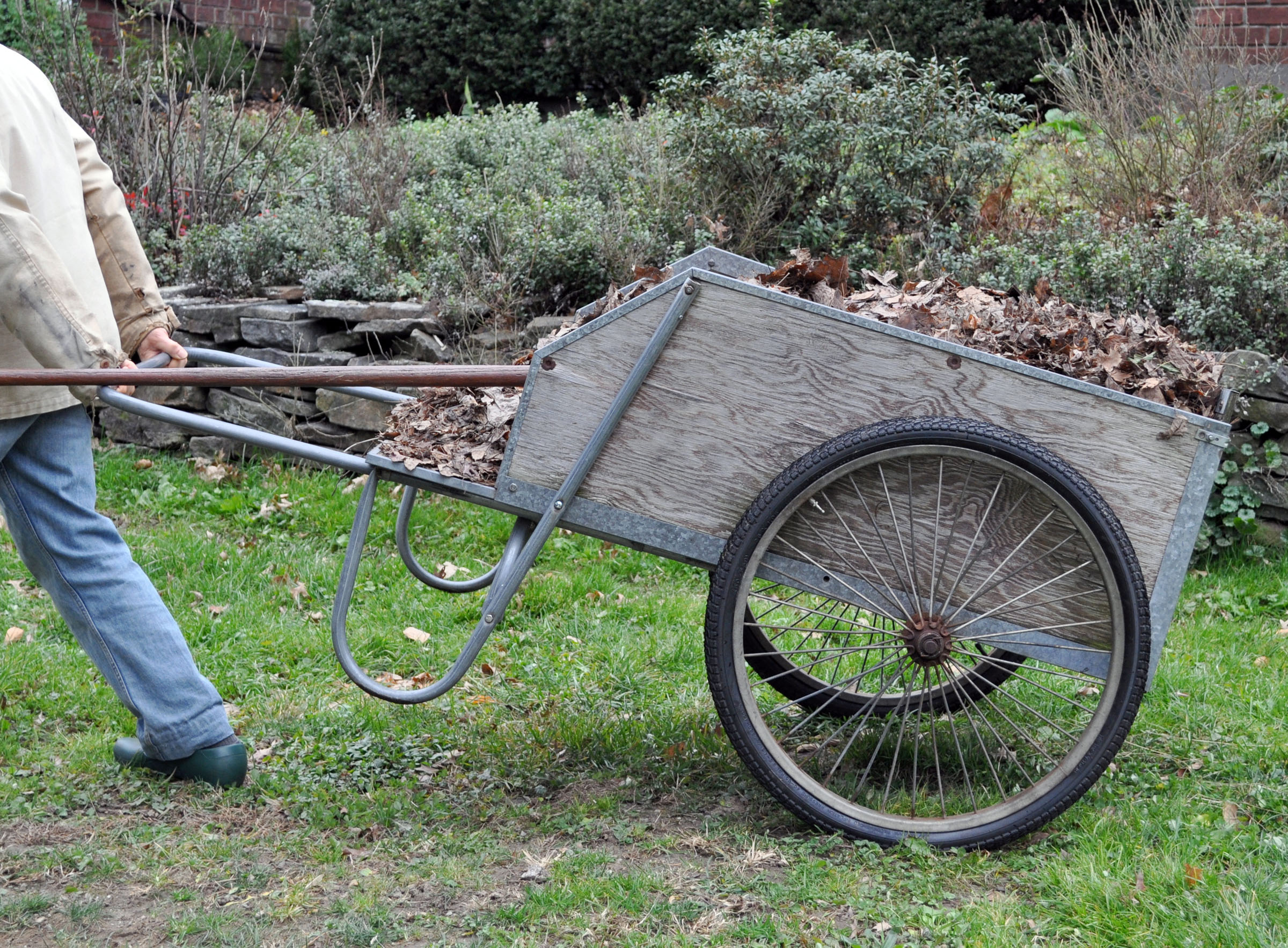
It’s been 35 years since I purchased a garden cart, essentially a sturdy, 3-sided wooden box that rolls on Garden cart Read more
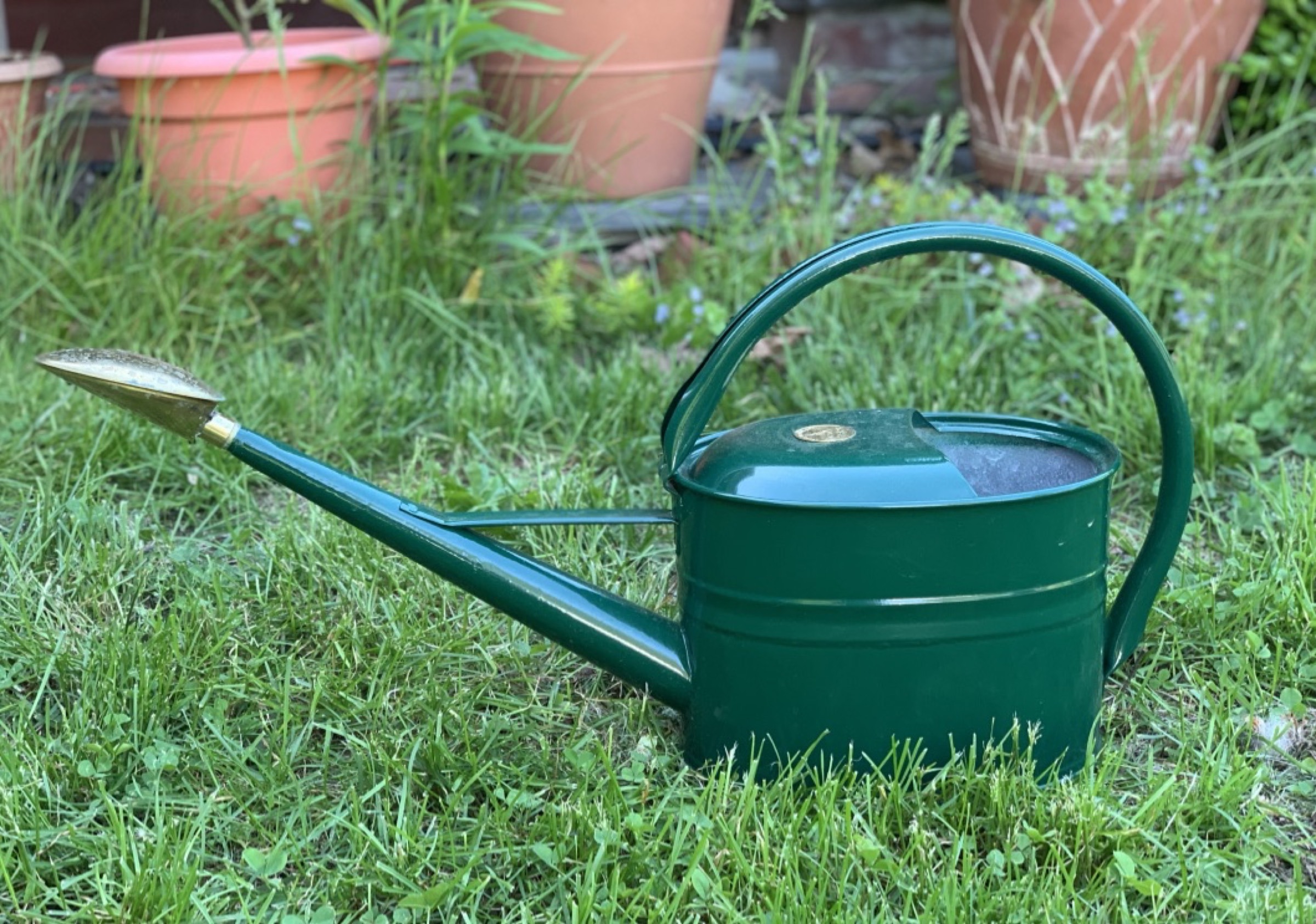
Watering can, green Haws

RAINY WEATHER: WHY WATER?

Prognastication, Nope

Who can predict the weather? If it happens to be raining cats and dogs as you read this, my words might make you want to pelt me with ripe tomatoes — if you had them yet. Still, I’ll say it again: Timely watering is the way too get the best plant growth from any plot of ground in any season.

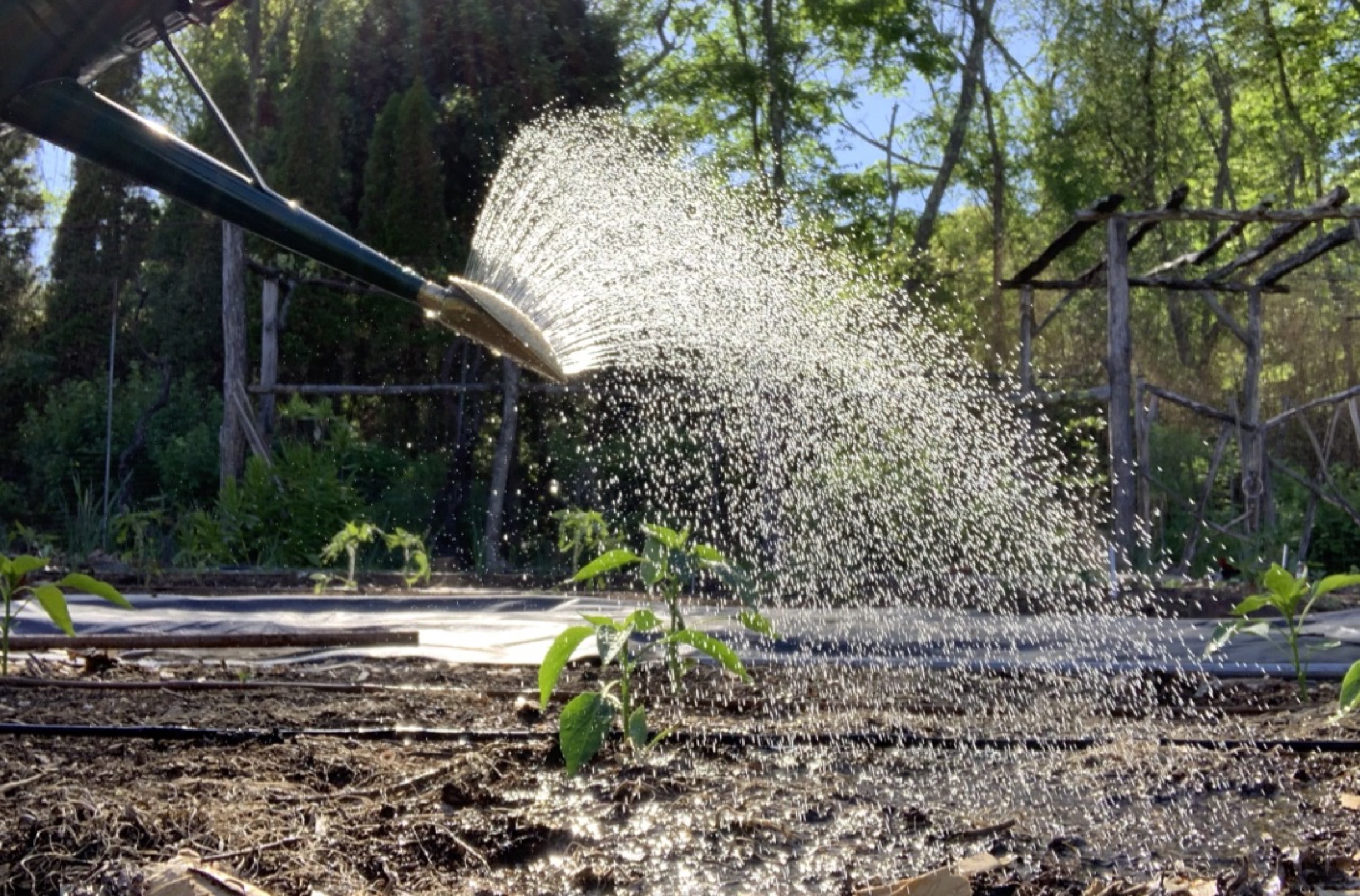
Watering usually helps even in wet seasons because all the water that falls in such seasons is not available to plants. Roots need air to function, and a cat and dog rain temporarily drives all the air out of the ground. Roots start to breathe and function well again only after gravity has pulled excess water deeper into the ground. A timely watering will spur plant growth in drier periods between rains.Watering form watering can

I’m not making a case for setting up elaborate irrigation systems to water every maple, marigold, lettuce, and lawngrass. (My blueberry bushes and my vegetables are the only plants that are watered regularly, here — as described in my book Weedless Gardening — with drip irrigation on a timer.) Read more

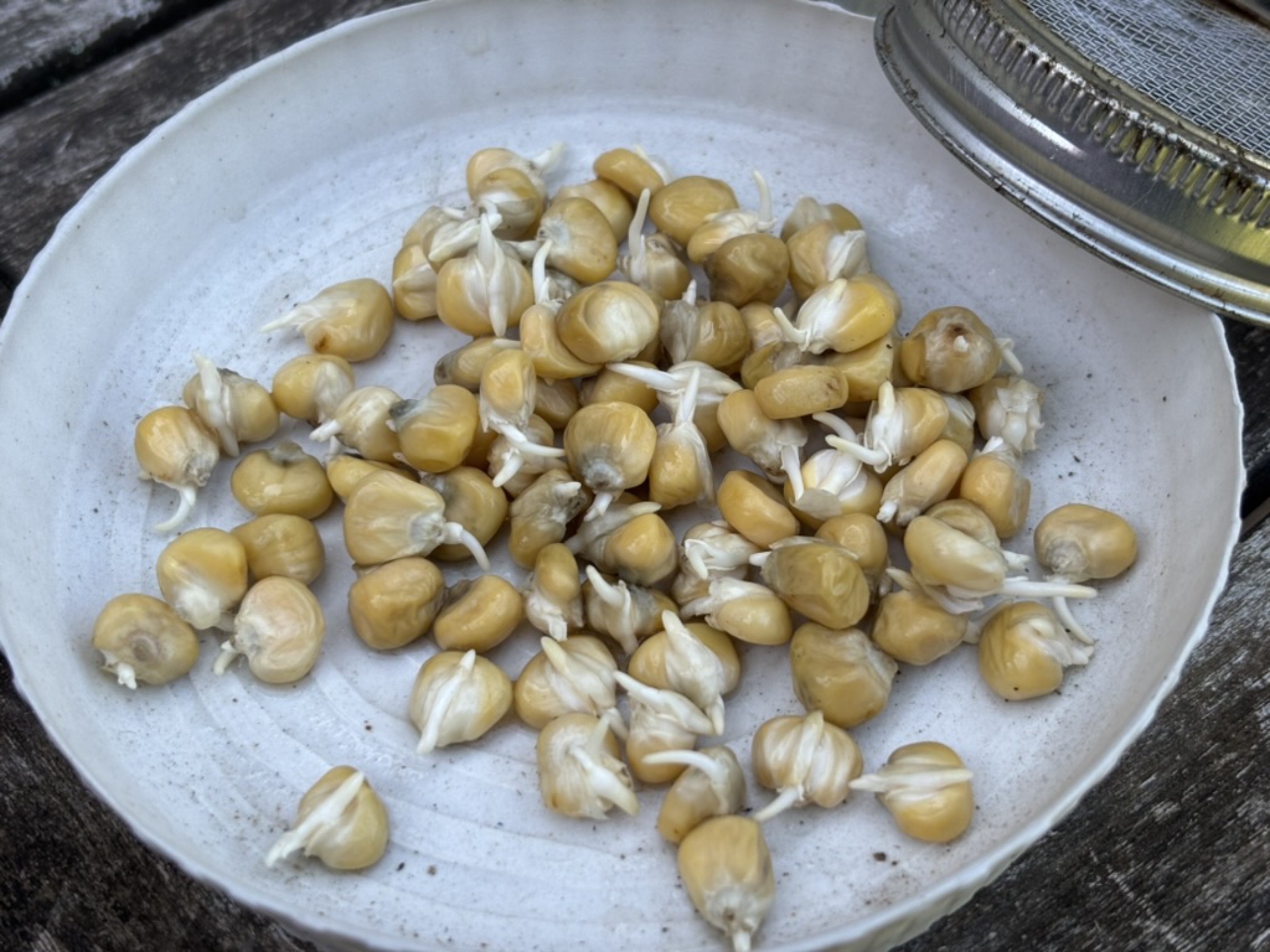
Corn ready for planting

HAVE FAITH, WITH RESERVATIONS

Sprouts for Your Vegetables

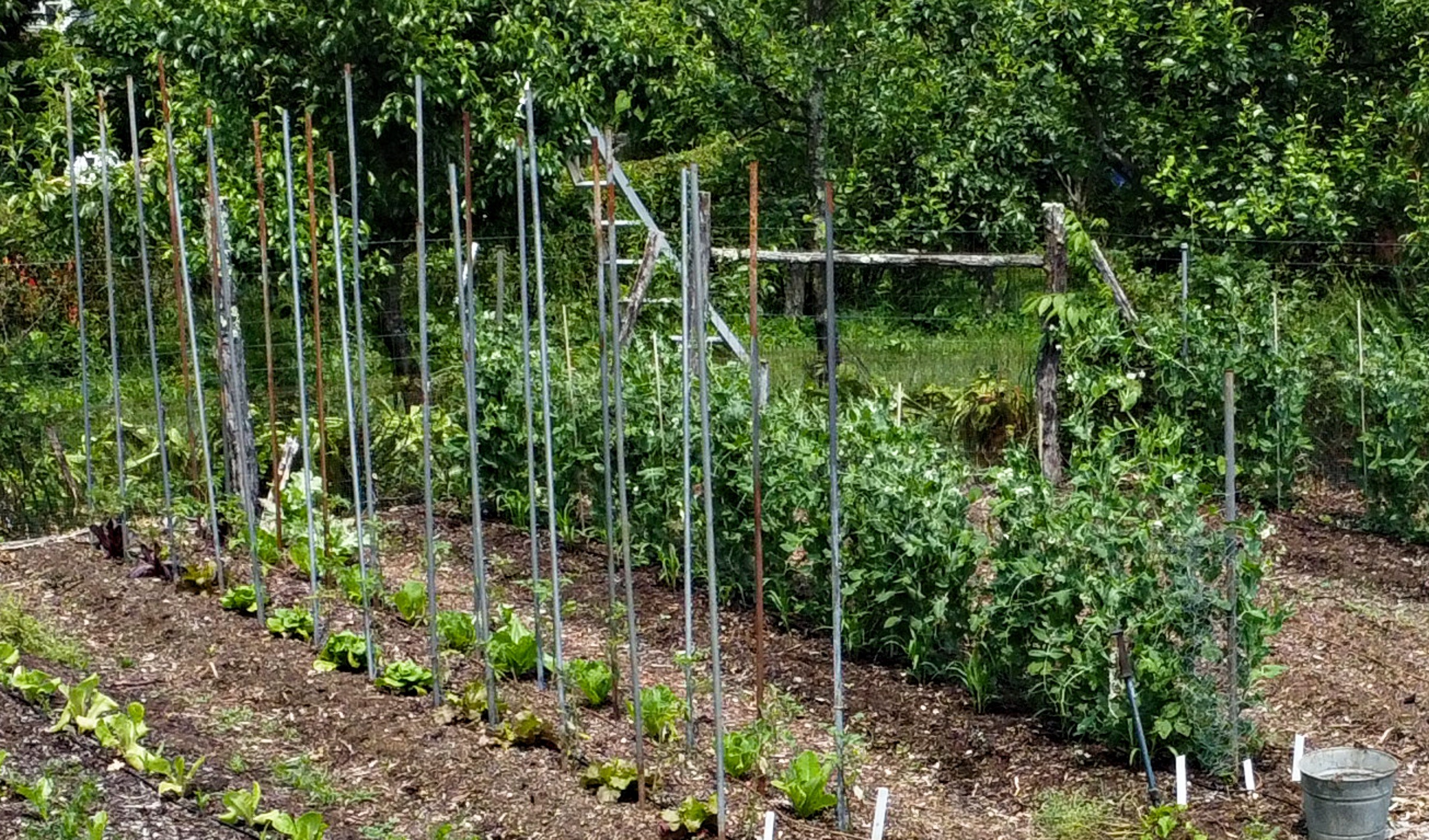
Planting a seed is an act of faith. After all, what could seem more far-fetched than dropping a shrivelled, apparently lifeless speck of something into a hole in the ground, then expecting to return and find growing there a lush, green plant brimming with life. A lack of faith — or maybe it’s just impatience — is what drives some gardeners to set out transplants rather than sow seeds. Of course, plants such as tomatoes, peppers, and eggplants won’t ripen their fruits in due time if seeded outdoors when the soil is warm enough for germination.View of vegetable garden in mid-June

Read more

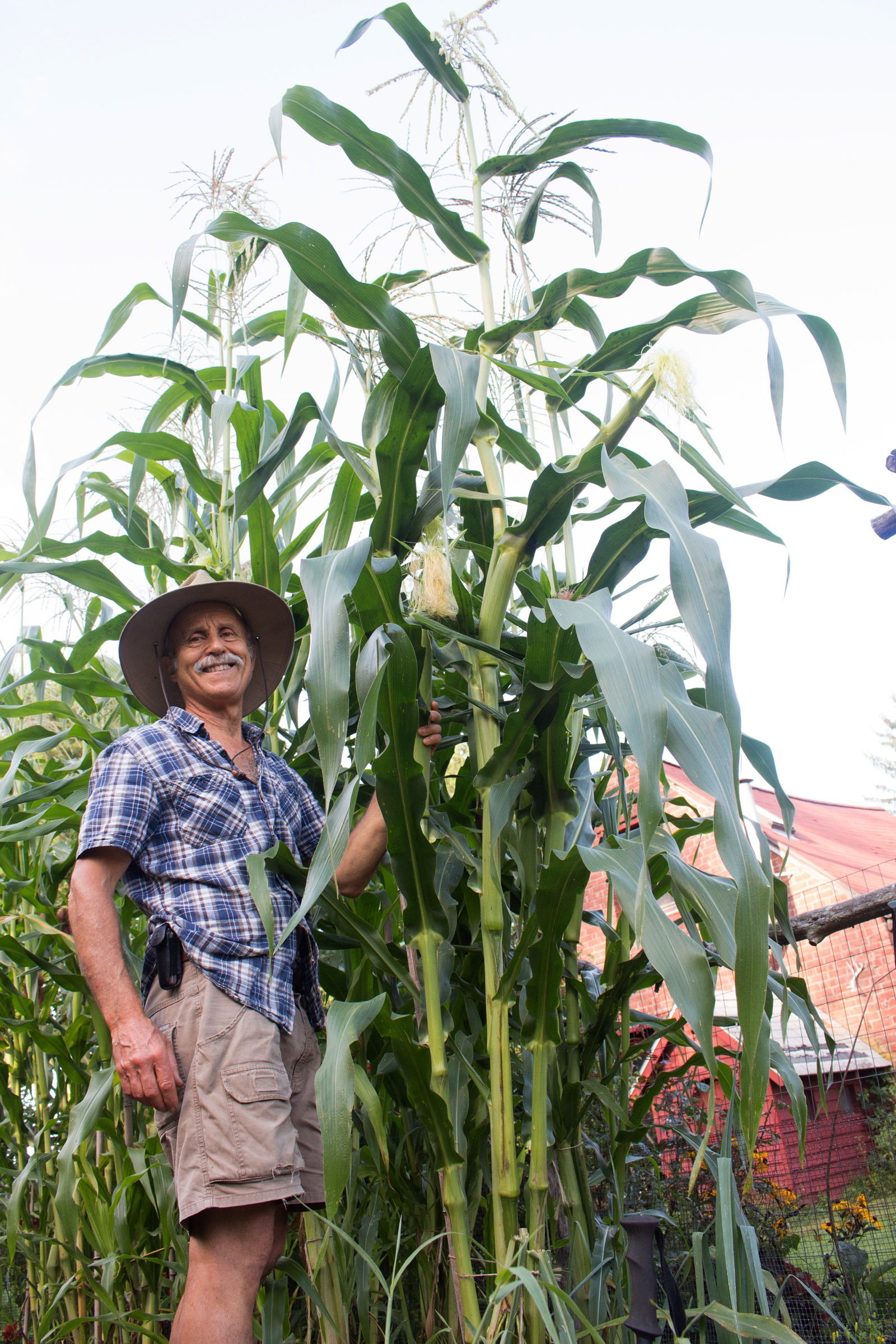
Tall corn and me

I GROW SWEET CORN BECAUSE . . . SO MANY REASONS

Conventional Wisdom is Wrong!

Conventional garden wisdom holds that sweet corn isn’t worth planting in a backyard garden. The reasons given are that it takes up too much space, that pollination is poor from small, backyard plantings, and that it’is relatively inexpensive and of high quality from markets and farm stands. I take issue with the conventional “wisdom” on all counts.Tall corn and me

Read more

Dame's rocket in my garden

A ROCKET FOR YOUR GARDEN

And a Welcome Dame

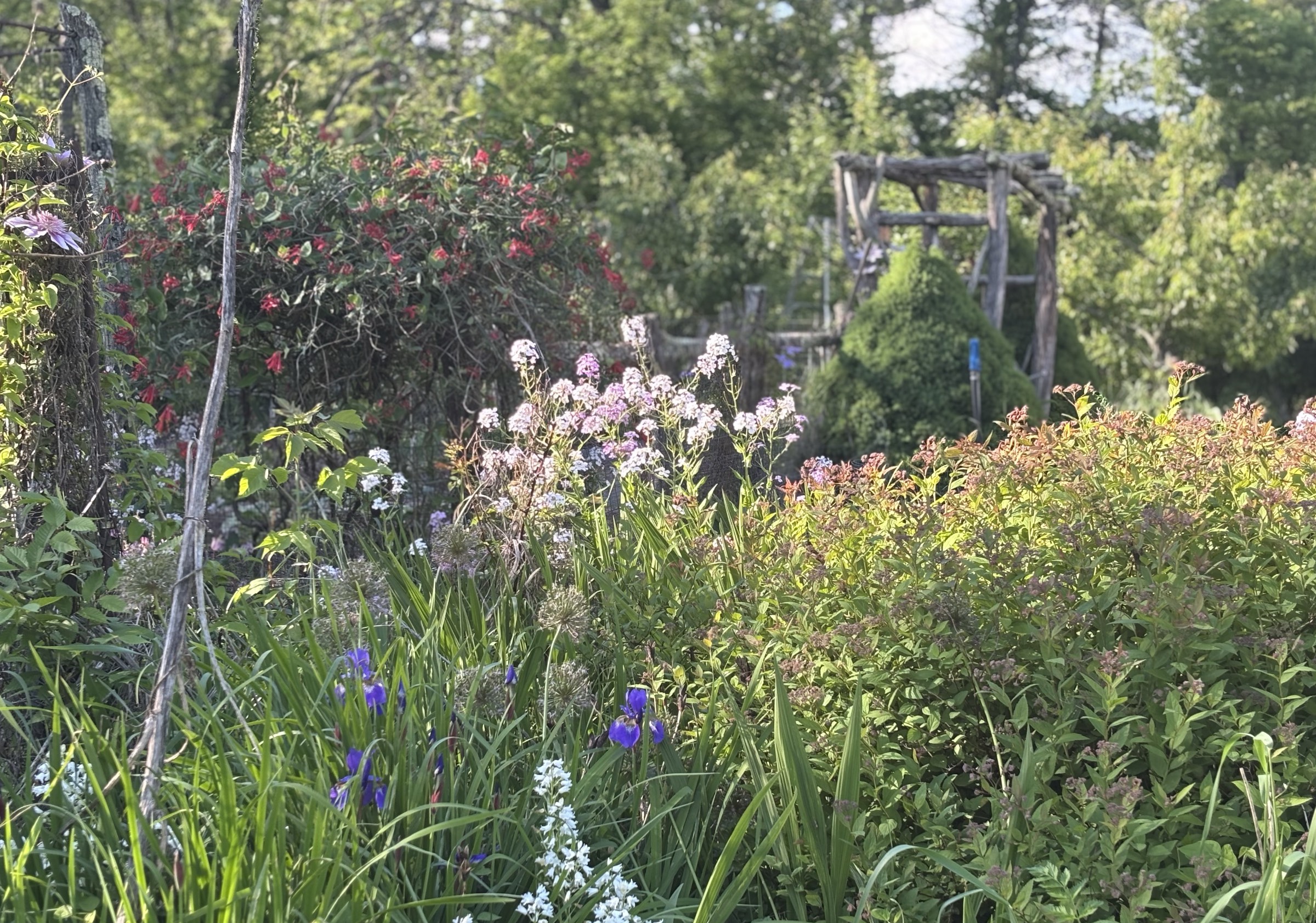
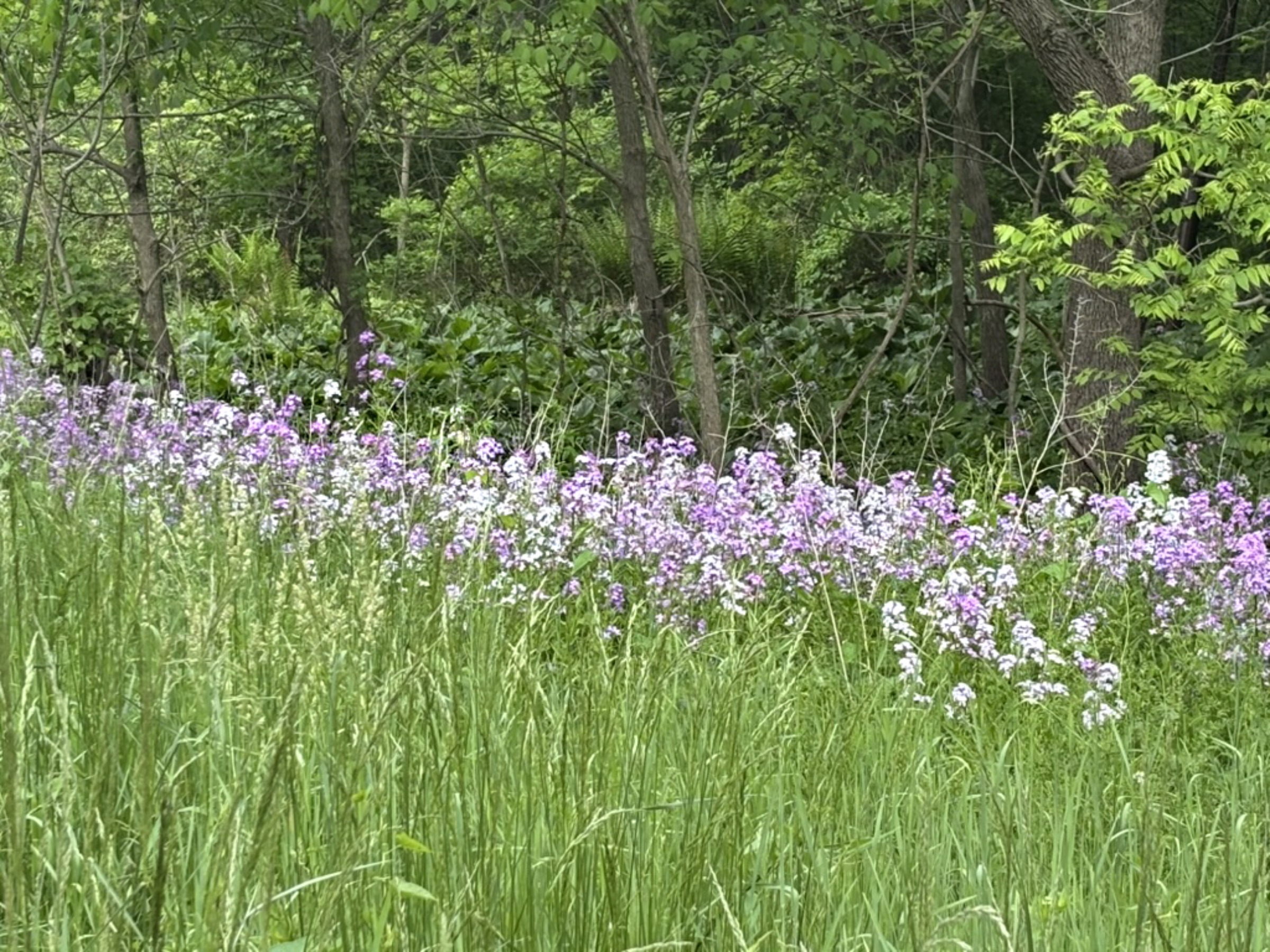
There’s a rocket in my garden, and it’s not in the sky. The rocket? It’s dame’s rocket (Hesperis matronalis). Individual plants are ho-hum, but these plants like to congregate. Here on the farmden and beyond, dame’s rocket is now blanketing the dappled shade of woodlands and roadsides with its white, mauve, or purple flowers. In mass, they will bowl you over with their sweet scent, especially pervasive on late spring and early summer evenings.Dame's rocket in the wild

Read more

Mountain view in garden

MAY I BORROW YOUR LANDSCAPE?

No Work Garden Expansion

If you’re feeling that your garden or yard is too small, you can expand your horizons without buying another square inch of property, without even much work. Just borrow some landscape.

“Borrowed landscape” originally appeared in the 17th century Chinese garden treatise  Yuanye; the technique was borrowed by the Japanese and shakkei, as borrowed landscape is known, has been frquently used in their gardens. But it can be employed in any garden style.

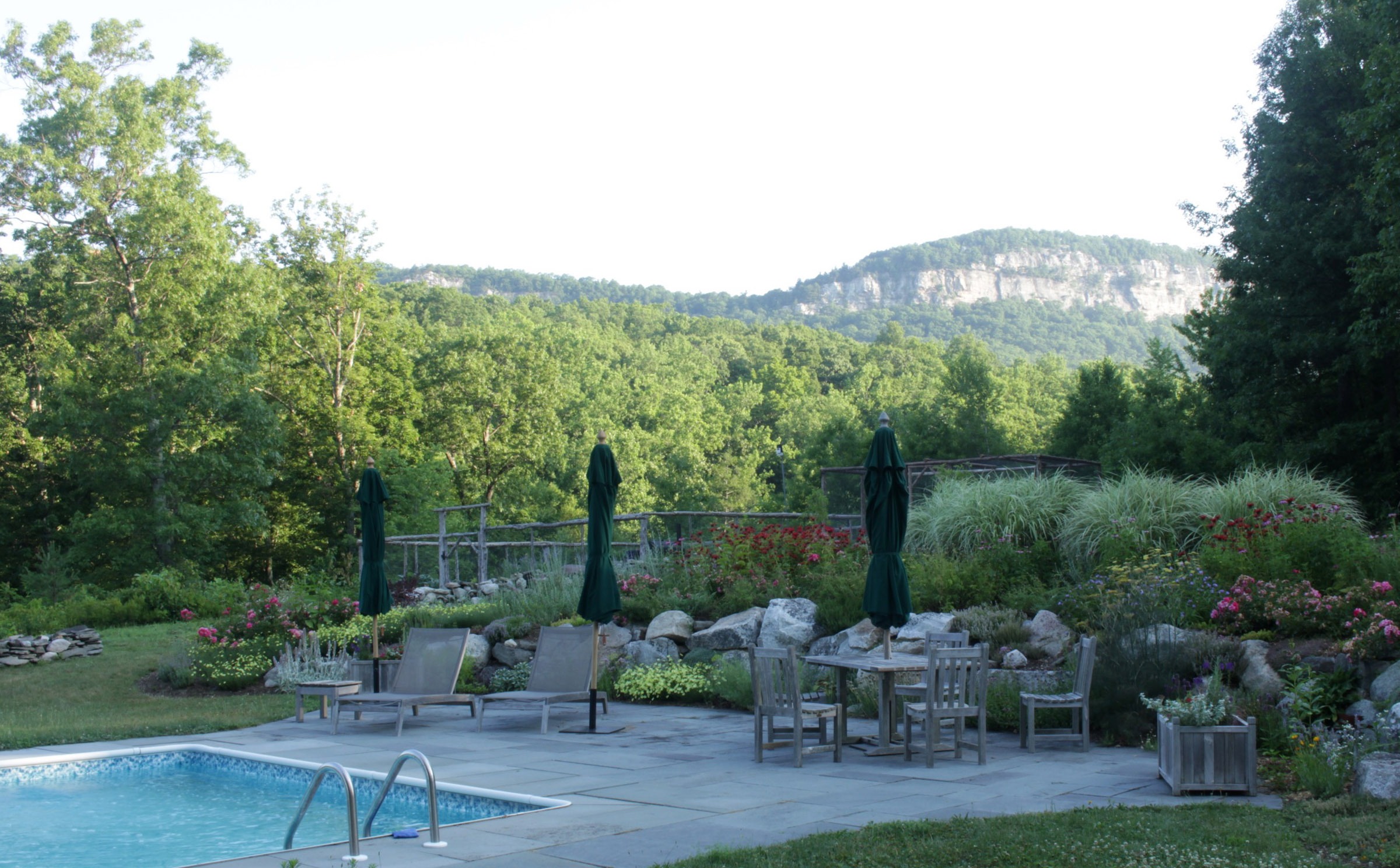
The idea is to incorporate some elements of the surrounding landscape into your landscape to create the feeling of greater space within your garden. You could reap a feeling of infinite space if that distant element is a mountain or ocean that stretches all the way out to the horizon. Mountain view in garden Read more

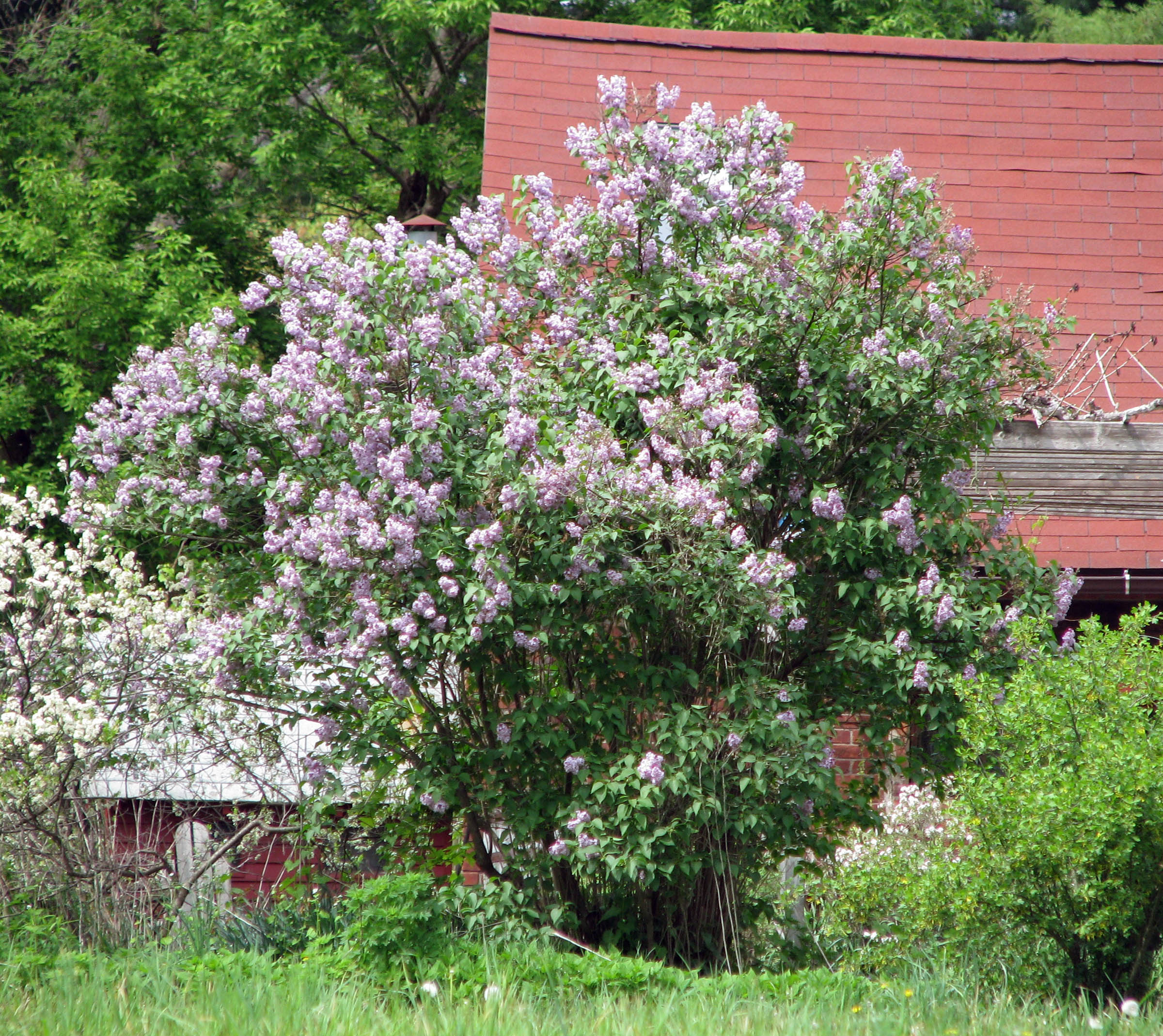
Lilac before its annual pruning

MORE PRUNING?

Showtime Again, Next Year

The main show is over, at least here on the farmden: Spring blooming shrubs and vines have strutted their stuff. With blossoms past, those plants are melding into other landscape greenery. You can’t turn your back on them, though; pruning now will encourage them into repeat performances next year and in years to come.

Many shrubs and vines renew themselves each year by sending up new stems at or near ground level. With age, these stems crowd each other, flower less profusely, and put fragrant or colorful blossoms beyond where they can best be seen or reached with your nose should you want to get close for an aromatic sniff as you walk past.

Lilac before its annual pruning

Lilac before its annual pruning

Read more

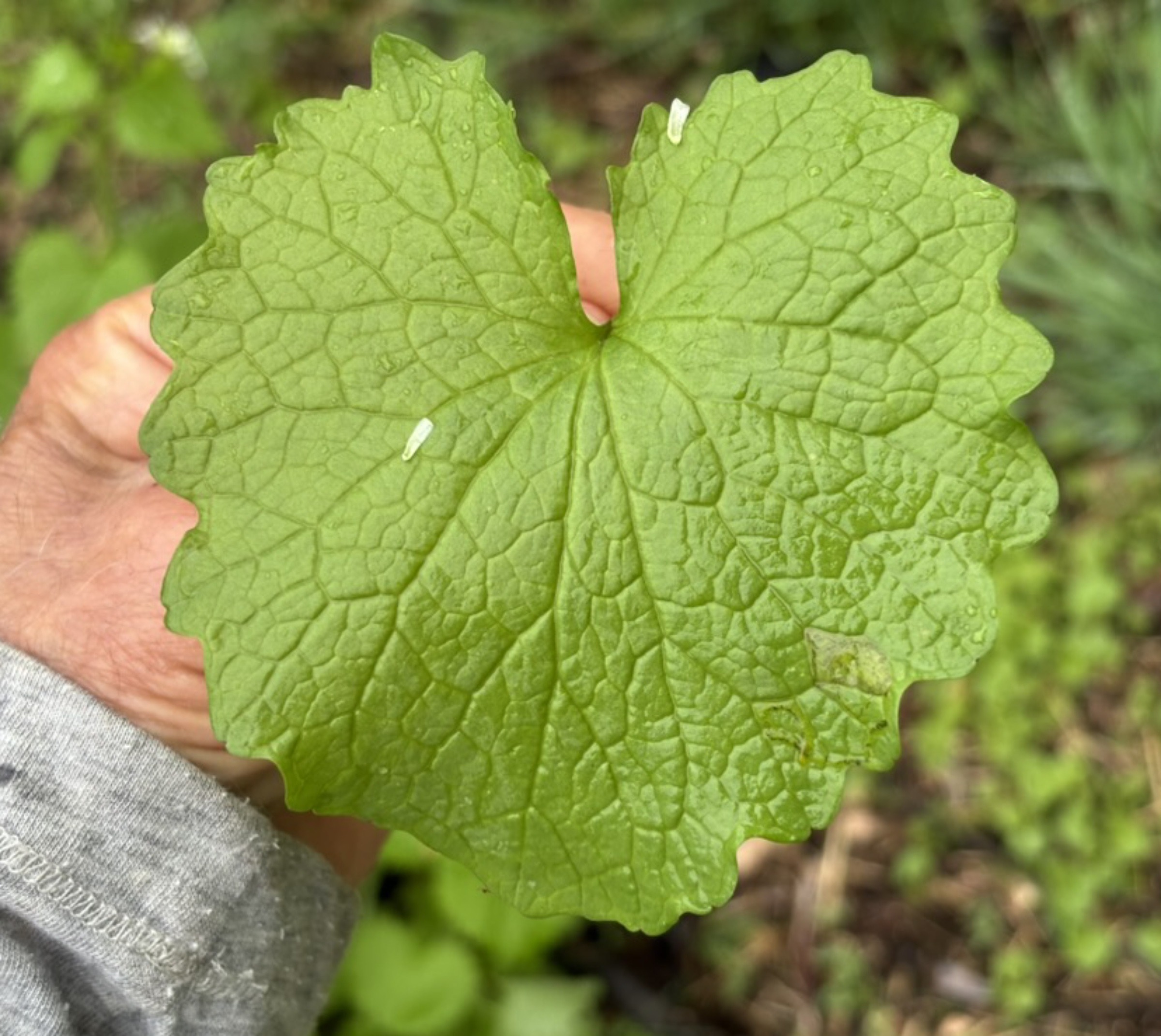
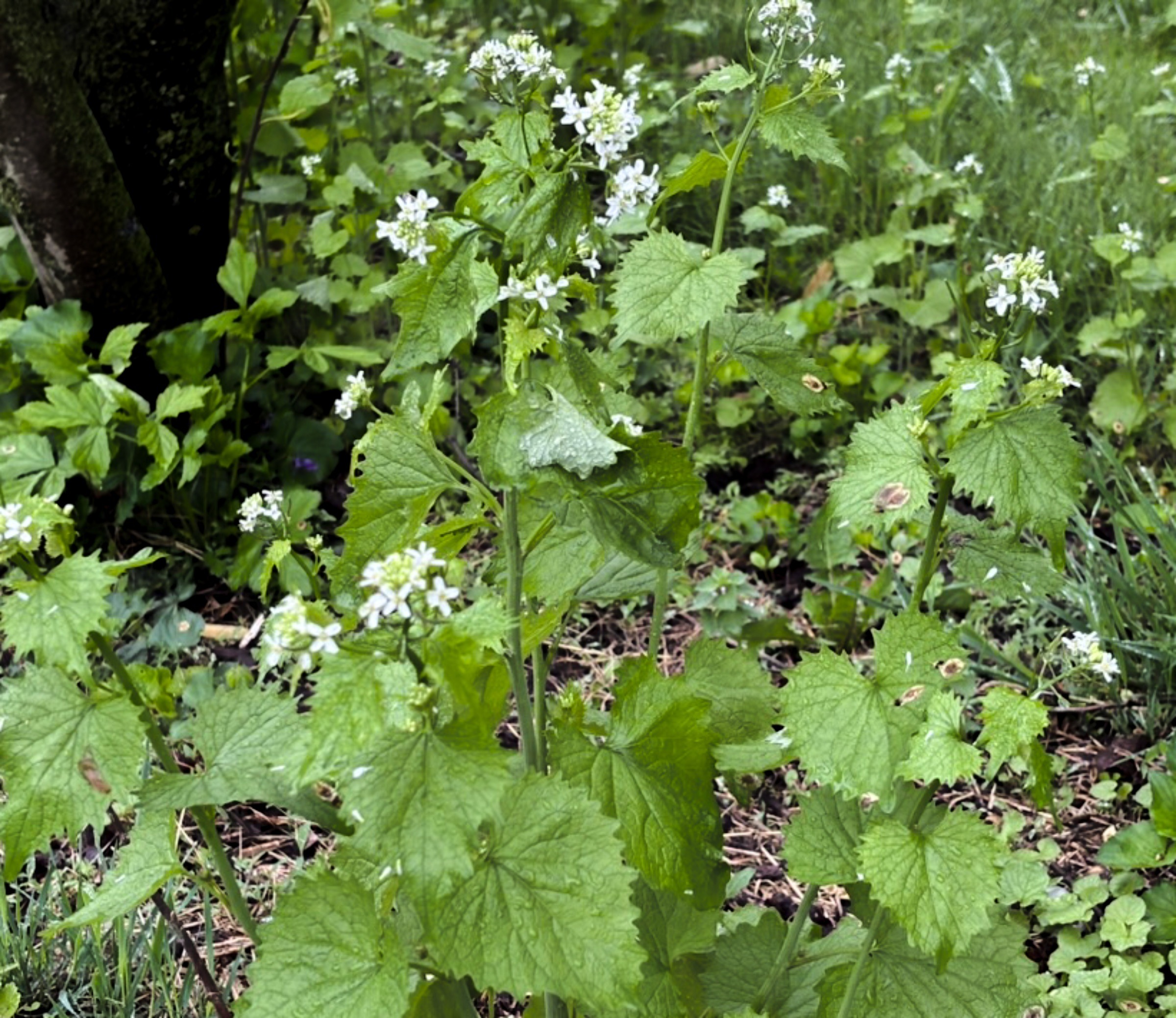
Garlic mustard leaf

MY BRIEF AFFAIR

What Could Be Bad?

Like most brief affairs, this one ended without rancor. A friend had introduced me to garlic mustard (Alliaria petiolata), our meeting coming at a time when I could look fondly upon any wild edible plant. That was many years ago, yet after a few years tensions between us escalated. 

In retrospect, I can’t really understand the attraction I had for garlic mustard. True, the name was appealing: you would think that any plant combining the flavors of garlic and mustard would have elicited affection that would linger, even grow, over the years.Despite the enticing name, I can now reminisce with a clear mind and remember finding the taste ho-hum at best, biting at worst.Garlic mustard

Read more

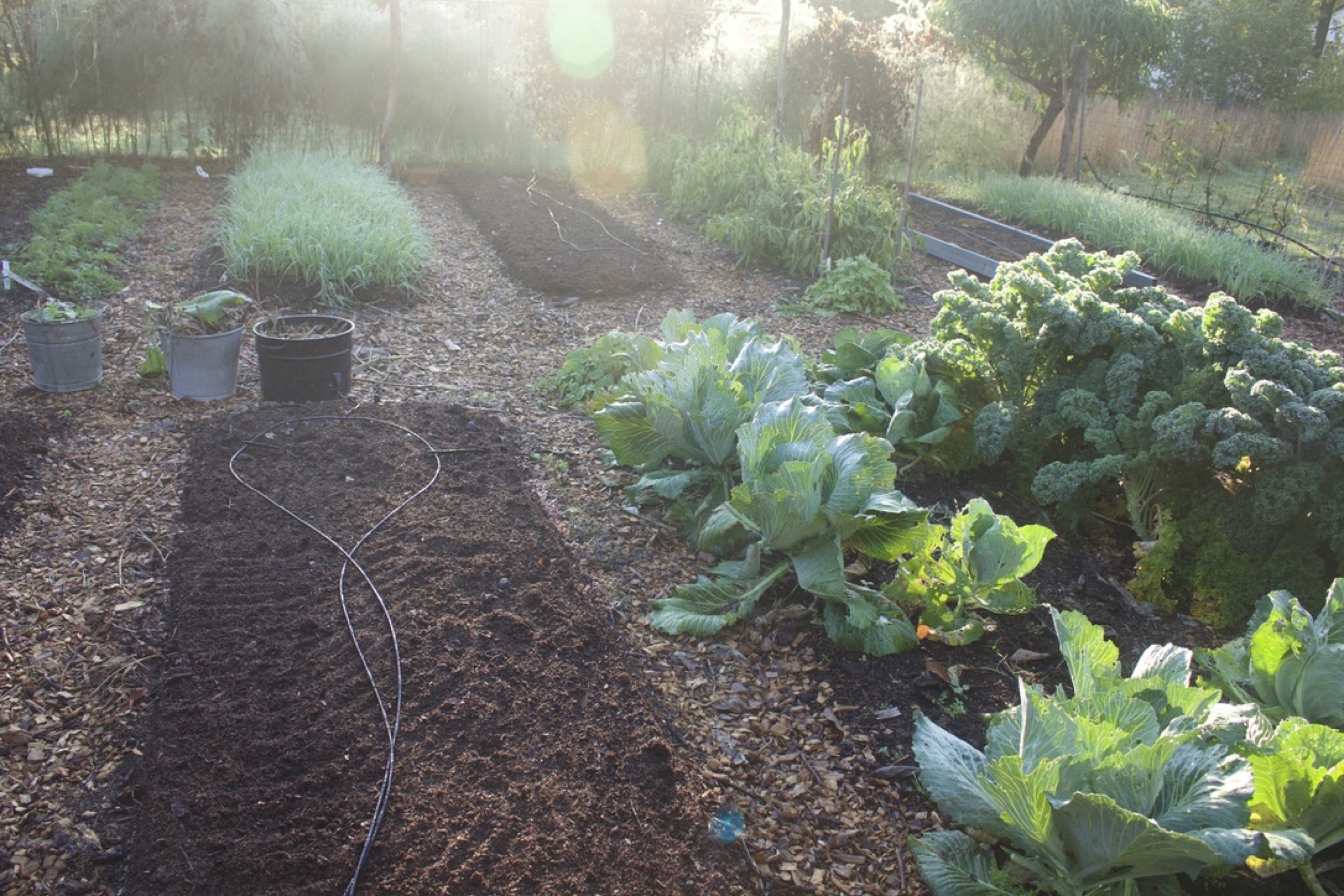
Composted garden beds in fall

ORGANIC FOODS FOR YOUR PLANTS

Where to Feed, With an Exception

To get the most out of any organic fertilizer, keep in mind how plants feed and how these fertilizers act in the soil. The bulk of plants’ feeder roots — whether the plants are midget marigolds or mighty oaks — lie just beneath the surface, so generally there is no need to dig fertilizer deep into the soil. And anyway, low oxygen levels there would retard the microbial growth necessary to unlock nutrients from most organic fertilizers.Composted garden beds in fall

Read more

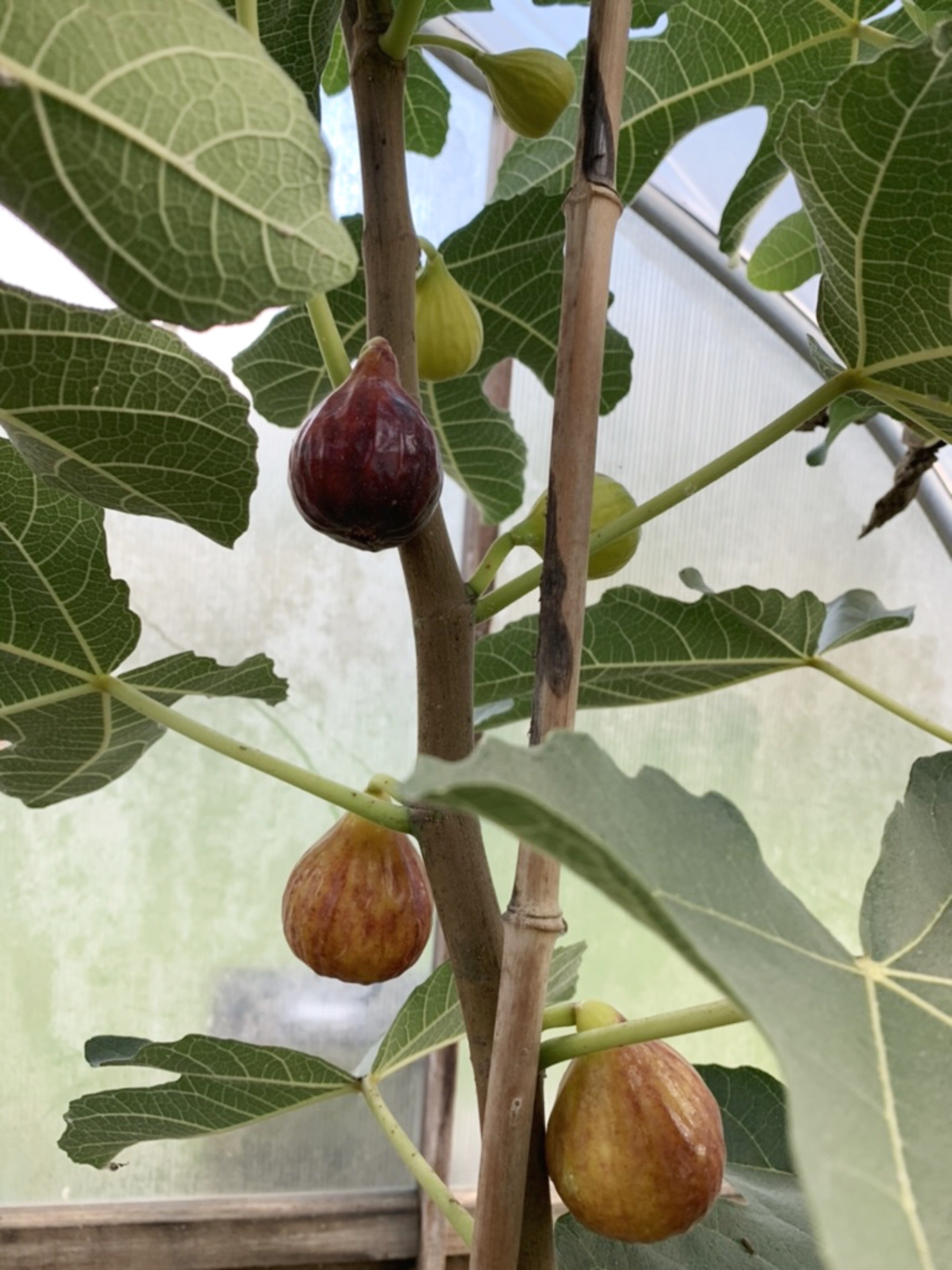
Figs ripening

FIG UPRISING

Up From the Ground

Raising my figs last week got me as excited as, I imagine, opening a kiln does for a potter. What would this spring’s disinterment — “kiln opening” — hold?

In an effort to grow figs outdoors here, despite winter temperatures regularly dipping below zero degrees Fahrenheit (-18° F. this past winter) I buried two plants last fall. Actually, those plants were put in the ground two years ago, but a combination of mice and insufficient cold protection prevented their making successful emergence each spring. Figs are resourceful plants, though, and new shoots sprouted each year from the roots. Read more