
Of Worms and Leaves, Here and Beyond
Unreiking is Good Exercise
For the past few days I’ve been engaged in the esoteric exercise of unreiking. Basically, this involves lifting heavy (or sometimes light) sacks, slitting them with a knife, and then moving my arms back and forth over the spilled contents. Okay, okay, the “sacks” are plastic bags, their contents are autumn leaves, and I’m holding a pitchfork in my hands as I spread out the spilled leaves.
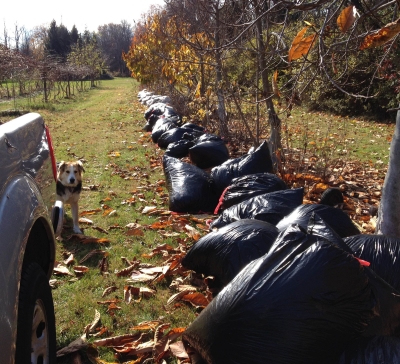
Sammy is looking forward to this leafy mattress
(Unreiking is the reverse of another esoteric exercise, reiking, whereby . . . well, leaves are raked up into plastic bags.)
Some people have too many leaves or otherwise don’t want them around. I have too few leaves and have use for them. By unreiking, the leaves get spread beneath my berry bushes, grape vines, and pear trees. These leaves feed bacteria, fungi, and other soil microbes, which slowly rot down the leaves to enrich the ground with nutrients and add organic matter that helps the soil hold both moisture and air.

Ahhhhhh
After doing this autumn after autumn for many years, the ground beneath these plants is as good as any agriculture soil in the world.
A Gardener’s, Farmdener’s, and Farmer’s Friend, Reconsidered
Our forest soils are similarly enriched, though to a lesser degree, with each autumn’s leaf drop. But change is under way, and the culprit is the earthworm.
Backtrack to about 12,000 years ago; that’s when the last glacier receded from the northern parts of the U.S. The glacier froze, compacted, churned and moved soil everywhere north of New Jersey, the upper parts of Pennsylvania, Ohio, Indiana, and Illinois, and parts of Wisconsin and South Dakota. Most of North Dakota was also enveloped by the the glacier, as well as, moving further west, the northern parts of the northern most states. In so doing, it killed off any native earthworms.
The still existing native earthworms to the south could have migrated back up here, but they move very slowly. Earthworms’ top speed is estimated at less than 6 yards per year.
Here, north of that line of glaciation, you and I do see earthworms in our soil. They’re not native; they arrived here nestled within pots of soil and organic debris, and as discarded soil ballast in ships, beginning in about the 17th century, with European colonists. And they liked it here.
More recently, those European immigrants — the worms, that is — were joined by worms from Asia.
Both species of non-native earthworms continue to spread in the soil of potted plants, in compost and leaf mulches, in home composting kits, and in discarded fishing bait (“nightcrawlers”).
Problem is that a few species of these non-native earthworms are very good a decomposing the leafy mulch that blankets forest floors. The blueberry, mountain laurel, rhododendron and other shrubs and ground covers in our forests thrive in that leafy mulch. The action of these non-native earthworms threatens to change the character of our forests.
Eek, A Snake Worm!
A number of years ago, my friend Sandy told me of strange happenings in her garden, of the abundance of worms and worm castings to the extent that the soil became so loose that her plants were flopping over. I pooh-poohed this report until a bit of research revealed this invasive worm issue.
I couldn’t offer Sandy any advice on what to do and, in fact, there’s no recommended way to deal with invasive worms. Discarding fishing bait at the end of a fishing day is one way these worms spread. (Sandy’s husband does fish.) They also can be spread in potted plants and in composts that were insufficiently heated and in mulches. (Uh oh; what about all my leaf hauling?)
For all the compost I make and spread, and all the leaves and other organic materials I haul here to the farmden, I come upon surprisingly few worms. One did catch my eye the other day, something about the way it moved and its robustness.
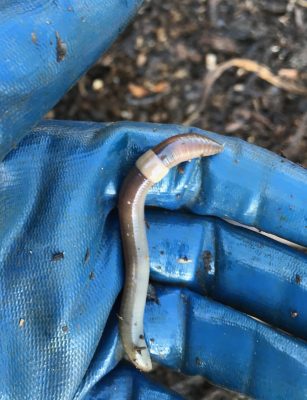
Crazy snake worm?
Could it be the European Lumbricus terrestris? Could it be the Asian “crazy snake worm”(probably Amynthas agrestis or A. tokioensis). Judging from the crazy way it moved and the pale collar (clitellum) circling its body completely, I’m guessing it’s one of the crazy snake worms.
Earthworms have always been a friend of gardener and farmer. Charles Darwin was a notable champion of them. After spending a lot of time on his belly in observation of these creatures, he wrote up his observations in a book, The Formation of Vegetable Mould through the Action of Worms. Darwin calculated that earthworms (probably Lumbricus terrestris) brought 18 tons of nutrient-rich castings to the surface per acre per year, in so doing tilling and aerating the soil while rendering nutrients more accessible for plant use. He wrote that “worms played a more important role in the history of the world than most persons would at first suppose.”
In our forests, European and Asian earthworms can eliminate leaf litter and change the soil composition to create conditions that favor non-native plants, decrease native plant biodiversity, and result in less understory vegetation. To the gardener and farmer, earthworms are a friend.
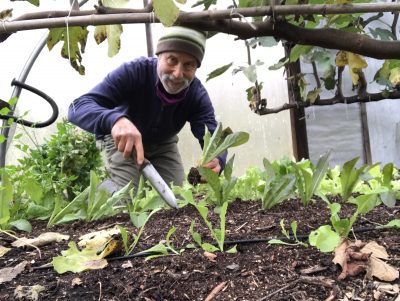
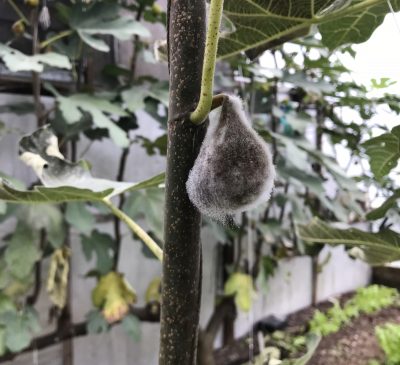
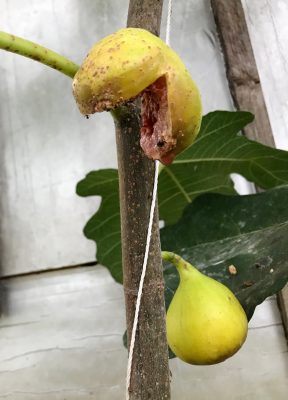 Roots of Rabbi Samuel fig, near the endwall, spread under the wall and outside the greenhouse, soaking up so much water that the figs split before ripening. Yet, a few fig fruits escape both afflictions and ripen to juicy sweetness.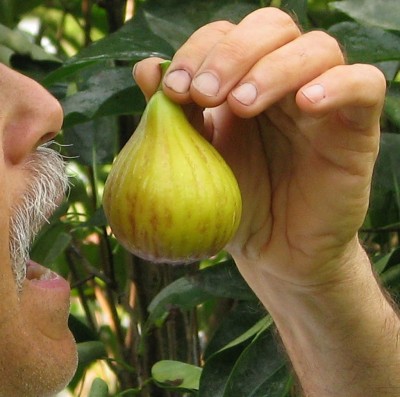
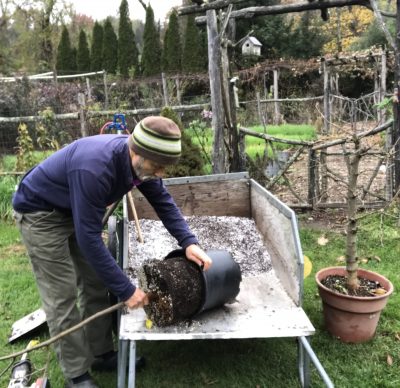 After standing the root ball upright, I started slicing it from top to bottom. For root balls 18 to 24 inches across, I slice a couple inches off all around. I used to use an old kitchen knife but discovered that my reciprocating saw with a medium-tooth blade works much better.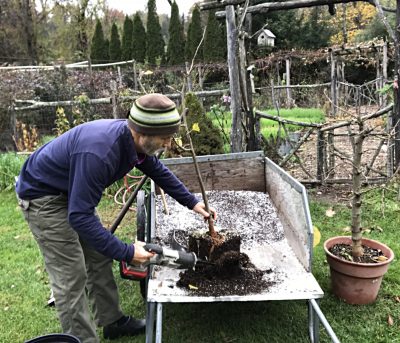
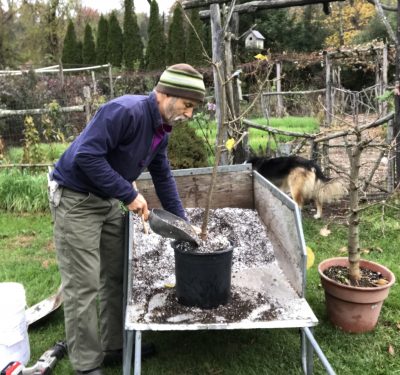 For good contact, I pack the potting soil in with my fingers and the flat end of a 3/4 inch dowel.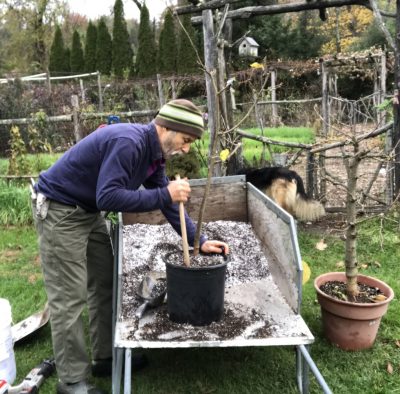

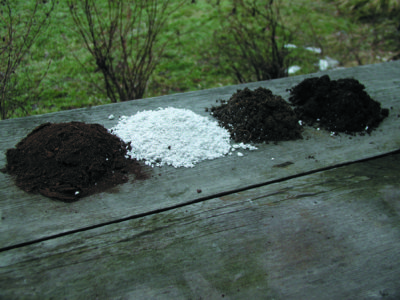
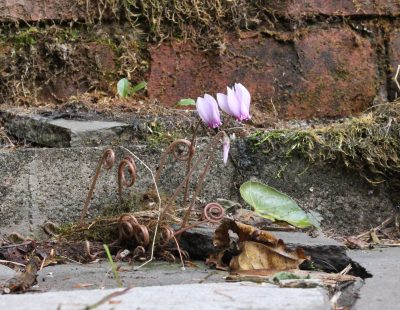
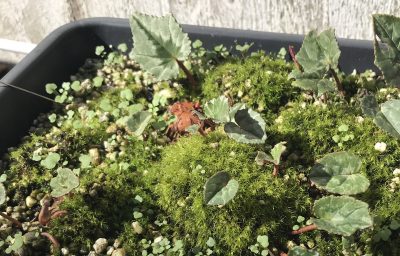 The youngsters finally were growing tubers, small bulb-like structures that will, in the future, store energy to carry the plants, dormant and leafless, through winter.
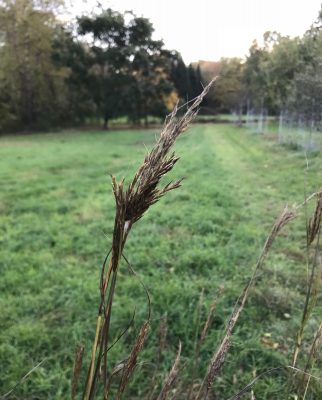 Not that some of the seeds wouldn’t self-sow near the mother plans, but seedlings that do sprout under natural conditions are subject to competition for light, nutrients, and water from other plants.
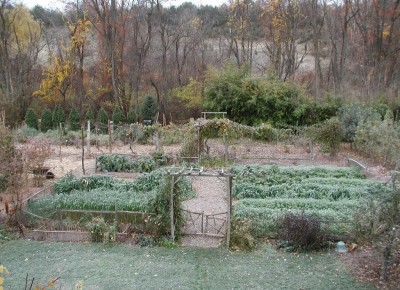 Weeds have been removed from the paths and the beds, and spent plants have been cleared away. What remains of crops is a bed with some tall stalks of kale that were planted back in spring. Yet another bed is home to various varieties of lettuce interplanted with endive, all of which went in as transplants after an early crop of green beans had been cleared and the bed was weeded, then covered with an inch depth of compost. Also still lush green is a bed previously home to edamame, which was subsequently weeded, composted, and then seeded with turnips and winter radishes back in August.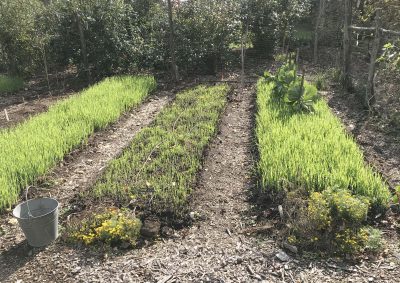
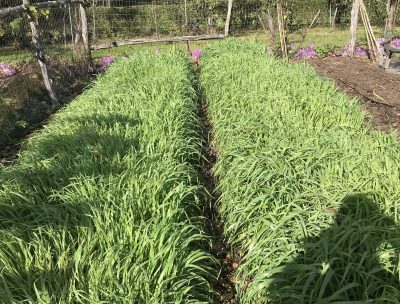 Below ground, oat roots pull up nutrients that rain and snow might otherwise leach away into the groundwater.
 Also enjoying this awful weather are the oat cover crops that I’ve sown in some of my vegetable beds. The oats are especially lush and green, as is your and my lawn grass. The same goes for beds I recently planted with lettuce, radishes, arugula, turnips and other cool weather vegetables.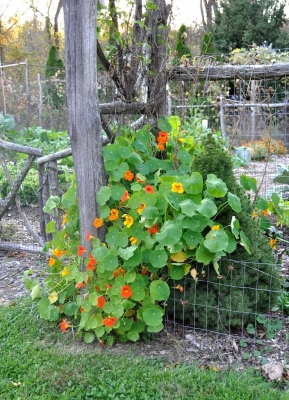
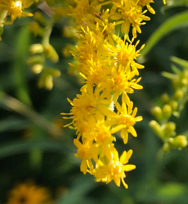
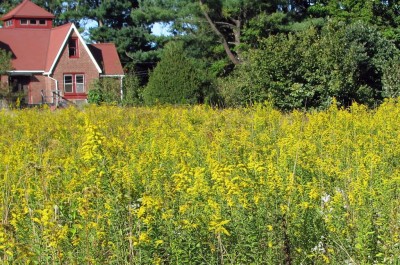 Goldenrod gets the blame for its showy, yellow blossoms during this allergy season. But the true culprit is ragweed, which goes unnoticed because it bears only small, green flowers.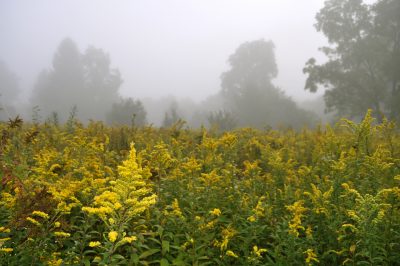
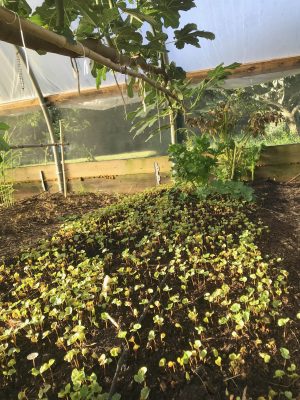 Buckwheat provides a quick and temporary cover of the bare ground. Sprinkling it with water assured its getting off to a quick start.
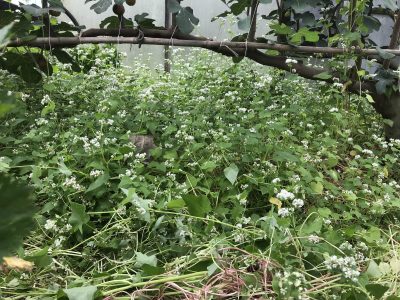 Below ground, the roots were latching onto nutrients that might otherwise leach away, bringing them up into the roots, stems, and leaves.
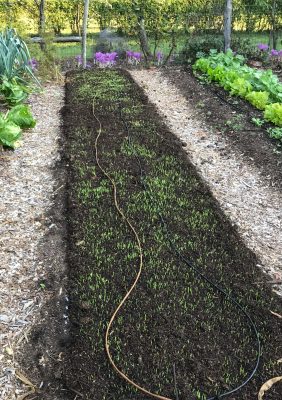 So any bed no longer needed for autumn vegetables and cleared before about the end of September gets oats (and compost). After the end of September, short days don’t provide enough light for the oats to grow enough to warrant planting.
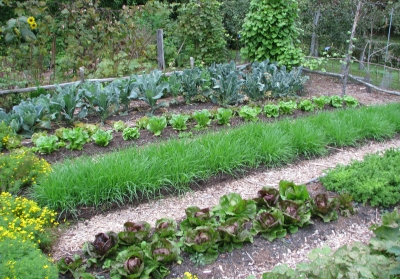 While I have great respect for soil, it’s not pretty to look at — and being bared isn’t good for the soil or the plants growing in it. I’d much rather look at a uniform, green carpet than bare, brown soil.
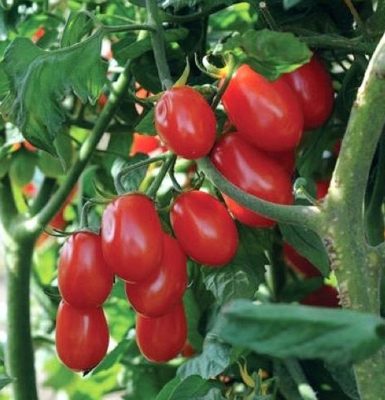 As it turns out, even taste is a matter of taste: To me, Garden Gem is not a great-tasting tomato; not even a good-tasting tomato. It lacked any sweetness or richness to smooth out the acidity, which is basically all I tasted.