I GET MY KICKS

Roots Do It

Some people get their kicks from hang gliding; some from racing cars. Call me mundane, but I get a similar thrill, minus the fear, from seeing cuttings of some new varieties of figs that I am propagating take root. The cool thing about hang gliding, racing cars, and rooting cuttings is also the sense of satisfaction you get from doing it well.

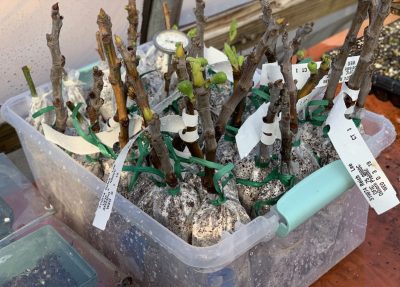
The current batch of cuttings provides special satisfaction because the method I used, gleaned from the web (see, for instance, what turns up with a search for “fig pops”), permit me to check and observe progress frequently. Usually, I stick a cutting into a rooting mix and learn that rooting has taken place by the resistance of the stick to an upward tug or by roots escaping through the drainage hole in the bottom of the pot. With fig pops, I get to see each cuttings wiry, white roots wending their way through the rooting mix soon after they first start to develop. Fig pops are also a way to root lots of cuttings in a small space.
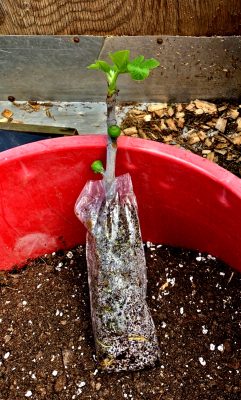
A fig pop
The current figs are rooting in 3” by 8” clear, thin plastic bags filled with my usual 1:1 mix of moist peat moss and perlite.  I pushed the cuttings, fig “sticks” of last year’s growth 1/4 to 1/2 inch thick, into the mix almost to the bottom, then sealed the top closed with a twist-tie. One cutting per bag. Roots need to breathe, so I poked each bag full of holes with a toothpick. That’s it, except when the bags seemed too dry I stood them in a pan with a couple of inches of water for awhile.

(Dipping the cuttings in a commercially available rooting hormone would probably improve rooting, but I don’t use them. To me, the health precautions needed when dealing with them takes the fun out of gardening.)

All that, and time, would have been enough. But to speed things up, I moved the cuttings to a place where they’d get some warmth on their bottoms. That could have been atop a refrigerator, above, but not on a radiator, or, in the case of my cuttings, on a seedling heating mat.
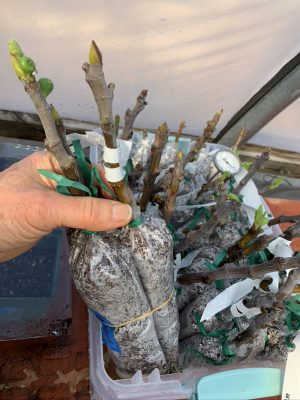
Fig pops
Fig pops together in tubNo light is needed until cuttings start to leaf out. Which is an exciting moment, because roots might — or might not — begin to show about then. All that’s needed is to lift a fig pop and take a look. Some of mine showed roots after only 3 weeks! But it’s good to let them get well rooted before disturbing them.
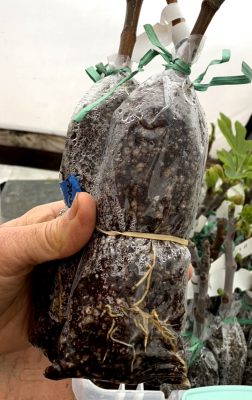
Rooted figs
When the time came to move a well rooted cutting, I sliced the plastic on the bottom and up along one side of its bag and put the whole root ball in a bona fide pot, filling in with bona fide potting soil around it.

That’s it. Growth will pick up with increasing warmth and sunlight. And then fruit, which could arrive on the branches even this growing season. Figs are admittedly easy to root by any method. As with any cutting, an important ingredient for success is patience.

Graft (Nonpolitical) is Good

Moving on, next week, to another perennial source of excitement here in the garden: grafting. I do this every year about now? Why every year? Because I’m always getting scions (1-year-old stems for grafting) of new varieties of fruits, mostly pears, to try out or to replace existing varieties. Or I might want another tree or two of a variety particularly worth growing here.

If I’m replacing an existing variety, I do a Henry the Eighth on the tree, lopping off its head, low, to graft a new variety onto the remaining stump. With the established root system underfoot, these grafts grow very vigorously and bear relatively quickly — sometimes the year after grafting. 

Alternatively, I make a whole new tree by grafting a scion onto a one-year-old rootstock that I purchase or grow. These small trees will take longer to come into bearing, how long depending on the kind and variety of fruit, and the rootstock.
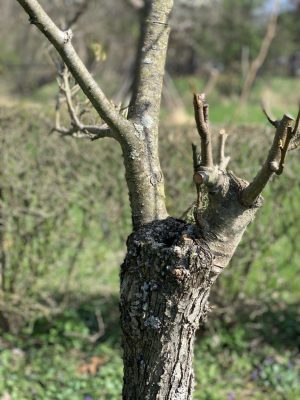
Stump of older graft

Stump of older graft

A rootstock, whether the remaining stump of a lopped back mature tree or a pencil-thick young plant, has to be closely related to the scion that will be grafted atop it for the graft to be successful. Rootstock and scion in the same genus generally do well together, so pear on pear, apple on apple, even peach on plum are compatible. Occasionally, plants in the same family but different genus, such as pear and quince, also join well.

Whip graft close up

Whip graft

One way to create a rootstock would be to just plant a seed, giving rise to the appropriately named “seedling” rootstock. A seedling rootstock’s main claims to fame might be its general toughness and its genetic diversity from other seedlings. That genetic diversity is a downside if you want to plant an orchard of uniform trees; it’s an asset if you don’t want some pest all of a sudden wiping out all your plants with genetically the same rootstocks.

Rootstocks have been selected or bred that impart special qualities to a tree, and these rootstocks are propagated not by seed, but by any one of a number of methods of cloning (cuttings, tissue culture, mound layering, etc). Most dramatic might be the effect on plant size. The Malling 27 variety of apple rootstock, for instance results in a tree that matures at about 7 feet high. As with many dwarfing rootstocks, the tree also yields its first harvest quickly with, although less fruit per tree than a larger tree, more fruit per sure foot of space. And you can plant many dwarf trees in the same space as one full-size tree.
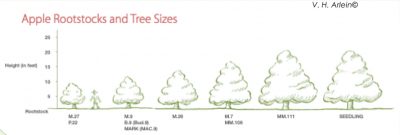
Apple rootstocks
Dwarf trees also have the advantage that pruning, harvesting, and other needs can be met with your feet planted on terra firma. Any disadvantages? Yes: more finicky about growing conditions, much shorter lifespan, and often needing staking throughout their lives. But there are many rootstocks from which to choose, especially with apples and pears, so you can choose what suits you from a fully dwarfing tree on up to full-size tree. A rootstock might also be selected for its tolerance for certain soil conditions, hardiness, and other environmental hazards.

Most important: The rootstock, for all its effects, has little or no influence on the flavor of fruit grafted upon it.

I’ll be grafting next week. Stay tuned for the 2 or 3 easy grafts I use to make trees.
PINING FOR PINES

More Than Just Pignolis and Piñons

Pine trees first appeared on earth 170 million years ago amidst lush, steaming forests of tree ferns and the footprints of dinosaurs. In time, human footsteps replaced those of the dinosaurs. Pines and humans have been intimately associated ever since. The trees have been worshipped; the cones have represented symbols of fertility; the pitch has sealed ship hulls; and the wood has been used for construction and for paper.

Korean pine

Korean pine

Throughout this long association, seeds of certain pines have been part of our diets. The flavorful seeds of native pines have a long history of use as “nutmeat” by the people of Siberia, the Himalayas, southern Europe, and the American Southwest. Look into almost any Italian grocery store in America, and you’ll find tempting cookies studded with pignolis, which are seeds of the Italian Stone pine (Pinus pinea). Pine nuts are the nut for pesto and dolmas. And from the American Southwest come seeds of the piñon pine. 

Although pine nuts usually are associated with the dry, mild climates of Southern Europe, the American Southwest, and northern Mexico, there are pine species that will produce edible nuts outside of their native range — even in the humid, often frigid, climate of my farmden. Nut-producing pines run the gamut from scrubby shrubs to majestic trees, some with needles that are soft and misty, others with needles that are dark and somber.  

Korean pine (P. koraensis), Swiss Stone pine (P. cembra), and Siberian pine (P. sibirico) are the three most reliable nut-producers for cold climates. All are hardy to at least minus twenty-five degrees Fahrenheit. The Korean pine is the most commercial of the three, producing 5/8-inch-long seeds that are exported from China. The tree itself will eventually tower to a soft, dark-green pyramid of 150 feet. 

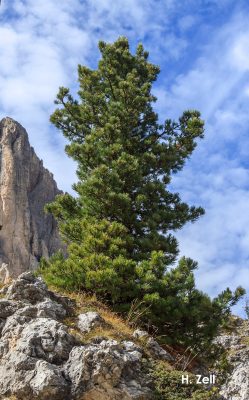
Swiss Stone pine finds a congenial home in the small garden, eventually reaching 50 feet or more, but very slow-growing. Native to central European Alps, this pine has dark, almost blackish-green, needles that, with the short branches, seem to hug the trunk. The Siberian pine is similar, except faster growing.  

Swiss Stone Pine

Swiss Stone Pine

Many other pine species potentially could produce pine nuts outside their native range, though their adaptability to very cold winter climates has not been not thoroughly tested. The closely related Colorado Pinyon (P. edulis) and Singleleaf Pinyon (P. monophylla) pines are bushy trees that become flat-topped with age. I planted a Singleleaf pine years ago; it’s annual growth was measured in inches. With the slow growth and lack of nuts, I eventually tired of it.

One of my favorites, unfortunately not hardy below 10°F, is the Digger (P. sabiniana). I saw many of these trees years ago as I was driving west down from the Sierra Nevada mountains; I came screeching to a stop when I spotted one of the large cones lying near the road. Passing motorists might have taken me for a lunatic as I tried to smash open the coneby smashing it repeatedly on the guardrail. This species bears lima bean sized pine nuts.

Some other pine species producing edible, albeit small seeds, are Himalayan pine (P. wallachiana), Limber pine (P. flexilis), Jeffrey’s pine (P. jeffreyi), and Japanese Dwarf Stone pine (P. pumila).

My Personal Pinetum

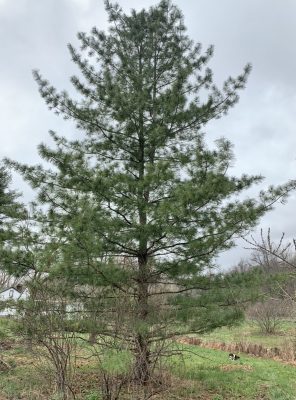
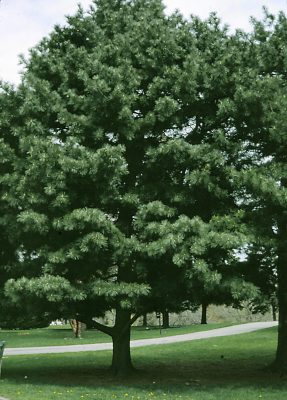
I’ve entered the world of nut pines with some plants here on the farmden. I began, of course, with Korean pine, but can’t claim great success. My largest tree, now about 35 feet high, has occasionally produced a cone near its summit. Perhaps some squirrels got them; I didn’t. The tree is a dead ringer for our native white pine (Pinus strobus); the most direct way to differentiate the two would be from the Korean pines cones, which are about half the length (about 4 inches) of white pine’s cones.

My older Korean pine

My older Korean pine

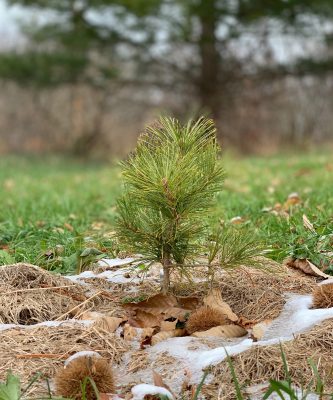
Just this year I purchased two more Korean pine seedlings. They’re each only a few inches high now, and I hope they bear like a friend’s Korean pine, which was loaded with cones when a mere 6 feet in height.

My younger Korean pine

My younger Korean pine

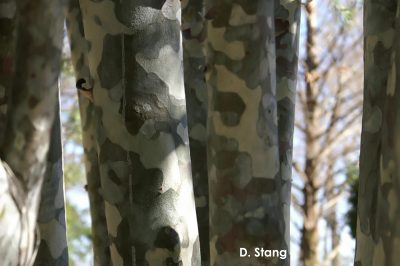
I’ve also planted a lacebark pine (P. bungeana). Besides offering pine nuts, the bark of this pine flakes off to yield pleasing patterns similar to that of sycamore. Neither nuts nor flaking bark here yet, though.

Lacebark pine

Lacebark pine

 Care and Feeding

 Nut pines, in common with most other pines, require little care. They are frugal plants, getting by with minimum water and fertility. They do require full sun and well-drained soil, though. Think of those dry, rocky slopes to which pines cling in the wild.

Two seasons are usually required for a female pine cone to produce ripe seeds. The cone is a primitive type of flower constructed of a tight cluster of either male or female reproductive cells at the bases of scales which spiral around a short axis. In the spring gusts of wind shake loose pollen from the male cones, which are catkin-like clusters located mostly at the tips of the trees’ lower branches.  Yellow clouds of pollen waft upwards to the female cones, most of which are high in the trees. Fertilization, the actual union of the male and female reproductive cells, takes place during the spring following pollination, within the tightly closed, green female cone. Seeds ripen at the end of the second season.

How a pine disperses its ripe seeds can mean the difference between getting pine nuts into your pesto or losing them to foraging squirrels or in the needles beneath the trees. With some pines, ripe seeds drop from open cones that remain attached to the trees. Other pines will not open their cones to release their seeds except with the stimulus of heat or the blow of a hammer. Such a mechanism, making it possible to beat the squirrels to the bounty, exists for the Swiss stone pine and the Siberian pine. The Swiss Stone pine clings to its neat little seed packages until the third spring from flowering.

It’s almost impossible to suggest an expected yield of nuts from a single tree. The trees are rarely grown in plantations. Most nuts are harvested from more or less wild trees, rather than from trees growing under uniform orchard conditions. And even then, yields are variable and erratic.

Lack of precocity or erratic nut production shouldn’t be a deterrent to planting a nut-bearing pine. What these pines lack in instant gratification, they furnish in “piney” fragrance,  longevity, and for the beauty and character they bring to a landscape.

COVID-19 OR NOT, THE GARDEN MARCHES ON

A Special Week

Coronavirus has come, and it will go, but the natural world soldiers on. My dogs, Sammy and Daisy, are as happy as ever, oblivious to the pandemic. My garden will respond likewise, trucking forward and offering a centering point as the world around has its ups and downs.

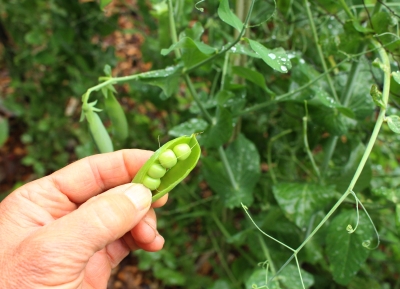
This week is a very special one in my gardening year; it’s the week I plant peas. April 1st, to be specific. It’s sort of the official beginning of the vegetable garden. “Sort of” because actually have been planting and harvesting lettuce, mâche, arugula, claytonia, kale, bok choy, chard, and celery all winter in the greenhouse.Peas in pod

Not Too Early, Not Too Late

For some gardeners, St. Patrick’s Day is the date for sowing peas. Yes, that is the correct date for pea sowing — in Ireland, Virginia, and other places where I imagine soil temperatures reach about 40° F by that date. Above 40° F, and pea seeds become most likely to sprout rather than rot. On the other hand, waiting too long to plant pea seeds has the plant bearing during hot weather; peas don’t stand the heat well.

I mostly plant shelling peas, which are admittedly more trouble because they need shelling. To me, they’re worth it, for their flavor. (Then again, with the pandemic, more people are spending more time at home; gather ‘round and let’s shell peas.) I recommend the very tasty varieties Green Arrow and Lincoln.

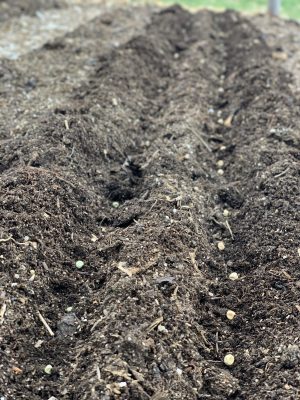
My pea plants grow right up the center of 3-foot-wide beds. I make two furrows a couple of inches deep, one on either side of a bed’s center, and 4 inches apart. The seeds go in a couple of inches apart.
Pea seeds in furrows
Pea plants are sometimes available as transplants, or, as my neighbor used to call them, “starts,” in cell-packs. Don’t buy them. Peas are a vegetable for which you sow the seeds directly in the garden. The reason is that the yield from a single plant, even six plants in a cell-pack is too minuscule to be worth it. And pea seeds sprout readily. Have some faith.

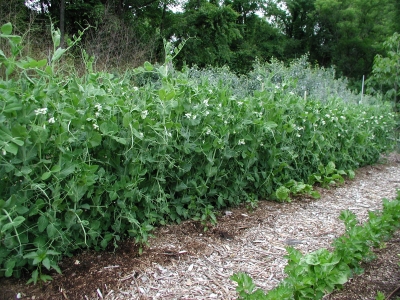
Once seedlings poke up through the ground surface, I put a trellis up the middle of the row. My trellis is temporary, able to move around the garden, just as do the pea plants, to a different bed each season. I pound a metal post into the ground at each end of the row, and then weave 3 foot high poultry netting (“chicken wire”), inch-and-a-half mesh, onto the posts. I use fiberglass electric fence posts, but any thin stakes woven at intervals into the netting and pushed into the ground keeps the fence from being floppy. After the final harvest, I pull up the pea plants, pull up the thin stakes, remove and roll up the netting, and pull up the end posts for use next year.
Peas on trellis
A number of other seeds can be planted on that seminal (for here) April 1st pea planting date. Those would include, except celery, the vegetables I mentioned above that have been growing in the greenhouse all winter. Radishes could also be included here, and spinach. And potatoes, as 2 ounce, whole tubers or pieces of cut tubers.

Best Tomatoes For . . . ?

Also significant about April 1st on my gardening calendar is that it’s my date to sow tomato seeds, indoors in seed flats. It’s not that tomato is my favorite garden vegetable; it’s just that it’s such a popular vegetable and perhaps the most versatile.

For a cherry tomato to just pop right in my mouth or put in salads, I grow Sungold. That’s all they’re good for, but they’re really, really good for that.

Sungold, hands down the best tasting cherry tomato

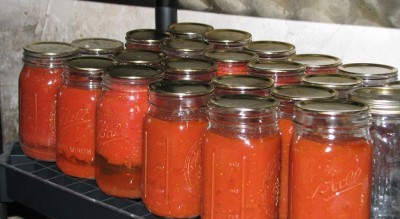
I dry many varieties, especially Amish Paste and Anna Russian. Some of them also go into jars, along with San Marzano, arguably the best tasting tomato for canning. (In Italy, cans of tomato made with San Marzano tout that on the label.) Blue Beech is another variety, this one with a unique flavor, that I both can and dry.
Canned tomatoes
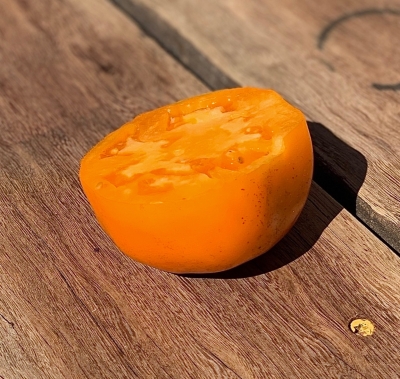
For good, fresh eating and very pretty tomatoes, I’m growing Nepal, Carmello, and, with a bright orange skin, Valencia. All three varieties are round tomatoes with smooth, crack-free skins.

Valencia tomato

Valencia tomato

For the very best in fresh eating tomatoes, there are many to choose from. I’m growing Paul Robeson and Pink Brandywine this year, although many others, such as Belgian Giant, Cherokee Purple, or others with “Brandywine” in their name could also fill the bill. Extras of these and the previous mentioned “good, fresh eating” varieties go into sauce, but not, of course, the dedicated San Marzano batches. Besides being good for cooking and drying, Amish Paste and Anna Russian are also good fresh. Not San Marzano, though; it’s awful raw.

As with pea planting, my tomato-sowing date is not for everyone; what is for everyone is to sow the seeds about 6 weeks before the local “average date of the last killing frost,” a date that is available online or from the local County Cooperative Extension Office. Sowing on this date strikes a nice balance between plants being small enough to make a smooth transition out to the garden and being sufficiently large for a timely first harvest.

April 1st isn’t the date to start all transplants. I sowed onion seeds way back in early February, and pepper and eggplant seeds in early March. For an early crop of cucumbers or melons, I’ll sow those in early May for transplanting at the end of the month. Or I’ll plant the seeds directly in the ground sometime soon after the “last killing frost” date. (I made a whole chart of vegetables and garden sowing, indoor sowing, and transplanting dates, keyed to whatever anyone’s “last frost date” is, in my book Weedless Gardening.)

Take Care

The garden marches smoothly forward, snubbing its nose at the pandemic. We can do likewise if we stay home if possible, wash our hands frequently and thoroughly and keep them away from our faces, and protect ourselves and others if we must go out. Consider that everything you touch off-site could be contaminated, or could be made so by you.

VEGETABLE MATTERS

Homebound? Plant Vegetables!

Working from home, I’m used to being homebound. And I like it. Not everyone feels this way, and now COVID-19 has forced this situation on many people.

For anyone who isn’t growing some vegetables, if there ever was a time to start a vegetable garden, it’s now. 
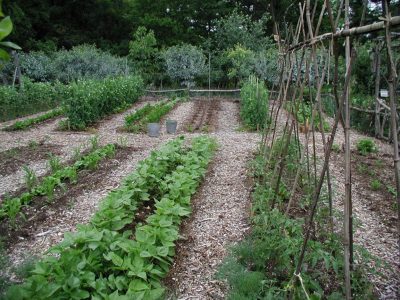
Vegetable garden
A garden will provide pleasant and interesting diversion, some exercise, a chance to be outdoors, the need for less frequent trips to the market, a good family project/activity, and some savings of food dollars. And the experience of — wonder of wonders — watching seeds sprout and grow into plants.

Growing vegetables is easy. Seeds have been practicing sprouting for millions of years. That’s what they do. Sprout. And plants have been doing likewise. 

Paying attention to some basic plant needs will make your garden even more successful. As far as soil, don’t worry about fertility or acidity for now. The most important consideration is drainage. That is, does water move down through the soil or does it just sit in place for a long, long time.

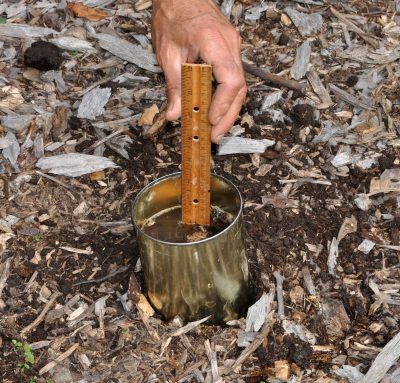
What’s a “long, long time?” If you really want to know, cut the bottom and top off a coffee or similar can, and set the can into a hole a few inches deep, pushing it into the soil (not if it’s frozen) in the bottom of the hole. Fill the can with water, let it drain, then fill it again. If the water level  drops slower than 1” per hour, drainage is poor. Find another site or make raised beds.
Measuring water drainage
No backyard or front yard in which to grow vegetables? No problem. Grow them in a tub or flowerpot. Pay attention to drainage even if your “garden” is a tub or a large flowerpot. The container must have drainage holes in its bottom to let water drain out. And you’re going to fill that container with “potting soil,” not with dirt from your garden. Water can’t drain well through garden soil in the confines of a container, which is why potting soils have, among their ingredients, perlite, vermiculite, or other mineral aggregate to speed water flow.

Whether in a container or in your front or back yard, vegetables need sun, about 6 hours of direct summer sunshine daily. 

Soil Matters

Next, ready the ground. For most newbies, that means transmuting a patch of lawn to a vegetable garden. There are two options. The first is the traditional one, turning over and mixing up the top few inches of ground to kill existing vegetation and leave a surface in which you can plant seeds. Do that, using a shovel, garden fork, or rototiller as soon as the soil is dry enough to crumble, not wad up, when squeezed gently in your hand.

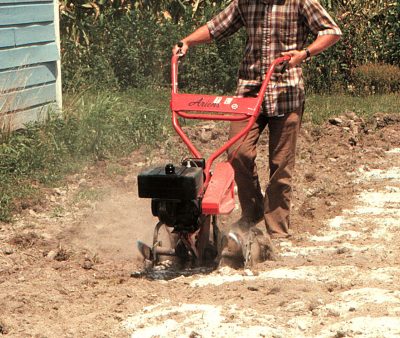
Me, rototillingWait two weeks for Mother Nature to work her magic decomposing some of that existing vegetation. Or, rather, part of her magic. After two weeks, dig up the ground again, this time adding some compost or fertilizer. You could dispense with the compost or fertilizer this season if whatever was growing there before digging looked vibrant. Better not to go out to a store these days if you don’t have to anyway. Wait another two weeks, and when you’re ready to plant, use a garden rake to tickle the surface of the ground and crumble it.
Digging up the ground may be a nice way to get your blood pumping on a spring day, and may even give you a feeling of righteousness, but there’s a better, quicker, and easier way, to prepare the garden site. There’ll also be less weeds in weeks to come.

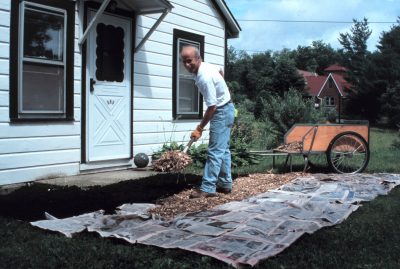
For option number two, you will need a supply of compost and either wood chips, straw, sawdust, or wood shavings. This option is easy: just cover the garden area with newspaper, four sheets thickness and overlapping, and then wet the newspaper to keep it from blowing away. Mark out 3 foot wide beds and 18 to 24” wide paths with string, and lay an inch or more of compost in the bed areas, and enough of the wood chips, straw, sawdust, or wood shavings in the paths to cover the paper. You’re all set to plant!
spreading wood chips in path
In most places, but not everywhere, a fence is needed to fend off rabbits. Two-foot high chickenwire (“poultry netting”) will do the trick.

(All this, and more, in my book Weedless Gardening.)

What to Grow

What to grow is a matter of taste. Kale, collards, and Swiss chard offer maximum nutrition and a very long harvest season. For some home-grown calories, potatoes and sweet corn. For rounding things out with great flavor, tomato, eggplant, pepper, cucumbers. Think about what you want to grow, look at seed catalogues, order seeds, and when we next cross paths, I’ll say something about timing.

Inspiration and Humor for the Pandemic

In these times of pandemic, the insouciance of animals and the humor they offer (and washing hands, social distancing, and covering up coughs and sneezes) is welcome. Here is a short video clip of my ducks:
Duck video

NOW, WITH COVID-19, ANOTHER REASON TO GARDEN

Not Necessarily Anti-Social

I’m feeling very lucky these days, lucky to be happy to stay home. An important way to deal with the current COVID-19 pandemic, both from a personal and a societal standpoint, is not to be out and about.

(If you are infected, you may not show any symptoms for awhile, or symptoms may be very mild. During that time, though, you could infect others. It’s estimated that, at present, every infected person infects 3 others before they get well or die. Those 3 other each infect 3 more, and so on; ten transmissions has almost 60,000 people infected. 

Social distancing brings that number of 3 new infections from each infected person down to a number of cases our health care system would be able to handle. So stay at home, if possible, maintain a six foot distance from other humans, be aware of contaminated objects and surfaces, and wash hands frequently.)

For all the downsides of the internet, a big plus now is the ability it gives us to interact socially without spreading disease.

Home is Nice, Gardening

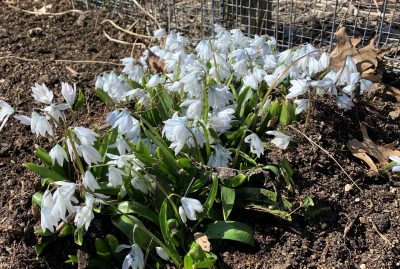
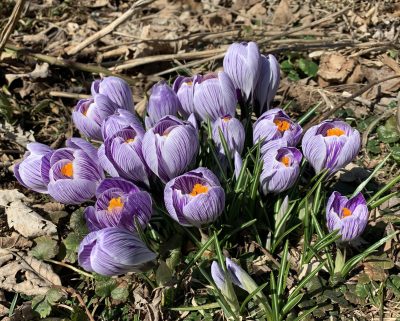
What’s so great about staying home? In my case, I have my garden, of course. Spring, as always, is a busy time in the garden.SquillBusy, such as: attending to my compost. The last compost pile of late fall and winter is an accumulation of end-of-season debris from garden cleanup, bedding from the duck house, and kitchen scraps. Not much happens in it with the slow additions and winter cold. I decided to dig into the pile to see how it was doing. Not good!
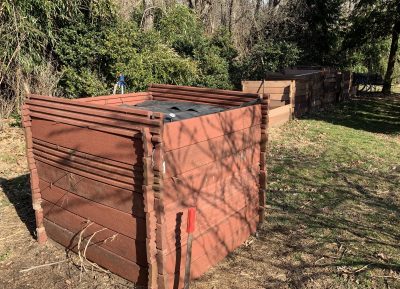
The innards were smelly and sodden, which could have been avoided if I had regularly thrown some straw, autumn leaves, or any other dry, old plant matter into it periodically. Oh well. 

Given enough time, even that smelly, cold, sodden pile would turn to compost. I prefer to speed things up, getting the pile hot and quickly killing many weed seeds.

Aeration and some dry material could remedy the situation. I left home and got a load of horse manure mixed with dryish sawdust bedding from a nearby stable. (No human contact was needed to get the manure). Then I began turning the pile, layering in the manure and some old hay that I had cut and raked last fall. The way I tell how its doing is by taking its temperature with a long-stemmed compost thermometer. Three days after the turning, the pile is warming, 90° and rising.Compost pile

Seed Starting, When?

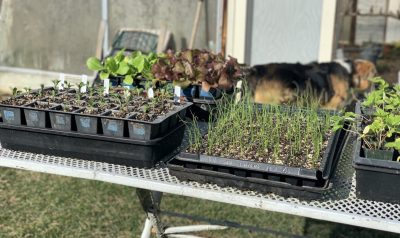
Busy, such as: starting seedlings indoors for later planting outdoors. The ideal is to have seedlings the right size when it’s time for that outdoor planting, so they can make a smooth transition from container to ground hardly knowing they’ve been moved. Each vegetable has its own timetable for how fast it grows to transplant size and then when it can be planted outdoors.

For instance, here on the farmden, the historical average date of the last killing frost is May 21st. Cabbage seedlings need about 6 weeks of growth before they’re large enough to transplant. Since they tolerate some cold, they can be planted out here on May 1st. Six weeks before May 1st is March 15th, which is when I sowed those seeds.

Let me also use tomato as an example because that’s one that many gardeners plant too early or too late. Tomato seeds need about 7 weeks of growth before they’re ready to plant out. Freezing temperatures are not good for them, so I plant them out around the end of May. The end of May minus 7 weeks is around April 1st, which is when I’ll be sowing tomato seeds.
Seedlings
Sowing and planting dates are not set in stone. Temperature, potting mix, and container size all influence how fast seedlings grow. And there’s wiggle room because sowing or planting out tomatoes a week earlier or later doesn’t change the date of the first harvest that much because plants grow slowly early in the season. 

One thing to avoid is being pushed around too much by the weather. Don’t let a 3 day warm spell in March convince you to sow tomatoes then, or a 3 day warm spell in early May to plant out tomatoes earlier. In the first case, the plant, being too large at transplant time, will have a harder transition to open ground; you’ll harvest earlier tomatoes, but less over the whole season. In the latter case, a subsequent cold spell might kill the plants (unless you cover them for protection).

I detail out recommended sowing and planting dates for vegetables according to locale in my book Weedless Gardening. At the very least, write down what you do in your garden this year and tweak it closer and closer each season.

Planting, What?

Busy, such as: planting out new trees, shrubs, and vines. After so many years here at the farmden, you’d think that I would have planted every tree, shrub, or vine I could have wanted. Tain’t so.

I’m very specific about what varieties I want to plant so I usually order bare root plants, which are available in greater variety than potted plants. Ideal size for a tree is about 4 feet high because their roots can establish in their new home quickly. Of course, a potted plant, if that variety is available locally, would establish even more quickly.

In the pipeline this year are Egremont Russet and Rubinette apples, Dr. Goode grape, Mohler persimmon, and a number of low bush blueberries and lingonberries.

I remember a sunny day years ago, right after hurricane Irene. The back part of my property, where my vegetable gardens are, was high and dry, a glorious early fall day. But turning 180 degrees, looking to the front, the Wallkill River and associated flood debris was flowing past my doorstep. These days, my thoughts are often on COVID-19. Again, the garden — or a hike in the woods and other home enjoyments — provide needed respite from a bad situation.
Crocus flowers

Winter aconite flowers


INTO THE WOODS

Forest Garden Skeptic

“Forest gardening” or “agroforestry” has increasing appeal, and I can see why. You have a forest in which you plant a number of fruit and nut trees and bushes, and perennial vegetables, and then, with little further effort, harvest your bounty year after year. No annual raising of vegetable seedlings. Little weeding, No pests. Harmony with nature. (No need for an estate-size forest; Robert Hart, one of the fathers of forest gardening, forest gardened about 0.1 acre or 5000 square feet.)

Is this a forest garden?

Is this a forest garden?

Do I sound a bit skeptical? Yes, a bit. Except in tropical climates, forest gardening would provide only a nibble here and there, not a significant contribution to the diet in terms of vitamins and bulk. A major limitation in temperate climates is that most fruit and nut trees require abundant sunlight to remain healthy; the same goes for most vegetables.

The palette of perennial vegetables in temperate climates is very limited, especially if you narrow the field down to those tolerating shade. I’m also not so sure that weeding would be minimal; very invasive Japanese stilt grass has been spreading a verdant carpet on many a forest floor whether or not dappled by sunlight.

The case could be made — has been made — that some of the dietary vegetable component could be grown on trees. Robert Hart wrote of salads using linden tree leaves instead of annuals such as lettuce and arugula. I’ll admit that I’ve never chewed on a linden leaf. (I’ll give it a try as soon as I come upon one that has leafed out.) My guess is that its taste and texture would leave much to desire.

And how about squirrels? I grow nuts, and part of my controlling them involves maintaining meadow conditions around the trees. This exposes them to predators, including me and my dogs, without their having tree tops to retreat to and travel within. Unprotected, I’ve had nut plants stripped clean by squirrels.

The book Edible Forest Gardens by Dave Jacke offers a very thorough exploration of forest gardening. 

But Did I Plant a Forest Garden?

I’ve actually planted a forest garden! Well, perhaps not a forest garden. Over 20 years ago, I did plant a mini-forest. My forest, only about 300 square feet, was originally planted for fun (I like to plant trees), for aesthetics, and for some nutrition. So far I’ve reaped immense visual rewards for my effort.

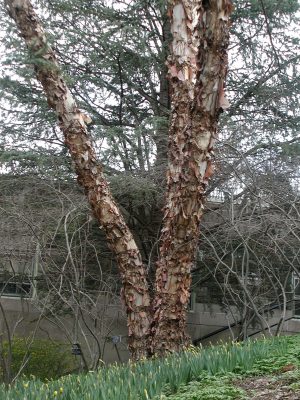
Here’s what I planted: Bordering a swale that is rushing with water during spring melt and periods of heavy rain went four river birch (Betula nigra) trees. They evidently enjoy the location for they’re now each multiple trunked with attractively brown, peeling bark and towering to about 60 feet in height.

River birch

River birch

I also planted 3 sugar maple trees to provide sap for maple syrup for the future. The future is now (except I no longer use enough maple syrup to justify tapping them.)My mini-forestI also planted a white oak (Quercus alba), whose sturdy limbs, I figured, would slowly spread wide with grandeur in about 150 years, after the maples and birches were perhaps long gone. Unfortunately, the white oak died, probably due to winter cold; its provenance was a warmer winter climate. My mistake.
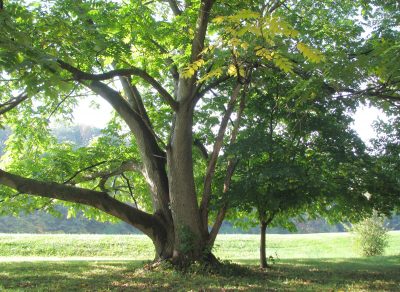
Since that initial planting, I’ve also planted a named variety of buartnut (Juglans x bixbyi), which is a hybrid of Japanese heartnut and our native butternut.

Buartnut

Buartnut (not mine, yet)

I hadn’t realized it, but that tree has grown very fast and now spreads its limbs wide in much that habit as a white oak. The other two trees that I planted are named varieties of shellback hickory (Carya laciniosa). These trees are slow growing but eventually will offer good tasting nuts. They’re quite pretty, even now, with their fat buds.

A Vegetable Also

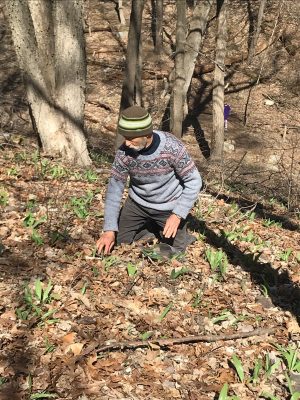
What about vegetables in my mini-forest? They were not part of my original plan. It turns out that ramps, a delicious onion relative, a native, which I’ve been growing for a few years beneath some pawpaw trees, are spring ephemerals. Spring ephemerals are perennial plants that emerge quickly in spring to soak up sunlight before its blocked by leaves on trees, then grow and reproduce before the tops die back to the ground.

Ramps (Allium tricoccum) are perfect forest vegetable, so I wanted to make the ground beneath my mini forest more forest-y before moving the ramps from beneath the pawpaws. Nothing fancy. All I did was to haul in enough leaves to blanket the ground in the planting area a few inches deep. That leafy mulch will suppress competition from weeds and add organic matter to the soil.

Collecting ramps for transplanting

Collecting ramps for transplanting

In just a few years, the ramps will be sufficiently established to provide good eating, perhaps along with some buartnuts and hickory nuts, all from my forest(?) garden.

Drip Opportunity

I’m looking for a site within 20-30 minutes of New Paltz, NY in which to hold a drip irrigation workshop. What I need is a vegetable garden in beds (not necessarily raised beds) for which I would design a drip system. Workshop attendees I would install the system after learning about drip irrigation. Host pays fo materials. Contact me if interested.

ALL ABOUT ONIONS

An Ode

Onions, how do I plant thee? Let me count the ways. I plant thee just once for years of harvests if thou are the perennial potato or Egyptian onion. If thou are the pungent, but long-keeping, American-type onion, I sow thy seeds in the garden in the spring. And if I were to choose like most gardeners, I would plant thee in spring as those small bulbs called onion “sets.” (Apologies to E.B. Browning)

New Old Ways with Onions

Early March brings us to yet another way of growing onions: sowing the seeds indoors in midwinter. This was the “New Onion Culture” of a hundred and fifty years ago, and, according to a writer of the day, “by it the American grower is enabled to produce bulbs in every way the equal of those large sweet onions which are imported from Spain and other foreign countries.” This is the way to grow the so-called European-type onions.

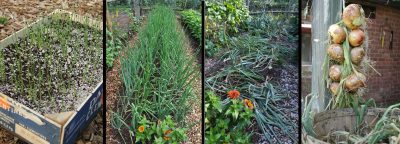
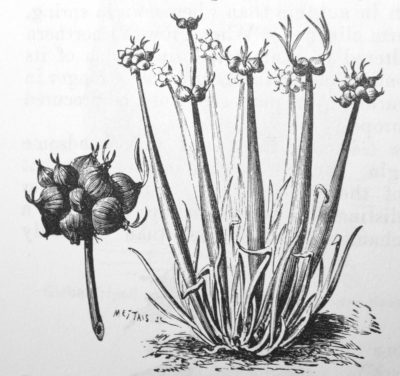
Walking onions

Walking onions

What’s wrong with growing perennial onions, American-type onions, and onion sets? Neither perennial nor American-type onions have the sweet flavor of the famous Vidalia onion, a European type. And onions for sets are generally limited only to the two varieties marketed, Stuttgart and Ebenezer, whose important quality is that they make good sets. A few seeds companies sell sets of a better variety, Forum. In addition to variety, quality of sets is important: too large and they become useless as they send up seedstalks.

The New Onion Culture is a way to grow the large, sweet, mild European onions, such as Sweet Spanish.

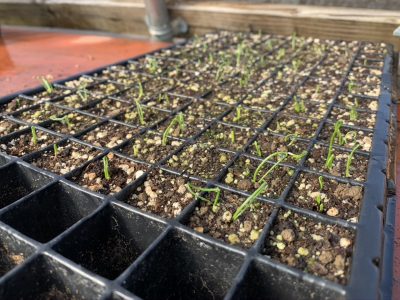
The “Method” is as follows: About 10 weeks before the last hard freeze, fill a seed flat with potting soil and use a plant marker to make furrows 1/2-inch deep and one inch apart. Drop about seven seeds per inch into the furrows and then cover the seeds with soil. Fresh seed, less than a year old is best. Water the flat, then keep it moist and warm and covered with of pane of glass. The onions should sprout in a week or two.

Once the onions sprout, remove the plastic or glass and give the seedlings plenty of light. Put the flat either within a few inches of fluorescent lights, on a very sunny windowsill, or in a greenhouse. Each time the seedlings grow to six inches height, clip them back to four inches. The trimmings, incidentally, are very tasty. This indoor stage of plant growing can be bypassed by purchasing onion transplants (not sets), which are sold mail-order in bundles of twenty-five.

Get ready for transplanting a few weeks before the predicted last freeze date. Choose a garden spot where the soil is weed-free, well-drained, and bathed in sunlight. Onions demand high fertility; my plants go into a bed that was dressed with an inch depth of compost last fall. Give the onion seedlings their final haircut, tease their roots apart, then set them in a furrow, or individual holes dibbled with a 3/4-inch dowel. Plant seedlings two to four inches apart, two inches if you want small bulbs, four inches if you want big bulbs. 
Onion growing cycle
This may sound like a lot of trouble to grow onions. But for me, midwinter onion sowing inaugurates the new gardening season. The onion is an apt inaugural candidate; it responds to “high culture” starting with careful sowing in fertile soil and moving on to good weed control, timely watering, and, after harvest, correct curing after harvest. 

Besides providing this midwinter ritual, onions raised according to the New Onion Culture do have superb flavor.

(The above was adapted from my book A Northeast Gardener’s Year.)

And Still Newer Ways

And now for the “Newer Onion Culture”: American-type onions have the advantage of being better for long-term storage, and newer varieties also have very good flavor. My current favorites are Copra, Patterson, and New York Early. They also are “long day” onions, setting bulbs when the sun shines for 15 to 16 hours daily. “Short day” varieties, which are adapted to the South, would bulb up too soon around here, producing puny bulbs.

There’s more to the “Newer Onion Culture.” A couple of years ago, a local farmer, Jay, of Four Winds Farm, told me he gets good results by just planting seeds in furrows right out in the field.

And even more. Instead of planting 7 seeds per inch indoors in furrows in early March, sow them in flats of plastic “cells” with 4 seeds per cell (each cell is about an inch square). Onions seedlings in cellsWhen transplanting out in the garden, plant each cell with its seedlings intact, spacing them further apart than you would with individual transplants so their roots get adequate water and nutrition. As vegetable growing maven Eliot Coleman wrote in Four-Season Harvest, “the onions growing together push each other aside gently.”
Back to my original query: “Onions, how do I plant thee.” Many ways. I’ll do four out of the six ways this season.
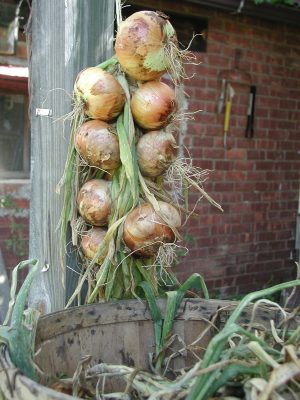
Onion braid

Pruning, Flowers

Much of Pruning is About Renewal

Why am I spending so much time pruning these days? To keep plants manageable and healthy, of course. But also so that flowering and fruiting trees, shrubs, and vines keep on flowering and fruiting. “Renewal pruning” is what does this.

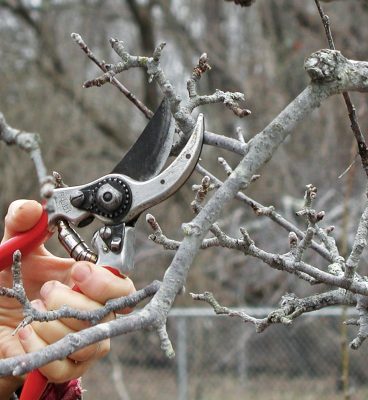
Pruning apple spur

Pruning apple spur

As plant stems age, they — like all living things — become decrepit, no longer able to perform well. But any plant’s show or productivity can be kept up if stems that are too old are periodically lopped back, which promotes growth of new, young, fecund stems. That’s all there is to renewal pruning.

Ah, but the devil is in the details. One important detail is how old is “too old.” That depends on the flowering and fruiting habit of the plant.

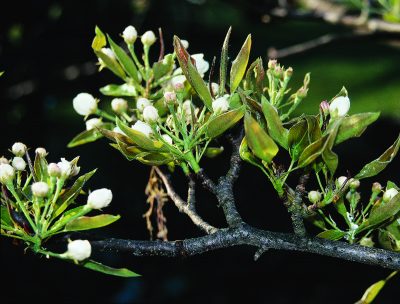
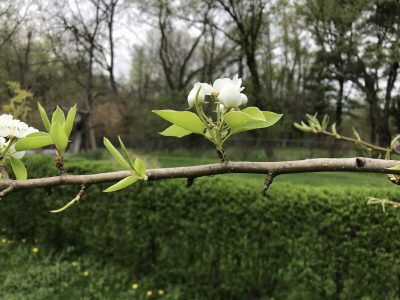
Near one extreme would be pear trees. Along pear stems grow stubby growths, called “spurs,” which bear the tree’s flowers and fruits.

Young pear spur

Young pear spur

Older pear spur

Older pear spur


These stubby growths grow only an inch or less each year.  Over time, spurs branch and these small branches, in turn, branch to create what look like miniature trees perched along the tree’s stems.

A pear’s individual spur can remain vibrant for about a decade, so little pruning is needed annually. But eventually, even a spur grows old and decrepit. I renewal prune my pears by cutting back some of the stubby parts of a spur system to coax out younger stubby growths or even by lopping back a whole stem on which they sit, stimulating new stem growth on which will develop new spurs.

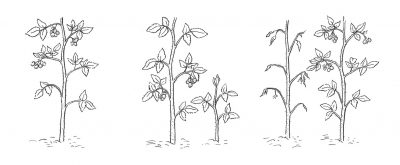
Near the other extreme in pruning would be an everbearing raspberry plant, which bears flowers and fruits on young shoots arising from ground level. Those bearing stems are very short lived. One way to prune an everbearing raspberry plant would be to lop all stems to the ground each winter. Having borne, those stems are aging rapidly, and pruning stimulates a flush of new, bearing stems that will come up from ground level in spring.

Everbearing raspberry growth habit

Everbearing raspberry growth habit

(Not to muddy the waters, but everbearing raspberry stems actually bear late in their first summer of growth, then again in midsummer the following year, so stems could be left one more season to bear that second crop. After that, though, the two-year-old stems need to be cut back. They die after their second year anyway.)

Pear and everbearing raspberry represent two extremes in bearing habit and, hence, method of renewal pruning. Other plants lie somewhere on the spectrum between these extremes. Where? It depends, as I wrote, on their particular bearing habit. For instance, blueberry stems are most productive on stems up to 6 years old, gooseberries on stems 2 and 3 years old, and grapes and peaches on stems one year old. So I cut away stems older than 6 years old from my blueberry bushes, stems older than 3 years old from my gooseberry bushes, and stems older than a year old from my grape vines and peach trees.

For other plants grown for either their flowers or their fruits, find out how to renewal prune them by watching how they bear for a season or more, or get the information from a book (such as my book, The Pruning Book).

A Workshop

If you’re interested in delving deeper into pruning, I will be holding a pruning workshop here on my farmden in New Paltz, NY on March 28, 2020. For more information about this workshop, please go to https://leereich.com/workshops.

Not Forgetting the Flowers

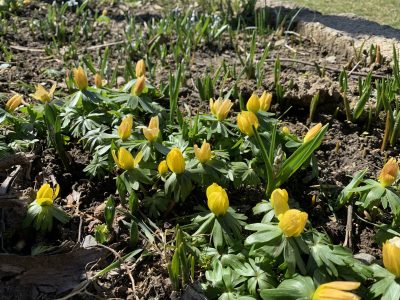
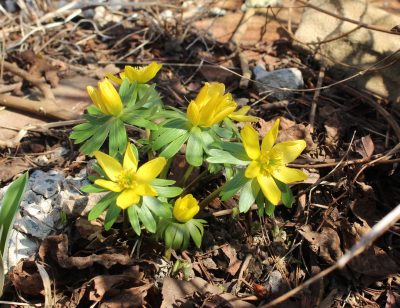
Flowers are at a premium this time of year. Here on my farmden, the only flowers blooming outdoors are winter aconite and snowdrops.

Winter aconite

Winter aconite

(Typically, my ‘Arnold’s Promise’ witch hazel would be bursting into bloom about now but a few years ago I performed dramatic renewal pruning to reduce the size of the plant. No special technique was involved other than lopping the whole plant to ground level. Witch hazel’s stems bear flowers for many, many years, so don’t need regular pruning; it does take a few years, though before stems are old enough to begin bearing.)

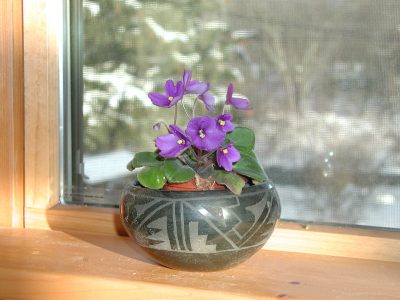
Indoors, plants sense the lengthening days of brightening sunlight. African violets have been blooming for a couple of weeks and will go on doing so for weeks to come.

African violet

The same goes for the Odontoglossum pulchellum orchid, whose stems are weighed down with small waxy white, fragrant flowers.

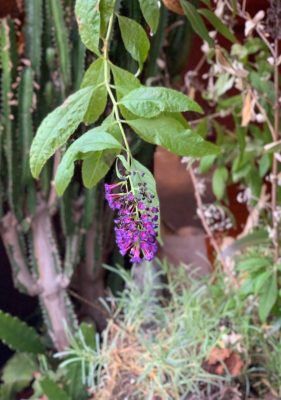
One surprise was a butterfly bush that was in a large pot that I had brought indoors for winter. This plant enjoys bright sun and hot days, neither of which it receives indoors — it has, nonetheless, managed to cough forth, so far, a singe blue blossom. I stick my nose into the flowers, close my eyes, and inhale, and it’s midsummer.

Butterfly bush flowe

Butterfly bush, indoors

Most dramatic are the humongous, fire engine red bloom of an amaryllis plant. It is gaudy, but appreciated anyway.

My favorites are the white blossoms now opening on Meyer lemon. The blossoms aren’t all that showy but their fragrance is heady and heavenly. No need even to get my nose up close.

I did catch one other bit of welcome color outdoors: my first sighting of bluebirds. The day is gray but the bluebird, to quote Thoreau, was “carrying the [blue] sky on its back.“

AMUSING MUSINGS

(The following is excerpted from The Ever Curious Gardener: Using a Little Natural Science for a Much Better Garden, available here.)

Write the Name Right!

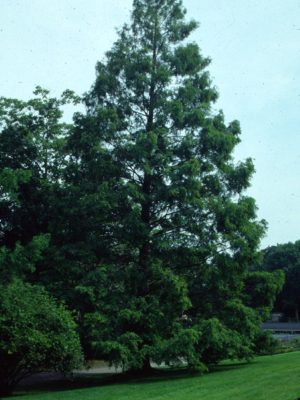
With little pressing, gardenwise, this time of year, why not muse about plant names — their common names and their sometimes intimidating-looking botanical names? Take the tree commonly named dawn redwood for example. ”Dawn redwood” admittedly reads more easily than this tree’s botanical name, Metasequoia glyptostroboides.

Wait! don’t stop reading! Instead, speak the Latin name aloud slowly: me-ta-see-KYOY-a GLYP-to-stro-boy-dees. It’s delightful, tonal poetry vocalized by a smooth dance of the lips, the tongue, and the upper pallete. 
dawn redwood
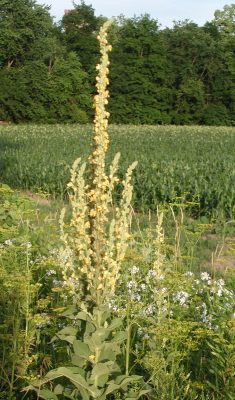
Sensual pleasure aside, botanical names have a practical side. That woolly-leaved plant that sends up a candelabra of creamy yellow flowers each summer has a hundred or so common names. I call it mullein but other names include Aaron’s rod, Adam’s flannel, bullock’s lungwort, and velvet plant. This plant has only one botanical name, though, Verbascum thapsus. 
Mullein
Each plant gets only one botanical name, and that name is recognized worldwide. A botanical name has two parts, both based on Latin. The first word in the binomial is the genus; each genus is subdivided into one or more species, the second word of the binomial. This system of plant classification was originally set forth in Species Plantarum, a book written in 1753 by Carl von Linne (usually known by the latinized form of his name, Linnaeus.)

I have a pet peeve about botanical names that finds root in a challenge issued way back in high school English class. Mr. Mehegan gave us detailed information on the correct way to list bibliographic references at the ends of our term papers: punctuation, underlining, capitalization, ordering. Then he predicted (correctly) that no one would list all their references exactly right. Now it irks me when rules are not followed in writing plant names.

Rules for plant nomenclature are simpler than Mr. Mehegan’s rules for referencing. Genus and the species names are always underlined or italicized. Genus is always capitalized; species is not, unless it commemorates a person. A species is never written by itself; if the genus is obvious, it may precede the species in abbreviated form.

The Name is Loaded with Information

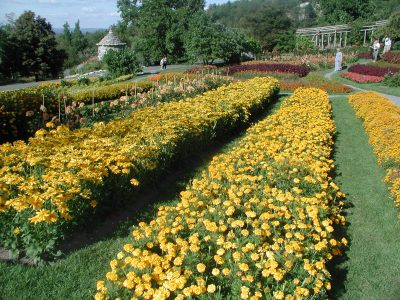
With correct botanical information under my belt, if I want a packet of marigold seeds, I could ask for Tagetes minuta whether I am in Andorra or Zanzibar.Marigolds In the case of plants like petunia, chrysanthemum, rhododendron, and fuchsia, at least part of the botanical name is the same as the common name in English. In some cases, using the botanical name might be the only way I could be assured of getting the plant I really want. If I wanted to plant bluebells, Hyacinthoides, and searched and asked for it by its common name, I could end with plants in the Mertensia, Muscari, Campanula, or Eustoma genus.
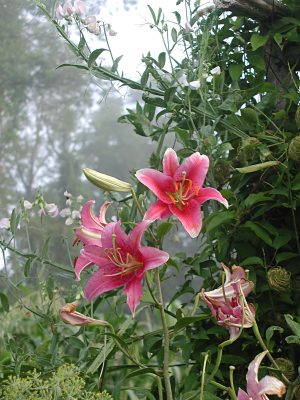

When I’ve planted lilies, I didn’t want to pick from a grab bag of about 80 different species of Lilium; I wanted to plant—and did plant—the sweetly fragrant Lilium candidum (which actually is the only lily with the common name Madonna Lily). I also wasn’t interested at that time in planting daylily (Hemerocallis spp.) or lily of the valley (Convallaria majalis), neither of which are true lilies. Neither is even in the Lily Family, let alone the Lilium genus!
Lily
A botanical name can tell a story about a plant: its discovery, its origin, its form. Adalbert Emil Redcliffe Le Tanneux von Saint Paul-Illaire discovered what became known as African violet growing amongst the lush vegetation in the mountain jungles of East Africa; in his honor the plant was given the botanical moniker Saintpaulia ionantha. Juniperus virginiana is a juniper native to eastern North America; Juniperus chinensis hails from China. Tulip tree, Liriodendron tulipfera, has a particularly descriptive name. Liriodendron was the ancient name for this plant, meaning “lily tree.” And tulipfera means “tulip bearing.” Tulip tree’s flowers do, indeed, resemble tulips, as long as you don’t look too closely. Tulip is a member of the Lily family. Tulip tree is in the Magnolia family.

African violet

African violet

Family Matters

Botanical names can tell about plant relationships. The apparent similarity between peaches, plums, and apricots is confirmed in the similarity of their names, Prunus persica, Prunus domestica, and Prunus armeniaca, respectively.

Knowing kinship can help decide what grafts might be successful. Grafts between the same genus and species almost always spell success. Success is even possible between different species of the same genus, which is why I once grafted a couple of branches from my sweet cherry tree (Prunus avium) onto my tart cherry tree (Prunus cerasus). The sweet cherry didn’t bear reliably enough to warrant living here as a whole tree. Emulating George Washington, I chopped the (sweet) cherry tree down following a successful graft.

In some cases, a species might be subdivided into botanical varieties. For instance, cabbage and its close relatives all are Brassica oleracea. But cabbage itself is the botanical variety capitata (meaning head), Brussels sprouts are gemmifera (little gems), broccoli is botrytis (cluster-like), and kale is acephala (without a head). The correct way to write broccoli is Brassica oleracea var. capitata.

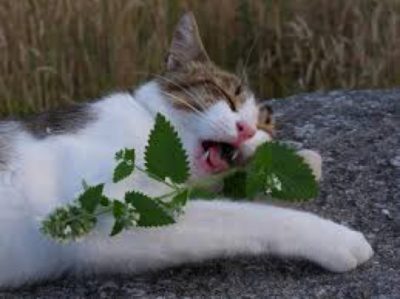
If you’re put off by botanical names for plants, take heart because the situation used to be more awkward. Before the days of Linneaus, baby’s-breath was the Latin mouthful Lychnis alpina linifolia multiflora perampla radice. Catnip was known as Nepeta floribus interrupte spicatis pedunculatis. (Both are mellifluous but too long for a name.) Thanks to Linneaus that the scientific names of these two plants now are the manageable and descriptive Gypsophila elegans to Nepeta cataria, respectively.
Cat and catnip