
BRUTAL BUT HAS ITS BENEFITS
Root Pruning
“Root pruning” sounds like such a brutal way to treat a plant. Yet it’s a periodic necessity once any potted plant has grown as large as you want it to. Potted plants — like other plants — grow, and while a fifty foot tall weeping fig (Ficus benjamina) is a glorious sight on a Carribean island, my living room ceiling won’t allow such growth. Root pruning slows stem growth as well as makes room for new soil and new roots.
Root pruning — and stem and leaf pruning — of my own weeping fig “tree” has kept it, after 15 years of growth, only a few inches high! This bonsai gets its roots, stems, and leaves pruned twice a year, one of those times this week.
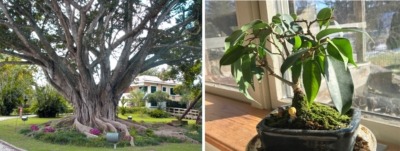
Weeping figs, Puerto Rico and windowsill
How often to root prune any potted plant depends on how fast the particular plant grows, or tries to, and any quirks it has about being root pruned. Angel’s trumpet (Brugsmansia spp.), for example, gets one severe root and stem pruning each and every year, in fall. Root and stem pruning are needed to stimulate new growth, which bears those eerily beautiful, pale apricot colored trumpets.
In contrast, after nineteen years, I have yet to root prune my pony tail palm (Beaucarnea incarnata).
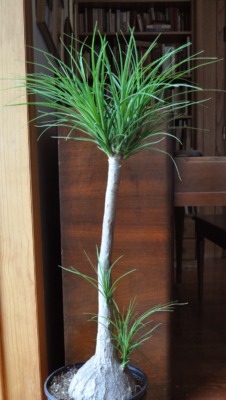
Ponytail palm
Who Needs Their Roots Pruned?
Plants have subtle ways of indicating that their roots need new soil in which to roam. Keep an eye out for plants that dry out too rapidly, or send roots attempting escape from their post out through their drainage holes.
Root prune any plant that’s beginning to look too tall or too crowded in its pot — or give it a larger pot. Exceptions exist, of course, such as clivia, which thrives cramped for years in the same pot until eventually bursting it.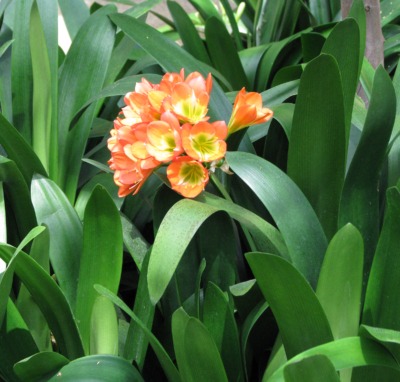
The most foolproof way of telling whether a potted plant needs root pruning is to slide the root ball out of the pot and examine it. Thick roots pressed right to the the edge of a root ball, or circling its outside, indicate that the time to operate has come.
To root prune, take a sharp knife or a reciprocating saw fitted with a metal blade, grit your teeth, and slice a half to two inch layer of soil from all around and underneath the root ball. The larger the root ball, the more soil and roots can be removed. Then go over the whole root ball again, this time with a pronged hand cultivator or a stick, loosening soil and roots on the outside. Also prune back any lanky or damaged roots.
With roots pruned, a plant is ready to return to its pot. Put a stone or screen over any drainage holes, then shovel in enough soil so that the base of the plant’s stem sits a half to one inch below the rim. Or less; my bonsai fig is in such a shallow, small pot that I can only sacrifice a fraction of an inch below the rim for the soil level. Gradually fill the space between the root ball and the pot with potting soil, tamping it in place with your finger tips or a blunt stick.
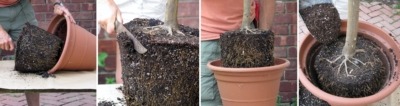
Repotting my kumquat “tree”
Because root pruning temporarily cuts down on a plant’s water supply, this pruning should be accompanied by shoot pruning—to remove transpiring leaves—if performed on plants in full leaf. A dormant, leafless plant that has been root-pruned may automatically adjust the number of leaves it grows, when awakening in spring, to the amount of root loss suffered, so it does not necessarily also need its branches pruned.
Useful on Established Trees or Shrubs
You don’t have to confine your root pruning to potted plants. In the middle of the 19th century, root pruning was used as a way to dwarf fruit trees planted in open ground. In his book, The Miniature Fruit Garden (1866), Thomas Rivers described how he root-pruned his trees by either digging them up and replanting them, or by digging trenches around them, then backfilling with new soil.Great judgment, of course, was needed as to how much root pruning a tree could tolerate without excessively enfeebling or killing it.
Besides dwarfing a tree, root pruning also has been used to hasten fruiting; this traditional practice that recently has been shown to be of dubious, or no, value. Wisteria vines are notably tardy to flower, and one traditional recommendation for coaxing them along in this direction is to root-prune them. Personally, I’ll put my money on summer pruning wisteria rather than root pruning to bring it to flower. (And, of course, time—every plant must attain a certain age before it can flower.)
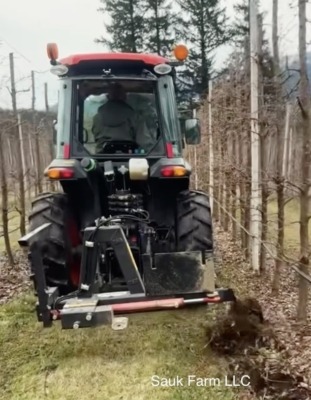
Root pruning young orchard
A bona-fide use for root pruning is to lessen the transplant shock of woody plants. An individual root responds to being pruned by growing new lateral roots near the cut. Root pruning a tree or shrub a year or more ahead of time reduces transplant shock by inducing the plant to grow masses of roots near enough to the plant to be taken up with the root ball.
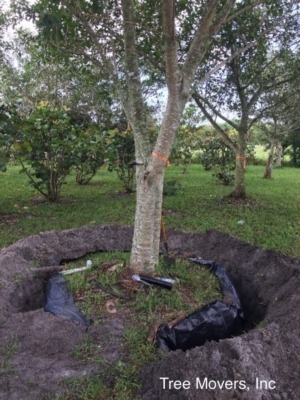
Practice root pruning with moderation and don’t forget an important function of roots: to anchor a plant to the ground. Depending on its size and how much you prune, a plant might need a supporting stake until new roots grow.
Watering is also very important during the couple of weeks or more that a plant is recovering from root pruning. Right after pruning, give the plant a thorough soaking. When new growth begins, make sure all the soil stays moist, the old soil because even with its reduced size it must still support the plant, and the new soil, to encourage new root growth there. (Succulents are an exception: let their soil thoroughly dry between waterings, even after root pruning.)
Finally, prune the stems so that the reduced root system has less leaves to support, and if your goal has been to keep the plant from growing larger.
Rest assured plants can tolerate all this pruning. Just look at my bonsai tree and other bonsais whose heights can still be measured in inches after a hundred or hundreds of years.
For more about all types of pruning, see my book, THE PRUNING BOOK, available from the usual sources or directly from me at www.leereich.com/books.

Bonsai juniper


Leave a Reply
Want to join the discussion?Feel free to contribute!