
EVERYONE LOVES GARLIC BUT ME
Influence of Planting Date on Head Size
I no longer grow “stinking roses” but when I did, it was the one vegetable that I was most likely to forget to plant each year. After all, although garlic, “the stinking rose,” is planted at the end of the season along with lettuce, endive, and radish, it’s not harvested along with these other vegetables, which all ripen or are at their best in the cool moistness of autumn. No, garlic ripens almost a year after planting, in the heat of summer. Nonetheless, now is a good time to plant garlic — and here’s a reminder for you.
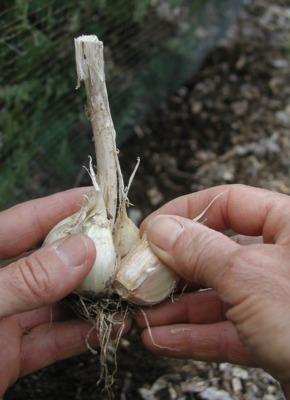
Separating garlic cloves in head
True, many gardeners plant garlic in early spring and reap decent crops. And those of you who are more savvy — or who have done some reading on the subject — plant in late fall, which is when gardening books and magazine articles direct you to plant.
But let’s examine the logic of planting garlic in spring versus late fall versus late summer. Garlic rarely makes seed, so is grown by planting individual cloves, which, together, make up a bulb or “head” of garlic. The cloves first grow leaves and roots and then, in response to the long days and warm temperatures of summer, heads. New leaves cease to develop once heads start forming, and the more leaves the plant has pumped out before this occurs, the larger the heads.
What we all want from our garlic is big heads. So although you can reap a garlic crop from spring-planted cloves, or a larger one from fall planted bulbs, late summer planting gives the cloves the most time to grow the most leaves. This should yields the largest heads. Leaves which poke up through the ground in late summer do take a rest or even die back a little when temperatures plummet in winter, but growth resumes in spring.
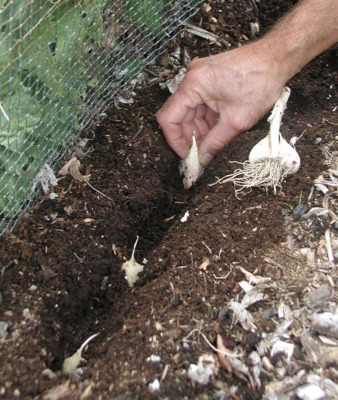
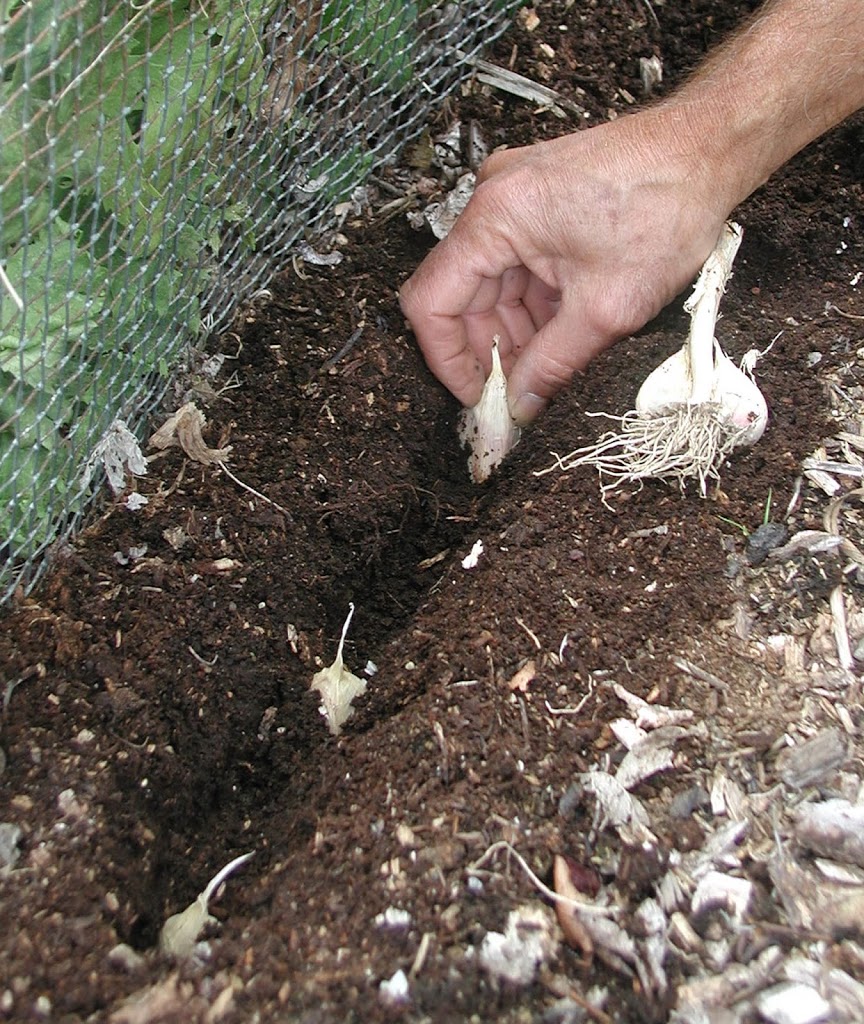
Planting garlic
(We’re as desirous for large cloves as for large heads, but clove size is determined in large part by variety.)
Late summer planting also gives roots the most time to grope further into the soil before cold weather strikes. Not only is the plant then able to drink in more water and minerals generally, but is ready to do so with the first warm breath of spring. A large root system early in the season is a special advantage in years when summer weather turns bone dry. All those roots taking firm hold of the ground also prevent freezing and thawing of the soil in the months ahead from heaving the cloves up and out of the ground. (This is one reason that mulching is so heartily recommended following late fall planting of garlic in the north.)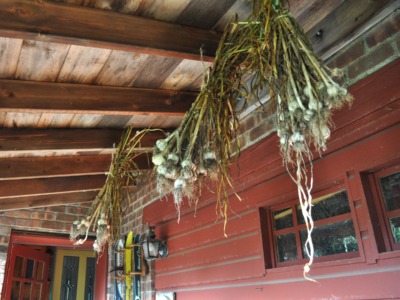
Ready availability of fresh cloves is one more plus for planting garlic in late summer. It’s surely a lot easier to plant now than to store bulbs in perfect condition until spring for planting.
A Confession
I have to confess that I no longer grow garlic. This is sacrilege but my main reason for not growing garlic is because I’m not an enthusiastic fan of it, especially when used raw. And cooked with other vegetables, it’s flavor is lost.
I do enjoy the mellowing effect roasting has on garlic.
One more reason is that garlic that home grown garlic tastes no better than that you can buy from a supermarket or a farmers market. Any difference from home grown is nothing like the dramatic difference you get from home grown peas, asparagus, lettuce, and sweet corn.
Perhaps my tastebuds are unrefined, at least when if comes to garlic. And I’ve admittedly tasted less than a handful of the hundreds of varieties.
Actually, garlic does grow here. But I don’t cultivate. Many years ago I did grow garlic which evidently dropped its seeds into the gooseberry and grape beds adjacent to my garden. Every year hundreds of sprouts appear, go to seed, and then lie dormant until the following season. Occasionally, for some reason, I’ll pull out a small head for kitchen use.
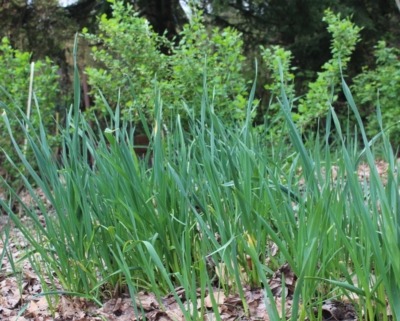
Naturalized garlic
Advantages and Disadvantages of Earlier & Later Planting
One admitted advantage to planting garlic later in fall is that, until then, many late season vegetables, such as endive, winter radishes, and cabbage, are still “holding their ground” and not willing to move out and make room for garlic. And they keep well sitting there in the cool weather awaiting harvest at your convenience.
One (alleged) disadvantage to planting now is that plants are likely to sprout and those green sprouts will be threatened by subsequent freezing weather. Not to worry. I’ve seen daffodils do this during a spell of warm fall weather, without suffering harm. If it makes you feel better, cover those green sprouts with wood shavings, straw, or some other fluffy mulch once freezing weather settles in in earnest. That mulch will also maintain some warmth in the soil, affording roots more time to grow. My uncultivated garlics offer more evidence for the viability of late summer planting, or earlier!
The only other disadvantage I see to planting garlic now is remembering to do so.
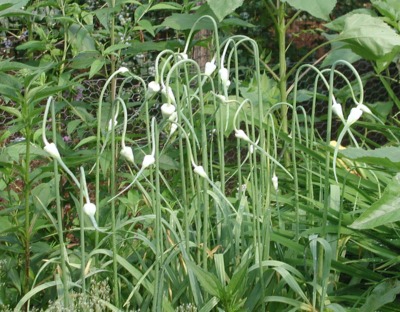
Naturalized garlic scapes (which I also don’t like)



What a lovely article. It is liberating for me as I have planted early and carefully, then the garlic is ‘lost’ whether in the polytunnel or outside. I am not a regimental gardener and use no dig. That is okay until marauding foxes and badgers dig. I have a returning elephant garlic which I’ve left in situ for many years. I might just clear the ground beneath to see if it seeds. Like you, roast garlic is the only way I enjoy it. My local veg shop sell fabulous huge bulbs, I think it best to leave this crops to the experts even though I enjoy the process of planting in Winter.
I’d never considered planting garlic as early as late summer, but the reasoning about giving the roots and leaves more time to develop makes a lot of sense. Interesting too that you don’t find much difference between homegrown and store-bought garlic.
Hi Lee, thanks for a great article about garlic. I do like eating all kinds of garlic, but no longer plant it. You are quite right, the local garlic in our Middlebury natural foods store is excellent and readily available. I do, however, have loads of self seeded garlic all over the place. I pick the greens (and some of the scapes) more often than I use the heads. Flowering garlic chives grow in my gardens for their beautiful flowers and also the greens.
oh gosh I disagree – home grown garlic has WAY better flavor than store bought. home grown also has much larger, easier to peel cloves. if you were nearby I’d have to make you something so you could taste difference. I prefer Xian, Red Toch, Chesnok for flavor. And Killarney Red for growing particularly large heads in heavy soil. this year I am also trailing a porcelain called georgian crystal, which is supposed to make enormous cloves and has reportedly very good soil.
my kid agrees with me on the garlic – I’ve gotten her to eat many vegetables she otherwise would turn her nose up by smothering then in a hefty dose of sauteed garlic. simply delicious!
I’m almost tempted to try the three varieties you mentioned for good flavor.
Interesting to hear of late summer planting of garlic. Makes sense. I plant my Egyptian walking onion bulblets then and it helps produce larger underground bulbs (or bulblets if you choose not to eat the flower stalk) the next summer. (But if you plant too early, the underground bulb might divide.)
I have a patch of garlic I’ve let grow mostly undisturbed. But it gets crowded and so I haven’t harvested much from it. I should try dividing it but it’s one more chore during a busy spring season. By contrast, I have more time in the fall. Plus I can plant into the bed that held tomatoes. In a space limited garden, as you know, succession planting is key,
I do like garlic heads but even more I like eating green garlic, one of the easiest to grow and tastiest vegetables that few take advantage of. I cut young stalks down several times and they regrow. Eat the whole plant and it all tastes of garlic. It’s a great way to use up old garlic that is sprouting, even store bought (though haven’t bought in years). Yum!
I like the idea of using green garlic except that I find them too tough. (Or was that garlic chives?)
Just to make sure we are on the same page, by green garlic, I mean the whole immature plant, not the garlic scape. You can cut them as early as you like and if you do so within the first month or so of emergence they are quite tender in a stir fry– similar to scallions but with more flavor. I agree they get tough if left too long. As for garlic scapes, I also find them too tough for most uses, though they work to flavor soups or in a pesto. The flower stalks of egyptian walking onions, scallions and potato onions are quite tender by comparison to garlic scapes and thus more versatile.
Ok, I’ll try the garlic earlier in the growing season. Thanks for the tips.
I had to laugh at the garlic continuing to grow on its own even after you stopped cultivating it. There’s something very typical of gardening about the plants you fuss over disappearing while the ones you’ve lost interest in happily come back every year.