
EASY EDAMAME
Soy Simple
I’m not going to ramble on and on in praise of the many health benefits of soybeans, their high quality protein, their healthful oil, and so on. Nor will I go on and on about how this plant, cultivated for thousands of years in Asia, has found its way into the manufacture of plastics and other hardgoods. Henry Ford was an early devotee of this plant, so much so that in the 1930s each Ford automobile ate up a bushel of soybeans in one form or another. I’ll also keep quiet about the gustatory alchemy that has been wrought on this bean to transform it into tofu and tempeh as well as ersatz meats, milk, and ice cream. 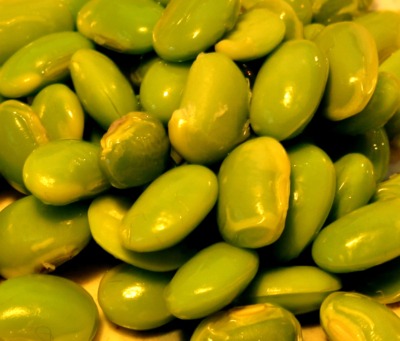
What I won’t do, though, is restrain my praise of the simplest form of soybean (edamame), the fresh green bean merely steamed or boiled for 10 minutes or so (soft but not olive green) and then popped out of its pod into your mouth. The flavor is delicious, nothing like the dry bean after boiling or other processing, but rather like a cross between a fresh lima bean and shelling pea. If you want one new vegetable to try in your garden this year, make soybean that vegetable.
The best soybeans for fresh eating are varieties developed for this use. A number of varieties are available. I have grown a few of them, and although I hoped that tasty sounding Butterbean would taste and bear the best, the variety named Shirofumi won out because of it slightly smaller stature, good yields, and slightly better flavor.
Also Simple to Grow
Soybeans are bushy, frost-tender plants that you grow just like bush green beans. I plant them around the date of the last killing frost in spring, around the middle of May here in Zone 5. By then, the ground has warmed enough for them to sprout and by the time they poke up through the ground temperatures will stay reliably balmy.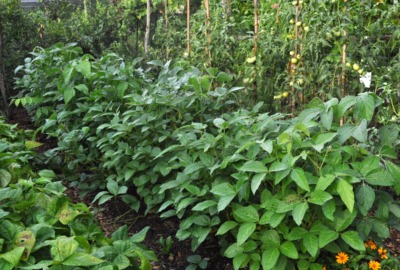
Make rows a couple of feet apart. I garden in beds, planting two rows about 20 inches apart down a bed. In either case, drop seeds three inches apart into furrows an inch deep.
Once you are smitten by the delectable taste of green soybeans and want to stretch the harvest season, do so by planting varieties that take different times to mature or by putting in a second planting about three weeks after the first one. Staggered planting times don’t work with all varieties, though, because some bear in response to the length of the day. Later plantings then don’t bear later, they just flower before the plants have grown large enough to make a large crop.
What About Flavor
I wrote that green soybeans taste something like a combination of peas and limas, and to plant them like green beans — and yet, soybeans are as easy, or easier, to grow than peas, limas, or green beans. 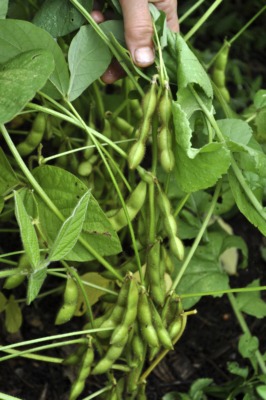 Soybeans tolerate hot weather better than peas, which languish by July, and cool weather better than limas, which languish almost until July, or all summer around here sometimes. And Mexican bean beetles, which in some years devastate green beans, have little interest in soybeans.
Okay, even the rose has its thorns; so must the soybean. Soybean plants grow larger than bush green bean plants, so tend to flop over. I used to keep my plants upright, mostly to keep my beds neat and passable, by putting stakes around the edges of the beds, then letting the plants lean on one or two courses of string tied to the stakes. I don’t know if the plants have become less relaxed because of climate change or whether I’ve become less fastidious with them, but I know longer support them and they no longer seem unduly floppy.
I also must mention animals: Soybeans are a dessert to rabbits and deer. Last year a rabbit found its way into my garden through a hole in the fence; it made a bee line for the edamame plants. So if either rabbits can make their way into your garden, forget about growing soybeans — unless you want to grow them as a trap crop to keep either of these creatures from feeding on other plants. Which some people do. Seriously.
Harvest soybean pods when they are fully plump and still bright green. As with limas and some other beans, soybeans are not wholesome raw, so steam or boil them in their pods for about five minutes before eating — timing is not critical. Cooled pods gladly release their beans when gently squeezed between your fingers.
If you have the foresight to plant enough so that you harvest more than you can eat fresh, pack excess cooked pods into bags or some other containers, then into your freezer. We enjoy the harvest from a twenty foot long bed in summer and then all winter.



Lee,
You are a gifted humorous writer. Your article has inspired me to plant soybeans. I live in Scottsdale, will they thrive?
Karen
Thanks. (I’m blushing.) Yes, you can grow edamame in Scottsdale.
Good morning, Lee. I so enjoyed reading your edamame post this morning. It certainly made me want to grow these beans, for the first time ever. And also, it made me deny my interest, owing to the proliferation of rabbits hovering around my garden. Such a decision to make…. And while I’m writing, I want to thank you so much for your contribution to Growing A Greener World. WONDERFUL!
Thank YOU. As far as the rabbits, they’re very easy to fence out.
Yes! Edamame has become a standard in my garden – so far the only variety I haven’t loved is Envy. And chipmunks love the seeds/seedlings – after losing an entire crop, i now I put floating row cover over the bed (very well secured with bricks) from the time I seed until the plants are a good size.
We have grown edible soybeans for many years. In trying lots of different varieties, we have found ‘tankuro’, a black seed variety to be the sweetest and best tasting. There are still a lot of people who look at soybeans as ‘cow food’ but we love them.
I’ll try that variety on your recommendation. I like the taste of edamame but never detected any sweetness in them.
I was just about to write down the 2 Japanese sounding soybean names recommended here, until you mentioned abt the deer and rabbits! Those critters are numerous in my Palenville place. Close to my house is a garden area, I’d plant just one bean bush in my otherwise ornamental garden, if I could find space for it, and if I could find just one plant.
It’s very easy to fence out rabbits.