
WEATHERING CHANGES
Exact Planting Dates . . . Ha!
In my first book, A Northeast Gardener’s Year, published 35 years ago, I described various goings on in my garden month to month. What topics made it to each month’s pages was left to the “whims and vagaries of the weather and the weeds, the unfolding of blossoms and the ripening of fruits, perhaps the cry of a plant begging to be repotted as it pushed its roots through holes in the bottom of its container.”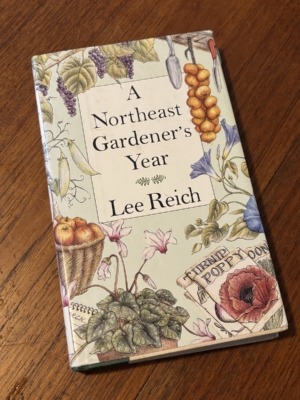
At that time, with almost 20 years of gardening experience under my belt (as well as graduate degrees and research in agriculture), I figured I had some idea of what was going on beyond the garden gate. Like the weather, for instance, as it related to when to sow seeds, set plants in the ground, and harvest. I even went so far, for instance, in the appendix of my book to list in granular detail what week in what month to sow tithonia, when to keep an eye out for gooseberry mildew, or when to take geranium cuttings. I had the hubris to present such details as if set in stone.
In the late 19th century, Charles Dudley Warner wrote (as quoted by and misattributed to) Mark Twain, “Everybody complains about the weather, but nobody does anything about it.” How wrong he was. It wasn’t common knowledge then, but we humans had already started doing something about the weather; global warming began its rise in earnest.
There’s Change A’Coming (And It’s Here)
It was hard for me to imagine that a shift in climate would occur and become obvious within a relatively short period of even a lifetime. And I do mean “climate;” weather refers to short-term changes in the atmosphere, the day to day ups and downs, while climate refers to atmospheric changes over longer periods of time. I could accept there being vagaries in the weather, but a shift in climate?!
Since penning my book, plants have told me what the weather and news reports might not have. Thirty plus years ago, for instance, I had to coddle a warm season vegetable like okra, starting seeds indoors around the last spring frost date, transplanting them into the garden once the weather warmed, and finally hoping for a sufficiently warm summer for a decent harvest. These days I just drop the seed into waiting furrows out in the garden towards the end of May, then stand back. Plants sprout and grow quickly and with the now common warmer nights, bear harvestable pods almost every day.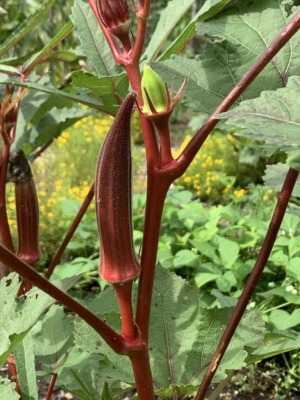
Bamboo is another of my bellwethers of our changing climate. I first planted Yellow Grove bamboo (Phyllostachys aureosulcata) almost 40 years ago; it’s among the most cold hardy of bamboos, both useful and beautiful, with canes that can grow one to two inches in diameter. The plant is evergreen — as long as winter temperatures don’t plummet too low. If they do, canes die back and leaves turn brown and fall off even though the roots survive to fuel new canes in spring. That was business as usual for many years after I planted Yellow Groove Bamboo.
Canes that remain alive and evergreen through winter thicken in the following season, and also sprout more robust new canes. Over the past decade winter low temperatures have oven hovered around 0°F rather than the usual minus 20°F, resulting in beautiful canes but more vigorous spread.
(For all its qualities, I don’t suggest planting Yellow Groove Bamboo. It’s very invasive, rapidly spreading via thick underground runners, and is banned in a number of states and municipalities.)
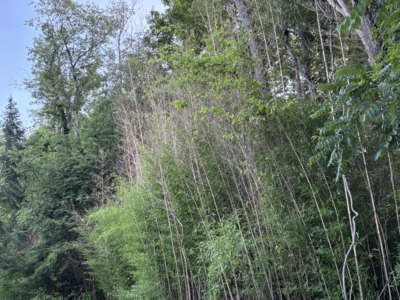
Bamboo, dead and new canes
The average last spring frost date for my garden is the third week in May. Some recent years, that last frost bowed offstage in early April. That’s not always a good thing. This past spring warmed early, with weeks of warm weather following; the extended warmth awakened flower buds on my apple and pear trees, but then a bitter frost (27°F) made a late spring encore, in spades. Poof. The life of embryonic fruits was snuffed out.
Temperature, Rain, Snow, Cold
Of course, weather and climate aren’t only about temperatures. They’re also about rainfall patterns, also with significant effect on our plants. Not only have temperatures been warmer, but rainfall has also been increased — especially 2023, with over 17 inches more rain than average. That’s one of the reasons many of us gardeners credit 2023 as being the worst gardening year ever, or, at least for me, in the past 40 years.
I prefer dry summers; my vegetables and blueberries are drip irrigated. But what can a gardener do about a wet summer? Good soil drainage is then important, with plenty of compost and, if needed, raised beds.
Notwithstanding this past winter here, the general trend for snowfall in the Northeast has been less and less. My measure for that is the number of days I could slap on my skis and hit the nearby cross-country trails. But what about plants and snow? Snow provides plants with a little free nitrogen but, more important, it’s a good mulch. Plants and soil snuggled beneath the insulating white blanket don’t suffer from extremes in soil temperature, limiting both cold damage and heaving out of the soil by freeze-thaw cycles. 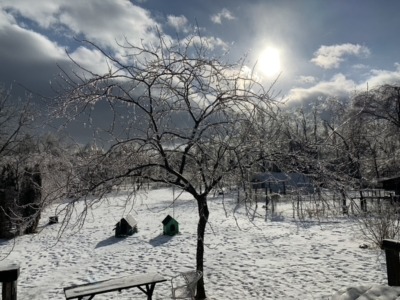
Book Burning Not Necessary
Ah, for the good ol’ days back in 1991 when the weather and climate were predictable (but not really) and I and my readers could refer to my book for when to do what, and why, in the garden.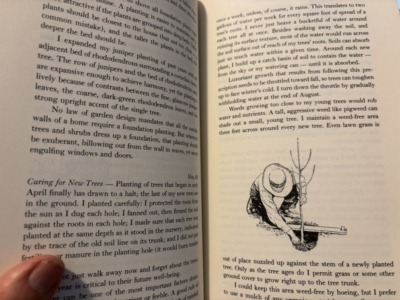
Is it time for me to burn the book? No! Many topics, such as edible flowers, birdhouse gourds, digging (or not digging) the soil, fencing, and planting by the phase of the moon, are climate independent. And, as for those granular dates for sowing, transplanting, and other weather dependent activities, I just move spring dates back a week or so and fall dates forward a week or so, and I’m back in business with A Northeast Gardener’s Year. Now it’s next week for sowing endive.
As for climate change, let’s each of us put some brakes on our energy consumption and back politicos that can see into the future the obvious.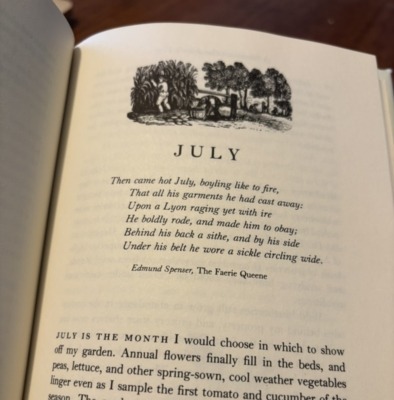



yep. climate changes. always have. always will.