
THANKSGIVING GARDEN FARE
The Garden Feeds
As we gradually close the gate to this year’s garden, it would be nifty to plan one meal to include as much as possible of what grew in the garden. Make it a year end — the garden “year,” that is — celebration of the garden, with a meal of seasonal food. A gardener’s Thanksgiving.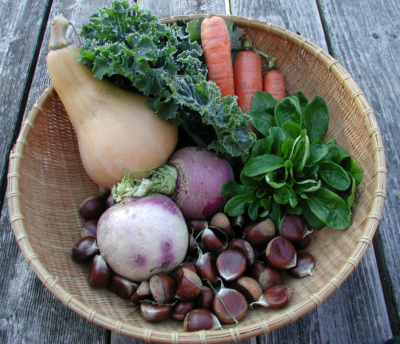
Let’s begin the meal with a salad. Here in Zone 5, how do I get a salad from the garden this time of year, you ask? With just a bit of protection, such as from a light blanket or sheet thrown over the bed, the lettuce remains fresh and crisp. I grow Flashy Trout lettuce and it has held up especially well to below freezing temperature. I planted curly endive in July and the frilly heads are now large and spread low against the ground. Endive is also easy to protect, only needing a large clay flower pot plopped upside down over its head. Besides fending off cold, the pot excludes light, so centers of those heads grow pale green and tender.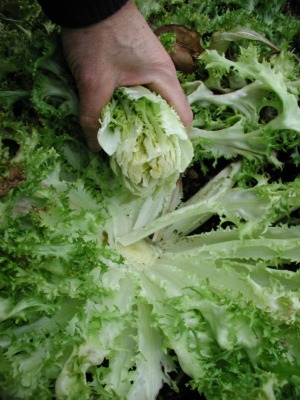
For fending off cold on Thanksgiving and beyond, I cover beds of lettuce and endive with metal hoops which support clear plastic or a row cover, or both. The “row cover” is a light material that adds a few degrees of frost protection which allowing light, air, and water to pass through. A second metal hoop over each supporting hoop sandwiches the plastic or row cover to hold it in place and make it easy to slide up and down for harvesting, or on sunny days when venting is needed.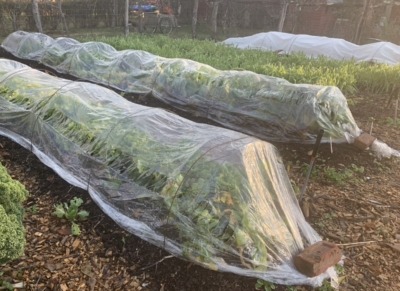
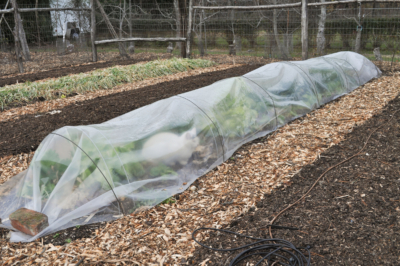
Even the cat likes the tunnel
Some salad greens keep in good condition without any protection at all. Spinach that was sown towards the end of August is still fresh and green, and will remain so throughout a mild winter. Even a frigid winter does no harm to the tender, spoon-shaped leaves of mache, also called lamb’s lettuce or fetticus.
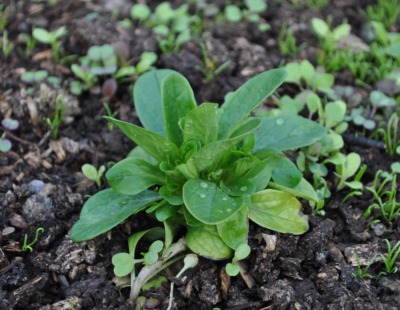
Mach (corn salad)
Round out that green salad with other colors, flavors, and textures. There are still beets, carrots, winter radishes, and turnips out in the garden, and they can be picked all winter if covered with a thick insulating blanket of leaves.
Turkey Fixins’
Now on to the turkey, or, rather, what you might have grown to eat with it: cranberries, for sauce; chestnuts, for stuffing. Move over vinca and pachysandra; cranberry’s creeping vines make an attractive groundcover that’s also edible. Contrary to popular belief, you don’t need a bog to grow cranberries, just very acidic ground (elemental sulfur may be needed to get the acidity to about 5), peat moss for aeration and to sponge up water, and mulch, also for moisture, and to keep the soil cool.
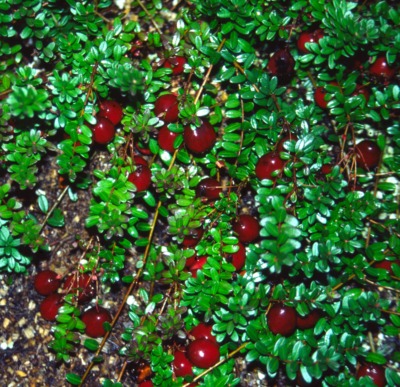
My cranberries (not bogged)
Rather than true cranberries, you are more likely to be already growing highbush cranberry. This large, relatively common bush is one of the ornamental species of Viburnum, and its red berries make a sauce that is very much like that made from true cranberries. The highbush cranberry thrives without any special soil treatment.
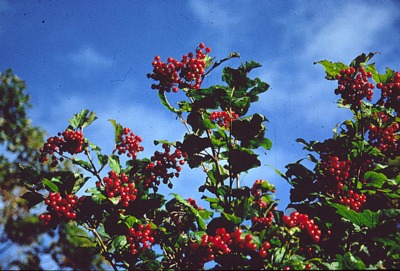
Highbush cranberry
Although chestnut blight disease put an end to most harvests of American chestnuts (the trees live, but do not bear), other chestnut species provide nuts that are almost as good. The best of the lot is either the Chinese or Japanese chestnuts, and their hybrids. Marigole is a variety that has borne reliably here for decades, as did its companion, Colossal, until it succumbed to the blight. Chestnuts are one of the few nuts that are quick to come into bearing; I’ve planted trees from a nursery that bore their first nuts in their second year. (Admittedly, not that many nuts that soon.) A nut I planted grew into a tree that yielded its first crop in five years.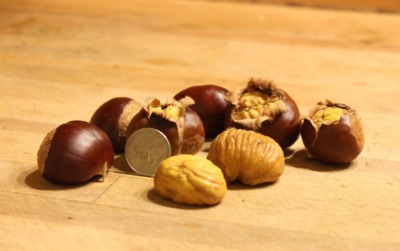
And More
Other vegetables out in the garden stew into tantalizing side dishes or soul-warming soups. Above ground, it’s the cabbage family that’s still surviving: kale, brussels sprouts, mustard greens, and, of course, cabbage itself, the firm heads of the latter packed away in a cool room for use I winter. Below ground, there’s parsnips, salsify, white potatoes and, for an authentic Thanksgiving food, ground nuts.
The ground nut, called nu nu by the Native Americans, is the starchy root that was the true savior of the Pilgrims during their first winter in Massachusetts. It’s a pretty plant, a vining legume that dangles chains of chocolate-y colored and scented flowers.
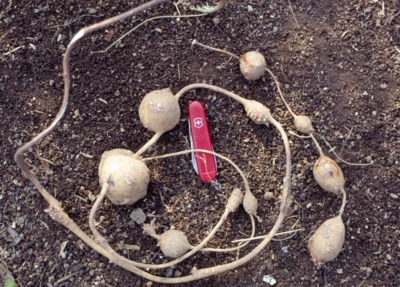
Groundnuts
Stored pumpkins or squashes could go into a main course pudding or, for dessert, a pie. Sweet potato would serve equally well, but they really enjoy longer and hotter summers than we can offer them.
So there you have it, a home-grown Thanksgiving dinner. Because every backyard gardener can grow such a wide variety of fruits and vegetables, there’s always some bounty to offset any losses due to weather, pests, or poor planning. Not a gardening year that goes by that is not worthy of a harvest celebration.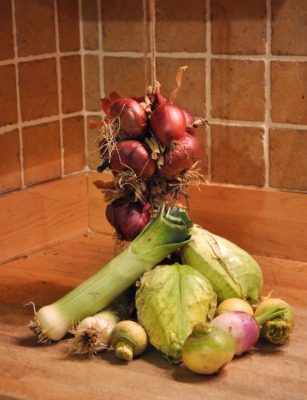

Leave a Reply
Want to join the discussion?Feel free to contribute!