
PUMPKINS: NOT JUST FOR HALLOWEEN
Setting the Stage
With Halloween past, we can now turn our attention to other things pumpkin — eating them. Although the earliest relatives of pumpkins probably originated somewhere in Central America, a typical autumn scene in New England has long been smoldering sugar maples and ashen gray skies creating a backdrop for tawny fields scattered with ripe, orange pumpkins.
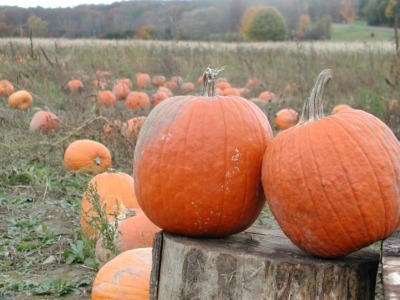
Indeed, Native Americans cultivated pumpkins in the Northeast long before white settlers arrived. In those distant centuries, preparation of pumpkins for eating was simple and savory: whole fruits were bedded in the ashes of a fire, then drizzled with animal fat and honey or maple syrup.
White settlers soon adopted pumpkin as a staple, valuable for its nourishment and for being able to keep through winter.Some form of pumpkin eventually found its way into stews, soups, sauces, pancakes, breads, and, of course, pie, giving a bit of humor and a bit of reality to the old ditty: “We have pumpkins at morning and pumpkins at noon, if it were not for pumpkins we would soon be undoon.” Long before Boston was known as Beantown, it was called Pumpkinshire.
Precursors of today’s pumpkin pies appeared early on. A Pilgrim recipe called for slicing the top off a pumpkin, scraping out and replacing the seeds with a mix of apples, sugar, spices, and milk, then putting the top back on and baking the whole thing. By the end of the 18th century, pumpkin was well on its way to our modern pie, with recipes calling for baking a mix of “pompkin” with eggs, molasses, allspice, and ginger in a pastry shell.
Best Pie Filling
Over the years, pumpkins did have its occasional detractors. Europeans were never fond of pumpkins, except as animal feed, and they were even spurned by some Americans. Well-known New York seedsman Peter Henderson penned a diatribe against pumpkins in 1893, asserting that it “is yet offered in large quantities for sale in our markets, but it ought to be banished from them . . . uncouth looking squash is immeasurably superior for all culinary purposes to the mammoth, rotund pumpkin.”
Most “pumpkin” pie filling today is, indeed, made from squash — no great transgression because pumpkins and some squashes are the same species, and in some parts of the world, what we call squashes are called pumpkins.
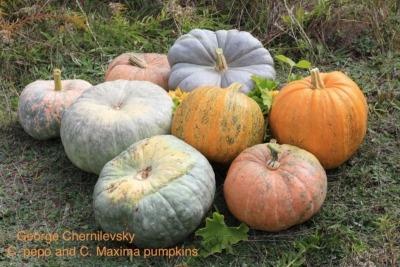
Pumpkins, C. pepo & maxima
Other species also number “pumpkins” amount their members. According to the Oxford English Dictionary, the English word pumpkin is a 17th-century corruption of the earlier pompion, denoting any of various kinds of edible gourd. An alternative theory derives pumpkin from the native Americans’ Algonquin word pôhpukun, meaning “grows forth round”.
I’ve never compared pumpkin pie made from squash with that made from pumpkin, but if you’re going to eat a pumpkin, grow Connecticut Field, Small Sugar, Spookie, or some other variety that stands out for good eating.
Throughout the world there are contests for the largest pumpkins. Winners often derive from C. maxima, the most worthwhile contender being the variety appropriately called Big Max, the big ones of which can weigh in at over a ton!
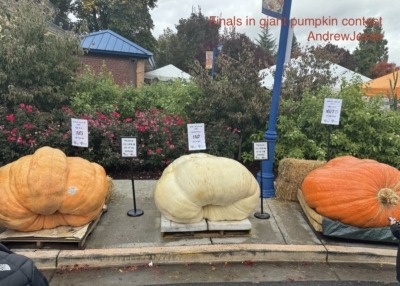
Finalists in giant pumpkin contest
Seeds
Let’s not overlook one of the most nutritious and delectable parts of any pumpkin — its seeds. You don’t hear much about the early settlers eating pumpkin seeds. Sure, they talked about munching a few to expel worms, or drinking them pulverized in water for bladder problems. But there’s not much talk about eating them for food. Too bad, because they are delicious if properly prepared.
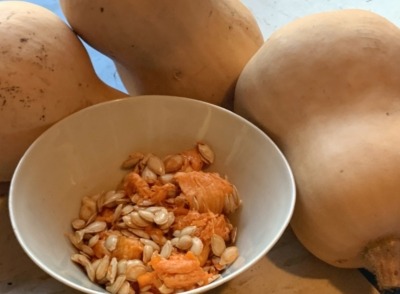
Tough hulls make most pumpkin seeds practically inedible raw. The seeds could be hulled, but what I do is wash them, then spread them out on a pan and roast them till the hulls are golden brown, at which point they’re crunchy and tasty. You have to be careful during the final minutes of roasting, for they can quickly go from golden brown to charcoal.
Hull-less varieties yield seeds covered with thin, green shells that need neither removal nor roasting. Lady Godiva and Streaker are two well-named, hull-less varieties. Neither has flesh worth eating. Other hull-less varieties with less catchy names, but with prettier fruits and tastier flesh, include Trick-or-Treat, Bushkin, Triple Treat, and Mini-Jack.
Once you tire of carving pumpkins, and savoring pumpkin pies and seeds, you could employ some other Yankee know-how with pumpkins: cut them to dry into pumpkin chips; brew them into pumpkin beer; boil pumpkin mush — very slowly — into a “molasses.”
Or just sit down on a pumpkin. New Englander Henry David Thoreau asserted that he would rather sit alone on a pumpkin than on a velvet seat in a crowd.


Leave a Reply
Want to join the discussion?Feel free to contribute!