
DON’T LET COLD THREATEN YOUR FIGS
(What follows is based and elaborated on in my book GROWING FIGS IN COLD CLIMATES.)
Winter is A’coming
Cold climate fig growers: The time has come (or will come or, I hope, has not passed). That time is getting your plants ready for winter cold. Figs are subtropical — not tropical — plants that do well dropping their leaves in fall and then experiencing some cold temperatures. That tolerance has its limits, though, which is temperatures down into the low 20s or high ‘teens for most varieties.
Temperatures here on the farmden used to drop to about minus twenty at least once every winter but have only edged a bit below zero for the past few years. Either low temperature will snuff the life from a fig stem. Even if that happens, though, roots which have been sheltered in the ground’s warmth, survive and send up new sprouts in spring. That excites novice growers because figlets soon appear along those stems.
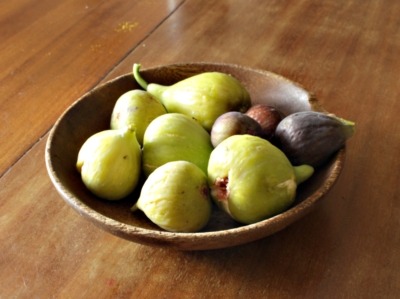 But except in climates with longer growing seasons, those figlets don’t have time to swell and ripen and the other end of the growing season. (Can you think of any places in the world experience frigid winter temperatures and long, hot growing seasons? I can’t.)
Options
So, what’s to be done with our fig plants in winter. Here, over the years I’ve explored three options. For many years I grew my fig plants in pots. When cold arrived but before frigid temperatures threatened, I would strip off any remaining leaves and carry the potted plants down to my barely heated basement, where winter temperatures hovered around 45 degrees F. A leafless plant doesn’t need sunlight.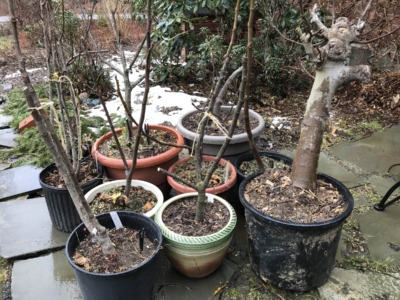
I now can avoid treacherous trips cradling large, potted plants down those steps A few years ago, I insulated a spare room in a studio building here and hooked up a Coolbot to create a walk in cooler for storing vegetables, fruits, and potted figs. (Coolbot is an electronic device that, when coupled with an air conditioner, tricks the air conditioner into believing that it hasn’t yet reached its minimum cooling temperature of 65 degrees F). The room maintains consistent temperatures a few degrees above freezing.
Option number two is to plant a fig outside right in open ground. Binding the stems together and then slowly bending the bundle down into a shallow trench lets me throw a piece of plywood or rigid plastic over it, in turn covering that with soil or some mulch such as straw or wood shavings. The soil’s warmth protects the stems from the full fury of winter’s cold.
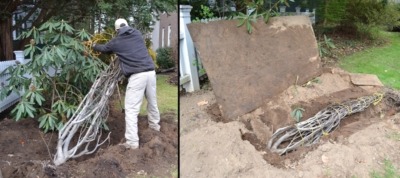
Photos by Mary Menniti
That buried fig is appealing food (fig stems) and lodging for mice. So before covering the stems, I spray them with Bobbex animal repellent and then sprinkle in stems I cut from my peppermint plants. Mice are reputedly repelled by peppermint aroma.
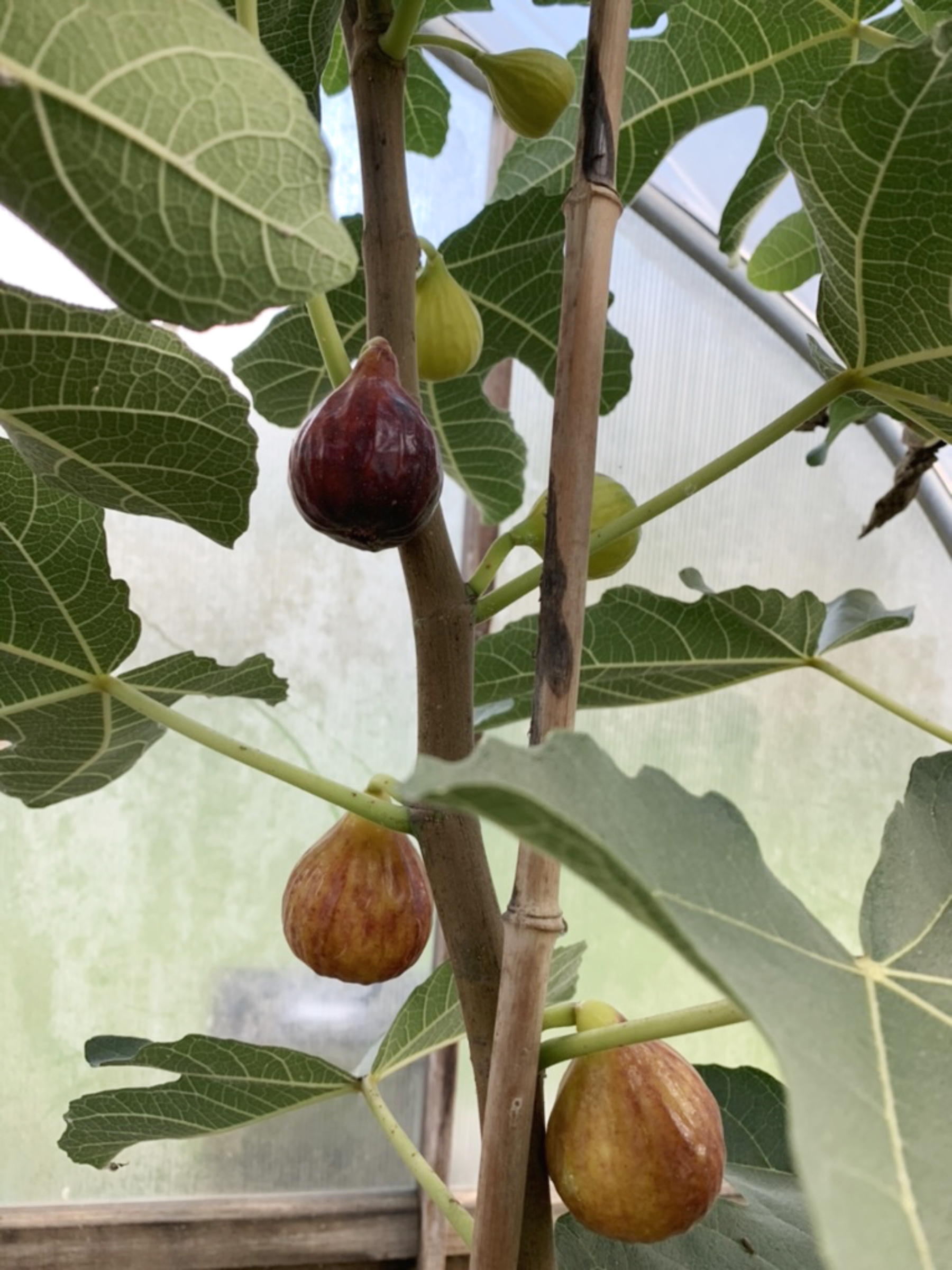
Option number three is the best of all. I have four fig plants growing directly in the ground in my 400 square foot, minimally heated greenhouse. 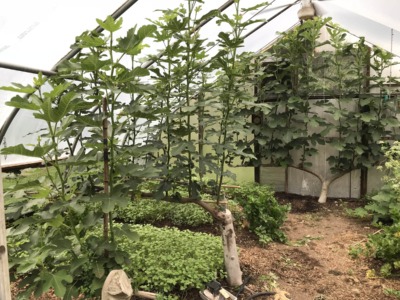 A heater in their prevents the temperature from ever going below 37 degrees F, which is warm enough to keep water hoses from freezing and to coax some winter growth from the lettuce, arugula, Chinese cabbage, kale, parsley and other makings for winter salads. This same greenhouse earns its keep in spring raising all seedlings for my vegetable gardens, then in summer with a few ginger and cucumber plants.
Harvest
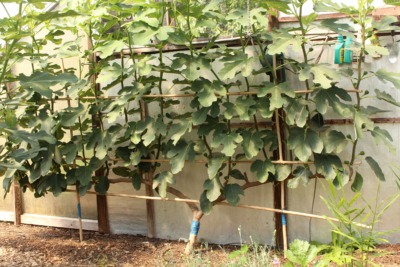
Late summer brings ripe figs, lots of them, with the harvest continuing on into early this month. I have my greenhouse figs trained as espaliers, which is an orderly way of deliberately orienting the directions of stems for both beauty and function. Function, in the case of espalier fruit plants, means lots of flavorful fruits.
Each plant has one permanent, long stem, called a cordon, that is essentially a continuation of the trunk parallel to and about 20 inches above the ground. 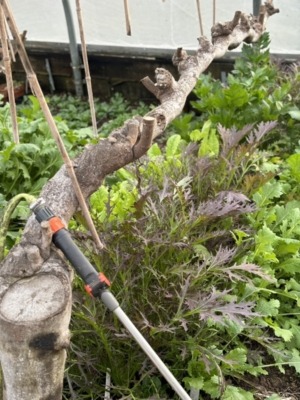 Every spring, new fruit-bearing shoots grow a few inches apart along the cordons. To keep things neat and manageable, and ripe fruits easily accessible, I train the growing stems vertically.
Okay, so not everyone grows figs where winter temperatures reliably drop below zero. Less heroic measure can be used to get a fig tree through winter in USDA hardiness zone 7 (with winter lows typically between 0 and 10 degrees F). Swaddling stems is the method.
As with the other methods, plants should be allowed to experience some cold weather before being swaddled. This experience toughens them for deeper cold. Also, wrapping stems while the weather is still warm would invite rot and rodents. After being pruned, a plant’s remaining stems are tied together in a tight bundle.
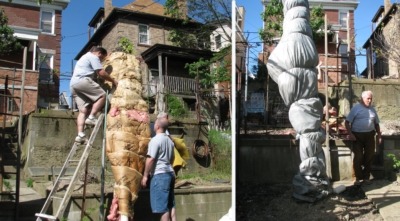
Photos from Mary Menniti
A number of wrapping materials can be used to fend off colder weather. What to use depends on what’s available and the degree of cold expected. Burlap suffices in regions where temperatures hardly dip below the ’teens. Colder than that, and blankets or, for even more cold protection, some sort of insulating material can be used.
Rain must be kept off the top of the fig “sculpture.” An upside-down bucket capping the bound together and wrapped stems could complete the picture. Such sculptures” often grace the front or backyards of gardeners, especially those with genealogical roots in the Mediterranean.
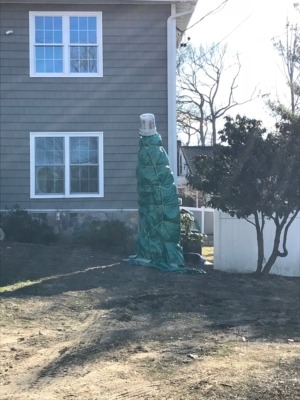
Fig tree swaddled for winter
Here, I once tried swaddling an in ground fig. It was a failure. The plant died to ground level and the vigorous, new shoots that sprouted did not have time to ripen their crop.
The point is that wrapping stems provides only a few degrees of increased cold resistance.
No matter, I always get good crops from my greenhouse and potted figs.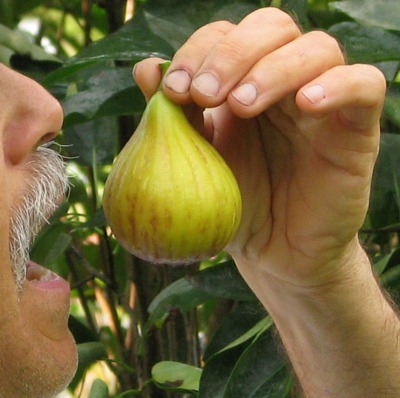


Leave a Reply
Want to join the discussion?Feel free to contribute!