
IT’S A HARD, HARD WORLD
The following is adapted from my book, The Ever Curious Gardener: Using a Little Natural Science for a Lot Better Garden, available from the usual outlets or, signed, from me (www.leereich.com/books).
Coddled Beginnings
Imagine that you hadn’t set foot outside all spring… better yet, that you had spent all spring in a warmed cave . . . then tomorrow you went out and stayed there. At the very least, you would have to put your hands to your eyes for a while to shield them from the sun. And if the night was very cool — not unusual this time of year — well, you would shiver. Fresh air and sunlight are great for the constitution, but you would have to first acclimate yourself to them.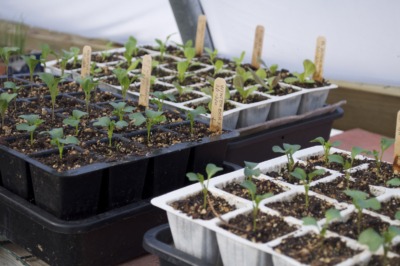
The same goes, even more so, for vegetable and flower transplants. Indoors, where they get their start, they are, after all, coddled. They know nothing of wind, which can shake them up and dry out their leaves by too quickly drawing water from the tiny openings in their leaves (“stomata”). Their tender cells know nothing about dealing with cool temperatures, or temperatures that swing 30 degrees Fahrenheit within 24 hours. Their leaves have yet to experience blazing sunlight.
Vegetable and flower transplants bought from a nursery would not necessarily fare any better. The more even temperatures and high humidity of a greenhouse does nothing to prepare them for drier air on the other side of the glass or plastic.
Toughen Up
What’s needed before setting transplants out in the ground is to have them undergo a process called “hardening off,” which gets these plants acclimated to increasing intensity of sunlight, gusts of wind, fluctuating and cooler temperatures, and soil moisture levels that might border on drought one day and a week later turn boggy.
I actually get this process started indoors by brushing my seedlings. I don’t mean any extended caresses; just running the back of my hand, a dowel, or one of those brushes for removing snow from windshields over their tops a couple of times per day. These caresses mimic, to some degree, the effects of wind.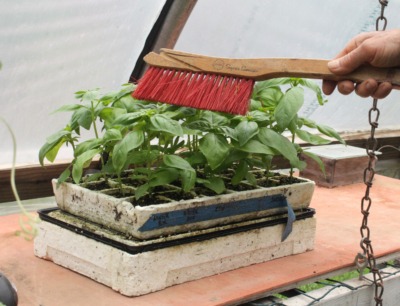
Hardening off outdoors needs to be gradual. Trying to toughen up plants too severely too quickly could send them into shock. Annual flowers and vegetables might respond by flowering prematurely. Flowering ruins a vegetable like celery, putting the brakes on stalk production and making those that remain too coarse too eat (fresh, at least; they’re fine for soup). And you don’t want flowers on a marigold plant before it has become big and bushy, or its growth will be stunted. The same goes for broccoli buds.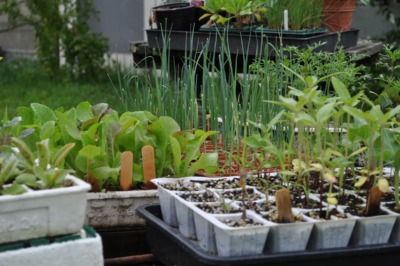
So the thing to do is to find some cozy spot outdoors, a spot that is sheltered from wind and receives sun for only part of the day, or else dappled sun all day. Move your vegetable and flower plants outside to that location, and leave them there for about a week.
Watering needs special attention because, barring rain or overcast conditions, plants are going to dry out much faster outdoors than they did indoors. I keep my plants slightly on the dry side to make for tougher growth, and gets them used to a condition they may have to experience once they are on their own in the ground. Too much water stress, though, could cause shock and its attendant effects.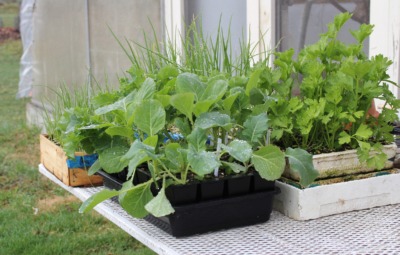
Also pay attention to the weather. If a night threatens to be very cool, bring the plants indoors. I do so if there is any doubt about the weather. One cold snap could snuff out weeks of care, especially tragic because I wouldn’t be able to replace seedlings such as my ‘Italian Sweet’ peppers, ‘Carmello’ tomatoes, and ‘Lemon Gem’ marigolds. Nurseries don’t offer transplants of these and many other unique varieties.
Ready for the Great Outdoors
After about a week, plants get moved to a more exposed location, one that takes just the edge off gusty winds and broiling sun. I continue to keep a close eye on watering and nighttime temperatures. A week at this second location and plants will be ready to be planted out at their permanent homes.
During the couple of weeks of hardening off, plant growth becomes slower and stockier. This is good; it shows that the plants are getting ready to face the world. Mother Nature can be fickle, though, so I stand ready to protect even these hardened off plants, once they are out in the garden, with overturned flowerpots or sheets if a late frost threatens.
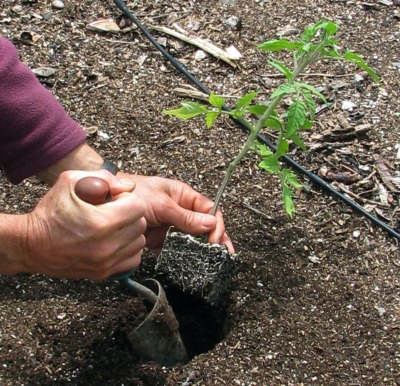
Ideally, this gradual hardening off, along with further protection, if needed, eases seedlings’ transition to the garden so they hardly know they’ve been moved. Which is as it should be.



What is the variety and source for your ‘Italian Sweet’ peppers? What attributes do you like about it?
I’m forever searching for a better tastier sweet pepper for more northern climes.
I was very impressed with ‘HMS Red Picnic Pepper’ last year in my garden. Probably the best tasting sweet pepper I have grown, good vigor, productive, did not rot easily. Also, ‘Goliath Griller F1’ equally impressed me with its complex smokey, sweet flavor and very mild heat (larger plant, unsure about production level).
I see that Territorial Seed Company has Italian Sweet. I isolate my plants and save seeds every year. I like the flavor and the earliness to ripen to red. I could trade you Italian Sweet seeds for the two you mentioned. My address is on the “contact” page of this site. Let me know.
Hi Mr. Reich,
I am very interested in attending your garden tours. please let me know if you are still conducting them and then schedule. looking forward to your response.
Thanking you in advance.
Prema Goldstein
I usually post such events on this website, so keep an eye out for it here. I’m not sure what I’ll be doing this year because part of the garden has been discombobulated by construction.