
BARKS OF ANOTHER STRIPE
Even Shrubs (Have) Bark
Hear “bark” and I’ll bet “dog” or “birch” comes to mind. Well, foxes also bark, and the cinnamon brown, flaky bark of paperbark maple is every bit as eye-catching as is the more talked about chalky white bark of birch. Winter is a wonderful time to appreciate plants’ bark.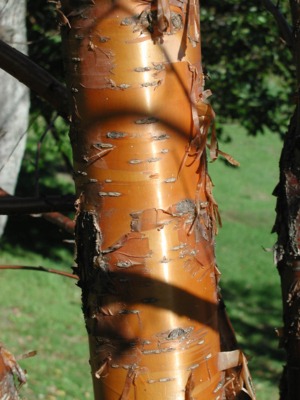
Shrubs never develop trunks thick enough to be swathed in broad expanses of bark, yet a few of them do have notable bark. The red or yellow twigs of shrubby dogwoods look stunning against snowy backdrops, and are bright enough to call attention to themselves even without that snow.
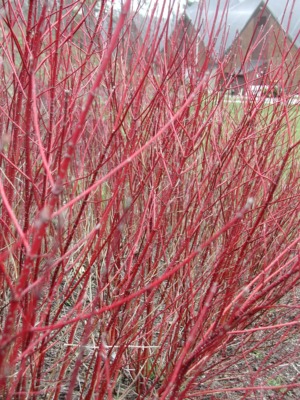
Red twig dogwood
Twigs of the variety of white willow called Cherisina have similarly colorful bark, orangish red in this case.
Only the young twigs of the dogwoods and the willow are brightly colored, so you can lop these plants right to the ground each spring as the flowers and leaves of other plants begin stealing the stage. The willow’s and dogwoods’ colorful stems fade as the weather warms, anyway.
Green is a welcome color in winter, and is served up by scotch broom as a fountain of slender, lime-green twigs. Come spring, will their color fade? Not a whit. Matter of fact, as spring draws to a close, the twigs get drenched in a mass of buttery yellow flowers. (Note: Scotch broom is invasive in certain parts of wester U.S.)
The young stems of kerria also stay bright green through winter. Only the young stems are green, so cut kerria back right after its yellow pompom blossoms — responsible for the plant’s also being called Japanese rose — wither away.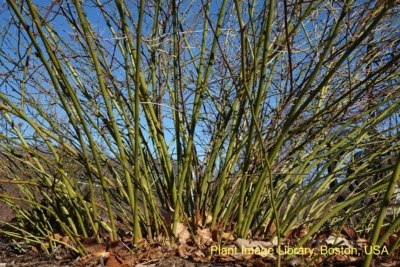
For a real rose with interesting bark, consider the omei rose. The plant grows quite large and has fairly nondescript white blossoms. But look at the younger stems: they are covered with translucent, ruby red thorns whose bases are so wide as to make the stems appear almost winged.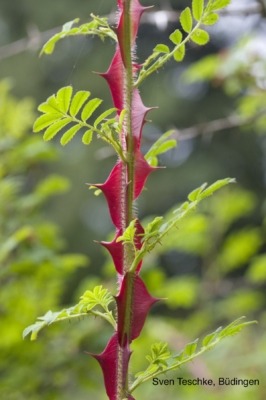 One more shrub with particularly appealing bark is Nanking cherry. The bark naturally peels from the plant in delicate curls to reveal a shiny, reddish brown inner bark that is punctuated with tan lenticels. Nanking cherry’s bark develops character only on older stems.
And Trees’ Bark, of Course
Let’s move on to larger plants with notable bark. Yew is “yewsually” grown as a bush, but time and training can transform it into a tree. Time also is needed for the bark to take on a rich color and texture, deep reddish brown and peeling in long, thin strips. Training an older plant to tree form lets that beautiful bark stare back at you at eye level.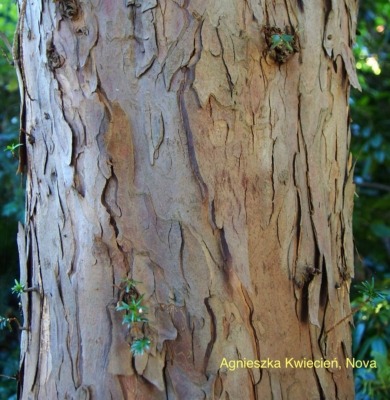
If the bark of yew evokes a dark, cool, damp forest, the bark of sycamore — a patchwork of white, pale olive green, and light brown — evokes the opposite: a sun-parched landscape. Despite its sunny appearance, sycamore inhabits moist bottomlands along rivers and streams. London planetree is a sycamore hybrid with similar pale, pretty bark, and somewhat more symmetric form. Before planting either of these trees, be aware that they can grow to monstrous proportions, fast.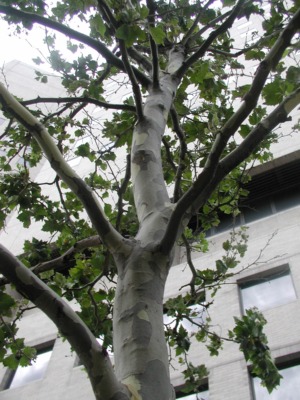
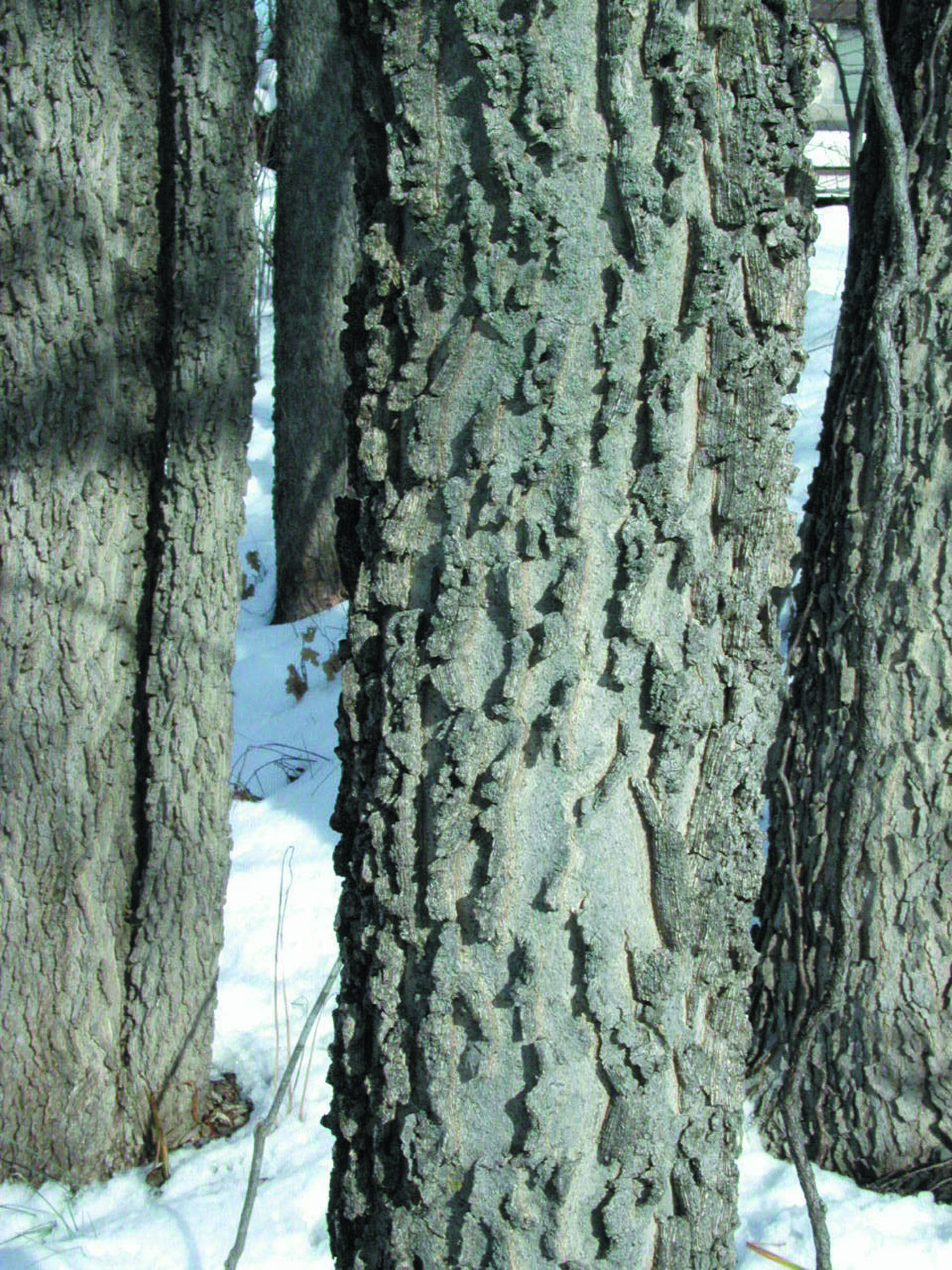
The barks of a number of other trees won’t jump out at you, but reveal their beauty and interest under closer inspection. Take a walk in the woods and pick out the aptly named shagbark hickory, its bark pulling free from the trunk at each end in long, fat strips. Take a look at flowering dogwood, its bark made up of little blocks fitted together like a puzzle. 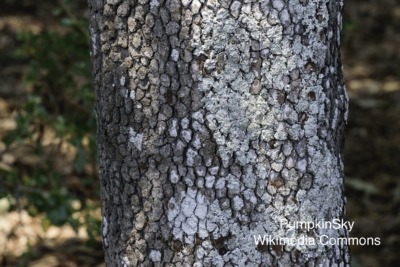 You will know and might come to love the gray bark of hackberry, whose smoothness is interrupted by corky ridges that cast crisp shadows reminiscent of photographs of the lunar landscape.
The more you look at bark, the more you appreciate this subtle beauty of trees. (For more about bark — its science, its beauty, and its uses around the world — see Bark by G. T. and A. E. Prance, and Bark, A Field Guide to Trees of the Northeast by M. Wojtech.)



I appreciate the varied and delicate peeling bark of river birch. Hope to plant one soon, especially since it’s beautiful in all seasons.
I have a Heptacodium (Seven Son Tree), which also has a unique peeling bark. It flowers later in the summer when most other trees have finished and supports several pollinators. The flowers also have a wonderful scent.
That’s a plant I always have wanted to grow but first I have to find an appropriate place for it. It’s got a lot going for it.
I’ll try lopping some of my red and yellow twigged dogwoods to the ground. I never thought to do this, but they’ve been there awhile so should have a strong root system. Thanks for this beautiful ode to bark!
Good, but wait until spring for your lopping.