
ONE OF THE GREATEST APPLES
Ol’ TJ was Spot On
Thomas Jefferson was right: Spitz is one of the greatest. Apples, that is. Esopus Spitzenberg, to use the variety’s full name, was the variety that T.J. preferred over all others from his Monticello orchard. And soon it will be coming into perfection here. Or, I should say “would be coming into perfection here.”
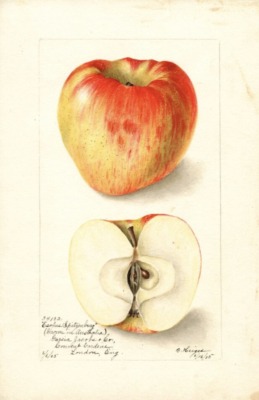
Watercolor from my book “Fruit: From the USDA Pomological Watercolor Collection“
That was years ago, when I grew Spitz.
This time of year, back then, the fruits would not be still hanging from the branches. They would have been picked and tucked away in the refrigerator. As with other so-called winter apples, storage brings about subtle changes within the cells, changes that lead to radical improvements in flavor. You shouldn’t rush the season for eating Spitz, or other late apples, such as Idared and the very flavorsome Newtown Pippin, both at their best out of storage in February.
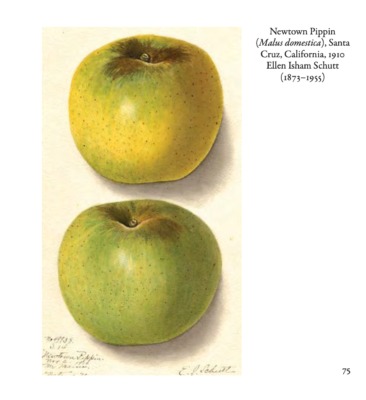
Watercolor from my book “Fruit: From the USDA Pomological Watercolor Collection“
Spitz’s gustatory peak of perfection arrives in December, and holds until February, or longer under good storage conditions.
What’s So Great About it?
Okay, okay, so back then I did often sneak a few apples now and then out of the refrigerator. Biting into the pale yellow flesh, it was hard to imagine that the flavor could get better.
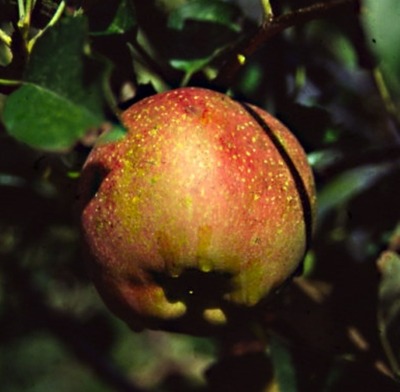
Homegrown Spitzenberg apple
Esopus Spitzenberg is not a sweet apple; then again, to describe it merely as “tart” would do injustice to its complexity of flavor. There’s some spiciness mixed in, and a mellow sweetness that overlays the tartness like silk.
When I grew Esopus Spitzenberg you would be unlikely to have found Esopus Spitzenberg at any local market or orchard, but this was not the case a hundred or so years ago. Back then this variety was quite popular, with commercial production centered in New York and Washington state.
Early in the 20th century, Spitz was New York state’s eighth most important apple, after such notables as Baldwin, Rhode Island Greening, and Northern Spy. Number eight would be insignificant in today’s markets, with only a handful of varieties garnering the bulk of the market share, but 100 years ago you would have found a lot more varieties at farm stands and markets than you do today. Nurseries back then were selling trees of about a thousand different apple varieties in any one year.
As Thomas Jefferson’s favorite apple, Spitz goes back way before the early 20th century. Its precise origin is unknown, but it is known that Esopus Spitzenberg originated in Ulster County, New York, in or near the town of Esopus, just a stone’s throw up some roads from my farmden.
As early as the beginning of the 19th century, Spitz’s fine flavor got it a place on published lists of recommended fruits. John Thomas, whose book “American Fruit Culturist” went though a score of editions in the 19th century, described the fruit as “firm, crisp, spicy, rather acid, nearly unequalled in its high rich flavor.” Andrew Jackson Downing, from Newburgh, NY, wrote in his tome “The Fruits and Fruit Trees of North America,” that Spitz was “unsurpassed as a dessert fruit.”
What Happened?
So what happened; why is Spitz unknown today? Why do I keep talking about my growing Spitz in the past tense? Sad to say, as those of us who grow Spitz know too well, this variety is especially susceptible to just about every apple disease, never yields particularly well, and even then, tends to lapse into alternating cycles of good and bad crop years. None of which endears Esopus Spitzenberg to commercial apple growers. Jefferson tried many times to grow it — without success.
Furthermore, today’s markets are global, demanding apples that will appeal to taste buds and eyes from Tokyo to Trenton. Spitz’s rich flavor is just too distinctive to appeal to everyone. Spitz has a yellow background unevenly painted over with red, generally bright red except where touched by sunlight, which darkens the skin almost to purple. A hundred years ago, Spitz was considered a handsome fruit. Not today.
I gave up trying to grow Esopus Spitzenberg apples. But I sure miss them.
Late news flash: I know of a local orchard that grows some excellent apples in wide variety, two boxes of which I bought a few weeks ago. Most were Ashmead’s Kernel, Hudson Golden Gem, Cox’s Orange Pippin, and Macoun. I just learned that they also grow Spritz, and will soon be picking up a box of them also.
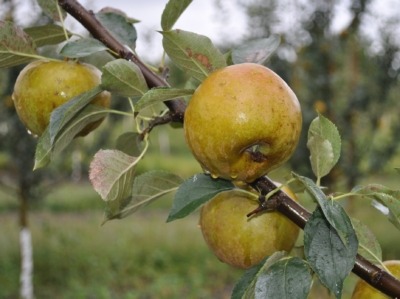
Ashmead’s Kernel apple
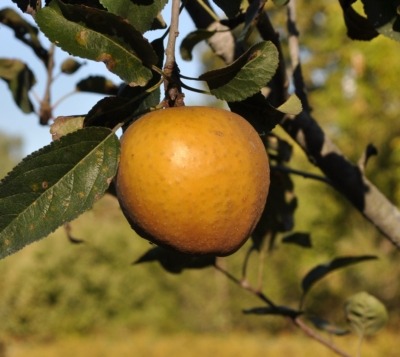
Homegrown Hudson’s Golden Gem apple
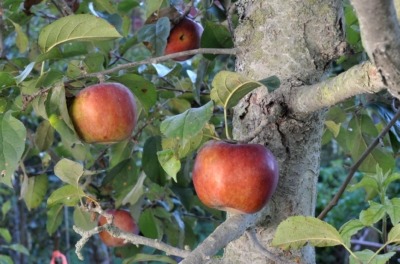
Homegrown Macoun apple


What? You’re going to keep the orchard a secret?
I can’t even get winesap around here anymore (Newburgh).
Ok, Ok, it’s Wightman Farm, Kerhonkson
What are good pollinators for Spitz? I may try a graft once I have established trees down the road. Will spraying with homemade worm tea give Spitz more disease resistance? I’m an experienced apple grower from CA who recently moved to Kingston. I’m planning a small orchard. Also can I grow apricots in Kingston?
Lee, picked up an Esopus Spitzenberg grown by Ian Merwin at the local food coop, it was great. Also picked up a fee small NYS Golden Russets. Waiting for those to ripen in the refrigerator. Thirty four years ago I grafted a Swaar, and old variety thought to be from the Dutch Colonial era grown in Kingston. It had several years of harvests, then the tree suffered from Black Rot disease, one of the major apple diseases before synthetic pesticides were developed. Here in the Finger Lakes it never reached the size that it did in Ulster Co. I miss the old varieties that so common in The Valley and te rest of the state. No Rome Beauty for baking in the late Winter, no Rhode Island Greening for baking, no Winesap or Baldwin, no Winter Banana, and no 20 oz, yet another baker, but for the early season.
Hi Lew, Those varieties were common here in the Valley long before you and I were here. Except Rome Beauty which may still be available. I never liked that variety though, even cooked as compared with others. I did get to taste Swaar decades ago from a sampler pack I bought from that guy from NAFEX who was selling them.